

Cast-iron plant, ZZ plant, and snake plant are useful starting points when choosing low-light indoor plants. But no living houseplant thrives in darkness.
A room without direct sun can still offer plenty of indirect daylight. The important question is how much light reaches the leaves, and for how long.
These 25 choices range from plants that tolerate lower light to plants that belong beside a brighter, filtered window. Each profile explains the distinction.
If the room has no usable daylight, plan suitable supplemental lighting before buying. Choose for the growing conditions first, then build a corner you enjoy using.
The distinction between tolerance and healthy growth follows University of Minnesota Extension’s indoor-light guidance.
Images are AI-created room-design illustrations, not identification photographs, light measurements, or records of the author’s plants. Use the linked botanical profiles for factual reference.
Jump to one of the 25 indoor plants
- Cast-Iron Plant for a Welcoming Hall
- ZZ Plant Beside a Working Desk
- Snake Plant for a Simple Bedroom Corner
- Chinese Evergreen in a Patterned Reading Nook
- Pothos Along a Useful Console
- Heartleaf Philodendron on an Open Bookcase
- Peace Lily as a Calm Sitting-Room Accent
- Parlor Palm for an Airy Reading Seat
- Lady Palm Beside a Navy Settee
- Kentia Palm for a Generous Dining Corner
- Arrowhead Plant for a Bright Desk Nook
- Dieffenbachia Against a Simple Backdrop
- Corn Plant for a Broad-Leafed Floor Display
- Dragon Tree for an Uncluttered Office
- Lucky Bamboo for a Small Breakfast Nook
- Homalomena in a Humidity-Friendly Reading Corner
- Bamboo Palm for a Layered Sitting Area
- Satin Pothos Beside a Filtered Window
- Spider Plant Above a Cheerful Kitchen Seat
- Tree Ivy as a Supported Hall Feature
- Japanese Aralia for a Spacious Glazed Porch
- Prayer Plant for a Patterned Tabletop
- Bird’s Nest Fern in a Daylit Bathroom
- Blue Star Fern for a Softly Colored Nook
- Mistletoe Cactus for a Trailing Window Display
1. Cast-Iron Plant for a Welcoming Hall

Light: Lower-light candidate
Cast-iron plant is one of the stronger choices for a room with modest daylight. Its broad upright leaves give an entryway presence without a complicated support system.
Use a substantial floor pot beside a teal bench, with a woven runner keeping the route visually clear.
Leave enough space for bags and coats to pass without brushing the foliage.
I love how the dark leaves settle against pale walls.
Provide a draining pot and rich, well-drained growing medium. Shade tolerance does not mean the roots should stay wet or that the plant can live without light.
Choose this for its foliage rather than flowers. It forms a clump, so allow for width instead of assuming every upright plant stays narrow.
2. ZZ Plant Beside a Working Desk

Light: Lower-light candidate; brighter indirect light preferred
A ZZ plant brings a polished outline to a home office without needing a bright sunbeam. Its upright, glossy foliage looks especially good against a simple wall.
Place the pot on a stable low cabinet beside the desk. A coral chair and blue patterned rug add color while leaving the plant itself easy to see and reach.
ZZ tolerates low light, but bright indirect light supports better growth. Do not bury it at the back of a windowless office.
Let the growing mix dry between waterings and empty collected water from the outer pot. Its water-storing tissues make repeated soaking a poor strategy.
Keep it away from chewing pets and children. This is a foliage display, not an edible desk plant.
3. Snake Plant for a Simple Bedroom Corner

Light: Lower-light candidate
Snake plant gives a bedroom a clean vertical accent, especially where a broad shrub would crowd the furniture.
Choose its position for available daylight before choosing the prettiest pot.
A charcoal planter beside an oak dresser creates a quiet anchor.
Add a blue chair and cream throw, leaving the leaves clear of drawers and curtain movement.
Its tolerance of very low light is useful, but it should not be mistaken for a need for darkness. Expect slower development in a dim position.
Use a freely draining growing mix and allow it to dry between waterings. Avoid a large decorative container filled with permanently damp soil.
The stiff leaves can be damaged by traffic, so keep the pot outside the route around the bed.
4. Chinese Evergreen in a Patterned Reading Nook

Light: Lower-light candidate; cultivar needs vary
Chinese evergreen offers a fuller, softer shape than an upright snake plant. Green and silver foliage can provide interest without relying on flowers in a less sunny room.
Set it on a low, sturdy stand beside a mustard chair.
A burgundy cushion and pale rug make the corner colorful while the leaves supply the main pattern.
Choose the actual cultivar with care. Variegation and light requirements vary, so a heavily pink or pale selection may need a brighter position.
Keep it warm and out of cold drafts, with a draining pot and moisture checks before watering. Do not let water collect inside a decorative cover.
Allow access around the clump for inspecting leaves. It is an unsuitable choice where pets regularly chew foliage.
5. Pothos Along a Useful Console
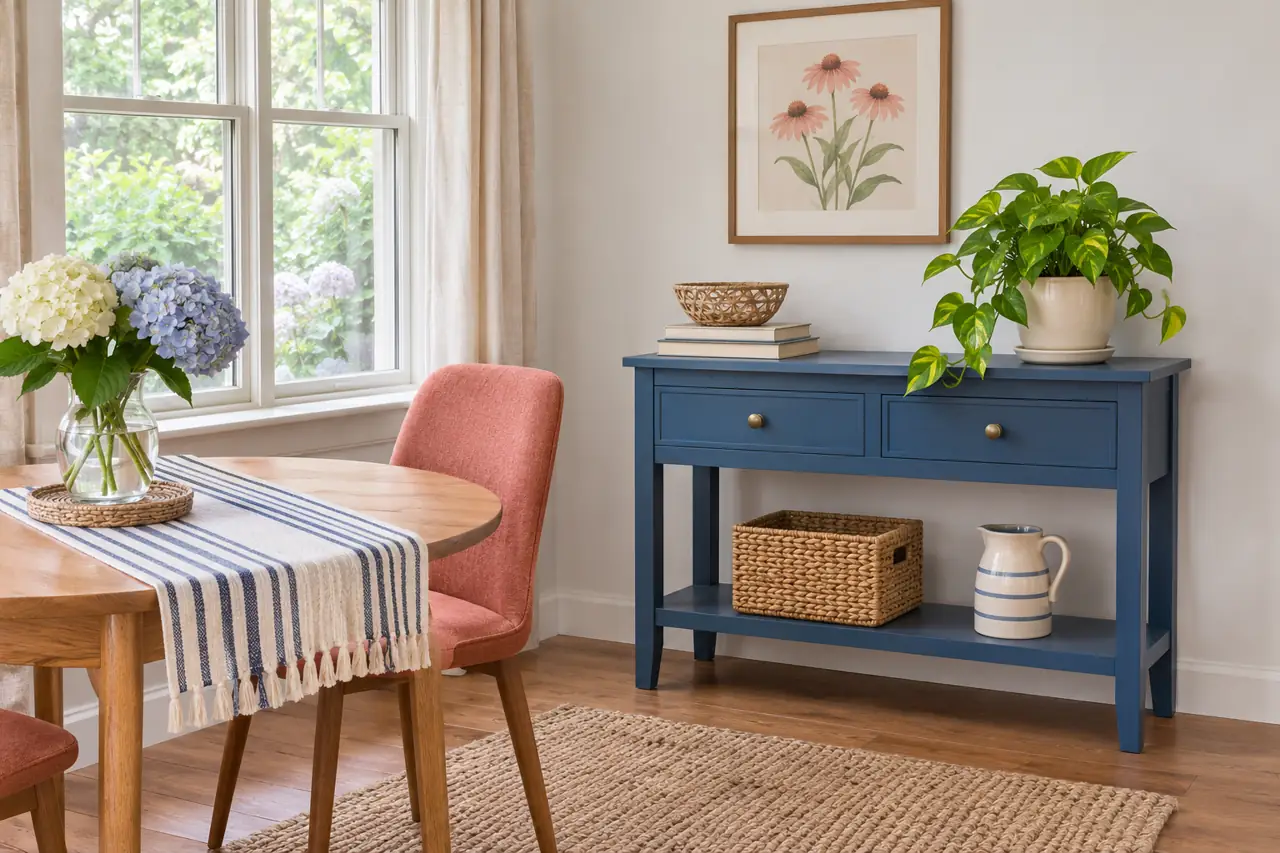
Light: Lower-light candidate; brighter indirect light preferred
Pothos makes a console feel planted without taking up floor space. Choose a short, manageable trail rather than sending stems across the chair or down a busy walkway.
A cream pot on a blue console works beautifully with an oak table, coral chair, and striped runner. Keep the pot within easy reach for watering and checking drainage.
Pothos can tolerate low light, although it prefers bright indirect light. A dim location may also reduce the variegated effect you bought it for.
Watch the newest growth rather than judging the plant only by its older leaves. Long, sparse sections deserve a review of light and care.
This setting suits someone happy to guide or trim vines instead of leaving them to cover every nearby surface.
6. Heartleaf Philodendron on an Open Bookcase

Light: Lower-light candidate; medium light preferred
Heartleaf philodendron suits a low bookcase where its green vines can soften one edge.
Leave the rest of the shelf useful for books and a small basket.
A lilac chair, floral cushion, and natural rug give the whole corner warmth.
Place the bookcase where the leaves still receive window light rather than hiding them behind taller furniture.
This plant tolerates low light, but medium light is better for active growth. Its survival in dim conditions is not a reason to withhold light deliberately.
Keep the growing medium slightly moist without leaving the roots waterlogged. Check the pot before adding water, especially when growth slows.
Plan where the vine will go as it lengthens. A modest trail is easier to maintain than a tangled curtain.
7. Peace Lily as a Calm Sitting-Room Accent

Light: Lower-light candidate; flowering needs more light
Peace lily gives a sitting corner a broad, leafy presence, with occasional white spathes when conditions suit. Choose it for the foliage first, rather than expecting permanent flowers.
A dusty blue floor pot pairs well with a rust chair and pale patterned rug.
Keep space beside the pot so you can inspect the mix without moving the furniture.
It tolerates shade, but a darker position can limit flowering. Avoid direct sun that could damage the leaves.
Maintain moisture without making the pot soggy. Drooping is a reason to inspect the growing medium, not an automatic instruction to pour in more water.
Peace lily is toxic to cats and dogs. Choose another arrangement if you cannot keep this plant away from chewing pets.
8. Parlor Palm for an Airy Reading Seat
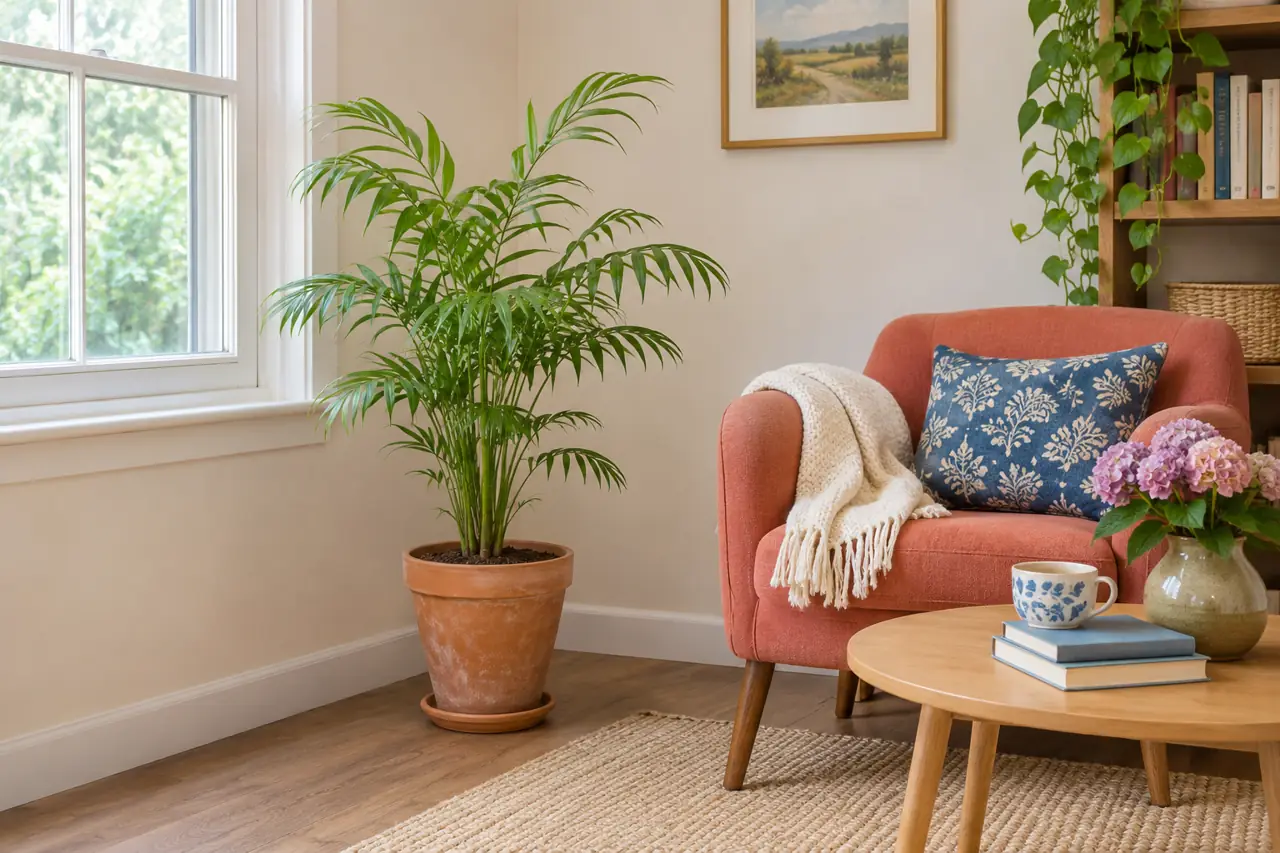
Light: Lower-light candidate; bright indirect light preferred
Parlor palm makes a small reading area feel softer without the solid mass of a large-leaved plant. Its fine fronds look lovely beside a coral chair and blue floral cushion.
Use a stable floor pot and leave the outer leaves clear of the chair back. A low table and woven rug complete the space without filling every gap.
It tolerates low light, although bright indirect light remains the better choice. A sheltered window position is more useful than a distant, decorative corner.
Use a well-drained mix and let it dry slightly between waterings. Avoid placing the fronds in the stream from a heating vent.
Shop for the plant’s eventual spread, too. A small nursery palm should not be treated as a permanently tiny ornament.
9. Lady Palm Beside a Navy Settee

Light: Lower-light candidate
Lady palm offers a different silhouette from feather-leaved palms. Its divided fan leaves make a strong backdrop beside a navy settee and an ochre patterned cushion.
Give the floor pot its own generous corner, with space between the leaves and the seating.
A pale rug and simple wall art keep the arrangement composed rather than crowded.
This palm can withstand deep shade indoors, but it still needs usable light. Indirect daylight is a sensible starting point when selecting its position.
Provide well-drained potting medium and check moisture regularly. Reduce watering when conditions and growth call for it, rather than following the same routine all year.
Its clumping habit matters in a small room. Allow for outward growth instead of squeezing the plant into a narrow gap.
10. Kentia Palm for a Generous Dining Corner

Light: Moderate indirect light preferred; tolerates lower light
Kentia palm is the choice for a room that can spare some space.
Its long arching fronds give a dining corner height without turning it into a wall of foliage.
Set a substantial blue planter beyond the chair-pulling zone. A walnut table, rust upholstery, and restrained floral rug complement the green canopy.
Check the full sweep of the leaves before buying.
Kentia has a reputation for tolerating lower light, but moderate indirect light is preferable indoors. Do not confuse that tolerance with reliable growth in a dark recess.
Use a well-drained, humus-rich mix and avoid letting the root ball dry out completely. Keep the pot accessible for watering and inspecting the fronds.
A young plant fits a corner; a mature specimen can dominate it.
11. Arrowhead Plant for a Bright Desk Nook
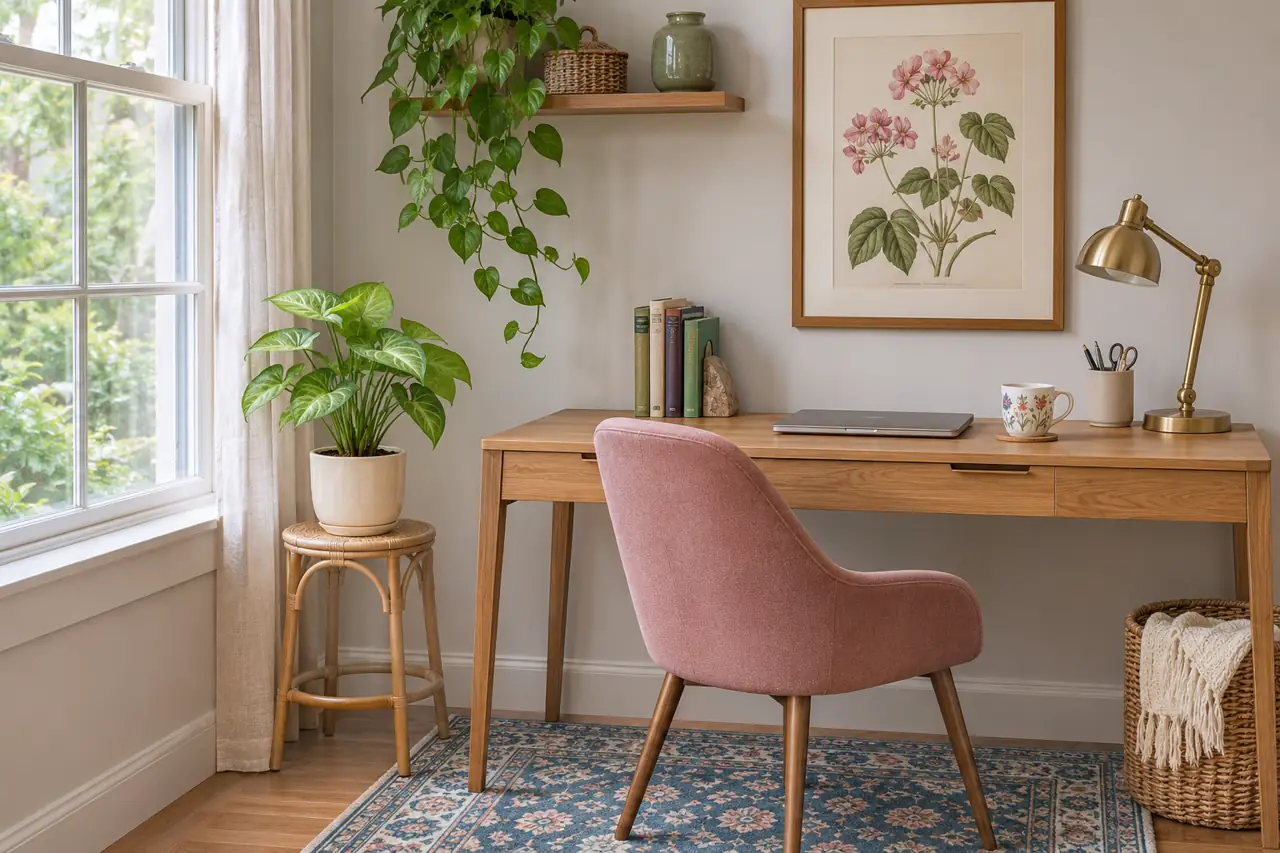
Light: Filtered daylight; avoid a dark recess
Arrowhead plant brings a broad, pointed leaf shape to a desk nook. A young plant can look compact, but its appearance and growth habit change as it matures.
Place a cream pot beside the work area, leaving room for your hands and laptop. A dusty pink chair and blue patterned mat make the setup feel considered.
Use filtered daylight, warmth, and suitable humidity. Avoid direct sun that can bleach or burn the foliage, while keeping the plant out of genuinely dark positions.
Plan for later growth.
Older stems may begin to climb or trail, so decide whether you will provide support or maintain a smaller shape. Keep the growing mix appropriately moist and check drainage.
This is not a suitable plant for pets to nibble.
12. Dieffenbachia Against a Simple Backdrop
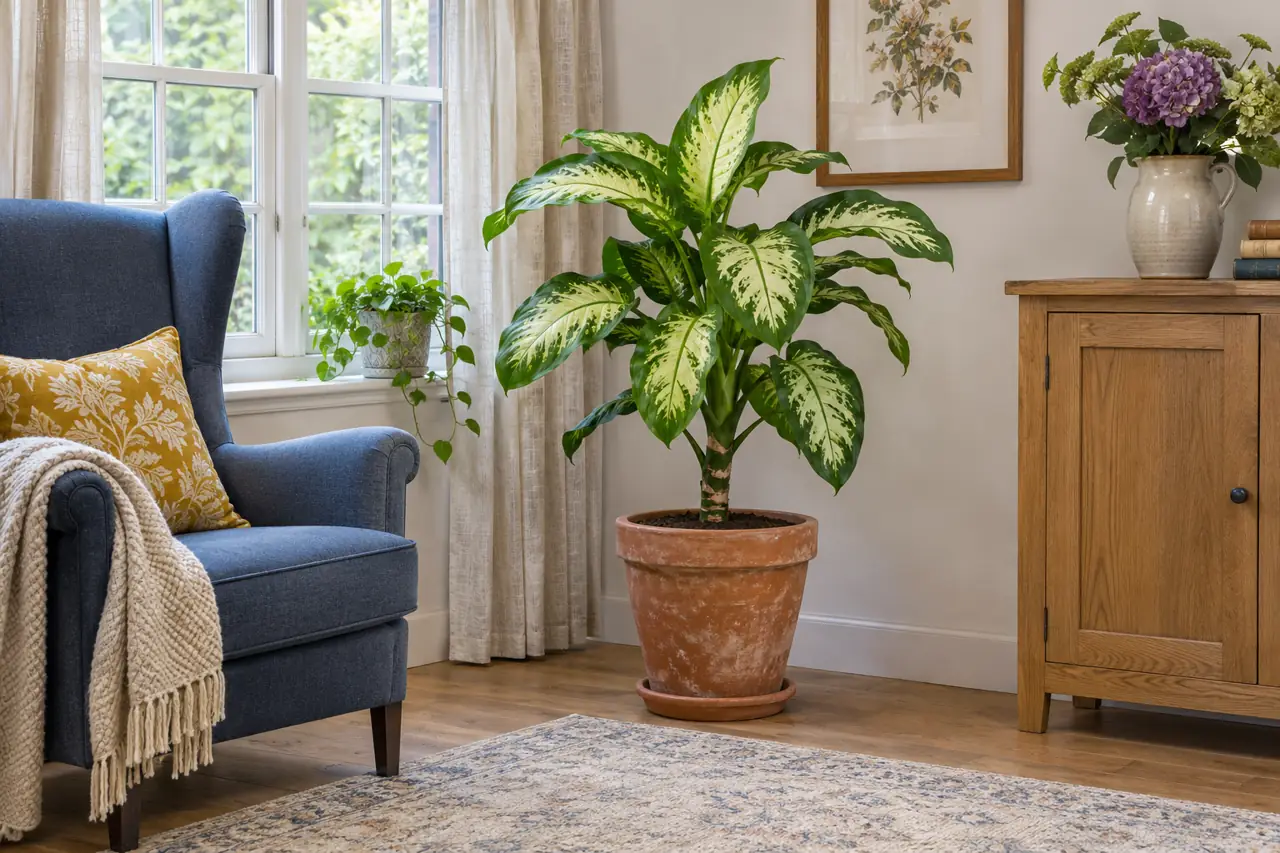
Light: Indirect daylight; brighter placement suits patterned leaves
Dieffenbachia makes a bold focal point where a room needs substantial foliage. Its broad patterned leaves are enough decoration against a quiet wall.
A terracotta floor pot, blue chair, and mustard cushion create a warm sitting area.
Leave space around the leaves so they are not folded against the cabinet or brushed by passing shoulders.
Provide indirect daylight, moderate temperatures, and a loose, well-drained growing mix. A dim corner may preserve a plant for a while without supporting the look you want.
Check moisture before watering and keep the pot away from cold drafts. Do not treat leaf yellowing as proof that it needs fertilizer.
Dieffenbachia is toxic to cats and dogs. Avoid this choice if safe separation from chewing pets is unrealistic.
13. Corn Plant for a Broad-Leafed Floor Display
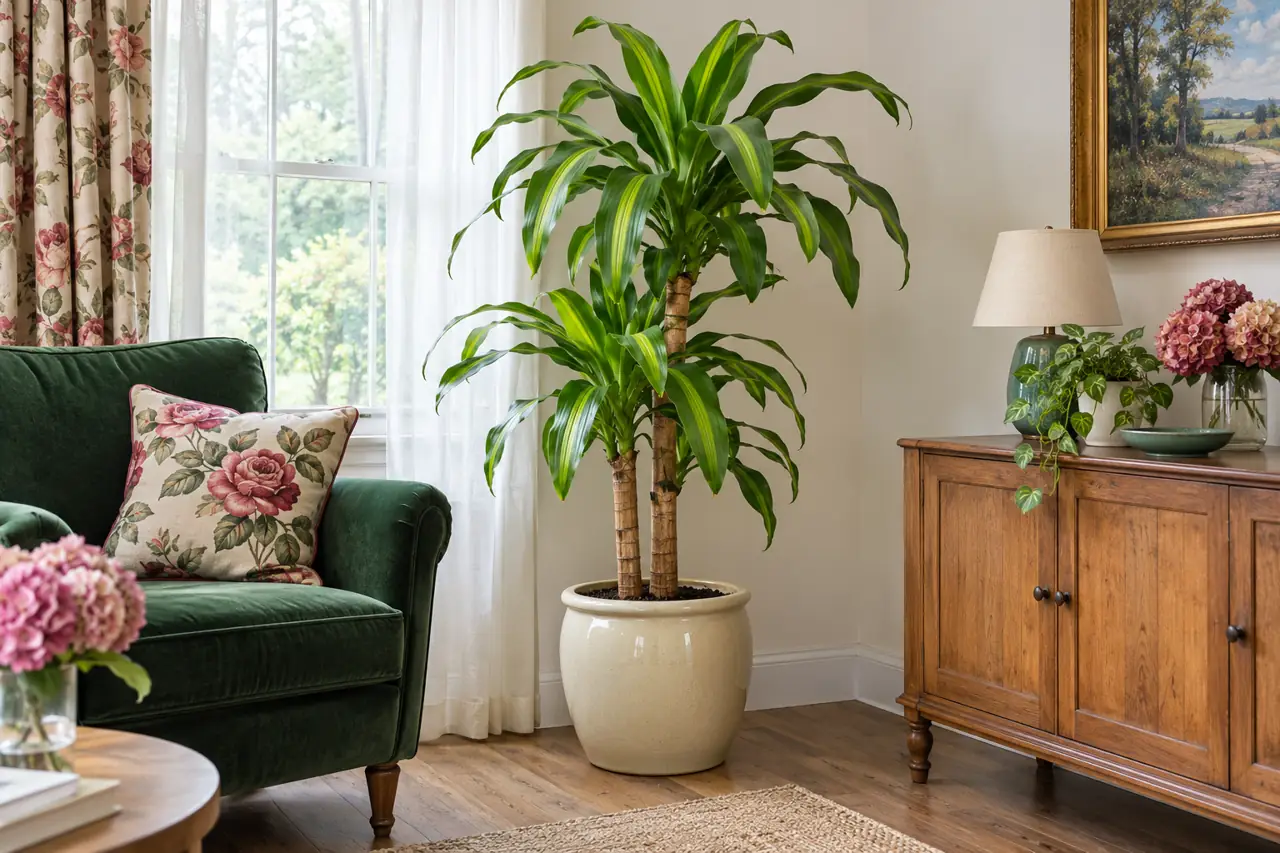
Light: Bright to moderate filtered light
Corn plant gives a living room height with a sturdier, broader outline than dragon tree. Its cane stems and arching strap leaves work well beside a low sideboard.
Use a substantial cream pot with a green chair and rose patterned cushion nearby.
Keep the leaf tips clear of the wall and the route beside the furniture.
This is a filtered-light choice, not a plant to recommend for the darkest available corner.
NC State recommends bright to moderate light and notes narrower leaves when light is insufficient.
Use commercial potting mix in a container with drainage holes. Check moisture as growth and indoor conditions change, especially in winter.
Allow overhead room. Its shape may be upright, but the leaves still need a comfortable spread.
14. Dragon Tree for an Uncluttered Office

Light: Bright indirect light preferred
Dragon tree brings height with a lighter outline, thanks to slender canes and tufts of narrow leaves.
It can fit an office corner that would feel crowded by a broad shrub.
Position a dark blue pot beyond the desk chair’s movement. Rust upholstery and a cream striped rug add warmth beneath the airy foliage.
Choose a bright indirect-light position. This plant often appears on low-light lists, but its preferred growing conditions deserve more weight than a convenient label.
Use a well-drained mix and let it dry between waterings without becoming severely parched. Keep the plant accessible rather than wedging it behind the desk.
Leaf tips can respond to water quality as well as care. Check the source guidance before assuming every brown tip means too little water.
15. Lucky Bamboo for a Small Breakfast Nook

Light: Bright indirect light preferred
Lucky bamboo creates an open, upright accent on a small sideboard. Despite the name, it is a dracaena, so it should not be treated like an outdoor bamboo.
A jade-green pot, white table, coral chair, and blue runner make a cheerful breakfast nook. Keep the plant away from the table edge and leave space for everyday use.
Choose bright indirect light rather than a dark shelf. The slim stems may remain decorative while growth quietly suffers in an unsuitable spot.
For the pictured approach, use a draining pot with moist potting mix. Water-grown arrangements need a different routine, including regular water changes; do not transfer care instructions between the two methods blindly.
Skip this plant if pets chew accessible stems or leaves.
16. Homalomena in a Humidity-Friendly Reading Corner

Light: Filtered daylight; higher humidity needed
Homalomena gives a reading corner a generous clump of heart-shaped foliage. It suits a stable plant table where the leaves can spread without covering the books.
Pair a warm white pot with a rust chair and teal patterned cushion.
Keep the table near usable window light and leave enough clearance to turn the pot for inspection.
Humidity is part of the decision, not an optional finishing touch. This tropical foliage plant prefers humid conditions and well-drained growing medium.
A very dry, heated room may need a different plant or a workable humidity plan. Overwatering will not compensate for dry air.
Keep air moving gently around the foliage without a cold draft. Homalomena is toxic if eaten, so do not place it within easy chewing reach.
17. Bamboo Palm for a Layered Sitting Area

Light: Medium light preferred; tolerates lower light
Bamboo palm adds a taller, cane-like layer behind a sitting area. Its clustered stems give a different effect from the broad fans of lady palm.
A charcoal pot beside a mustard settee looks grounded, with a blue striped cushion tying the arrangement together.
Leave a route around the pot and space for the outer fronds.
Medium light is preferable, even though this palm can survive lower light. Start with a position receiving useful indirect daylight.
Keep the potting mix slightly moist and well drained. Roots and stems can rot when the container remains too wet.
Inspect the foliage and stems regularly for pests, especially before adding the palm to an existing collection.
A large specimen is much harder to examine once trapped behind furniture.
18. Satin Pothos Beside a Filtered Window

Light: Bright indirect light preferred
Satin pothos brings a quieter silver pattern to a room without needing flowers. Its short trailing stems are particularly effective on a low sideboard beside a window.
Use a sage pot, pink chair, and pale geometric rug to make a complete sitting corner. Keep the vine away from the seat and leave the pot easy to lift for watering.
Despite its common name, this is Scindapsus rather than the golden pothos listed earlier. It prefers bright indirect light, so it belongs nearer the window than the darkest shelf.
Provide moist, well-drained potting medium and avoid prolonged wetness. Do not use curled leaves alone to decide what is wrong.
Its appeal comes from the leaf pattern; a suitable light position helps make that choice worthwhile.
19. Spider Plant Above a Cheerful Kitchen Seat

Light: Medium light preferred; tolerates shade
Spider plant adds a fountain of narrow leaves where a kitchen corner needs movement.
Its hanging plantlets can become part of the design, provided they stay clear of the chair.
A stable blue stand, terracotta pot, yellow seat, and coral checked runner make the setting cheerful. Keep the arrangement beside useful daylight, away from cooking heat and grease.
Medium light is the better target even though spider plant can tolerate shade. This is another case where tolerance should not become a plan for permanent darkness.
Leave room for the arching leaves rather than pressing them against the window. Check the pot before watering and let excess water drain away.
As plantlets develop, decide which to keep. An overloaded trail can make a small corner awkward to use.
20. Tree Ivy as a Supported Hall Feature

Light: Shaded daylight; allow room and support
Tree ivy gives an entryway a leafy vertical feature with a different shape from a cane plant.
It is a hybrid of fatsia and English ivy, with broad lobed leaves.
Train its stems onto a modest support inside a substantial pot.
A blue bench, mustard cushion, patterned runner, and pale paneling complete the setting without crowding the doorway.
Tie stems as needed rather than assuming the plant will attach itself in the arrangement you want. Pruning can help encourage a bushier form.
Use a position with shaded daylight and enough space for growth. Shade tolerance still requires a workable indoor light supply.
This suits someone willing to guide the shape over time. If you want a permanently compact pot, a smaller foliage plant is simpler.
21. Japanese Aralia for a Spacious Glazed Porch

Light: Shaded daylight; large specimen needs space
Japanese aralia makes sense where you have room for a broad, leafy specimen. Its large, deeply lobed leaves create a strong outline beside an enclosed porch window.
Use a substantial cream pot, wicker chair, cobalt cushion, and small coral table. Leave a generous walking route and enough room to reach the window without pushing through foliage.
Fatsia tolerates shade and can be grown as a houseplant or conservatory plant. That does not make it a sensible choice for a small, windowless hallway.
Provide a moist, well-drained growing medium and inspect the pot as conditions change. Avoid assuming a large leaf canopy needs water every day.
Measure the available width before buying. This is a shrub with a spreading habit, not a tiny tabletop plant.
22. Prayer Plant for a Patterned Tabletop

Light: Bright indirect light preferred; tolerates lower light
Prayer plant brings detailed leaf pattern to a small table, where you can enjoy it close up. Its low, spreading habit works differently from a tall floor plant.
A terracotta pot beside a teal chair and ochre floral cushion makes a warm nook.
Leave clear space around the leaves, with the table near filtered window light.
Its leaves change position between day and night, but movement is not a substitute for checking growing conditions.
Bright indirect light is preferable, and very low light can reduce leaf color.
This plant needs humidity and dislikes cold drafts. Keep the growing mix appropriately moist without leaving it soggy.
Choose it if you can meet those conditions. A beautiful pattern is less rewarding when the room’s dry air makes care a struggle.
23. Bird’s Nest Fern in a Daylit Bathroom

Light: Bright light or light shade; humidity needed
Bird’s nest fern offers broad, undivided fronds rather than the fine texture people often expect from a fern.
Its upright rosette makes a handsome feature on a sturdy stand.
A sage pot, pale tile, folded pink towels, and wooden stool create a complete bathroom corner. Keep the floor dry and the route to the basin open.
The essential ingredient is a real daylight window. Humidity does not make a windowless bathroom suitable without an appropriate grow light.
Provide a porous, moisture-retentive fern mix and enough humidity to avoid dry conditions. Handle the fronds gently rather than repeatedly brushing past them.
Check that the stand is stable and the leaves have room. A cramped shelf above a heater is a poor substitute for this setting.
24. Blue Star Fern for a Softly Colored Nook

Light: Filtered daylight; medium to high humidity
Blue star fern introduces a softer blue-green tone among more familiar glossy houseplants. Its irregular lobed fronds look particularly good against a pale wall.
Set a cream pot on a sturdy low blue stand beside a coral chair. A neutral patterned cushion and clear floor space let the foliage remain the feature.
Use filtered daylight and plan for medium to high humidity. This is a tropical fern, so a dry corner beside a radiator is an unhelpful starting point.
Choose a loose, organic growing medium that holds moisture without becoming soggy. Keep the planting accessible so you can check it without handling every frond.
Its spreading rhizomes and uneven outline are part of its appeal. Allow room rather than trying to force a tightly clipped silhouette.
25. Mistletoe Cactus for a Trailing Window Display

Light: Bright indirect light preferred
Mistletoe cactus is a useful reminder that not every cactus belongs in strong desert sunshine. Its slender trailing stems create a light, flowing display beside a filtered window.
Use a tall, stable stand so the stems hang freely without touching the floor.
A sage chair, small timber table, and terracotta checked textile make the corner inviting.
Keep the plant in bright indirect light. Its forest origins do not mean that a dark room will provide enough energy for growth.
Provide a well-drained growing mix and check moisture before watering. This cactus appreciates more consistent moisture than many desert types, but soggy roots are still a problem.
Leave space around the trailing stems for air circulation and inspection. Avoid turning the stand into an obstacle beside the doorway.
Choose the Position Before the Plant
Shortlist two plants whose light and care needs fit the room. Then check that their pots, mature foliage, and your furniture can share the space comfortably.
For a familiar trailing option, the pothos care guide covers keeping vines healthy and managing their growth.
If the bright, usable space is outside instead, explore these small balcony garden layouts before filling a dim indoor corner.
Start with one suitable plant. Watch its new growth, check the pot, and let that experience guide the next addition.