
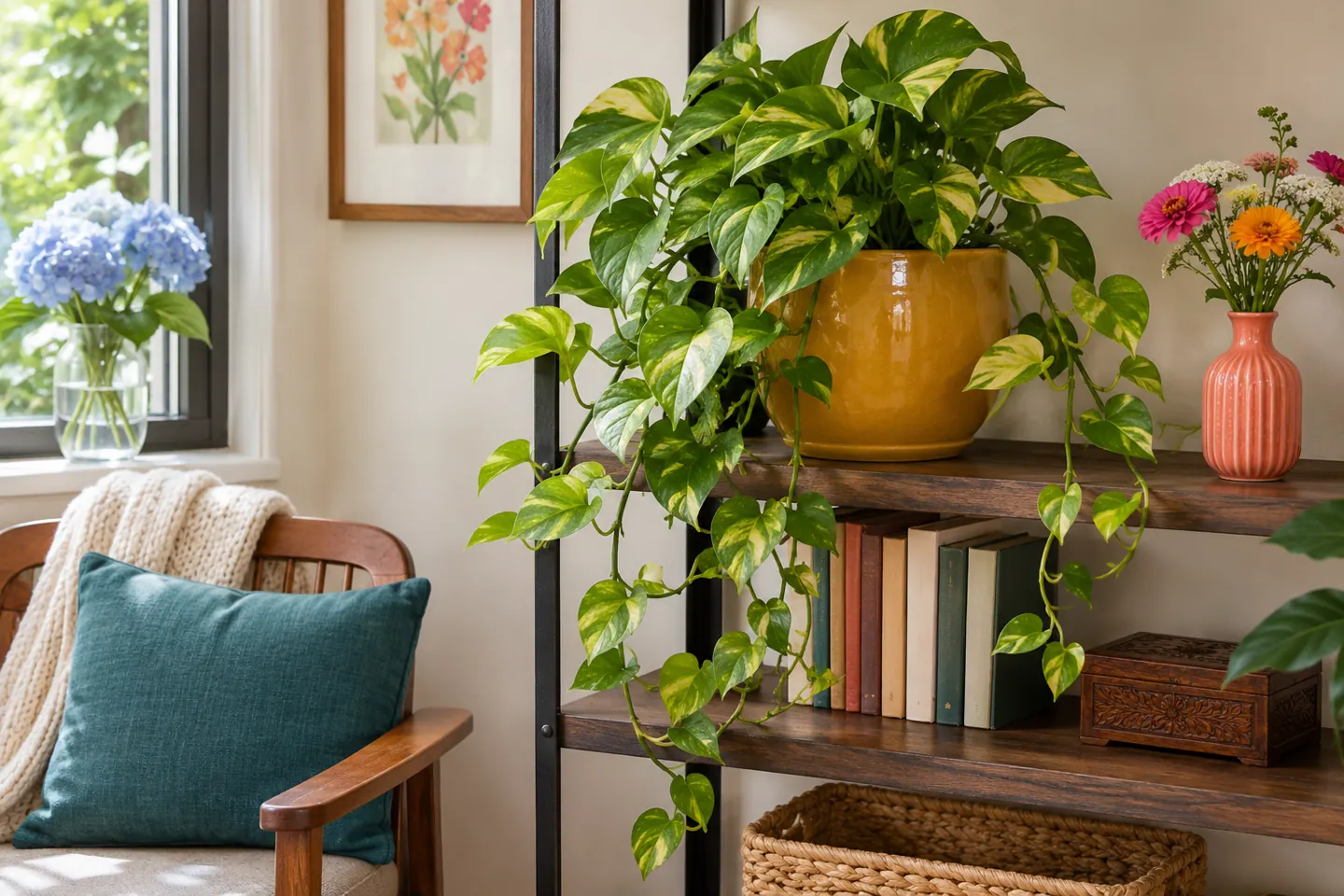
A pothos can have a very long vine and still look a little empty at the pot. Length and fullness are two different goals.
You can work toward both. Give the plant conditions for healthy growth, then use pruning and rooted cuttings to shape the display.
Here is a practical routine for a pothos that looks leafy at the top and lovely as it trails.
Images are AI-created illustrations. Use the written guidance and local growing conditions when planning your garden.
In this guide
Give Your Pothos Useful Light

Start with the position, not the fertilizer bottle. A pothos in an unsuitable corner cannot be styled into healthy growth.
Choose bright, indirect light where possible. Wisconsin Extension notes that pothos tolerates lower light but grows best with filtered light and protection from excessive direct sun.
A sheer curtain can soften a harsh window. The distance that works depends on the window's direction, nearby buildings, season, and your local conditions.
Watch the actual leaves. Strong sun can damage foliage, while a very dim location can leave growth less satisfying than the lush plant you imagined.
Move a plant toward stronger light gradually. A pothos that has spent months in a dim room should not suddenly sit in intense sun.
Look at the growth closest to the tip over time. Existing bare stretches will not instantly refill because you moved the pot last weekend.
I love a trailing plant beside a reading chair, but I would choose the brightest suitable spot before deciding exactly where the chair belongs. The plant still needs light.
Leave room for the vines as they grow. Keep them away from hot appliances, frequently opened doors, and places where leaves will be crushed.
Water the Root Ball, Then Let It Drain

Check the mix before watering. A calendar cannot account for a cool week, a warmer room, or the difference between a small nursery pot and a large container.
Allow the mix to dry somewhat between waterings rather than keeping it continuously wet. Clemson's pothos guidance emphasizes good drainage and checking moisture before adding more water.
When watering is needed, wet the root ball thoroughly and let excess water escape. Empty collected water instead of leaving the nursery pot standing in a filled decorative cover.
Lift the pot occasionally to learn the difference between recently watered and drying mix. Use that clue alongside a moisture check rather than treating pot weight as a diagnosis.
A pot with drainage holes makes this much easier. A decorative outer pot can still work if you can remove the inner pot and drain it properly.
Choose a well-aerated houseplant mix when repotting. Inspect whether roots are crowded before assuming a struggling plant simply needs a much larger home.
Move up modestly when repotting is justified. A large volume of damp unused mix can make watering harder to judge.
If the mix stays wet unusually long, investigate the pot, drainage, light, and roots. Adding another drink because a leaf looks sad may make the underlying problem worse.
Prune for Shape, Not a Promise of Instant Bushiness

A haircut can improve a pothos outline, but it does not create a mature plant overnight. Decide which vines you want to keep long before reaching for scissors.
Use clean, sharp tools. Choose healthy stems and locate the nodes, the points where leaves and buds attach to the vine.
To shorten a vine on the mother plant, cut just above a node you are leaving behind. Keep enough healthy foliage to support continued growth.
Work selectively if you love the trailing effect. Shorten a few awkward stems while keeping the strongest, leafiest vines as the main display.
Wisconsin Extension notes that pruning encourages new growth. The response still depends on the plant's condition, light, and growing activity.
Do not cut every vine equally merely to create a straight line. Slightly different lengths usually make a trailing display look softer and more natural.
If a vine is mostly bare, consider taking healthy tip cuttings rather than expecting every old gap to become leafy. Rooted additions can improve the pot's appearance more directly.
Set the plant back in its normal position before making extra cuts. A stem that looked awkward on the worktable may be exactly right once it hangs over the shelf.
Root Stem Cuttings to Fill Out the Pot
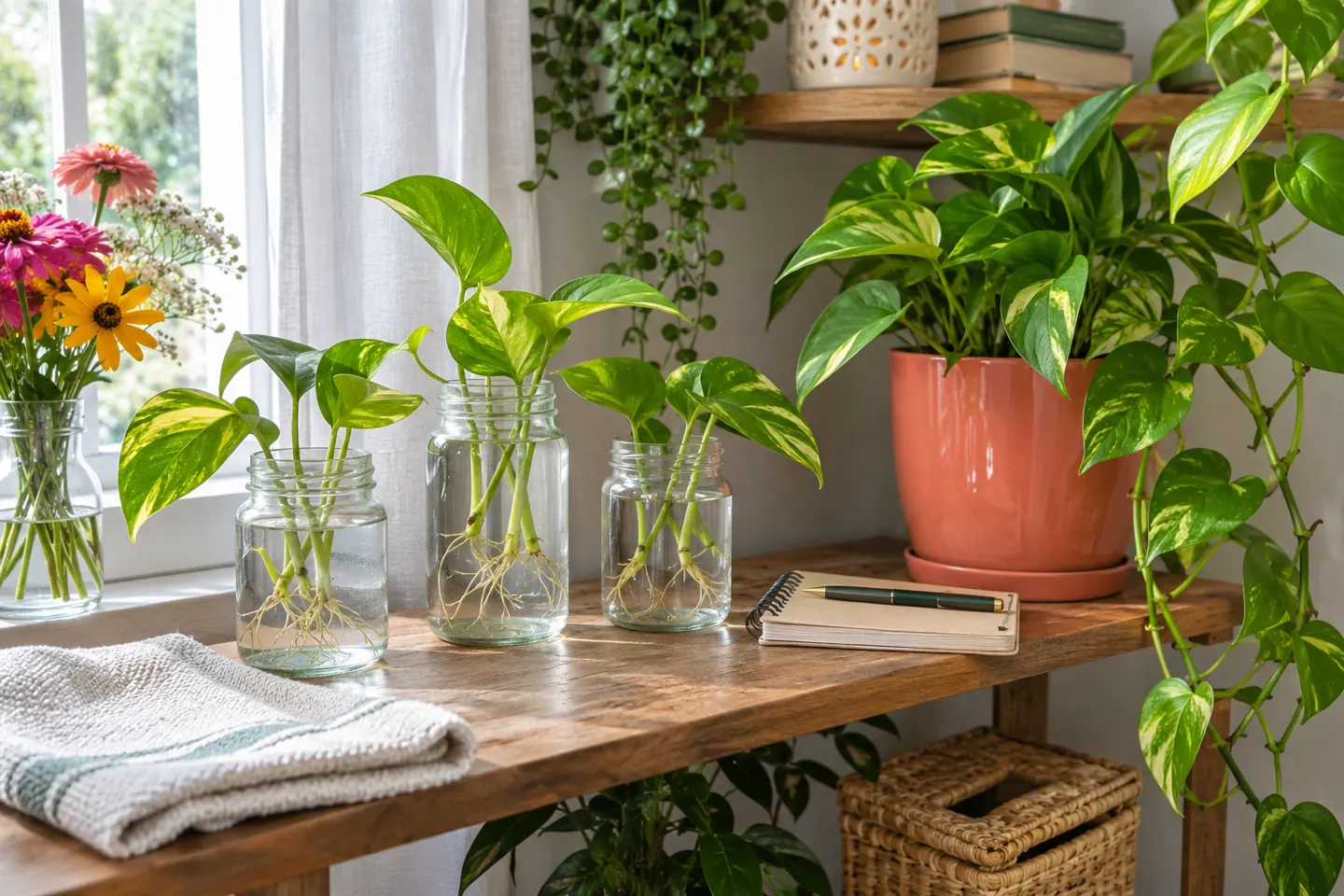
For a fuller top, you need more leafy stems growing from the pot. Propagating suitable cuttings gives you a way to add them.
Start with a healthy vine. Each cutting needs a piece of stem with a node; a loose leaf is not the same thing.
Iowa State's stem-cutting instructions use 3–6-inch tips with at least two nodes. Remove lower leaves so the rooting portion can sit in the medium without buried foliage.
You can root pothos in water or an appropriate propagation medium. For water rooting, keep the lower node in water and the remaining leaves above it.
Place the cuttings in suitable indirect light. Keep the vessel clean and refresh the water as needed so it does not become stagnant.
Rooting speed varies with conditions. Watch for healthy developing roots instead of expecting every cutting to meet an exact deadline.
Once a cutting has a usable root system, pot it gently into a suitable mix. Keep the transition evenly moist without leaving the pot waterlogged.
Wisconsin recommends planting several rooted cuttings together for a fuller container. Add them where there is room, or start a separate pot rather than damaging a crowded root ball.
Give new additions time to establish. A full-looking pot is a collection of growing stems, not a result you can force with repeated fertilizer.
Guide Long Vines Without Making Care Difficult

A long vine looks best when its route feels deliberate. Decide whether the plant will trail from a shelf or climb a suitable support.
NYBG's pothos guide describes both trailing and supported displays. Choose the arrangement that fits your room and the light the plant actually receives.
Use gentle, adjustable ties on a freestanding support. Leave space around each stem rather than fastening it tightly as though it were a cable.
Do not stretch a vine across a doorway or a place where someone will catch it. Keep the pot accessible for moisture checks and watering.
For a shelf display, gather the main vines into a few loose paths. Let some shorter leafy stems soften the edge around the container.
Turn the arrangement carefully when you need to inspect it. Avoid yanking a long vine around furniture just to reach the pot.
Check ties as the plant grows, and release anything that begins to pinch. Supported vines still need regular inspection.
Be cautious about attaching climbing stems directly to finished walls. A removable support is easier to manage when the plant needs moving or the room needs cleaning.
The aim is a plant you can enjoy and look after. An elaborate vine installation loses its charm if watering becomes a furniture-moving event.
Feed Sensibly and Read Problems in Context

Feed during active growth according to the label on a suitable houseplant fertilizer. More product does not automatically mean more leaves.
University of Minnesota's spring houseplant guidance recommends assessing conditions before making major care changes. A plant needs a workable environment before extra feeding makes sense.
Pause and investigate if growth slows unexpectedly. Look at light, moisture, drainage, root crowding, and pests rather than changing everything at once.
One yellow leaf is not enough to identify the cause. Older leaves can age naturally, while persistent yellowing may call for a closer look at roots and watering.
Inspect the undersides of leaves and the stem joints. Wisconsin lists mealybugs and scale among possible pothos pests.
If you find suspicious insects or sticky residue, separate the plant from others while you identify the problem. Choose treatment for the confirmed pest and follow the product's indoor-use directions.
Wipe dusty leaves gently with a damp cloth, supporting each leaf as you work. Use that moment to check new growth and ties.
Keep pothos out of reach of pets and children who might chew it. Hanging the plant high does not help if its vines trail down within easy reach.
For a fuller plant, return to the same useful combination: suitable light, roots that can breathe, selective pruning, and additional rooted stems. Give each adjustment time to show its effect.
Sources and further reading
Horticultural guidance checked against the university extension and botanical resources below.