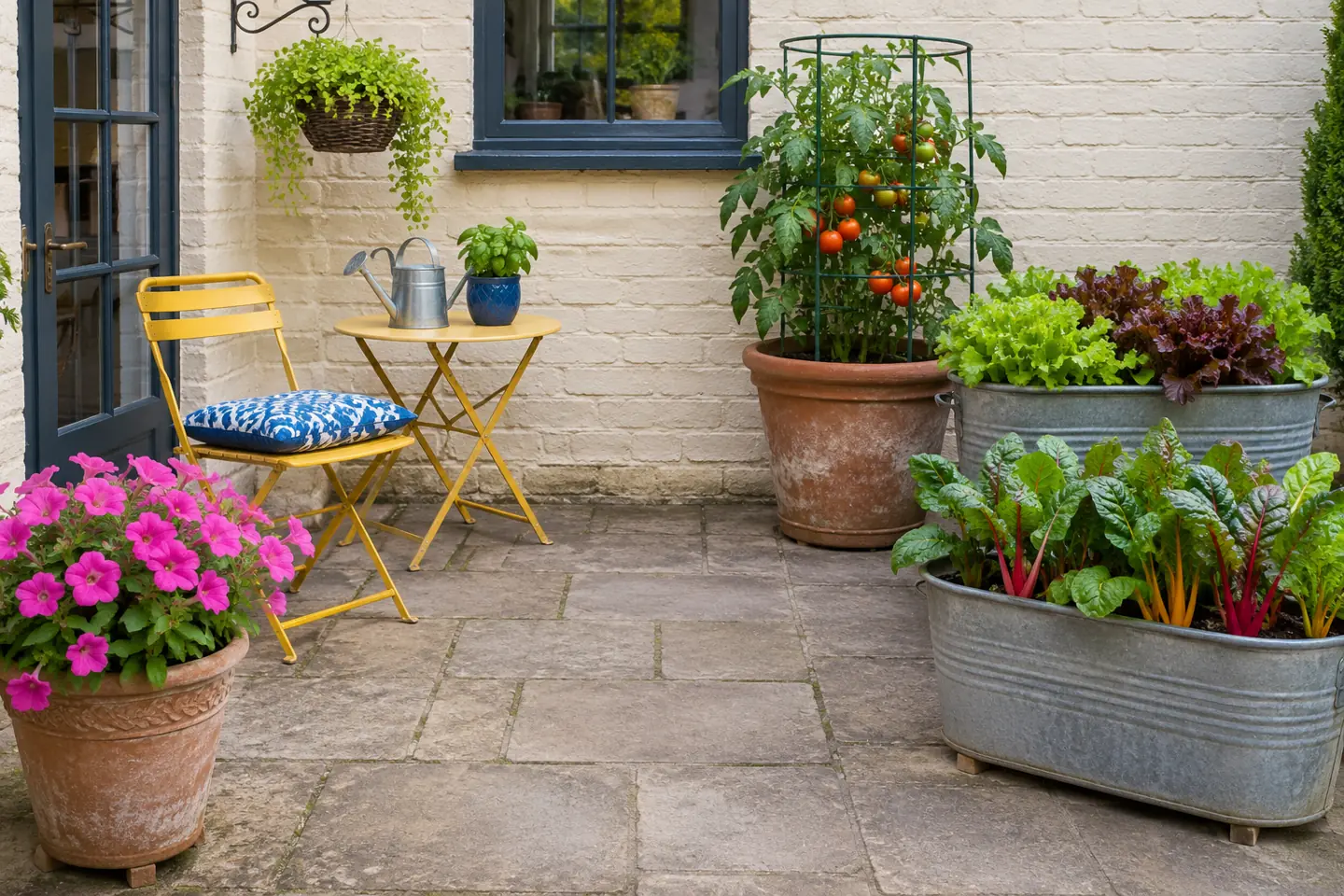
Leaf lettuce, radishes, bush beans, and compact tomatoes are some of the best vegetables to grow in containers. The right choice depends on your light, season, and pot size.
You do not need a yard, but you do need suitable outdoor growing conditions, drainage, and a practical way to water.
These 20 picks balance manageable plant size, useful kitchen harvests, and attractive planting. This is an editorial shortlist, rather than a ranking from comparative trials.
Choose two or three crops you eat often. Then give their pots enough room to work as a garden, with space to water, pick, and sit nearby.
Images are AI-created design illustrations, not tested gardens, yield promises, or identification photographs. Use the linked horticultural guides for factual plant reference.
Set Up the Pots Before Choosing Plants
Use containers with drainage holes and a vegetable-suitable potting mix. A layer of gravel at the bottom does not improve drainage.
Check whether the mix already contains fertilizer before adding more. Follow the vegetable fertilizer label for the amount and frequency.
These basics follow Wisconsin Extension’s container guidance.
For baby salad leaves, a broad container more than 6 inches deep can work, as the RHS salad-pot guide explains.
Full-sized plants need more space. Match root length, mature spread, and the variety’s recommended pot volume; all gallon sizes below mean US gallons.
Jump to one of the 20 vegetables
- Compact Tomatoes for a Sunny Sitting Corner
- Sweet Peppers Beside a Coral Chair
- Eggplant in a Cobalt Courtyard Pot
- Cucumbers on a Small Courtyard Trellis
- Bush Beans in a Broad Patio Trough
- Peas for a Cool-Season Seating Nook
- Leaf Lettuce Around a Tiny Bistro Set
- Spinach in a Quiet Blue-and-White Corner
- Rainbow Chard as a Colorful Patio Feature
- Kale in a Simple Terracotta Collection
- Arugula for a Small Kitchen-Door Trough
- Mustard Greens with a Patterned Bench
- Radishes in a Cheerful Low Planter
- Short-Rooted Carrots in a Deep Container
- Beets in a Burgundy-and-Green Patio Display
- Salad Turnips for a Cool-Season Courtyard
- Scallions Along a Neat Patio Edge
- Garlic for a Longer Container Project
- Bok Choy in a Fresh Green Seating Corner
- Mini Kohlrabi in a Generous Courtyard Pot
1. Compact Tomatoes for a Sunny Sitting Corner
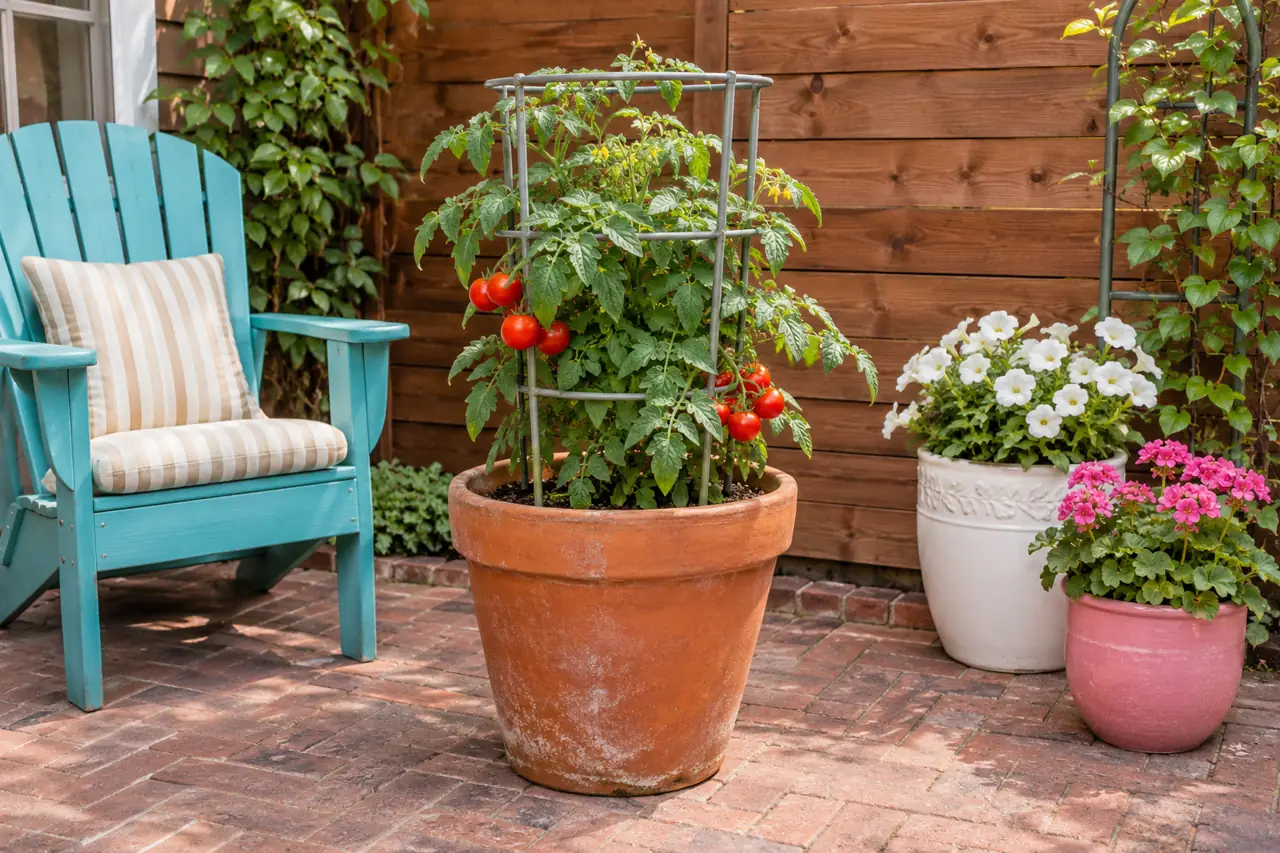
A compact tomato makes a satisfying centerpiece beside a patio chair.
Choose a variety described as suitable for containers; a cherry tomato is not automatically a small plant.
Use one generous pot, with a cage or stake installed while the plant is young. A roughly 10-gallon container is a roomy planning choice for many compact tomatoes, rather than a universal minimum.
Place it against a timber backdrop, leaving air around the foliage and space to reach every side.
I love how a turquoise chair and separate pink flowerpot soften this practical setup.
Give tomatoes the sunniest position available and consistent moisture. They occupy their pot for much of the growing season, so keep a separate trough for quick salads.
2. Sweet Peppers Beside a Coral Chair
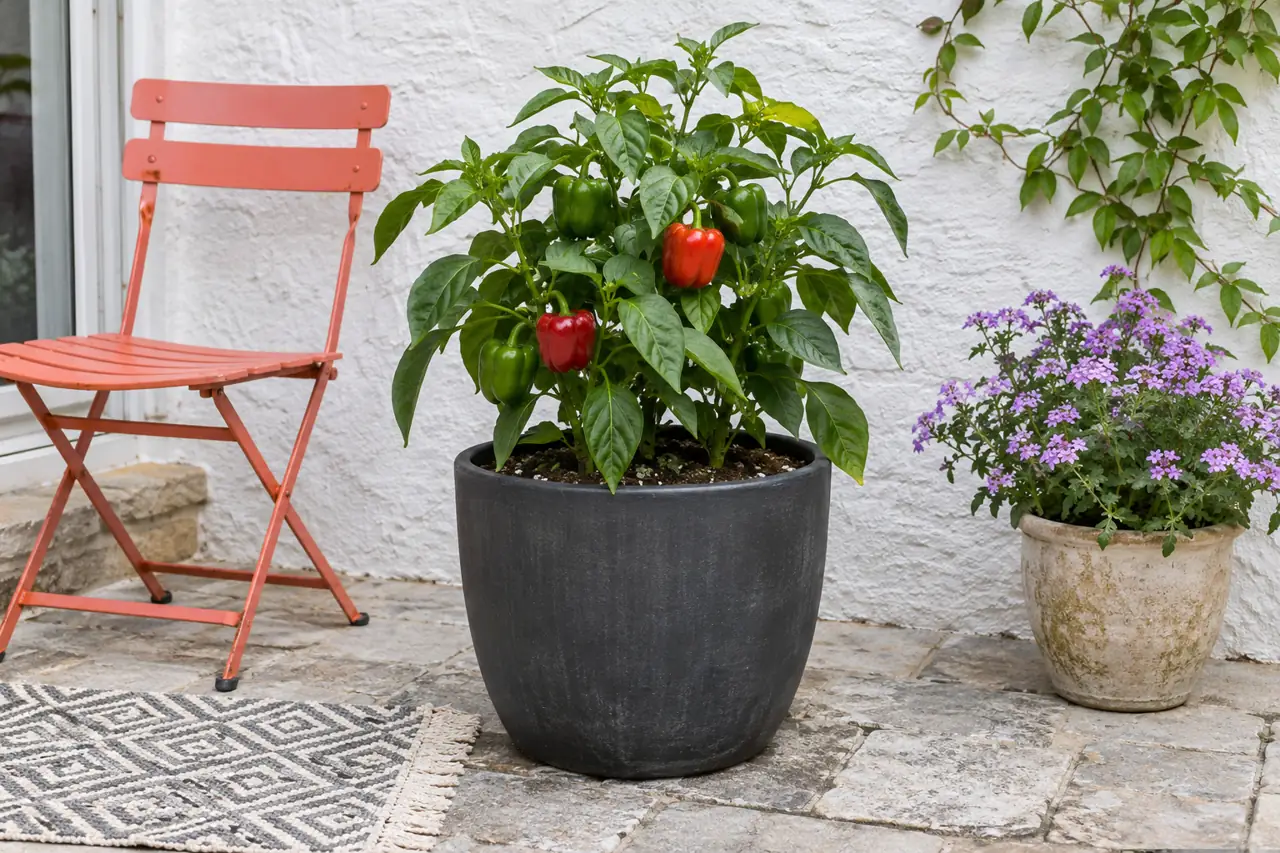
Sweet peppers bring color to a small terrace without needing a sprawling vine. Choose a compact plant and check its mature spread before buying the pot.
A container of at least 5 gallons is a useful starting point, with more room offering a larger moisture reserve. Keep the decorative flowerpot separate so neither planting crowds the other.
Set the pepper beside a coral chair on pale paving. A simple patterned mat makes the corner feel intentional.
Plant outdoors only when conditions are reliably warm. University of Minnesota Extension recommends nighttime temperatures above 50°F for setting out peppers.
Smaller-fruited sweet peppers can be a practical choice in variable temperatures. Allow access for harvesting, and support branches if their fruit begins pulling them outward.
3. Eggplant in a Cobalt Courtyard Pot
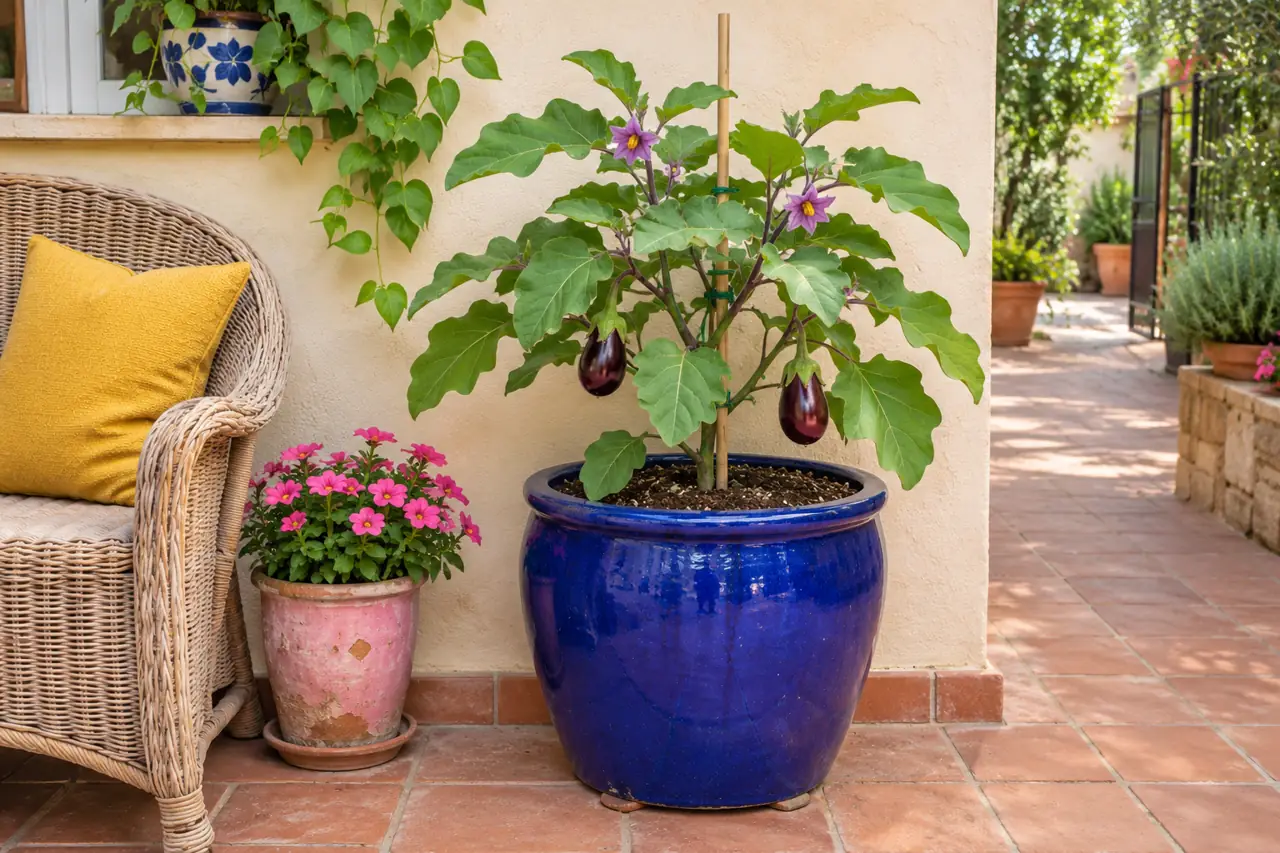
Glossy eggplants look particularly handsome above a deep blue container. Use a compact variety, giving it a generous pot rather than squeezing several plants into one decorative bowl.
Plan around at least 5 gallons for one plant, checking the variety’s recommendations. Add a stake early if needed, before roots fill the container.
A woven chair, mustard cushion, and separate pot of pink flowers turn the planting into a complete courtyard corner.
Leave the tiled route open.
Eggplant is a warm-season crop, so wait for suitable local planting conditions rather than following a calendar from another climate. Check moisture regularly as the leafy canopy expands.
This is a longer commitment than a pot of radishes; reserve its space until the harvest is finished.
4. Cucumbers on a Small Courtyard Trellis

A cucumber trellis gives a plain patio wall a leafy summer backdrop.
Choose a compact or bush type, then check whether that particular variety still benefits from support.
Use a large, stable container with the trellis secured to withstand the mature plant. Leave enough clearance behind it to inspect leaves and pick fruit.
A sage bench and coral flowerpot keep the setting cheerful without taking over the walkway.
Cucumbers need warm growing conditions and attentive moisture checks. A small pot that repeatedly dries out is a poor match for their expanding foliage.
Check the variety’s pollination requirements, too; they differ. In an enclosed growing space, access for pollinating insects may matter unless you have specifically chosen a suitable parthenocarpic variety.
5. Bush Beans in a Broad Patio Trough
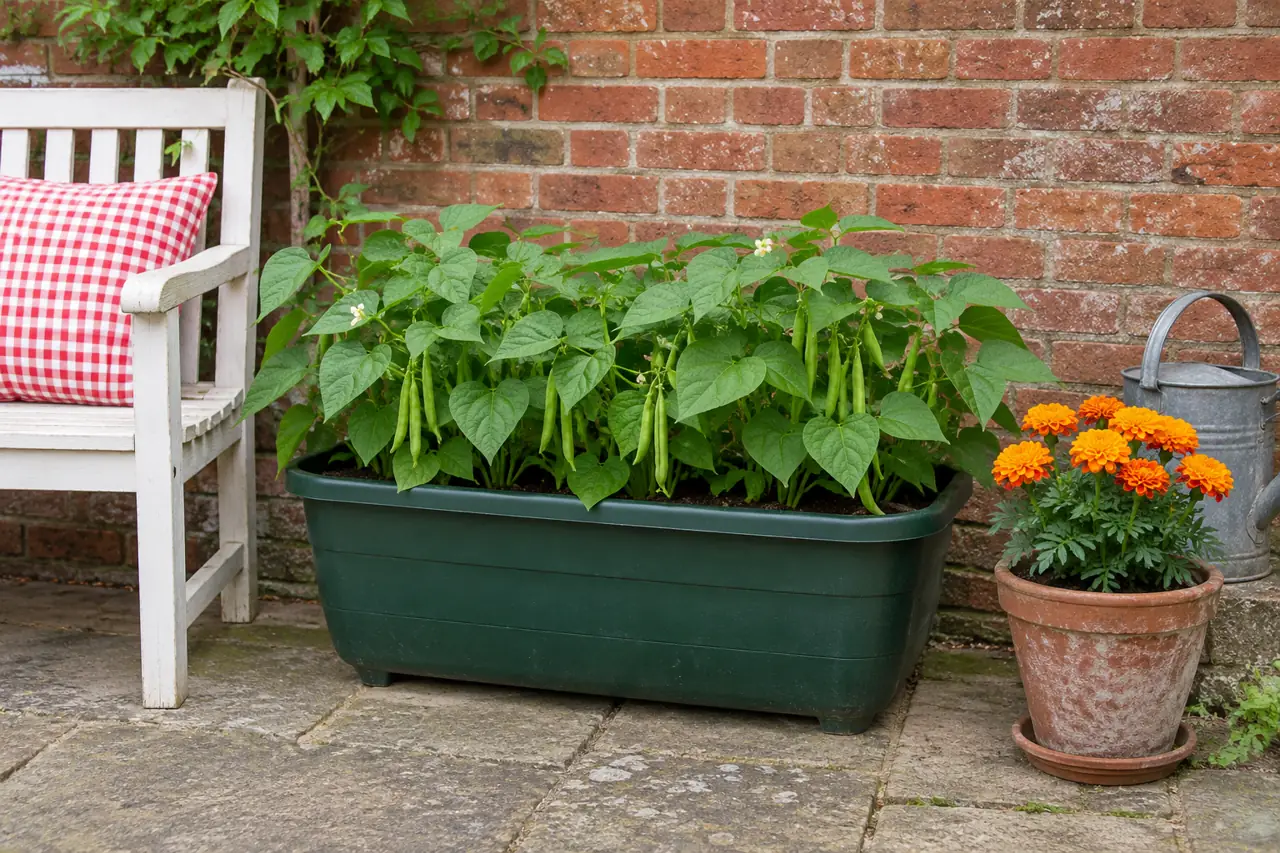
Bush beans suit a low planting that leaves the view from your chair open. Make sure the packet says bush, rather than pole, unless you want a tall support system.
A broad container of 5 gallons or more gives you room to arrange a modest planting. Use the variety’s spacing instructions instead of treating a full-looking photograph as a planting plan.
Pair the green trough with a white bench, gingham cushion, and separate marigold pot. Keep a clear strip beside it for picking.
Sow when local conditions are warm enough for beans. Harvest pods at the stage recommended for the type you chose.
The useful tradeoff: a compact footprint, but fewer plants than a garden row and a correspondingly modest harvest.
6. Peas for a Cool-Season Seating Nook

Peas make a light, airy screen while the weather is cool.
Choose a short variety and a support that matches its expected height, even if the young plants look tiny.
A wide terracotta planter and low twig lattice create a softer backdrop than a tall wall of foliage. Add a lilac chair, striped throw, and separate pansy pot outside the picking space.
Keep the support stable from the start.
Peas generally prefer cool growing conditions, so plan them around your local season. This is not a crop to rely on through intense summer heat.
Choose the harvest you actually enjoy: tender snow-pea pods, plump snap peas, or shelling peas. Those different types should not all be picked at the same stage.
7. Leaf Lettuce Around a Tiny Bistro Set
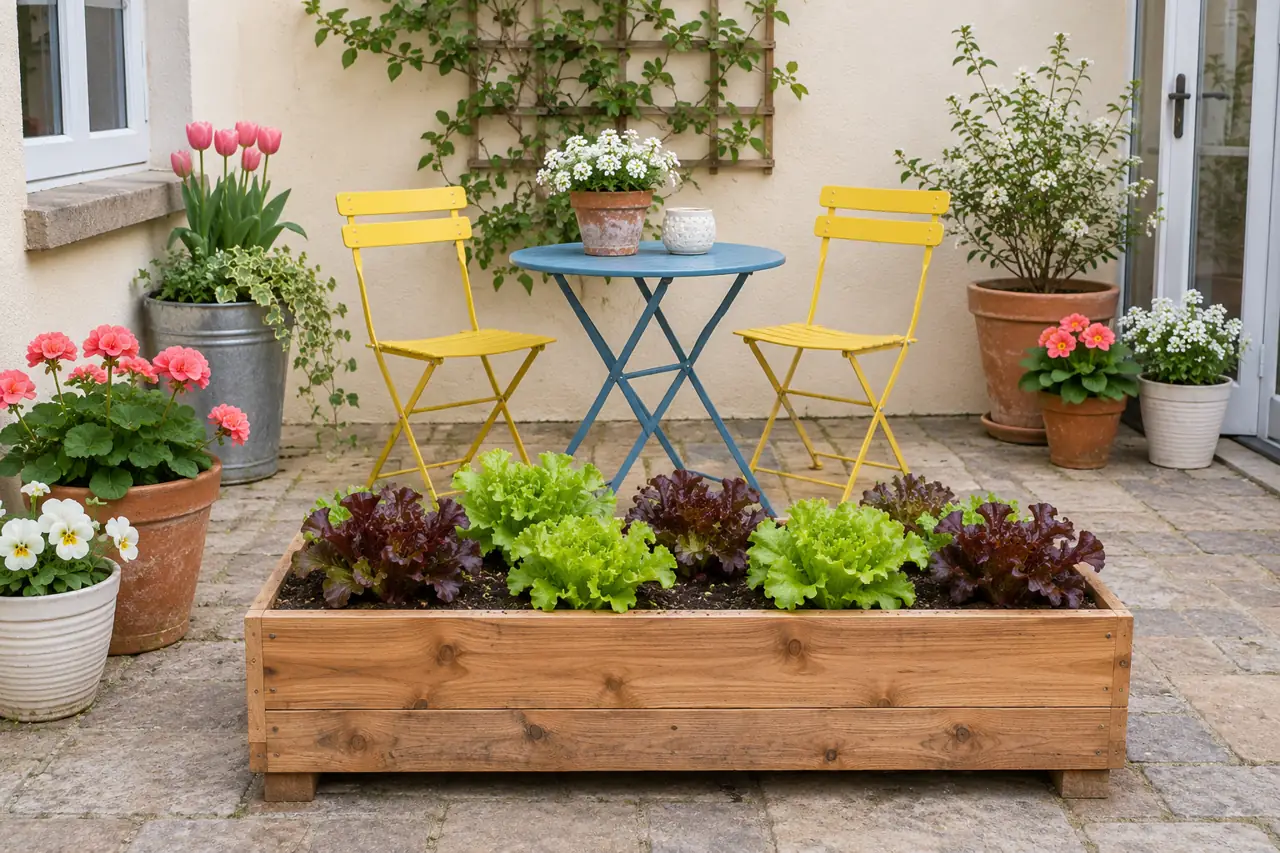
Leaf lettuce is a friendly starting point when you want small harvests close to the kitchen.
Green and burgundy varieties can make a low trough look as deliberate as a flower display.
Arrange the planter beside a blue table and yellow chairs, with room to pull each chair out. Keep taller decorative pots behind the lettuce so they do not block its light.
Choose a broad container with drainage and space for the mature leaves. Baby-leaf sowings and full-sized plants need different spacing.
Pick a few outer leaves while leaving the center to grow. Expect the planting to need replacing eventually.
Hot weather can reduce quality and encourage bolting, so use your cooler growing window and sow another modest batch when conditions suit.
8. Spinach in a Quiet Blue-and-White Corner
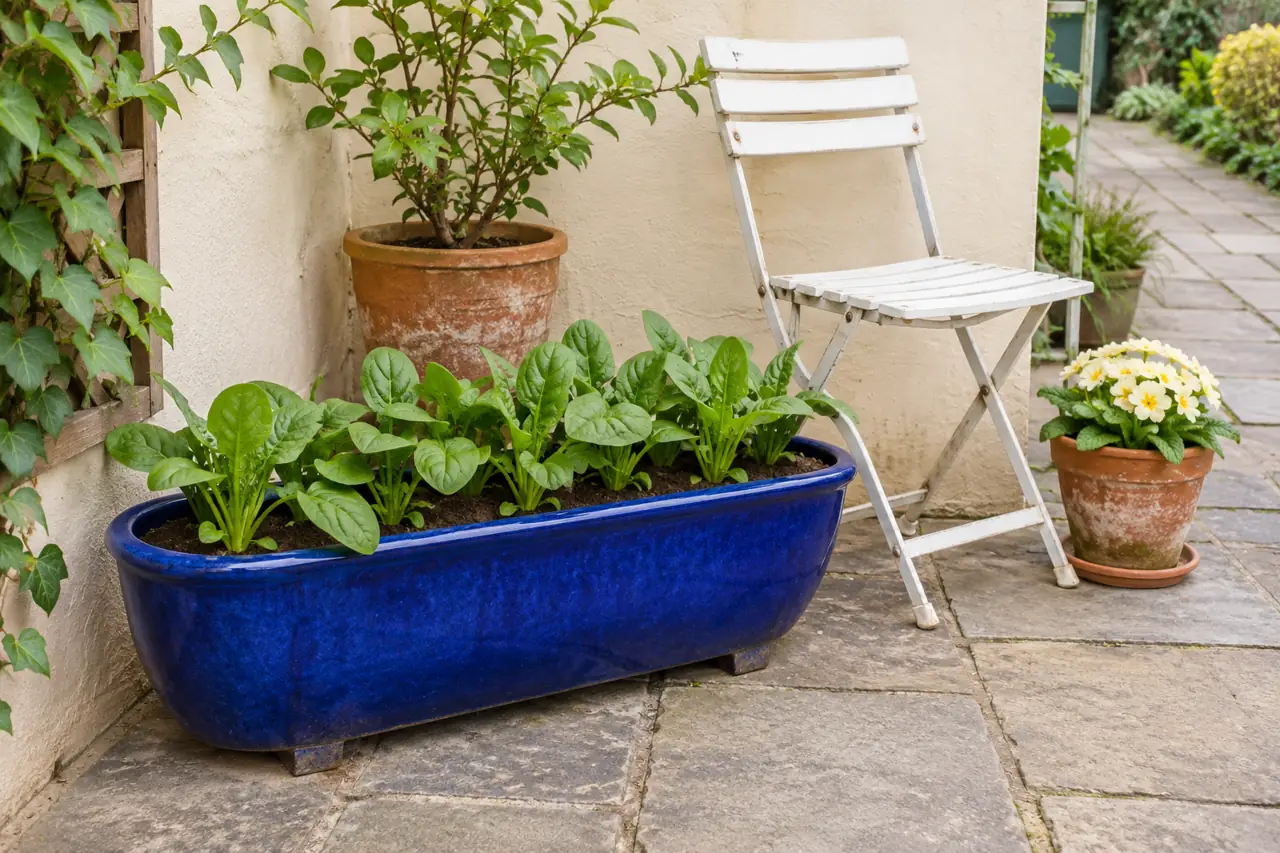
Spinach works well as a temporary cool-season planting beside a back door. A broad blue trough, white folding chair, and small pot of pale flowers make a calm setting without hiding the crop.
Sow into the final container, keeping the seed surface moist while plants establish.
Thin according to the packet so the remaining plants have room to develop.
The important limitation is timing.
Spinach responds to increasing day length and can bolt as the season changes. Repeated summer sowings will not solve that problem in every climate.
Harvest young leaves or pick the outer leaves selectively, leaving the growing center intact.
When plants begin flowering, plan the next suitable crop rather than expecting endless tender spinach from the same pot.
9. Rainbow Chard as a Colorful Patio Feature

Chard earns its place where vegetables must also look good from the house. The colored stems rise above a roomy container, giving the arrangement height without a climbing frame.
Use a generous trough and leave space for broad mature leaves. A painted rose bench, neutral striped cushion, and separate purple flowerpot make the stem colors feel part of the whole setting.
Keep the plants within easy picking reach.
Chard often continues through warmer weather better than spinach, although heat and inadequate water can slow growth. Check the pot rather than assuming its large leaves mean it has enough moisture.
Take a few outer leaves and let the center develop. This is a leafy crop, so do not expect a beet-sized root beneath it.
10. Kale in a Simple Terracotta Collection
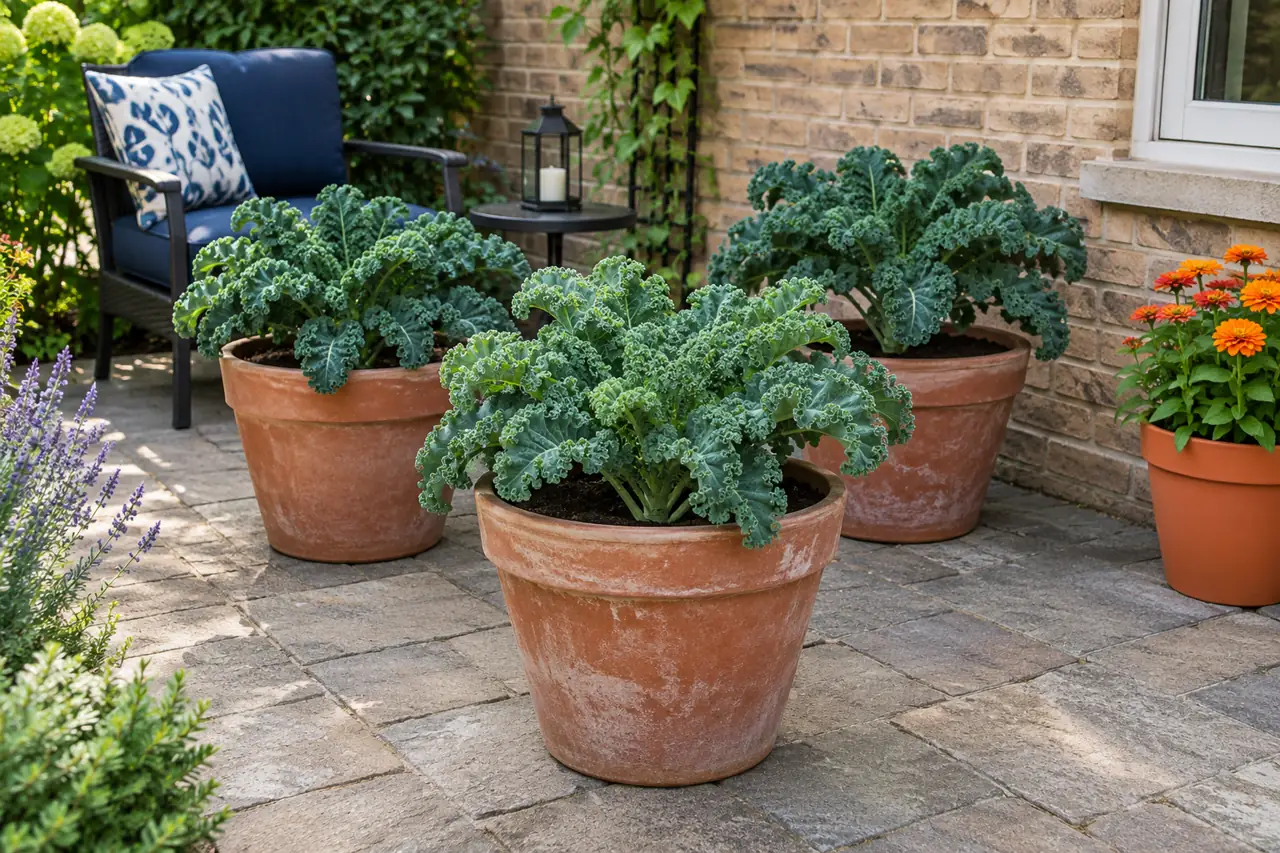
Kale creates a useful middle layer between low salad pots and taller container crops.
Pick a compact variety if the planting has to fit beside a chair rather than fill the whole terrace.
Give each plant room for its mature leaf spread. A broad, substantial pot is easier to arrange around than a cluster of tiny containers that soon becomes crowded.
Terracotta, a navy seat cushion, and a separate pot of orange flowers make a warm, uncomplicated combination.
Position the crop where you can check the backs of its leaves. Pest checks are much easier before foliage becomes a tightly packed screen.
Harvest selected outer leaves, keeping the center growing.
Match sowing and planting to your local cool-season window and the variety’s guidance.
11. Arugula for a Small Kitchen-Door Trough
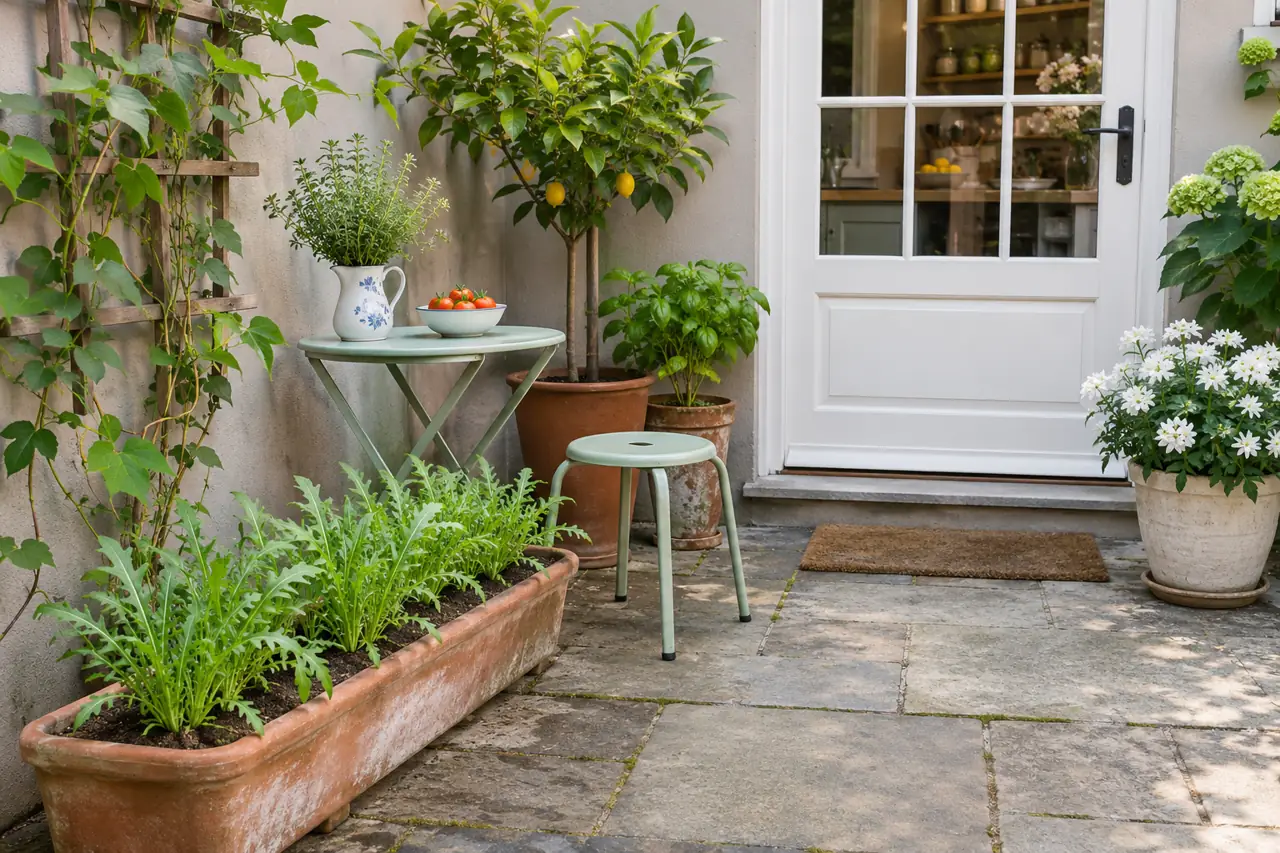
Arugula is a good fit when you want a handful of peppery leaves rather than a large vegetable harvest.
Its low planting suits a narrow trough that stays clear of the doorway.
Place it beside a pale green stool, a small outdoor table, and a separate pot of white flowers. Keep the container away from the door’s swing and leave somewhere to set your harvest bowl.
Sow small batches instead of filling every available pot at once.
Rocket, another name for arugula, can flower sooner in hot, dry weather. A cooler position during intense summer conditions may help, but local season still matters.
Pick leaves while tender and replace declining plants. The tidy, fresh sowing beside them is more useful than an overcrowded aging crop.
12. Mustard Greens with a Patterned Bench

Mustard greens bring texture to a container garden, from gently ruffled leaves to more deeply frilled varieties. Choose by flavor as well as appearance; some have a much stronger bite than lettuce.
A broad planter beside a cream bench lets the leaves spread without spilling across the seat.
Add a red patterned cushion and a separate pot of small purple flowers for a finished corner.
What I like to do when planning is leave one nearby pot available for the next sowing.
Baby leaves are a different goal from large cooking greens, so use spacing that matches your intended harvest. Pick selectively rather than stripping every leaf.
Plan for replacement as quality declines, especially when seasonal conditions encourage plants to flower.
13. Radishes in a Cheerful Low Planter
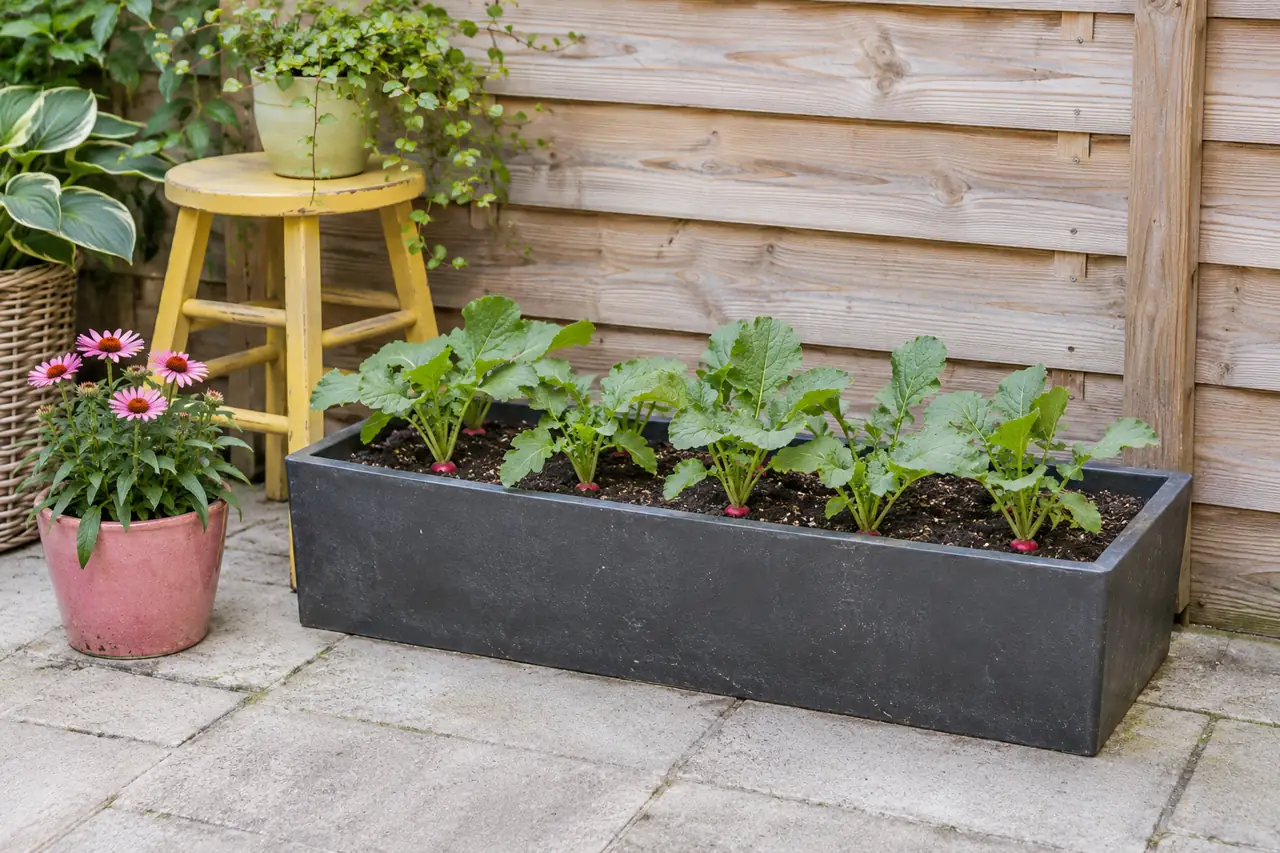
Radishes are useful when you want a small, relatively quick crop in a space that cannot accommodate a large summer plant. Choose a round salad type for a shallower container arrangement.
Use a broad planter with loose potting mix and adequate root depth for the variety. Thin seedlings early; crowded leaves do not guarantee useful roots.
A yellow stool, pale timber backdrop, and separate pink flowerpot keep this little growing station bright. Leave enough room to kneel or bring over a chair.
Sow a modest batch, then another when local conditions allow.
Check the packet’s harvest size and pull roots promptly. Holding them indefinitely in the pot can mean poorer eating quality, particularly as weather becomes hot and dry.
14. Short-Rooted Carrots in a Deep Container

Carrots make sense in containers when the root length matches the available depth. Choose a short-rooted variety rather than expecting a long carrot to fit into a shallow decorative trough.
Set a deep planter against a pale fence, with a coral stool and separate blue flowerpot beside it.
Keep the fine, feathery foliage away from the chair’s cushion.
Sow directly into the final growing container. Starting carrots in modules and moving them later can disturb their taproots.
Germination can be slow, so keep the surface consistently moist and mark the sowing clearly. Thin seedlings to the variety’s spacing.
Loose growing medium helps roots develop. The limitation is patience: the pot may look sparsely planted for a while before those airy tops fill out.
15. Beets in a Burgundy-and-Green Patio Display
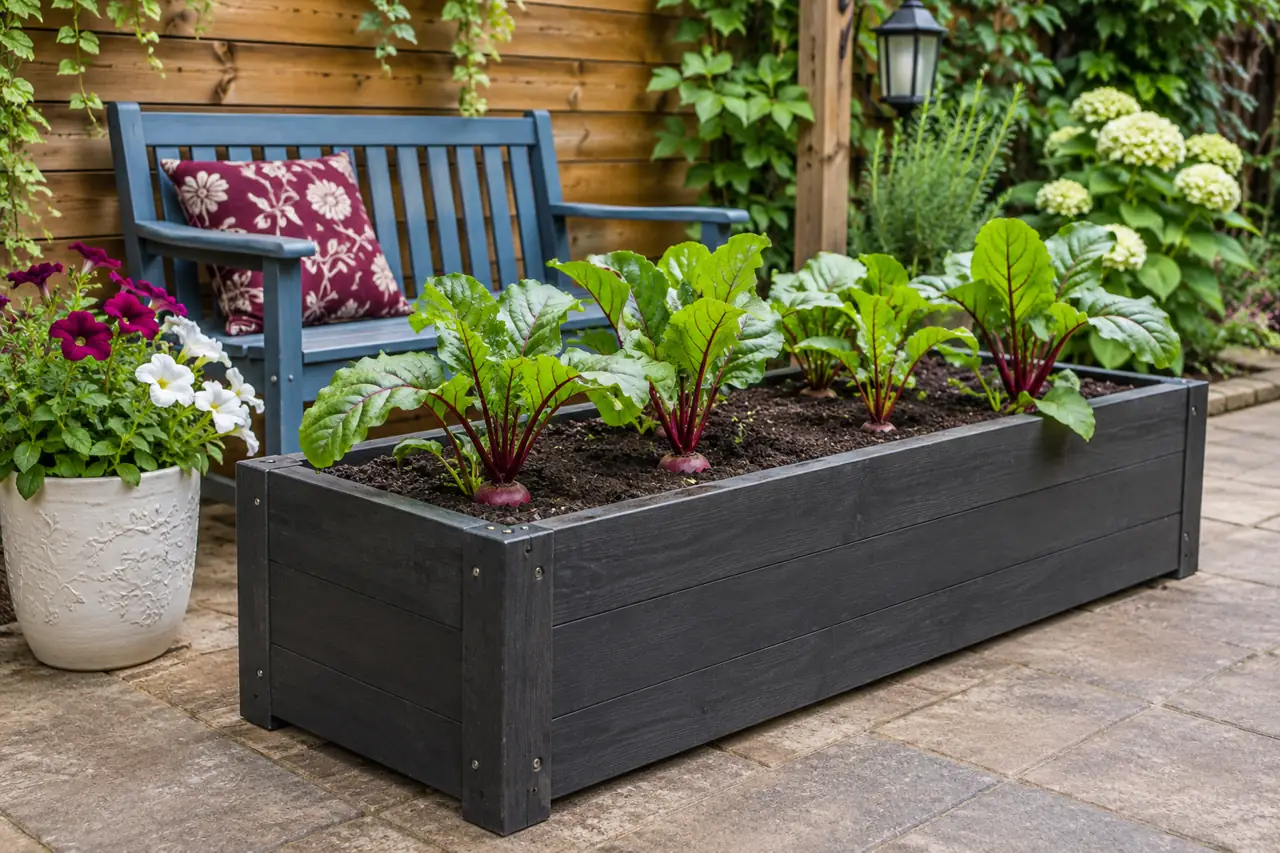
Beets offer attractive foliage while you wait for the roots beneath it.
A wide container makes more sense than a narrow pot because each developing plant needs its own space.
Use loose, well-drained potting mix, then thin seedlings to the variety’s recommended distance. Avoid assuming every small shoot can remain just because the container looks pleasantly full.
Set the planter beside a blue bench with a burgundy patterned cushion. Separate white flowers brighten the backdrop without competing inside the crop pot.
Plan a modest harvest of young roots rather than a basketful from one small container.
Check their development and harvest at a useful size.
Keep access around the planter so you can inspect the soil surface without leaning through neighboring plants.
16. Salad Turnips for a Cool-Season Courtyard
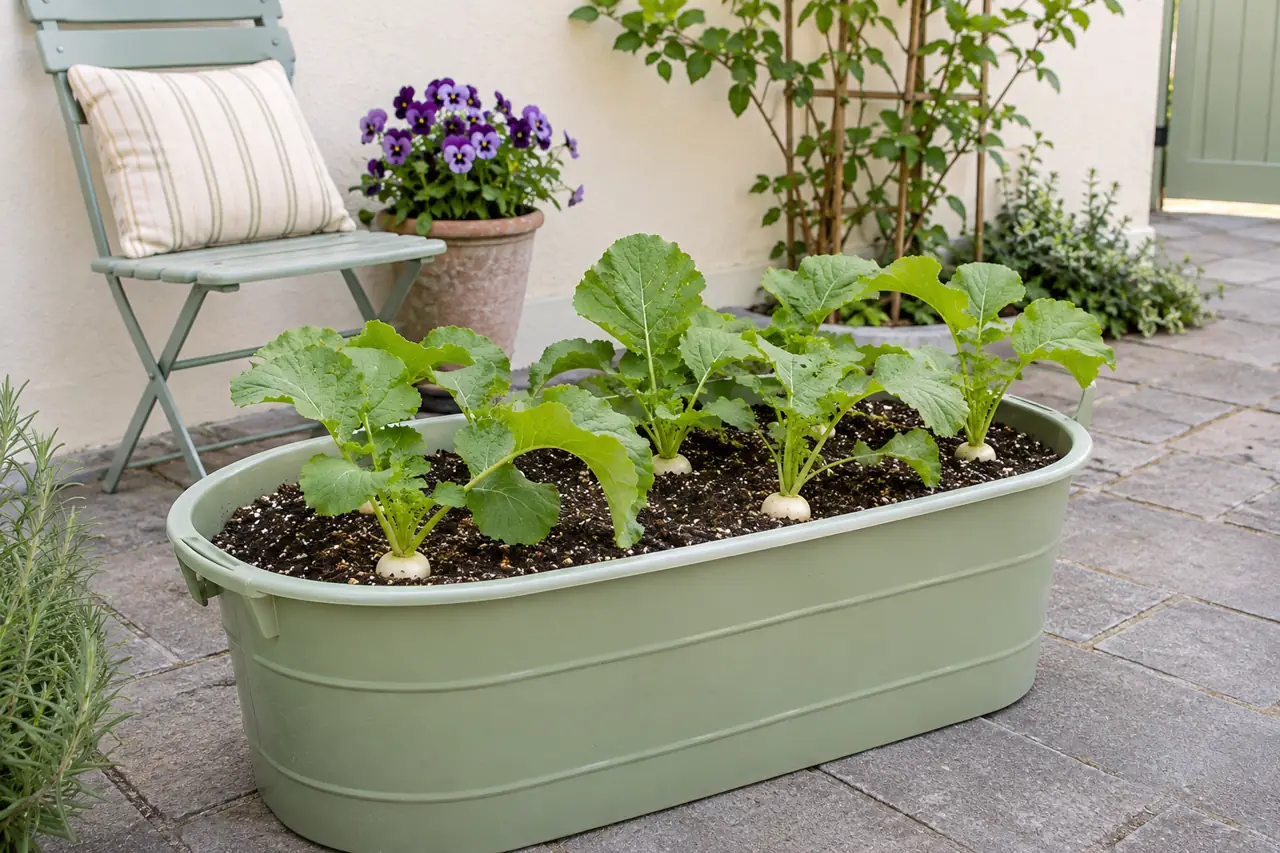
Small salad turnips are a practical alternative to a large, slow container crop. Choose a variety intended for tender young roots and give it a broad planter with room between plants.
A mint chair, simple striped cushion, and separate pot of violet flowers give the setting a fresh look. Keep the planting low so it does not close in the seating area.
Sow for your local cool-weather window.
Thin promptly and maintain steady moisture. Turnips left too long, or stressed by dry conditions, can become woody or develop stronger flavors.
Check the variety’s suggested harvest size instead of waiting for the largest possible root.
This is a small-batch crop; after harvesting, clear the container and plan another suitable seasonal planting.
17. Scallions Along a Neat Patio Edge
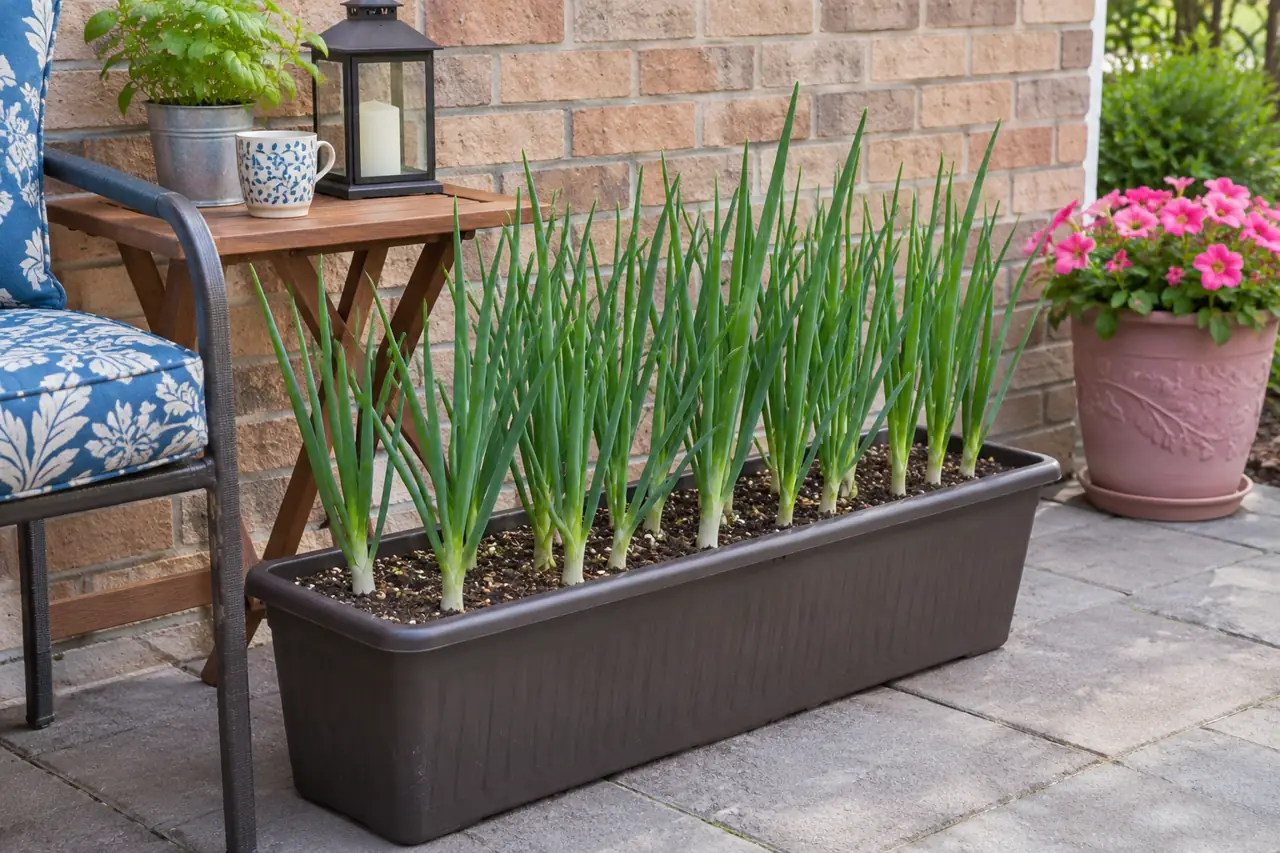
Scallions give a container display a crisp, upright shape. Use bunching onions or another type specifically grown for green onions, checking the seed packet rather than choosing by the picture alone.
A long planter fits neatly beside a small outdoor table, provided it leaves the route open. Pair its vertical leaves with a low pot of pink flowers and a blue patterned chair cushion.
Keep labels visible between successive sowings.
Harvest plants as green onions when they reach a useful size, rather than waiting for large storage bulbs. Thin according to the variety and the size you want to pick.
A container gives a convenient handful close to the kitchen, but it will not supply an unlimited crop without fresh sowings and ongoing care.
18. Garlic for a Longer Container Project
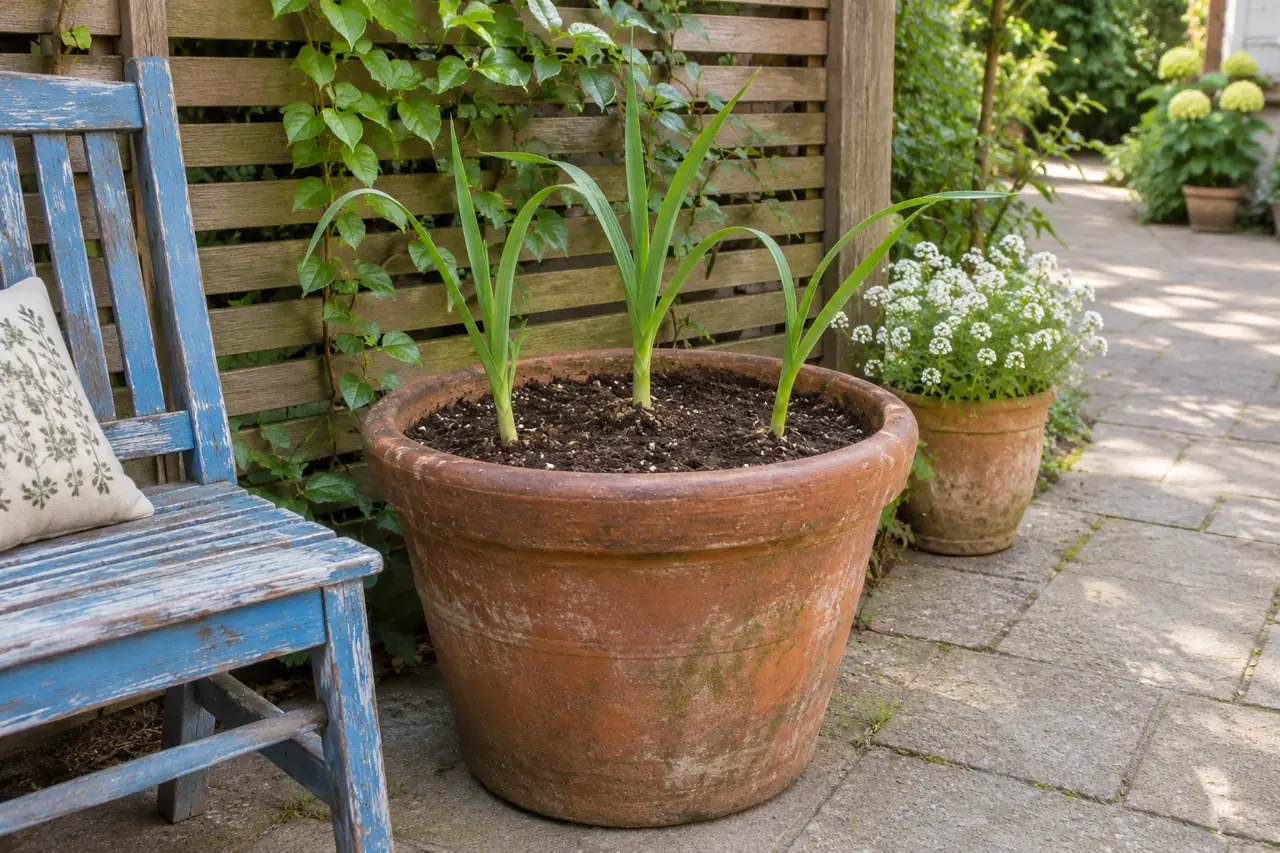
Garlic is worth considering if you can dedicate a pot for months. It is less suitable when you need that same space quickly for a succession of salad crops.
Choose planting stock suited to your climate and follow local advice on planting time. Different garlic types have different cold requirements; one universal autumn date will not suit every reader.
The RHS recommends a container at least 10 inches deep, with its width determining how many cloves fit at the proper spacing.
Place it beside a weathered blue chair, a simple timber screen, and a separate pot of small white flowers.
Keep access for moisture checks throughout the growing period. The upright leaves create a quiet backdrop, while the main reward requires patience until harvest.
19. Bok Choy in a Fresh Green Seating Corner
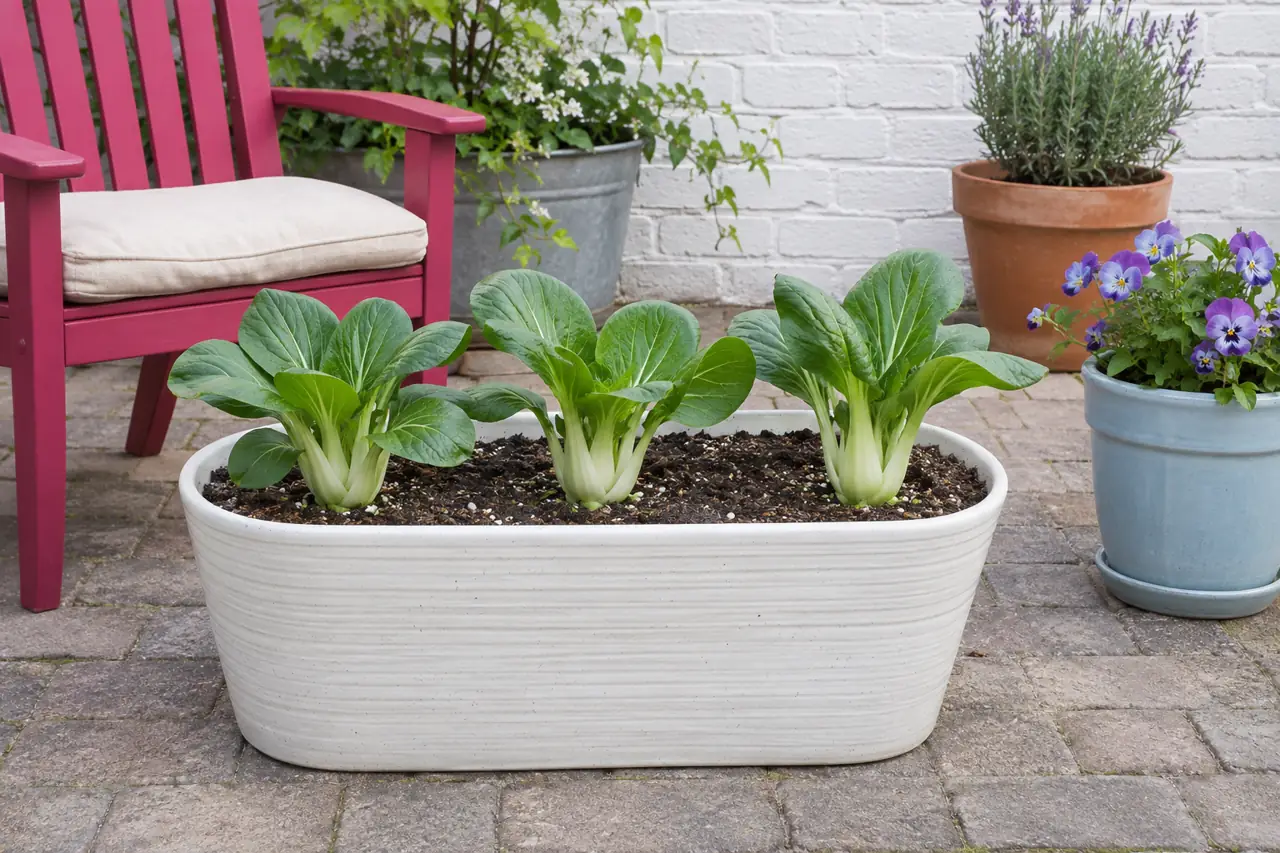
Bok choy brings broad leaves and chunky pale stems to a small container garden.
Choose a compact type if you want several small plants rather than one large leafy centerpiece.
Give each plant room for its mature rosette, following the packet’s spacing. A broad white planter, raspberry chair, and small pot of pale blue flowers make a clean, colorful arrangement.
Keep the harvesting side clear.
Timing needs care: exposure to cold while plants are young can encourage later bolting as conditions warm. Follow regional advice instead of treating bok choy as a crop for any month.
Harvest young, tender plants or selected outer leaves as appropriate.
Consistent moisture matters, and an overcrowded pot can become difficult to inspect before quality starts slipping.
20. Mini Kohlrabi in a Generous Courtyard Pot
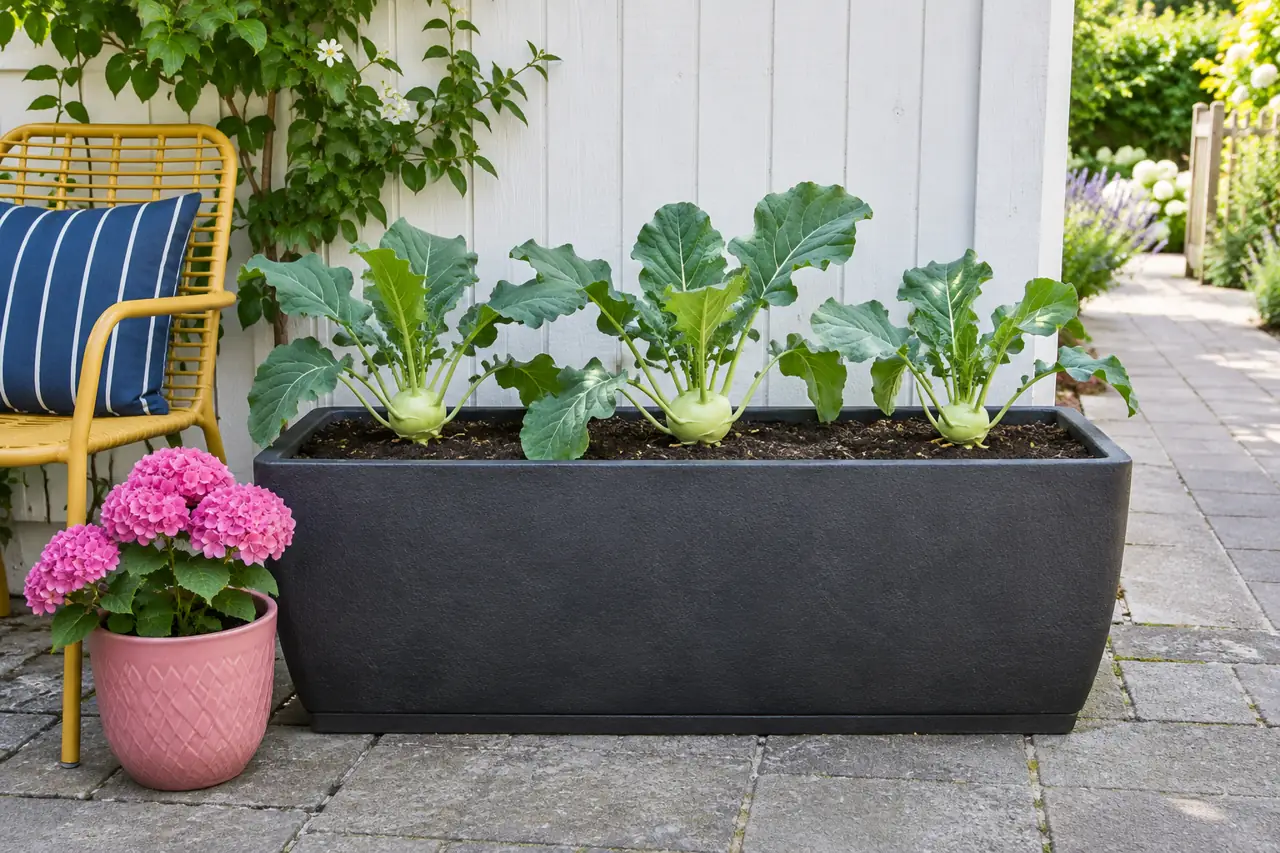
Kohlrabi is the unusual choice that can make an edible container feel special. Its swollen stem develops above the growing medium, with leaves projecting outward on their own stalks.
For a container crop, the RHS suggests a pot at least 12 inches wide and deep, thinning plants about 6 inches apart and harvesting young.
Use a broad planter so those outward leaves have space. A mustard chair, blue striped cushion, and separate pink flowerpot make the arrangement feel welcoming rather than purely functional.
Keep moisture steady and watch the plants as they develop.
Harvest at the small stage recommended for your variety instead of waiting for oversized stems. Kohlrabi can bolt under stressful conditions, so it needs more attention than its sculptural appearance suggests.
Start With a Garden You Can Keep Picking
A pot of leaves and one larger crop can be a useful beginning. Leave room for a replacement sowing before adding another permanent container.
For furniture, flowers, and layout combinations, explore these small balcony garden ideas.
Prefer a longer planting arrangement on paving? Compare the courtyard and patio raised-bed designs, checking support, loaded weight, and drainage for your site.
Choose the vegetables for your conditions first. The colorful chair and flowers can make the space yours once the growing plan works.