

The gap between two beds can matter as much as the beds themselves. It is where you carry a basket, turn with a watering can, and stop to enjoy the flowers.
These raised garden bed ideas bring the whole backyard together: planting, paths, materials, and a comfortable place to pause where space allows.
Some suit a slim side yard. Others make room for a generous potager or a dedicated cutting garden.
Choose a layout for the light, ground conditions, and care you can provide. Then borrow the colors and finishing details that make it feel like your garden.
Images are AI-created design illustrations. They show complete settings, not tested construction plans or photographs of the author’s garden.
Jump to one of the 25 garden ideas
- Four Beds Around a Round Gathering Space
- An L-Shaped Kitchen Garden in a Corner
- A Slim Bed Along One Sunny Boundary
- A U-Shaped Bed With an Open Working Bay
- Twin Beds Linked by a Garden Arch
- A Kitchen-Door Herb Garden
- A Flower-Filled Potager
- A Patio Garden With Rounded Metal Troughs
- Stepped Beds on a Gentle Slope
- A Low Brick-Edged Cottage Plot
- A Woven-Willow Garden With a Rustic Backdrop
- A Rustic Garden With Known-Source Timber
- Repeating Metal Beds Beside a Broad Working Path
- Six Compact Squares With a Working Aisle
- A Garden Built Around Standing-Height Planters
- Vegetable Beds Beside a Flowering Habitat Strip
- A Raised-Bed Cutting Garden
- A Trellis-Backed Bed for a Small Yard
- Beds With Removable Seasonal Covers
- A Mulched Garden for Hot, Dry Spells
- A Garden With Firm Paths for Rainy Weather
- A Low Bed for Little Garden Helpers
- A Courtyard Garden on Paving
- A Fenced Kitchen Garden With a Welcoming Gate
- A Round Bed With a Keyhole Access Path
1. Four Beds Around a Round Gathering Space

Four beds around a small circular sitting area give a kitchen garden a lovely sense of occasion. The center becomes somewhere to pause, not another planting obstacle.
Use matching timber frames and repeat the same gravel through the connecting paths. A round table and two sage chairs soften the square geometry.
Keep taller supported crops toward the outer edges, where they will not immediately swallow the seating.
Pink and orange flowers along the boundary make the vegetable beds feel part of the backyard.
I love the balance of tidy lines and loose planting here. Mark the chairs pulled out before fixing the beds in place.
If the center feels cramped with someone sitting down, choose fewer beds rather than squeezing every path.
2. An L-Shaped Kitchen Garden in a Corner
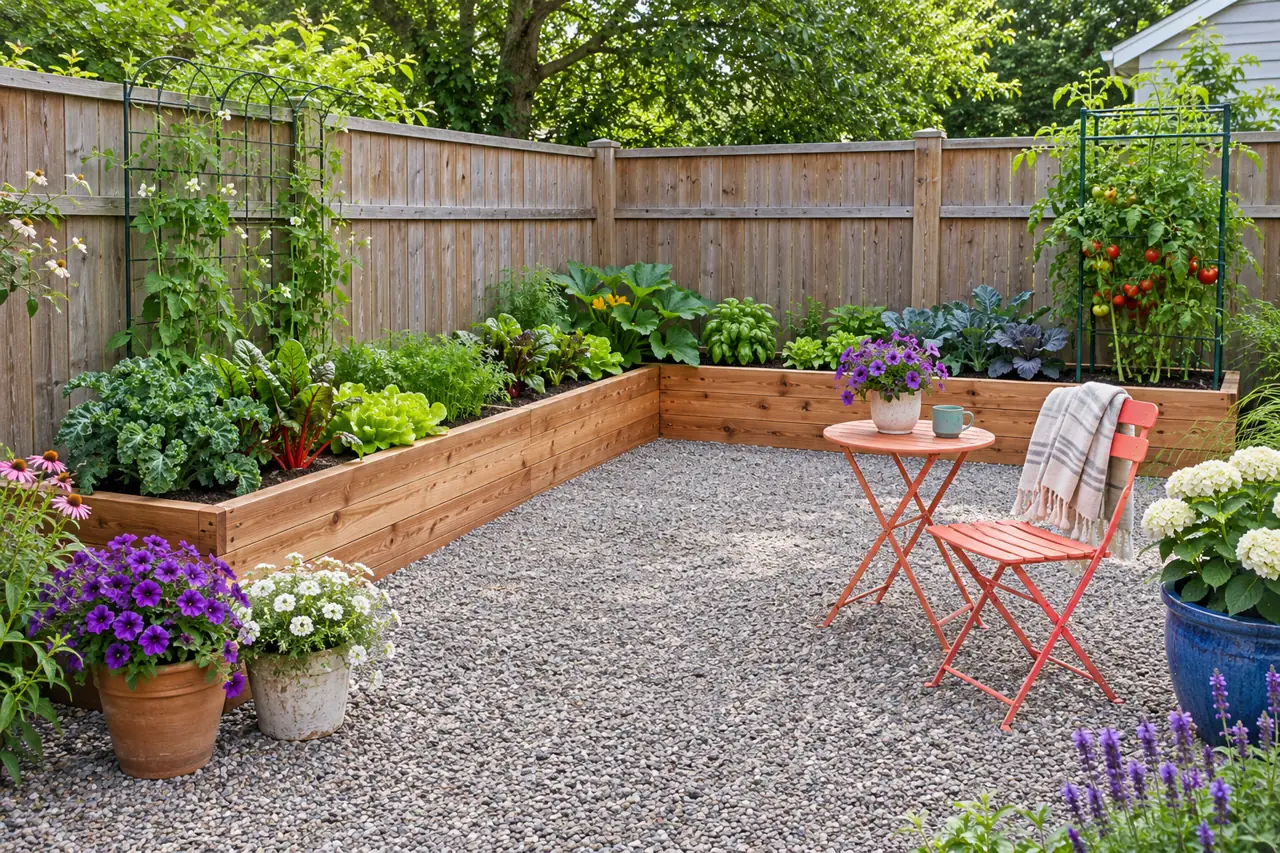
An L-shaped bed can turn an awkward corner into the garden's strongest feature. Run two narrow planting arms beside the boundaries, leaving a generous open area inside.
Let leafy vegetables fill the foreground, with supported taller crops at the far end. A coral chair and tiny table bring the garden into everyday use.
Terracotta and blue pots of purple flowers finish the open corners without making another permanent bed.
The important measurement is your reach from the accessible side. Do not make the back corner so deep that harvesting means climbing into the soil.
Keep room between the bed and any fence that needs maintenance. This layout works best when the sheltered-looking corner also receives the light your crops require.
3. A Slim Bed Along One Sunny Boundary
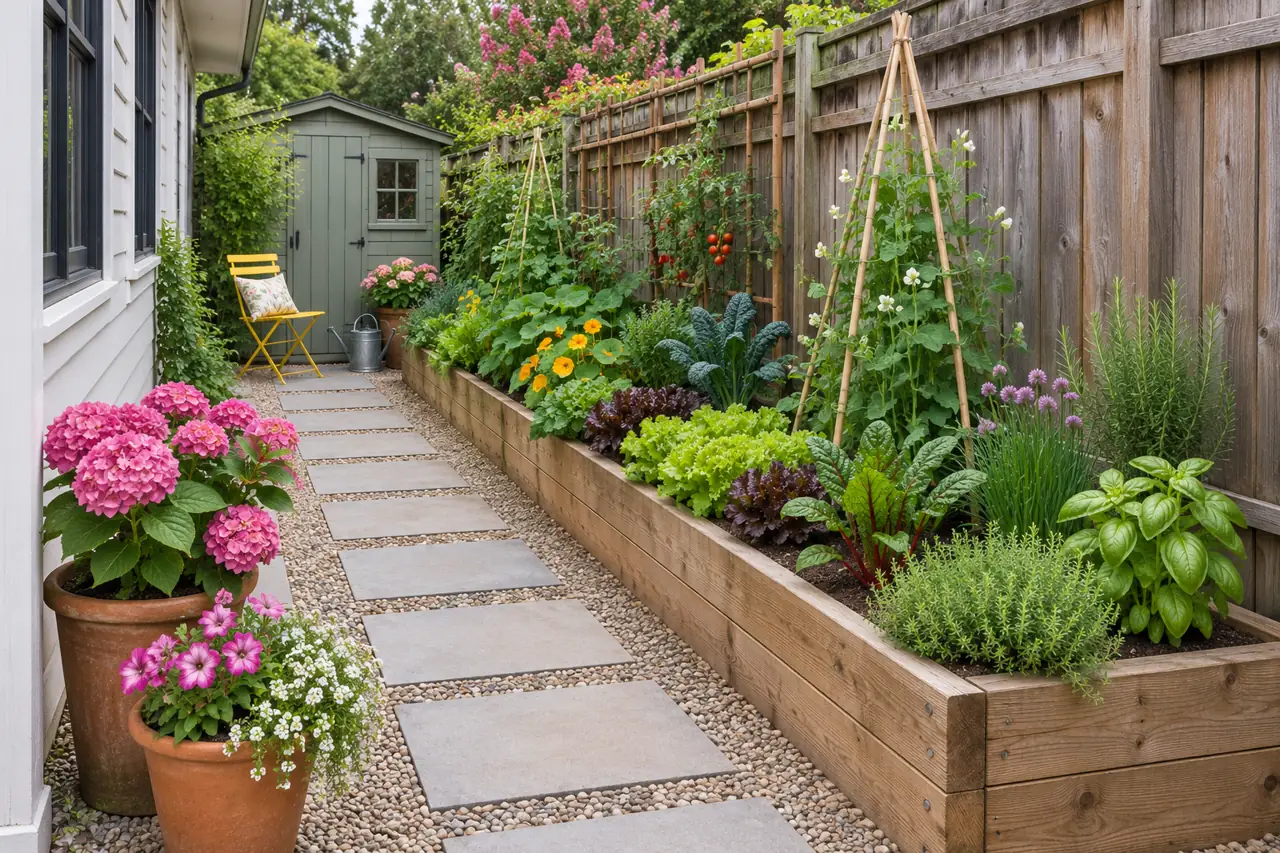
One slim bed can be enough to give a side yard a clear purpose.
Set it along a suitable boundary and keep the opposite side open for walking.
Use low crops near the entrance so the view runs all the way toward a yellow chair at the far end.
A few compact supports can add height without creating a tunnel of foliage.
Repeat terracotta pots beside the doorway, with pink flowers echoing a small cushion on the chair.
Before choosing the bed width, allow for plants leaning beyond the frame. The timber edge is not the final edge of the garden.
Check that you can carry a watering can through comfortably. If the passage is also an essential access route, keep that function first.
4. A U-Shaped Bed With an Open Working Bay

A U-shaped bed gives you an inviting working bay surrounded by planting. Keep each arm narrow enough to tend from the paths, with a clear opening toward the house.
Use the back arm for supported crops and the side arms for lower vegetables. That arrangement keeps the inner space feeling open rather than enclosed by leaves.
A blue stool belongs outside the entrance, with flowering pots marking the two front corners. Repeat the same path material inside and around the bed so it reads as one garden.
Test the whole outline with a hose before building. You need comfortable turning space in the bay, and the far corners must remain reachable after the planting fills out.
5. Twin Beds Linked by a Garden Arch
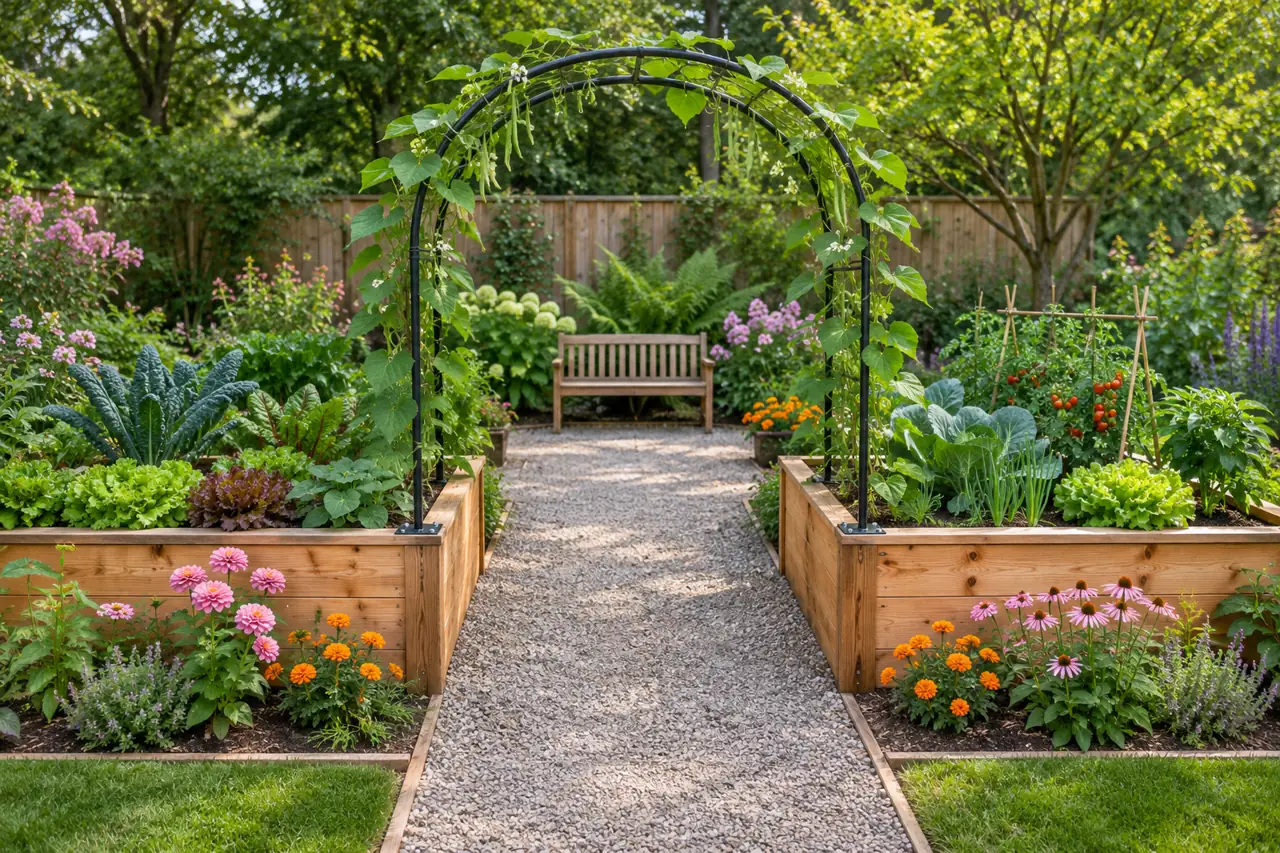
An arch between two raised beds gives the garden a destination. The path leads through leaves toward a simple bench instead of stopping at the end of a box.
Choose a support suited to the mature climbing crop and its loaded weight. Install it securely before planting, following the system's construction requirements.
Keep low vegetables along the path edges so foliage does not immediately close the walkway.
Pink and orange flowers outside the beds connect the productive space with the bench beyond.
I would keep the bench plain and let the arch provide the drama.
Allow for harvesting access on both sides of the support. A beautiful leafy tunnel is less enjoyable when you cannot reach the crop above it.
6. A Kitchen-Door Herb Garden

A kitchen-door herb bed should make everyday gathering feel easy. Place a modest timber bed near the back entrance, with a clear route between the door and the garden.
Group herbs according to their growing needs rather than squeezing every favorite into one watered space. A separate rosemary pot can join the setting without sharing the whole bed's routine.
Add a small folding table for setting down a bowl, with a sage stool tucked beside it.
White flowers and lavender-colored blooms soften the outer edge.
Keep the doorway usable with the table in place. Before planting, check the actual sunlight and choose herbs that suit it; convenience cannot make a shaded corner behave like a sunny border.
7. A Flower-Filled Potager

Vegetables and flowers can share a garden that feels ornamental from the patio.
Give the raised beds a clear outline, then let small groups of blooms interrupt the rows.
Orange flowers at a corner and airy pink stems farther back create different layers without hiding the crops.
Repeat the timber finish in a simple gate. Pale paths and a blue chair give the eye a quiet place to rest.
Choose flowers and vegetables with compatible conditions, and allow for their mature spread. The little plants in nursery pots will not stay that size.
Think of the flowers as part of the composition, not a promise of pest control.
Leave gaps where you need to weed, water, and lift a basket out.
8. A Patio Garden With Rounded Metal Troughs
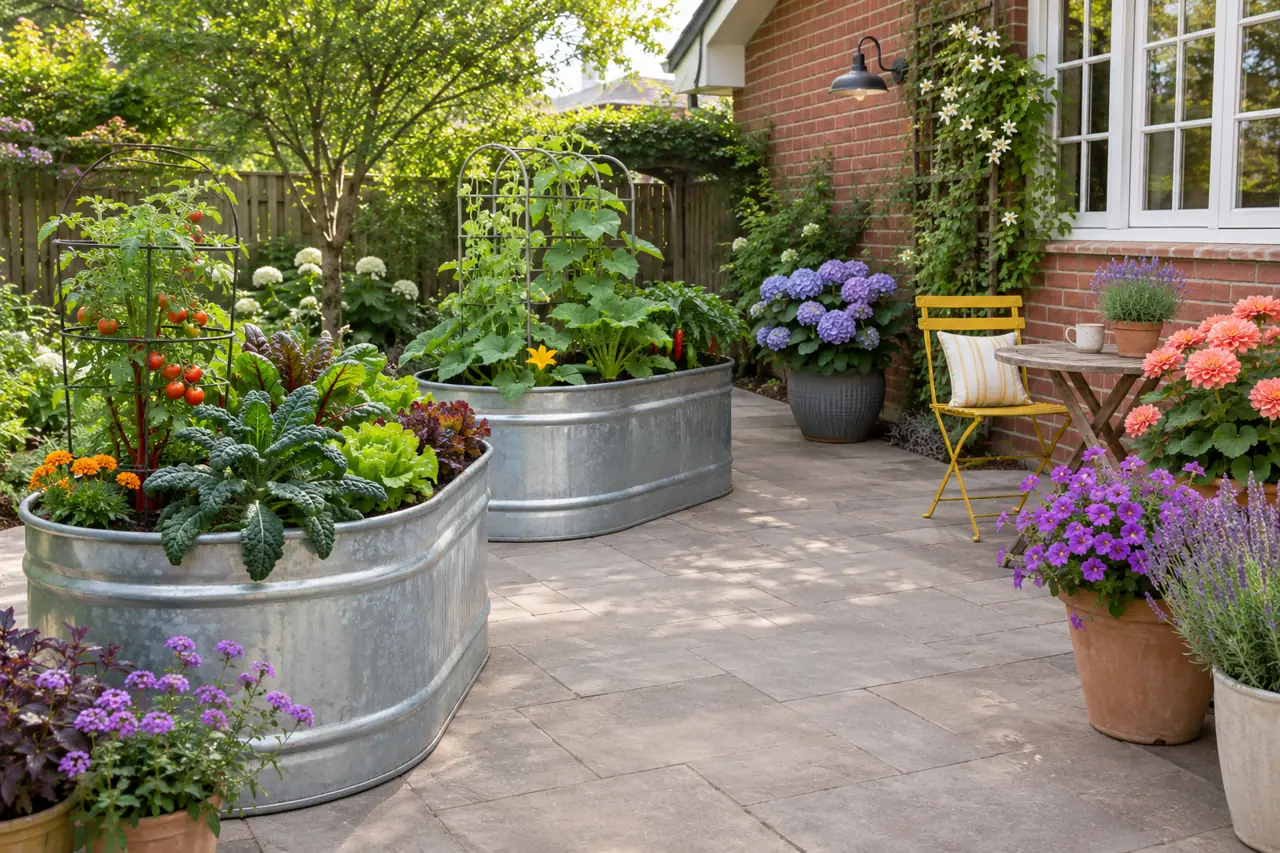
Rounded metal troughs soften a patio full of straight paving lines. Use a pair as the main planting shapes, with space to walk between and around them.
Keep the surrounding furniture small: a mustard chair, a round timber table, and one cushion are enough.
Purple and coral flowers in separate pots make the metal feel warmer without covering every edge.
Choose troughs or planter systems suitable for growing, with safe finished edges and effective drainage.
Check the usable internal depth against the crops you want.
On a hard surface, roots cannot simply continue into garden soil underneath. Plan the growing mix and watering accordingly.
Set the full arrangement out before filling; a loaded trough is a very different moving job.
9. Stepped Beds on a Gentle Slope

A gentle slope can become a sequence of small growing spaces rather than one tilted bed. Keep each bed level on an appropriately formed terrace, with a clear route between levels.
Repeat the same timber and path finish so the separate platforms feel connected. Let colorful flowers soften the changes in height, and keep a chair on the lowest comfortable landing.
This is a setting to plan carefully, not a suggestion to stack loose boxes on an unstable bank.
Retaining work, drainage, foundations, and soil loads need a design appropriate to the site. Bring in qualified help where those questions are involved.
Start with the path and level changes. The planting plan comes after you know you can move through the garden comfortably.
10. A Low Brick-Edged Cottage Plot

Low brick edges give a cottage kitchen garden a settled, permanent outline. Pair the warm masonry with a loose gravel path and a plain timber bench.
Keep the vegetables readable inside the beds, while pink, purple, and white flowers gather around the outside.
A pale fence helps the different greens stand out without another strong color competing for attention.
Use bricks and construction details suited to outdoor exposure and retaining the intended soil depth. A decorative edge and a substantial retaining wall are different projects.
Check drainage and the required foundations before committing to masonry.
The RHS notes that brick raised beds generally need skilled construction.
This approach suits a layout you are ready to keep, rather than a first experiment you may move.
11. A Woven-Willow Garden With a Rustic Backdrop

Woven willow brings a softer texture to a productive garden. Use it as the visible face of a properly supported low bed, with sound corner posts doing their job.
Woodchip paths and a simple slatted backdrop keep the materials feeling connected.
Plant leafy vegetables in the foreground and a modest climbing crop toward the back. Purple flowers and a pale blue chair finish the cottage mood.
The weave should not be treated as proof that a frame can hold any depth of wet soil.
Choose a system designed for its intended use, and consider how worn sections will be replaced.
Keep the bed low and reachable. This look is especially appealing when you enjoy natural textures and accept that they weather over time.
12. A Rustic Garden With Known-Source Timber

A rustic raised-bed garden can feel collected without relying on mystery salvage. Start with sound timber of known type and treatment, then let its surface weather naturally.
Broad woodchip paths, a simple shed, and a plain wooden stool give the setting its relaxed character.
Supported beans and generous leafy crops provide height and texture. Orange flower pots brighten the edge nearest the door.
Avoid making old railway ties or unidentified treated scraps part of an edible bed just because they look appealing.
Maryland Extension's materials guidance explains why older wood treatments need care.
Check the source before building, not after filling.
I like the worn-looking finish here, but the frame still needs sound joints and a design that supports its soil load.
13. Repeating Metal Beds Beside a Broad Working Path

A row of corrugated-metal beds can make a larger growing area feel orderly. Set the beds beside a broad working path rather than filling the middle with disconnected boxes.
Repeat their shape and finish, then soften the outside boundary with grasses and purple flowers.
A blue tool cart adds color and a useful place for supplies.
Park it where it does not reduce the route through the garden.
Put a plain workbench at the far end so the aisle has a clear purpose.
Plan irrigation connections and crop supports before filling the beds. Long planting runs are easier to enjoy when everyday tasks have a place.
Check how each bed's sides are reinforced. Repetition makes the layout attractive; it does not make construction details optional.
14. Six Compact Squares With a Working Aisle

Six small squares make a useful alternative to a few long beds. Arrange two rows of three around a broad working aisle, with reachable cross paths between them.
Keep the frames consistent so different crops can provide the variation. A square of low greens looks lovely beside a bed with a modest upright support.
Use a low flower border to connect the separate units to the rest of the yard.
A small potting table and coral stool belong at the end, outside the turning space.
Measure the complete grid, including every path, before buying six frames. It occupies more ground than the planting area alone suggests.
If the layout feels too large, begin with fewer squares and preserve the planned access.
15. A Garden Built Around Standing-Height Planters
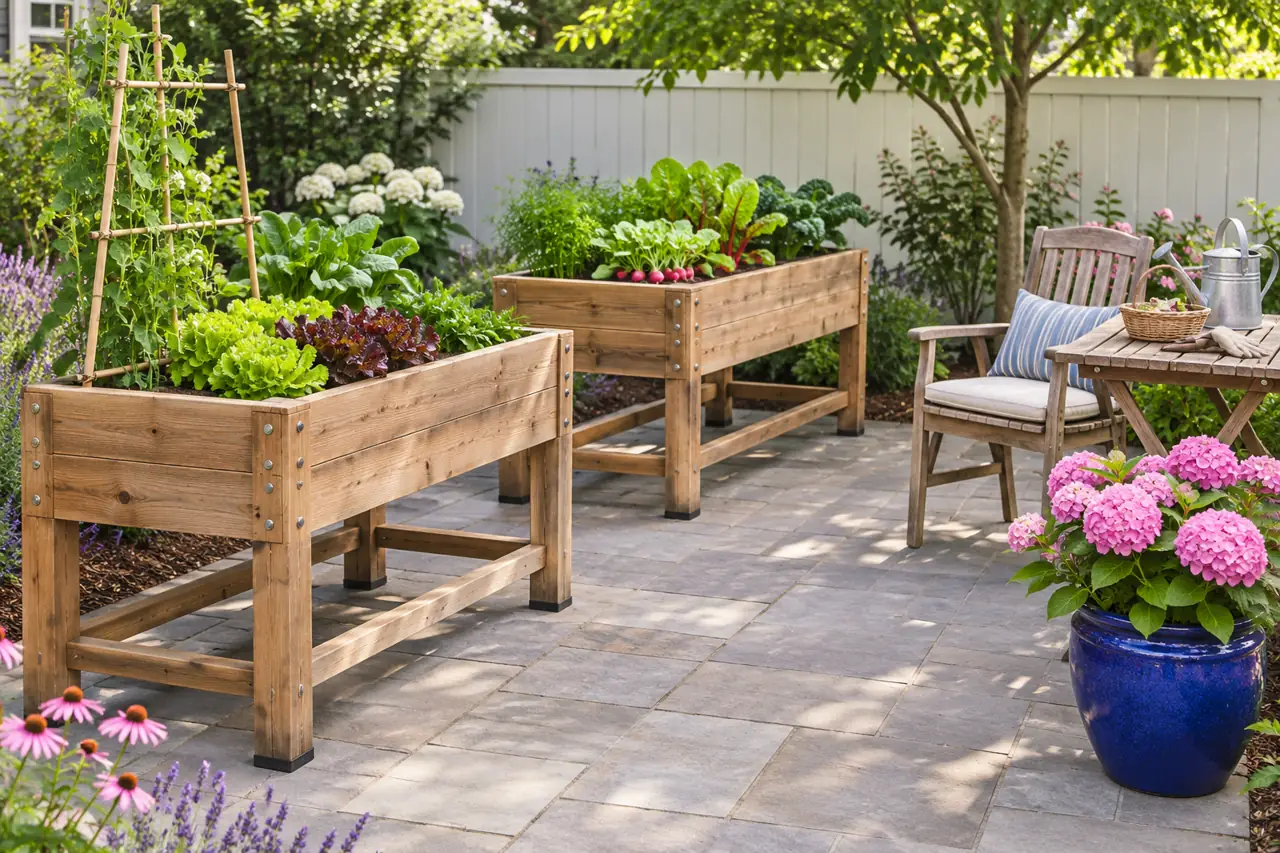
Planters on legs can bring a small growing area closer to your preferred working height. Place them on a firm, level surface with room to stand or sit nearby.
Choose a purpose-built structure with an appropriate loaded-weight capacity.
The legs and bracing are part of the design, not details to hide with plants.
Keep the crops modest and match them to the actual planting depth.
A comfortable chair, small worktable, and cobalt pot of pink flowers make the corner feel like a garden rather than equipment storage.
Try the height and reach before choosing a model. People need different working positions, so a tall planter is not automatically comfortable for everyone.
Keep drainage away from places that become slippery or difficult to use.
16. Vegetable Beds Beside a Flowering Habitat Strip
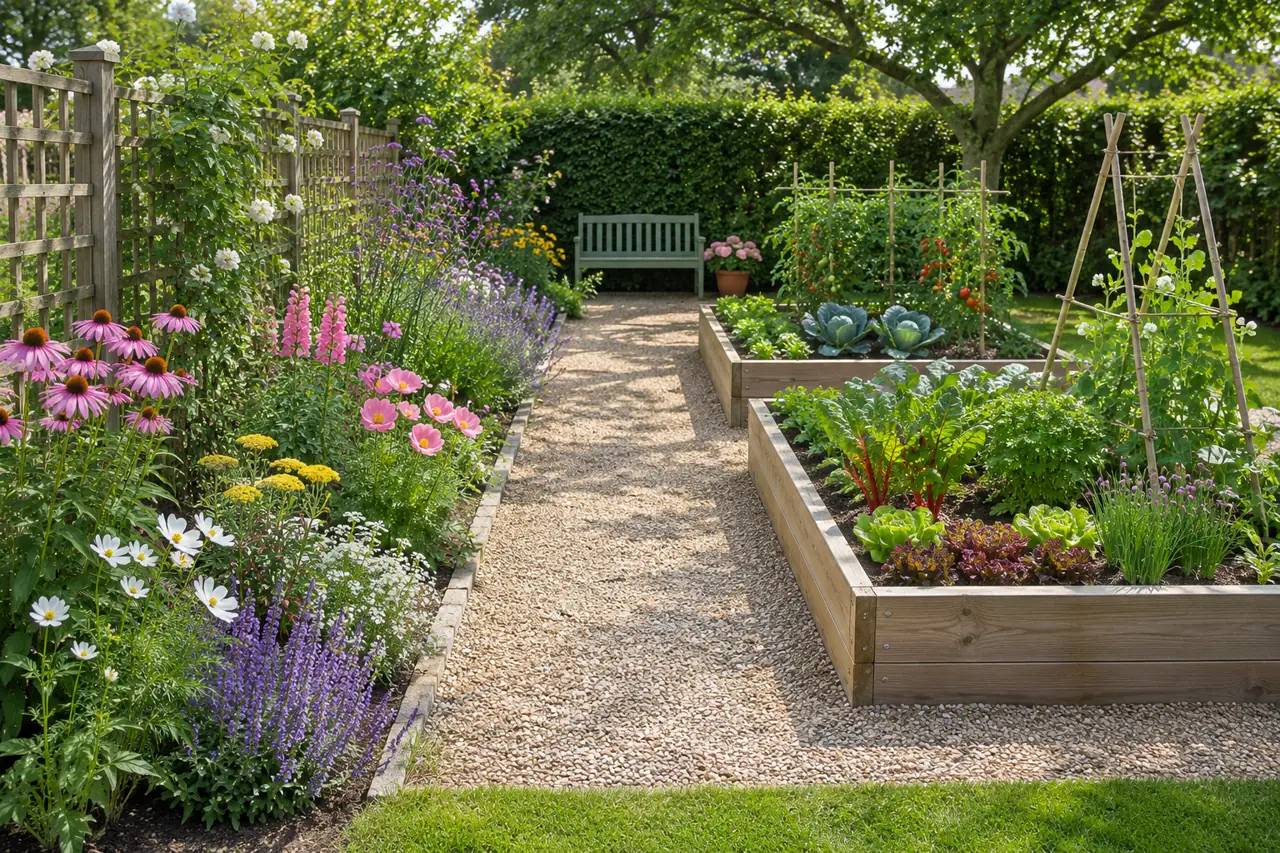
A flowering border beside the vegetable beds creates a garden with two kinds of interest. Keep a distinct path between them so the flowers do not bury the growing space.
Mix suitable flowering shapes and seasons along the outer edge rather than expecting one plant to carry the whole display.
Pink, yellow, purple, and white blooms can share a quiet timber-and-gravel background.
A plain green bench at the end gives you somewhere to watch the garden without occupying a harvesting aisle.
Choose locally appropriate plants and check mature size, light, and water needs. Pollinator value depends on plant choice and location, not just an attractive photograph.
Leave room to maintain the border separately. It should complement the vegetables without making either area unreachable.
17. A Raised-Bed Cutting Garden

Raised beds can hold flowers for cutting as happily as vegetables. Make the path between them the main feature, with space to carry a bucket without brushing every stem.
Use repeated groups of pink, orange, and purple blooms for a generous but readable display.
Add supports appropriate to the chosen varieties before tall growth needs rescuing.
A small table with a vase provides a destination for freshly cut stems. Keep a white chair nearby for enjoying the flowers that stay in the garden.
Check planting distances and flowering periods for your climate.
A beautiful image may show one seasonal moment rather than a combination that flowers everywhere at once.
Leave tools stored safely after use, and keep the worktable outside the main path.
18. A Trellis-Backed Bed for a Small Yard

A trellis-backed bed gives a small yard a leafy backdrop without using the whole floor. Keep the planting strip reachable from the front and the support independently secure.
Choose a climbing crop suited to the trellis, with lower vegetables positioned where they still receive appropriate light.
A yellow chair and terracotta pots of coral flowers soften the side of the arrangement.
The support should frame the bed, not lean on a fence that was never designed to carry it.
Allow for pruning, tying, and harvesting access before the vines fill out.
Check the mature crop rather than judging the structure against a small seedling.
Keep the surrounding ground simple. One vertical feature usually gives a tiny kitchen garden enough presence without extra decorative screens.
19. Beds With Removable Seasonal Covers
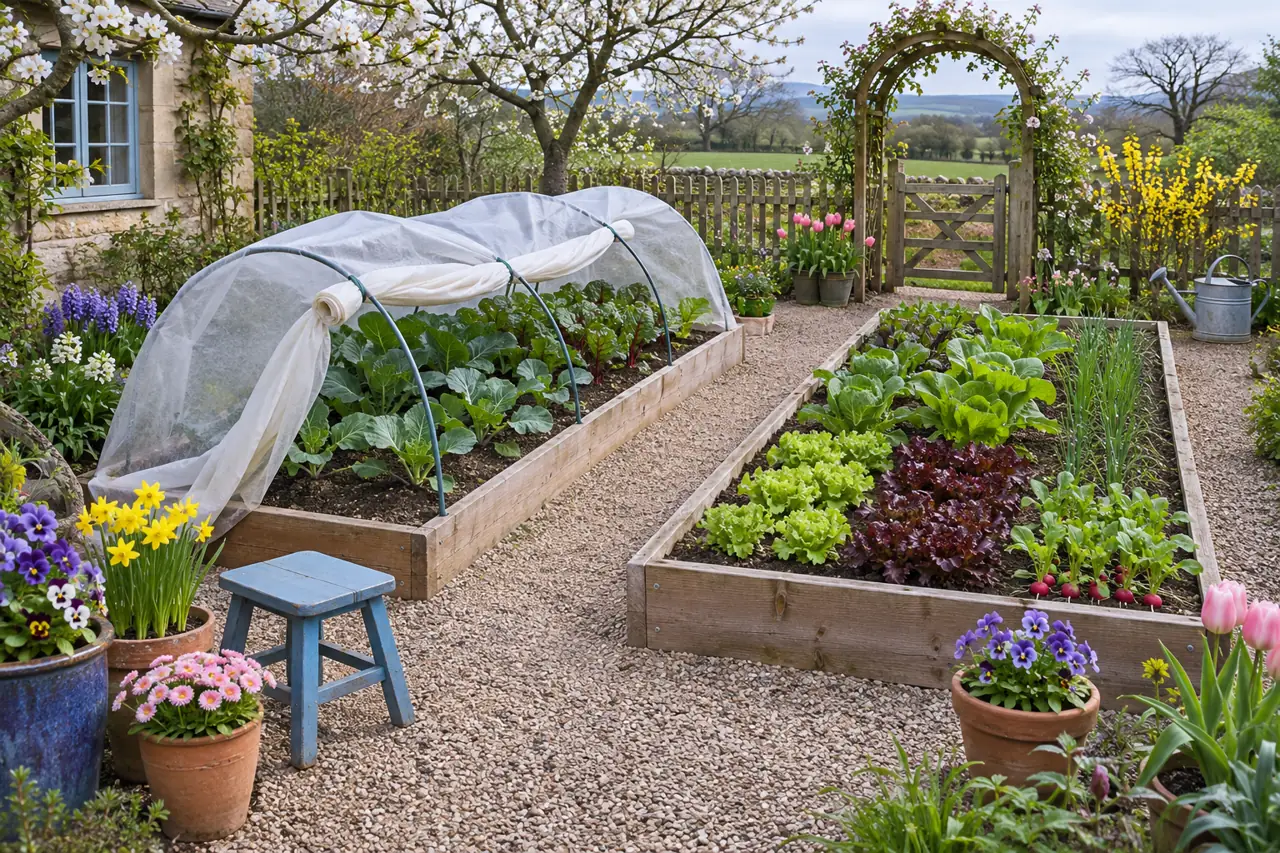
A bed with removable covers can change with the season. Keep the base garden simple so hoops, fabric, and fixings can be added or removed without rearranging everything.
Repeat the same timber frames and gravel paths in the neighboring uncovered bed.
A blue stool and a few flowering pots bring color to the garden when the crops are still small.
Use a cover and support system suited to the intended crop and conditions. Secure it according to its instructions, while preserving access for watering and inspection.
Ventilation matters as conditions warm; protection is not a reason to leave a bed closed and forgotten.
Plan where removed fabric will dry and be stored. A seasonal feature is useful only when changing it is manageable.
20. A Mulched Garden for Hot, Dry Spells
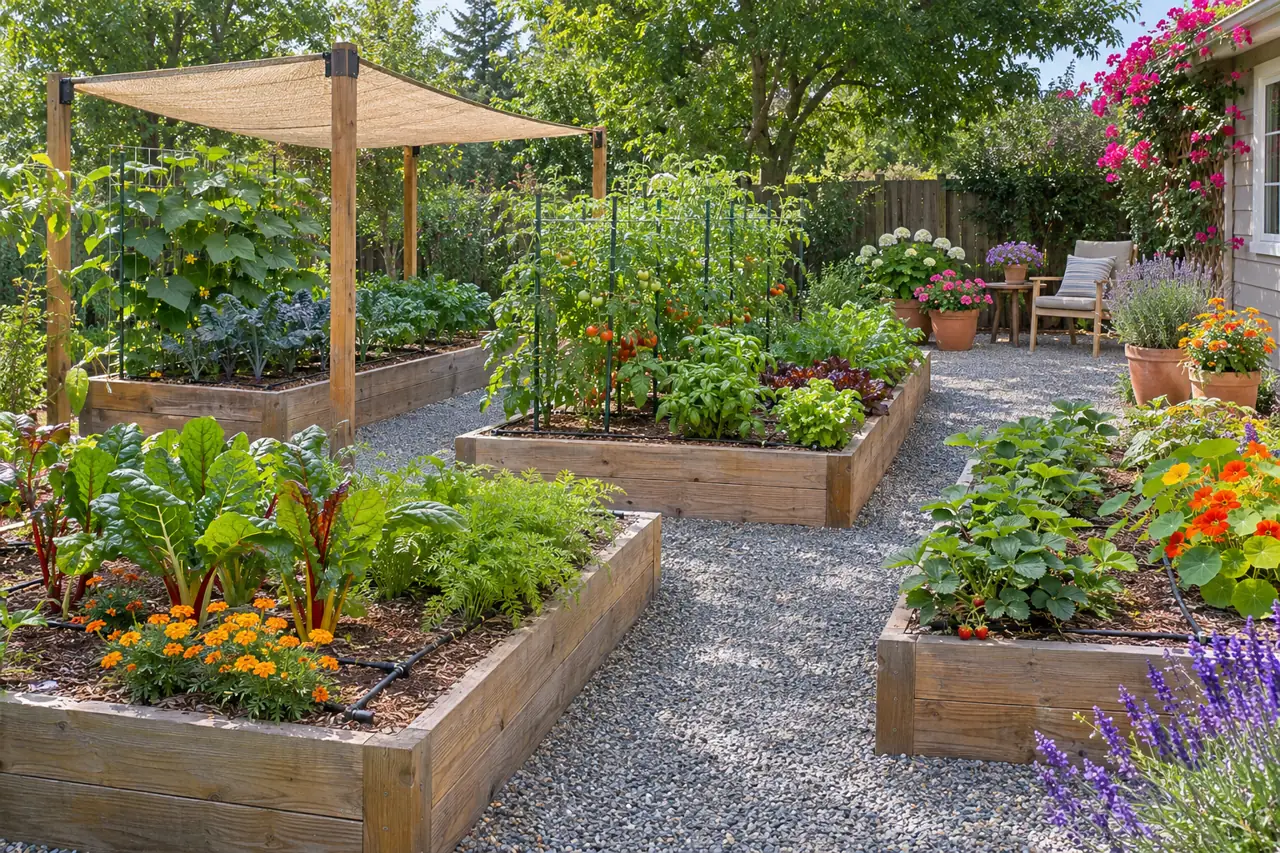
For a garden exposed to hot, dry spells, make watering access part of the layout. Clear paths should let you reach every bed without stepping across irrigation lines.
Use suitable surface mulch around established plants, leaving stems and crowns clear. A modest drip system can make the physical task easier to organize.
Where appropriate, a properly supported shade covering can be planned for a specific crop and season. Do not assume every vegetable wants the same amount of shade.
Terracotta flower pots and a separate sitting corner keep the practical setup welcoming. Choose plants and containers for the heat they will actually receive.
Check soil moisture rather than trusting a calendar. The RHS notes that raised beds can need closer watering attention in warm, windy weather.
21. A Garden With Firm Paths for Rainy Weather
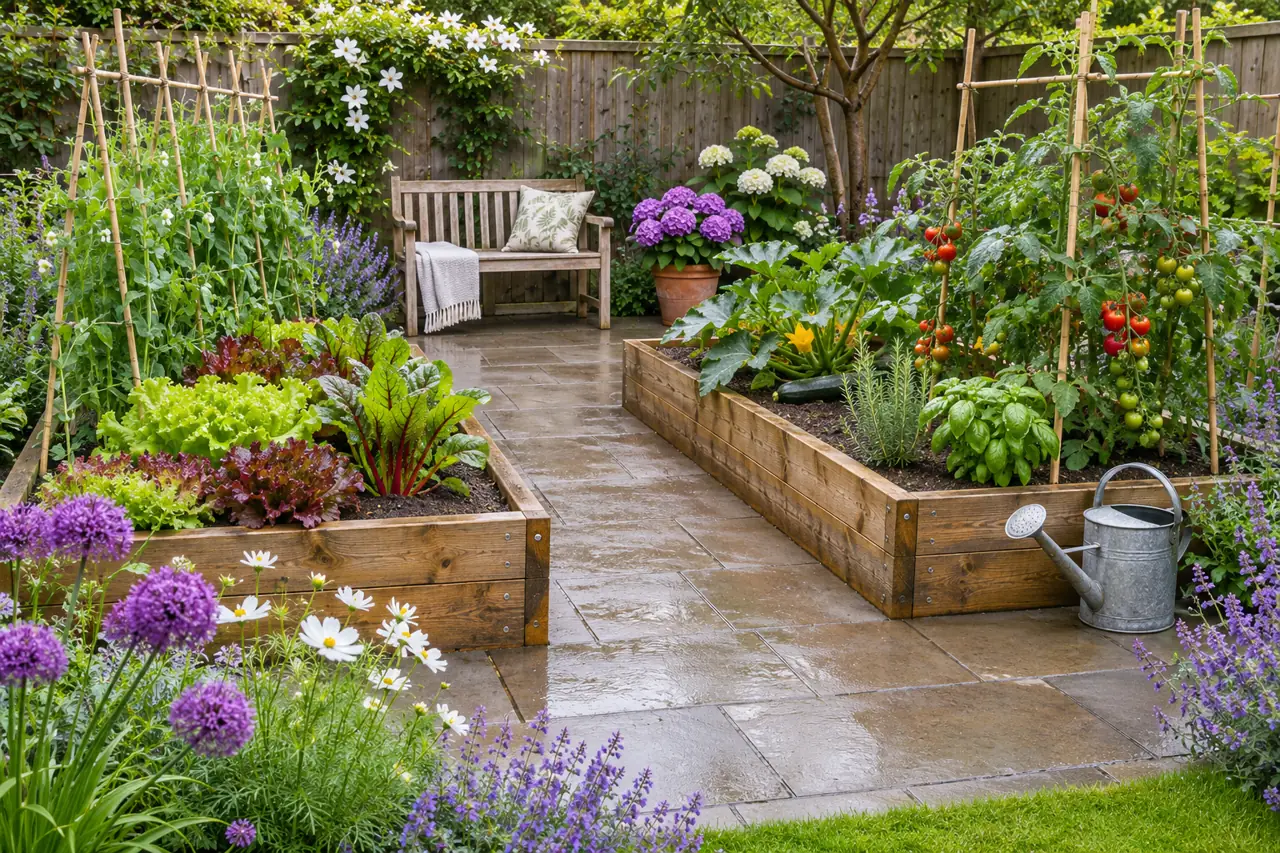
Firm paths can make the difference between enjoying a garden after rain and avoiding it. Build the layout around a suitable, stable walking surface with access to both beds.
Keep the timber frames low enough to suit the planting plan, with purple and white flowers softening the boundary.
A small bench belongs on a comfortable landing rather than in a narrow passage.
Plan the path base, drainage, and surface for the site's conditions. Attractive paving laid on an unsuitable base can still move or collect water.
Raised beds do not automatically cure a flooded or persistently waterlogged location.
Investigate where water goes before building. Once that question is resolved, the beds and planting can become the pleasant part of the project.
22. A Low Bed for Little Garden Helpers
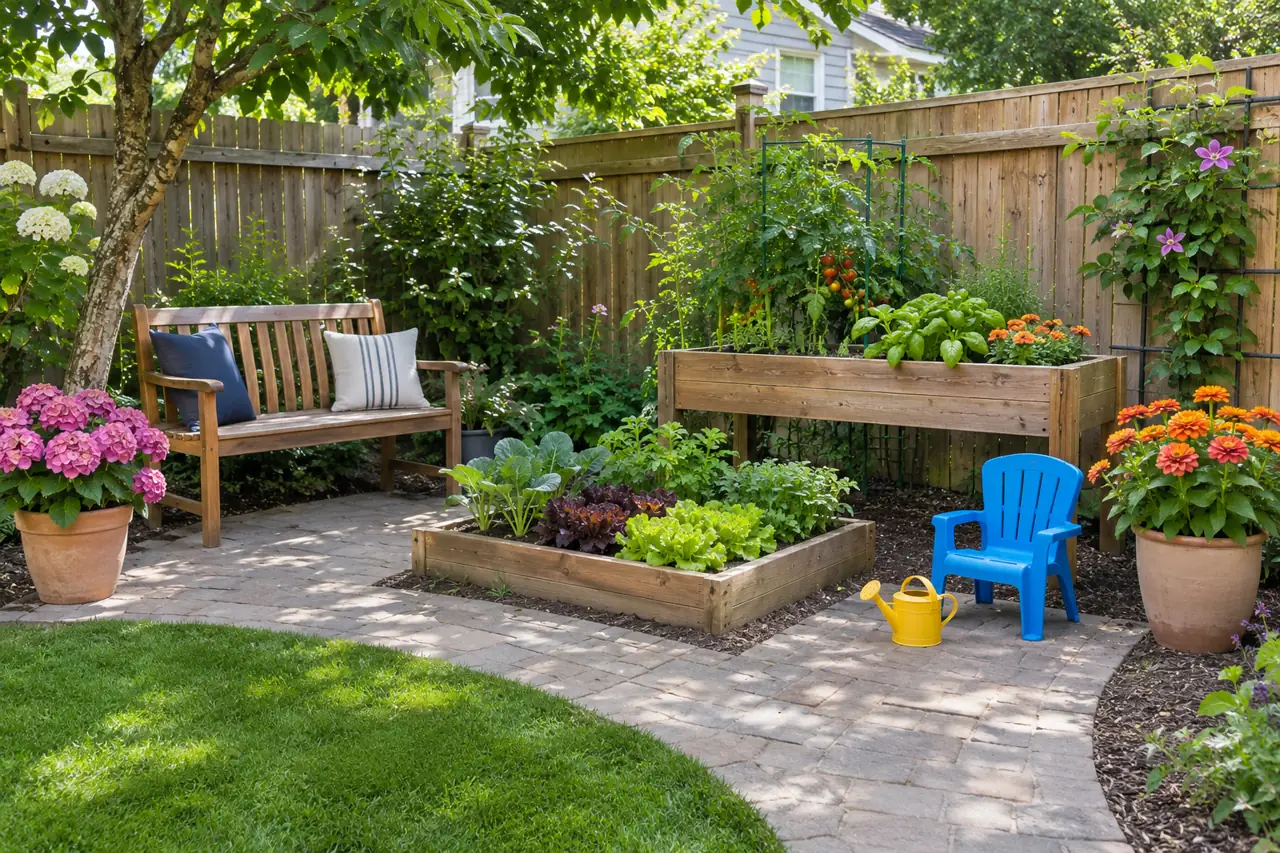
A small low bed can give younger garden helpers a place that feels like theirs. Put it beside the main growing area rather than hidden away from shared activity.
Choose a size they can reach with adult help.
Low lettuces and suitable compact vegetables keep the planting easy to see.
A little blue chair and small watering can add personality outside the walking route.
Repeat cheerful pink and orange flowers in separate pots so the corner still connects to the wider garden.
Select plants carefully, supervise gardening and tasting, and keep tools, fertilizers, and other products stored appropriately.
I would leave plenty of open ground around this bed. The useful part is room to work together, not squeezing in the maximum number of seedlings.
23. A Courtyard Garden on Paving
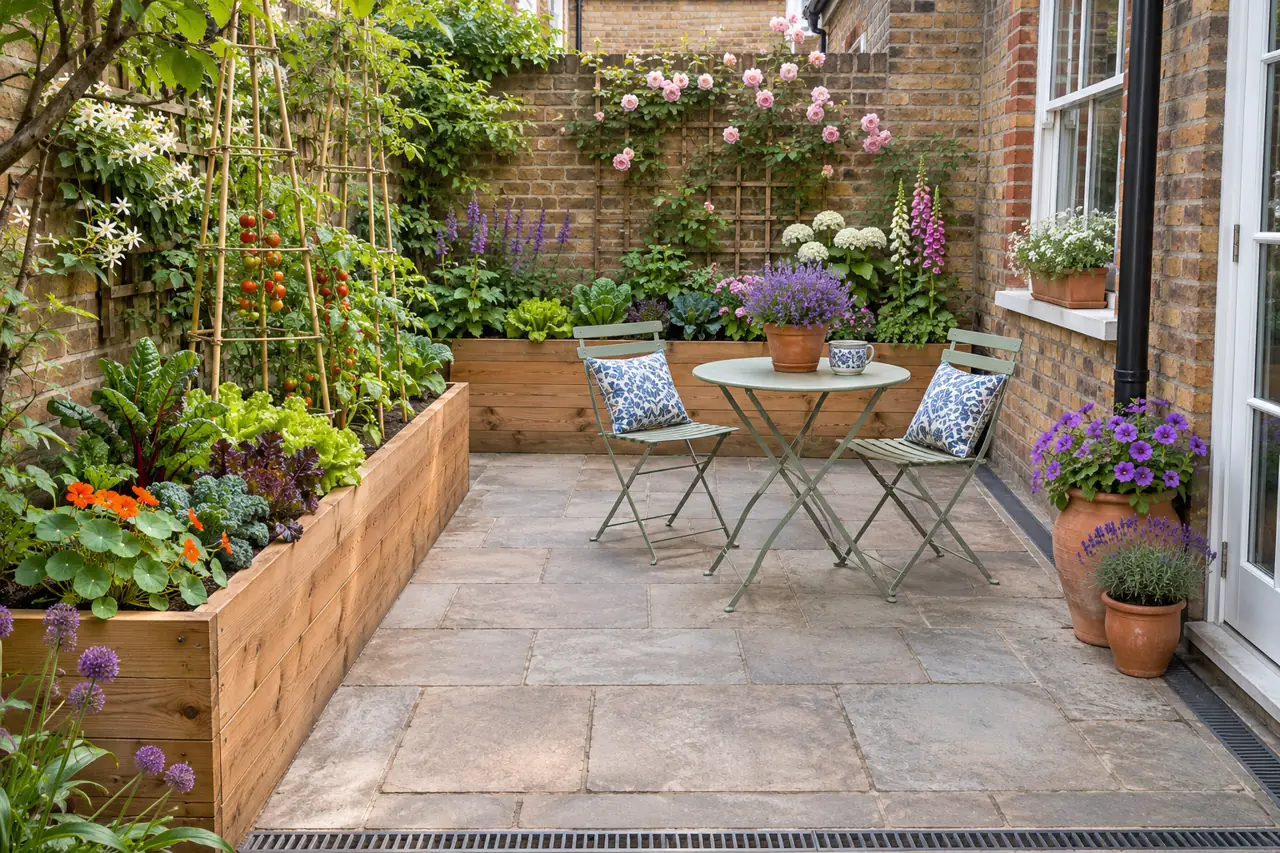
A paved courtyard can still become a productive little garden. Place substantial planters along two edges and preserve an open center for a small table and chairs.
Sage furniture, a blue patterned cushion, and terracotta flower pots make the hard surfaces feel softer.
Keep the tallest supported crop away from the main view and doorway. Lower vegetables can bring greenery closer to the seating.
Unlike a bed over suitable soil, a planter on paving must provide its usable root zone within the container.
Check depth, growing mix, drainage, and the needs of the mature crop before filling.
Leave drainage routes accessible and consider reflected heat from walls and paving. The most attractive arrangement is still one you can water and maintain comfortably.
24. A Fenced Kitchen Garden With a Welcoming Gate
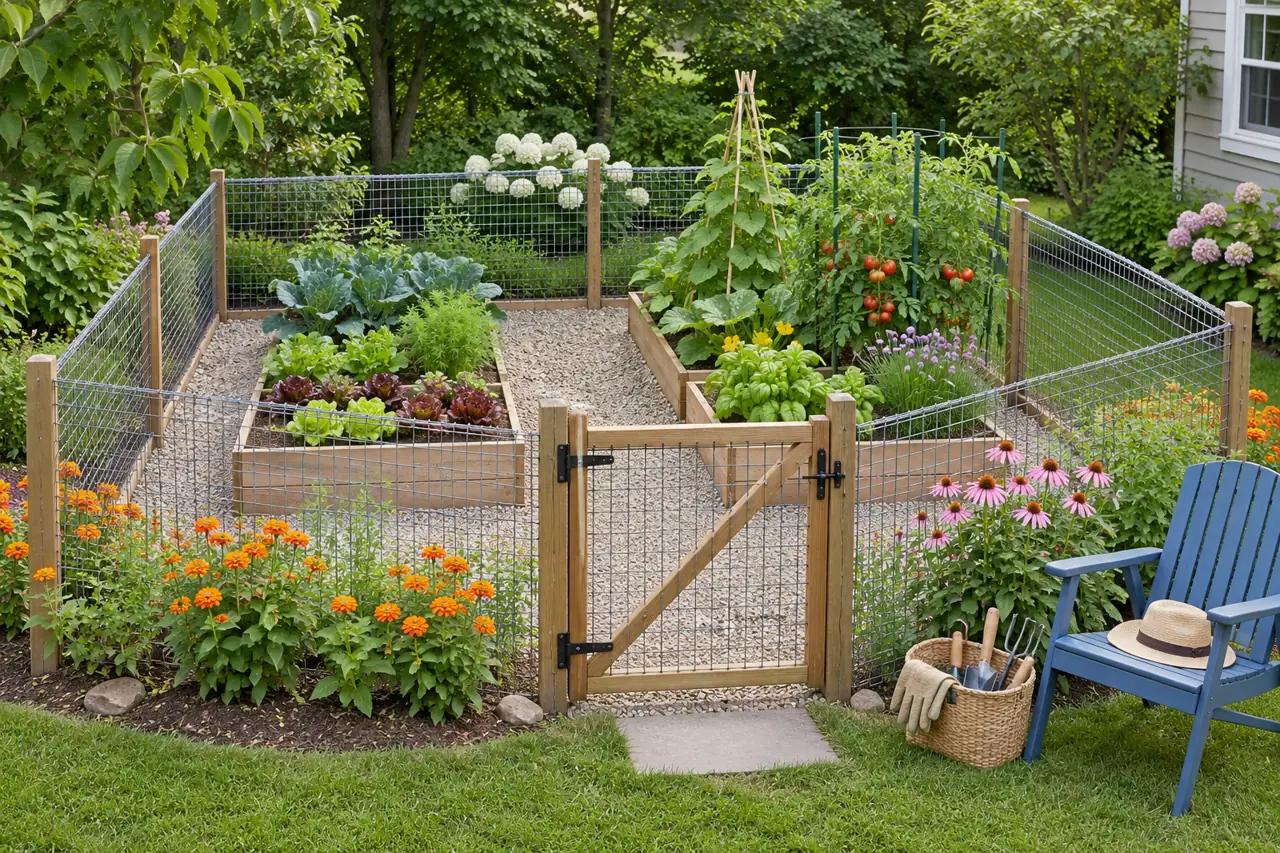
A fence and welcoming gate can make the kitchen garden feel like a separate little room. Keep the beds simple inside so the enclosure supplies the main outline.
Run clear paths from the gate to both beds, allowing space to turn with a basket. Orange and pink flowers outside soften the mesh and connect the garden to the backyard.
A blue chair beside the entrance gives the boundary a friendly purpose, with supplies stored neatly nearby.
Choose the fence, openings, height, and gate details for the animals you are actually trying to exclude. One decorative enclosure will not solve every wildlife problem.
Check local rules and utility access before installing posts. Make sure the gate works comfortably before placing planters beside its swing.
25. A Round Bed With a Keyhole Access Path

A round bed with a keyhole entrance makes the planting itself the garden's focal point. The opening leads to a small working space inside the circle.
Keep the planted band narrow enough to tend from the center and outside path. Curved metal outlines mixed leafy vegetables without another competing material.
A yellow chair and pink flower pots outside the circle add color without interrupting the unusual geometry.
Test the opening and turning space with temporary markers. A circular shape can look generous from above while leaving an awkward entrance at ground level.
Choose a properly designed frame for the soil load. You do not need a central compost tower or extra ornament for this garden to feel distinctive.
Choose the Layout Before the Finish
Shortlist two ideas that fit your yard, then mark their full outlines on the ground. Include paths, mature planting, and any furniture.
Walk the route with something in your hands. The better design is the one that still feels comfortable once the pretty details become everyday objects.