
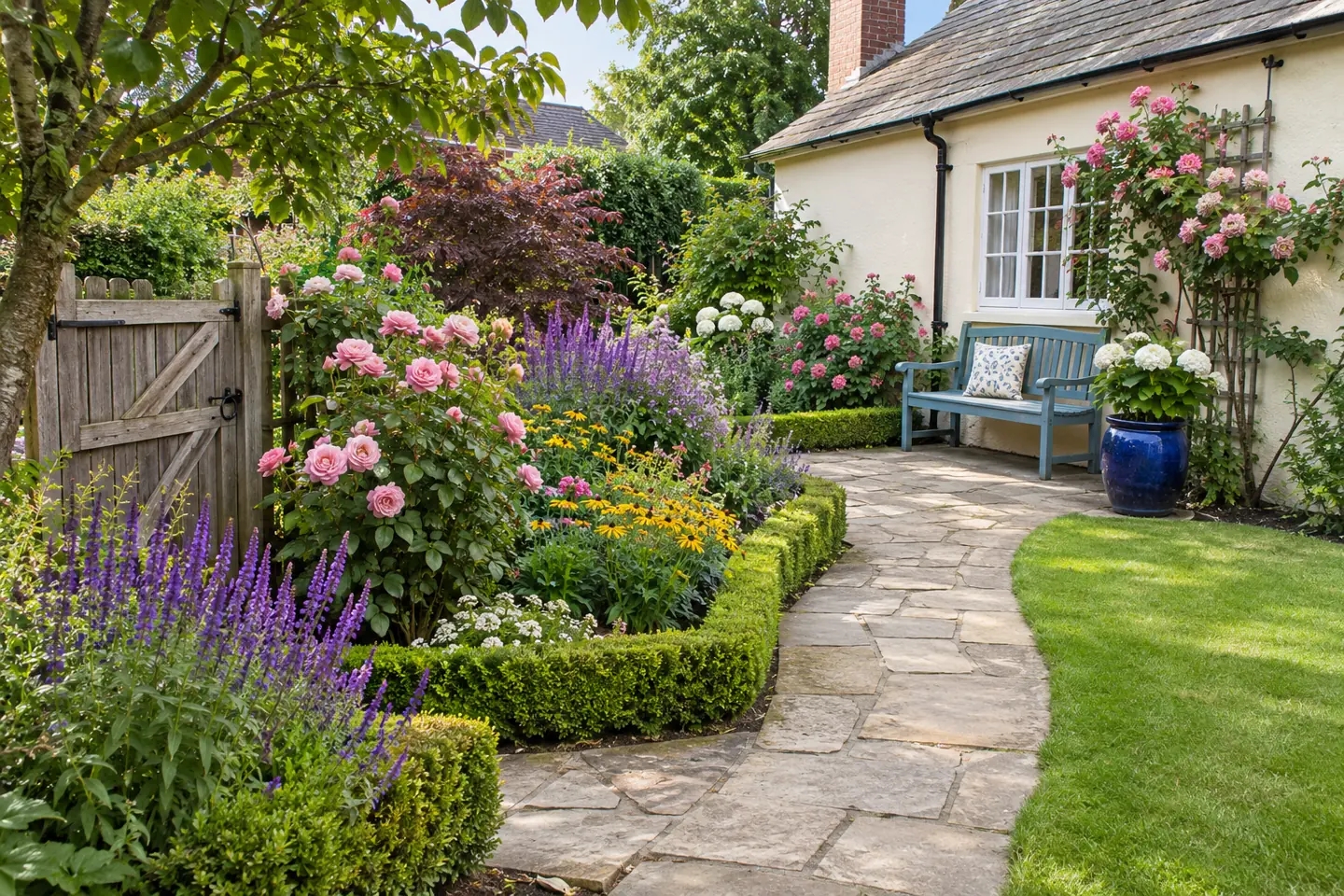
To create a cottage garden, start with clear paths and a few repeated planting groups, then add flowering layers, a useful sitting spot, and materials that belong together.
It can be colorful and wonderfully loose without becoming impossible to walk through. The best layout still leaves room for your chair, watering can, and growing plants.
These 25 cottage garden ideas cover everything from a tiny pot-filled courtyard to a flower-framed family lawn. Choose the setting that fits your space before choosing the flowers.
Plant examples are starting points, not a universal planting list. Check local hardiness, heat, rainfall, soil, invasive-species rules, and each variety’s mature size before buying.
Images are AI-created garden-design illustrations, not photographs of Claire’s garden, plant-identification evidence, or construction specifications. They show established planting; a new garden will need time and suitable care to develop.
Starting with bare ground? The flower garden guide for beginners covers the preparation that comes before the pretty planting.
Explore the 25 cottage garden ideas
- A Flower-Filled Walk From Gate to Door
- A Deep Border With Room for Flowering Layers
- A Tiny Courtyard Wrapped in Pots and Flowers
- A Side Passage That Becomes a Flower Walk
- A Four-Bed Potager With Flowers Around the Crops
- A Cottage Cutting Patch You Can Actually Harvest
- A Rose Arbor With a Proper Path Beneath It
- A Leafy Cottage Retreat for a Shadier Corner
- A Sunny Gravel Garden With Cottage Softness
- A Flowering Rain Garden Beside a Dry Path
- A Small Wildlife Pond Framed by Cottage Planting
- An Orchard Edge With a Ribbon of Flowers
- A Low Flower Garden Around the Front Porch
- A Flower Island Designed to Be Seen From Every Side
- Flowering Terraces That Follow a Gentle Slope
- A Hedge-Enclosed Reading Garden
- A Meadow-Inspired Patch With a Mown Route
- A Border That Saves Its Big Moment for Late Summer
- A Spring Bulb Garden With a Plan for What Follows
- A Cottage Garden Composed Around the Kitchen Window
- An Outdoor Dining Room With Flowers at the Edges
- A Kitchen-Door Herb Garden With Cottage Character
- A Cottage Garden for a Stoop and Window Boxes
- A Garden Shed Framed by a Working Flower Border
- An Open Family Lawn Framed by Cottage Borders
1. A Flower-Filled Walk From Gate to Door
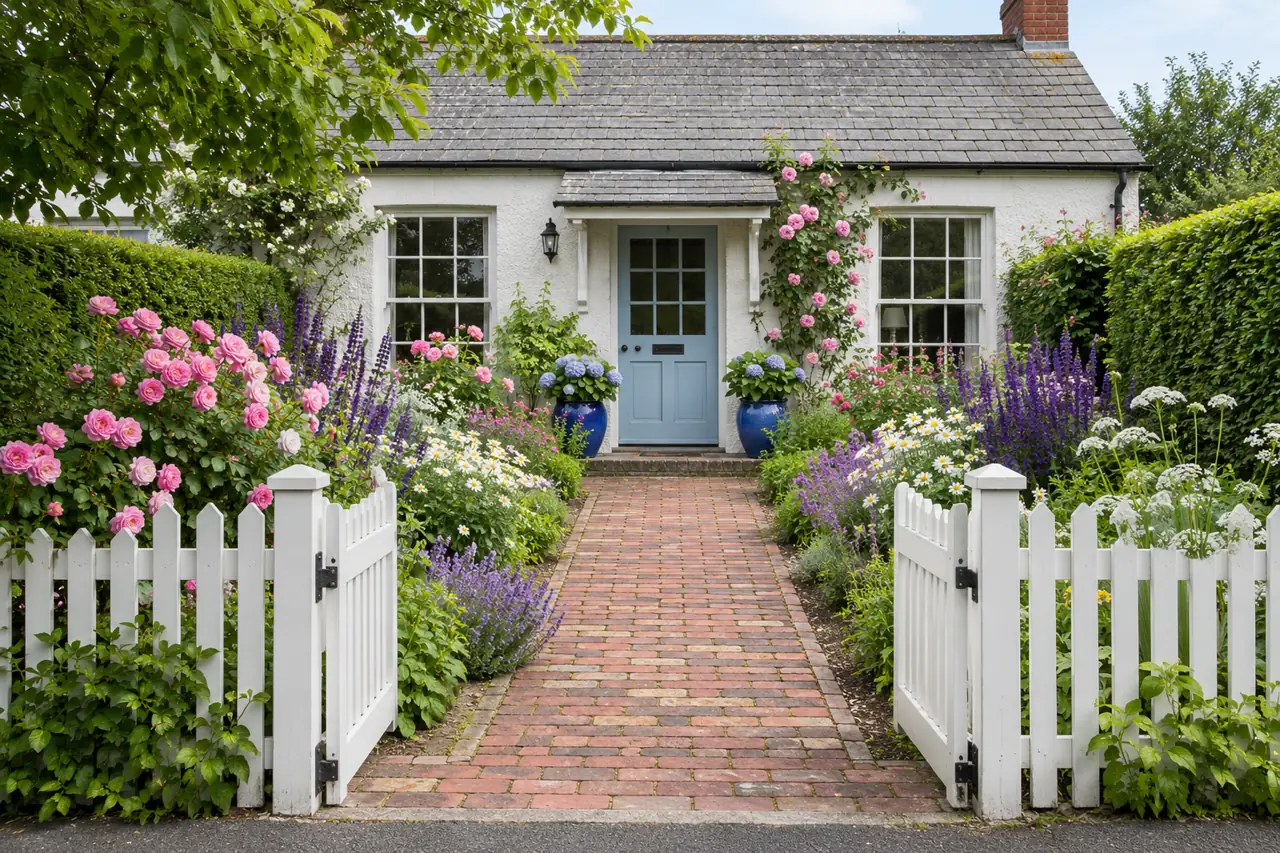
An open picket gate, a brick path, and generous flower beds make this entrance feel welcoming before anyone reaches the door. Keep the route obvious and comfortably clear.
Let pink shrub roses form rounded middle layers, with taller purple flowers behind and smaller blue or white blooms near the edging.
Repeat a few plants on both sides rather than collecting one of everything. The repetition gives the flowers a quiet framework.
I love how a painted front door and two matching pots can finish this setting without adding more ornaments.
Mark the gate swing and carry shopping bags along the proposed route before planting.
Allow for mature stems, wet foliage, and routine trimming; a charming entrance still needs to work every day.
2. A Deep Border With Room for Flowering Layers
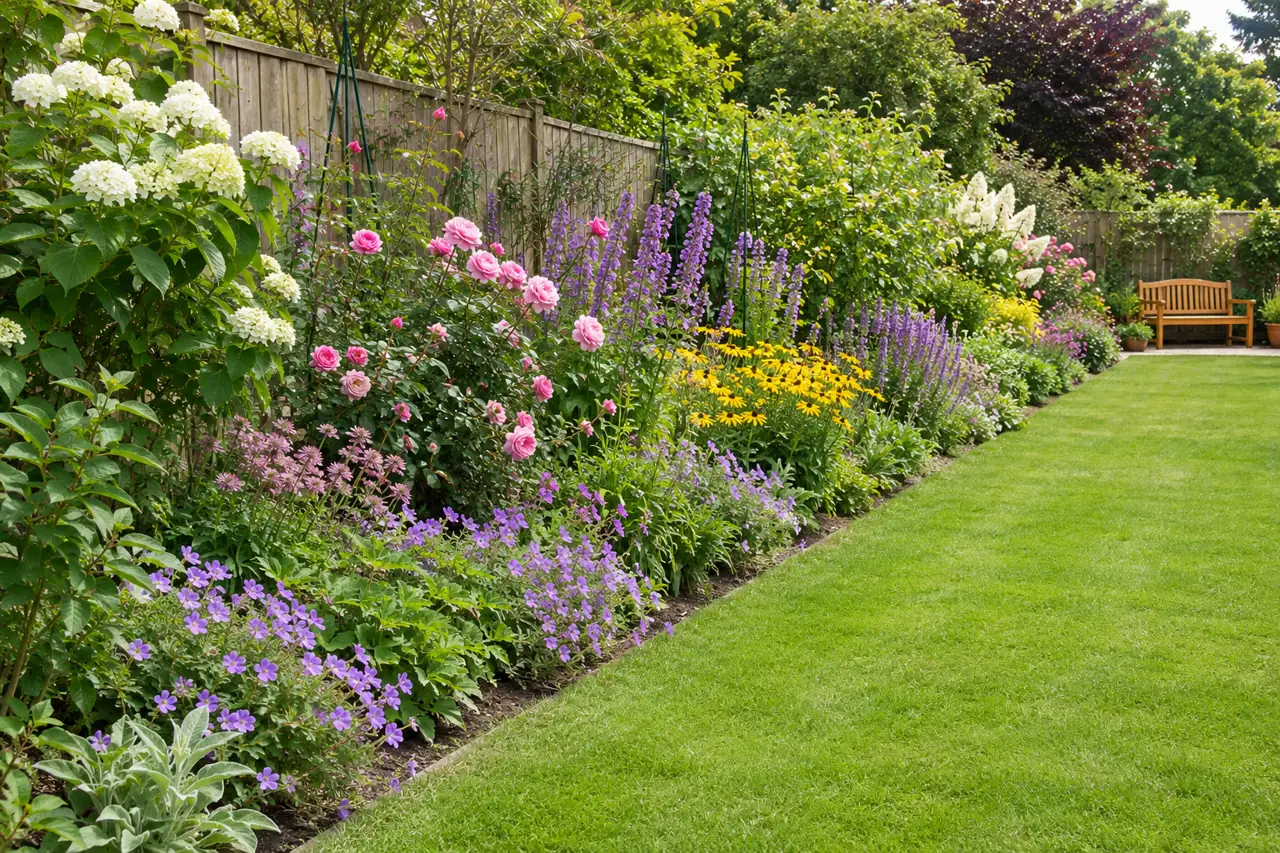
A deep border beside an open lawn gives cottage planting somewhere to spread without swallowing the whole yard. Use the fence or hedge as its backdrop.
Start with a few suitably sized shrubs, then arrange flowering perennials in loose groups across the middle. Lower plants can soften the lawn edge.
Pink roses, purple spires, and yellow daisies suggest the look, but choose their actual species and cultivars for your conditions.
Set a small bench at one end so the border becomes a view to enjoy, not merely a strip to weed.
Lay out mature plant widths before buying. Tall delphiniums often need staking and shelter, so put supports in early or choose sturdier alternatives if that maintenance would become a nuisance.
3. A Tiny Courtyard Wrapped in Pots and Flowers

No broad lawn required.
A small paved courtyard can carry the cottage feeling through flowering containers, a trained climber, and furniture that looks inviting from indoors.
Place a compact table where both chairs can pull out fully. Cluster larger pots around the perimeter rather than scattering little ones across the walking space.
Choose a flowering climber suited to the wall's light, and give it an appropriate support. Keep its stems away from doors and windows.
Teal chairs, a coral cushion, and terracotta pots bring plenty of color even between flowering periods.
Before filling the containers, check drainage and where discharged water will go.
Group plants with similar care needs, and leave access for watering; a packed courtyard becomes awkward surprisingly quickly when every pot needs attention.
4. A Side Passage That Becomes a Flower Walk
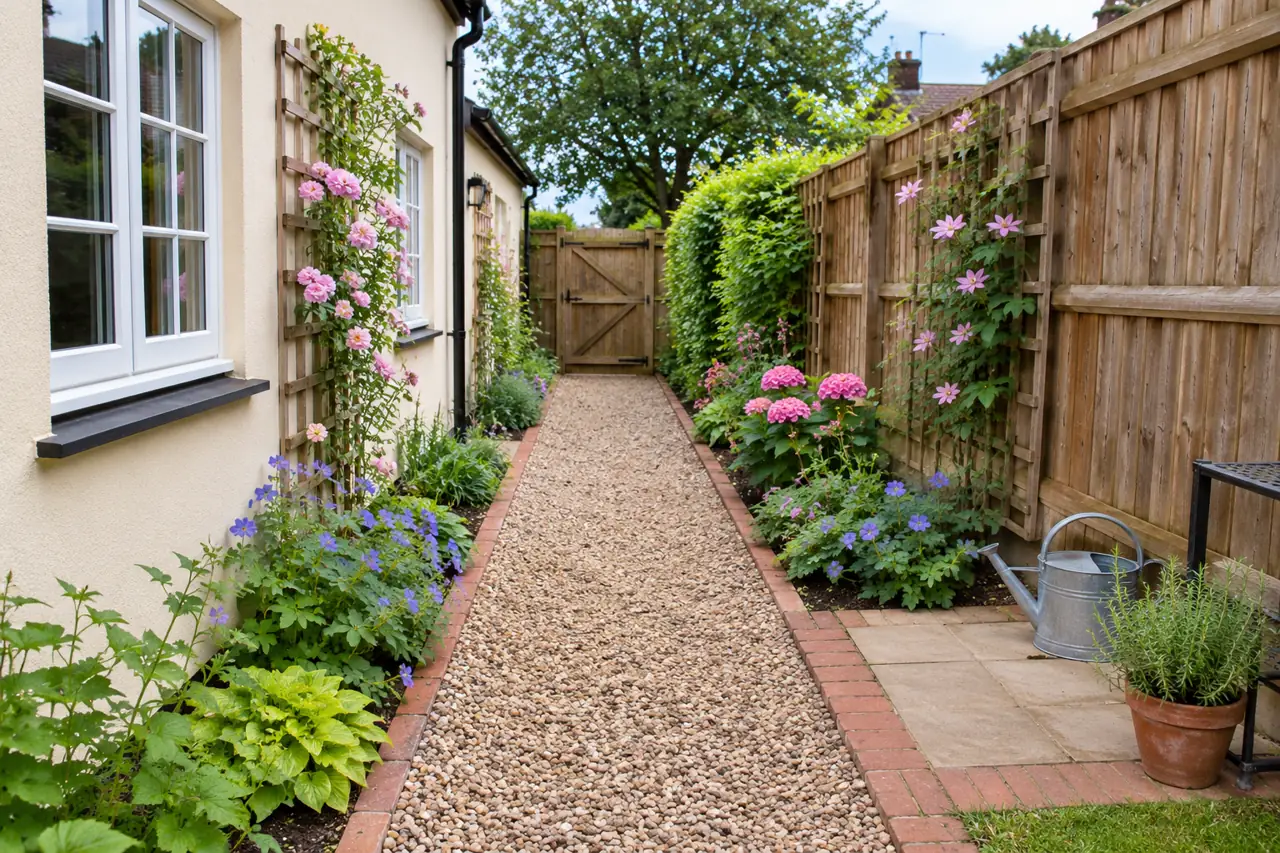
Turn a side passage into a garden route with a firm, continuous path and planting that stays within its allotted space. The gate at the far end becomes the destination.
Use slim beds for lower flowers, then bring height to selected sections with supported climbers. Leave the entire passage open above head height.
A brick edge and repeated blue or pink flowers can connect the narrow space to the rest of the garden.
Skip the bench if it creates a pinch point. A small paved recess for a watering can gives the passage a useful finishing detail instead.
Measure the narrowest point with bins or other equipment in place.
Choose plants by their mature width, and check the fence and wall's sun patterns before deciding which flowers belong here.
5. A Four-Bed Potager With Flowers Around the Crops
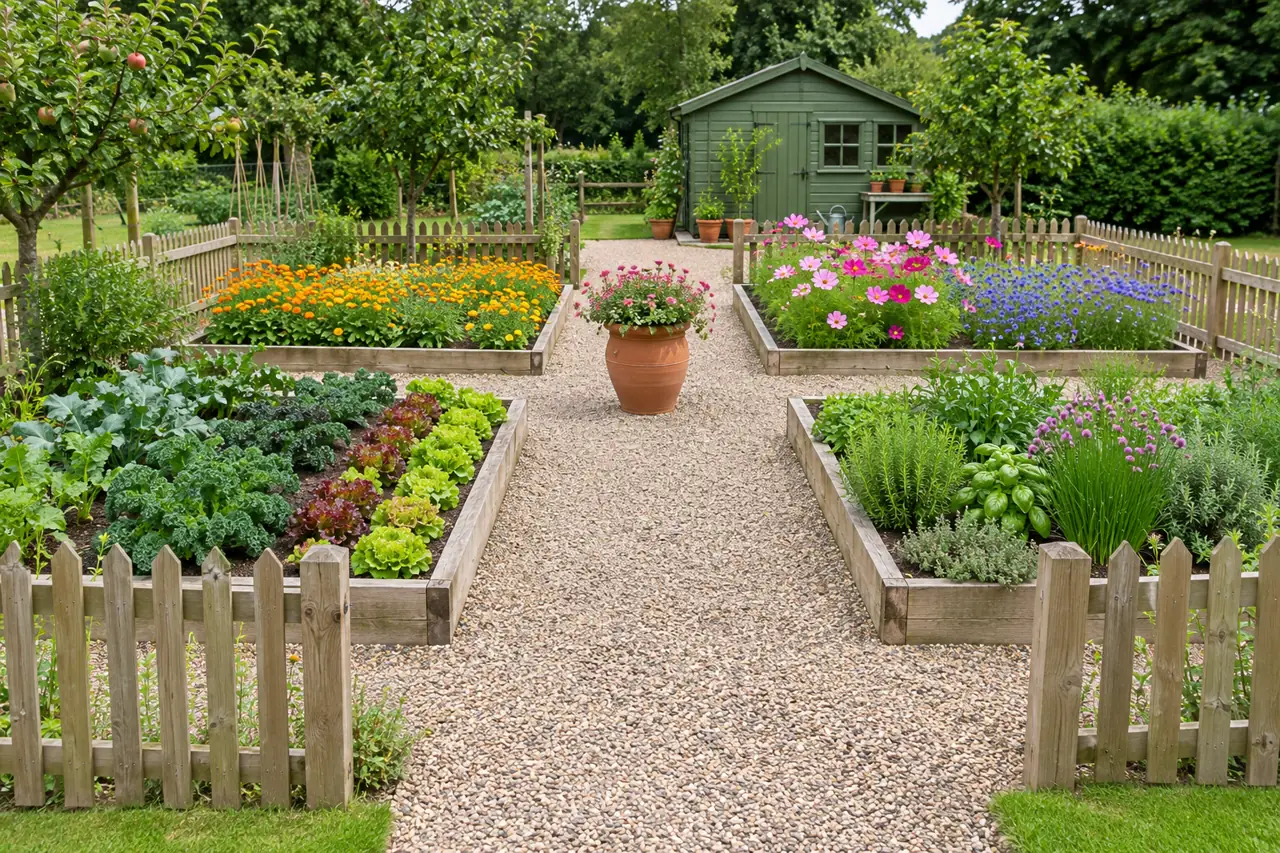
A simple cross of paths makes a kitchen garden look settled and intentional. Four manageable beds can hold vegetables, culinary herbs, and separate ribbons of flowers.
Keep the center open enough to turn with a watering can. A modest planted urn provides a focal point without making the junction awkward.
Use repeated bed materials and a low boundary fence to hold the busy planting together. Cosmos, calendula, and leafy crops offer contrasting shapes where locally suitable.
Treat the flowers as part of the design, not as a promise of better harvests.
Plan access to every crop before filling the beds.
Keep ornamental and edible plants clearly identified, choose vegetable varieties for the season, and reserve a little space for replacement sowings rather than planting every inch immediately.
6. A Cottage Cutting Patch You Can Actually Harvest
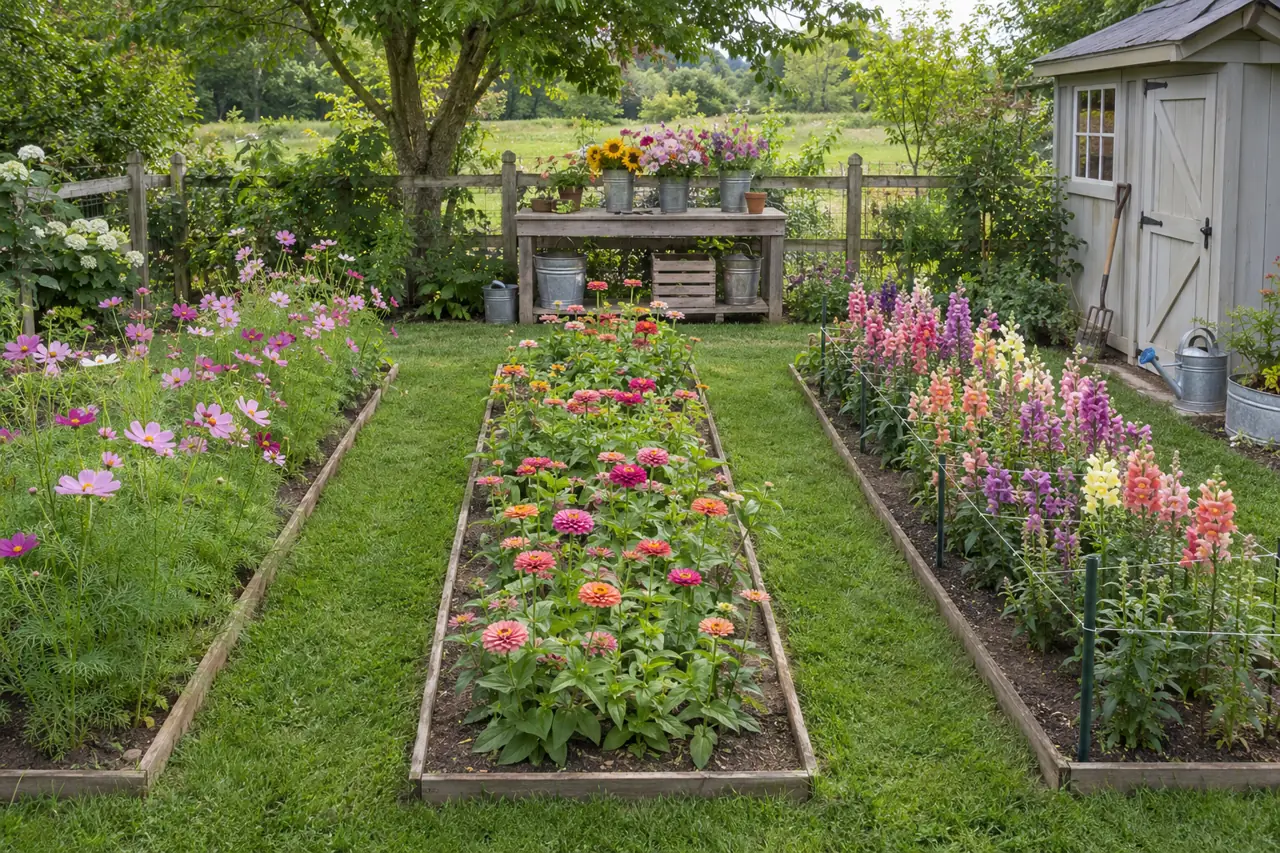
This garden earns its flowers twice: once in the beds and again indoors.
Straight rows and clear paths make it easier to reach stems without treading through neighboring plants.
Arrange several narrow beds beside a simple worktable. Buckets, clean tools, and a small patch of standing room belong within easy reach.
Choose locally suitable cutting varieties of cosmos, zinnias, or snapdragons, mixing flower shapes rather than relying on one crowded block of color.
Install any needed supports while plants are small. A low fence can provide a neat backdrop without shading the entire patch.
Plan around each flower's growing season and harvesting behavior.
Some produce repeated usable stems, while others have a shorter contribution; leave room to replace finished plants instead of expecting every row to perform indefinitely.
7. A Rose Arbor With a Proper Path Beneath It
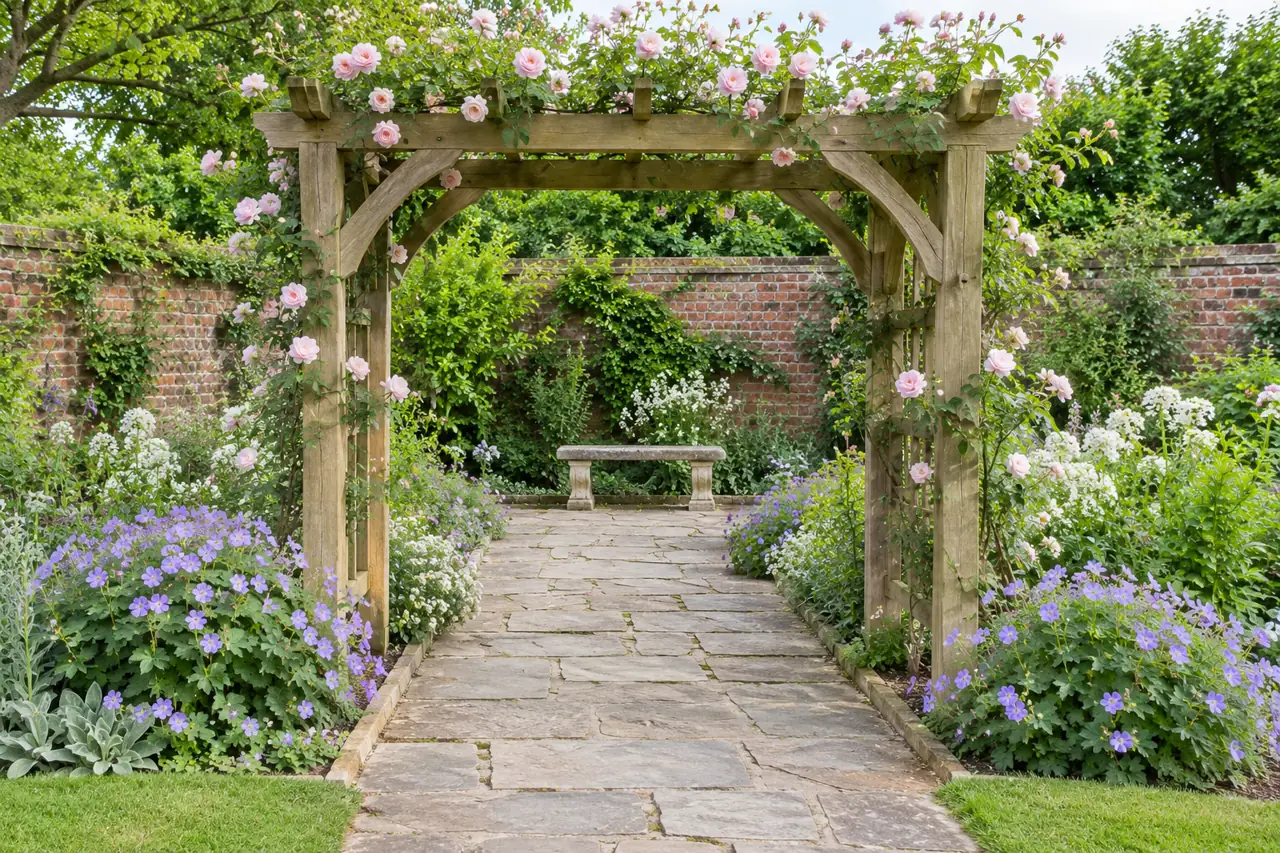
A rose-covered arbor creates a clear transition between two garden spaces. It works especially well where a path already leads toward a bench or a second garden room.
Choose the structure first, with enough strength and space for the mature climber. Get suitable structural advice rather than assuming a decorative arch will carry it.
Train stems so the opening stays clear. Low flowers beside the paving make the approach feel generous without competing with the rose overhead.
Weathered timber, pale stone, and a plain bench let the planting carry the romance.
Match the rose to your climate and available sun, then check its flowering habit.
Some old-fashioned roses flower only once, so give the beds below their own seasonal interest rather than promising continuous bloom from the arch.
8. A Leafy Cottage Retreat for a Shadier Corner

A shady cottage garden can be soft and colorful without pretending it is a sunny rose border. Begin with foliage, a comfortable seat, and a clear route through the space.
Layer ferns with suitable shade-tolerant flowering plants. Hardy geraniums and astrantias offer possibilities where the particular variety and soil moisture fit.
A green bench, pale cushion, and weathered brick backdrop make the room feel finished even when few flowers are open.
Keep planting pockets modest around established trees. Roots and dry soil may limit what can grow there.
Avoid cutting major roots, raising soil around trunks, or burying the root flare.
Assess the existing tree first and seek advice where needed; a generous open mulched area can be better than forcing a dense new bed beneath it.
9. A Sunny Gravel Garden With Cottage Softness
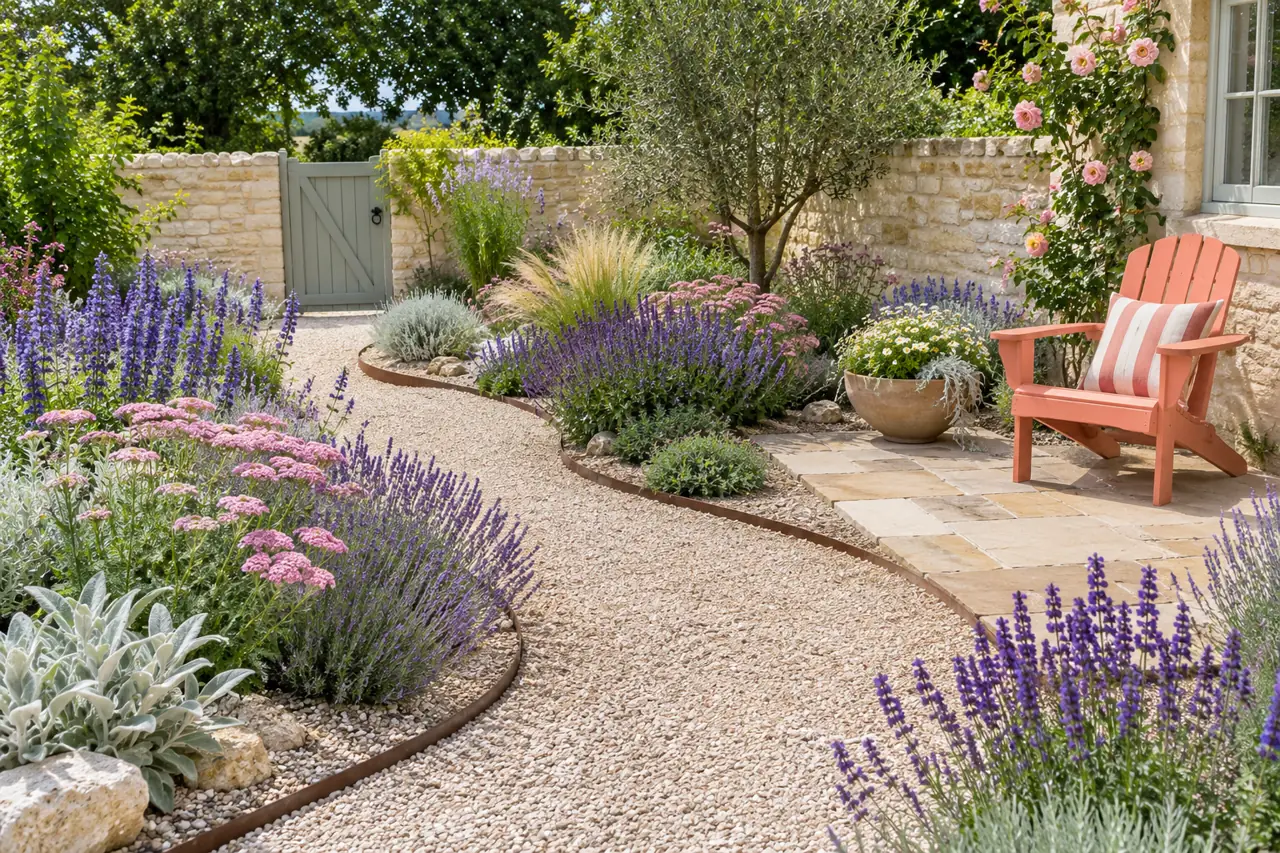
For a sunny site with genuinely free-draining soil, gravel planting offers a looser cottage look.
Purple salvia, lavender, and suitable yarrow can sit among pockets of silver foliage.
Give the garden a defined walking route instead of treating every gravel patch as a path. Low edging helps distinguish planted areas from circulation.
Set a coral chair on a stable paved pad, with a striped cushion and one substantial clay pot nearby.
The color feels cheerful; the repeated stone and gravel keep the whole setting calm.
Check the selected plants' winter wet tolerance as well as their summer needs.
Gravel on top will not fix underlying drainage problems. New plants still need appropriate establishment watering; this is not a garden that never needs care.
10. A Flowering Rain Garden Beside a Dry Path
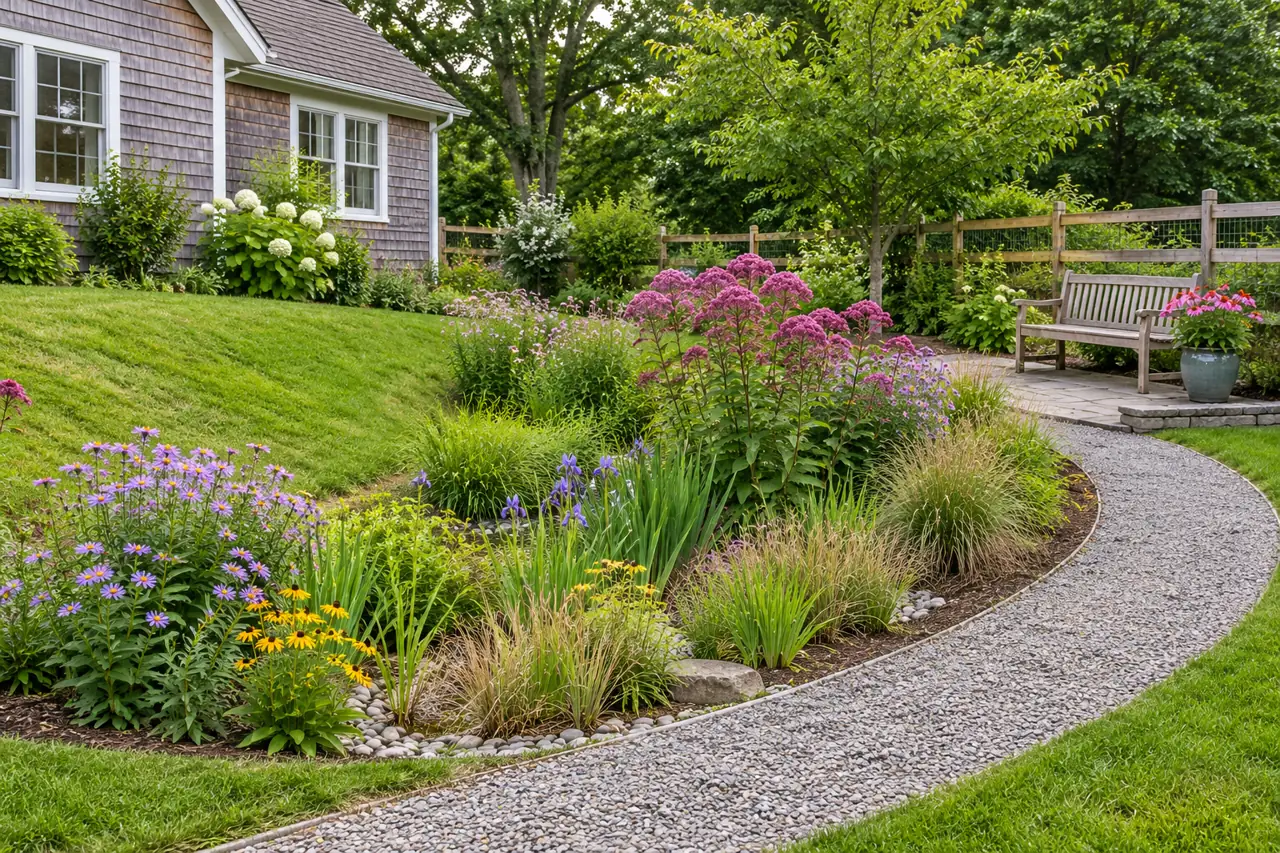
A shallow planted basin can become a beautiful part of a cottage landscape where the site is suitable for a rain garden. It is a drainage decision first.
Arrange a broad sweep of locally appropriate plants that tolerate the basin's wet and dry cycles. Sedges and flowering perennials can provide contrasting forms.
Run the walking path outside the basin, with a bench on a separate dry pad. Keep access clear for inspection and maintenance.
The result can read as a soft crescent of flowers against the lawn rather than an isolated utility feature.
Before digging, assess infiltration, runoff, utilities, and locally required setbacks from buildings, wells, and septic systems.
Use regional guidance or qualified help; an existing soggy spot does not automatically make a suitable rain garden.
11. A Small Wildlife Pond Framed by Cottage Planting

Water gives a cottage garden a different pace. Place a small wildlife pond where a dry path and a set-back bench allow you to watch without trampling the edges.
Use a modest mix of stone, gravel, and planting rather than a ring of unrelated ornaments.
Provide a gentle, usable exit for wildlife, such as a long shallow edge. Choose aquatic plants for your region and check invasive-species restrictions before buying.
Keep part of the bank open while allowing cover nearby. Flowering beds farther back can connect the pond to the wider garden.
This layout needs a real safety plan wherever children could reach water, including suitable barriers and supervision.
Confirm local requirements and construction details before installation; a pretty illustration cannot establish that a pond is safe.
12. An Orchard Edge With a Ribbon of Flowers

An existing small orchard can borrow cottage charm without squeezing flowers around every trunk.
Keep the central grass route open and put the richest border along a sunnier perimeter.
A weathered bench and harvest basket give the setting a clear purpose. Choose a spot where branches will not interfere with sitting or moving equipment.
Repeat a few flower shapes through the boundary bed so the trees and border feel connected.
Leave trunk bases visible and avoid piling mulch against them. Established roots and the changing canopy will influence nearby planting choices.
Observe the available light before extending the flower strip, and keep access for pruning and fruit collection.
Where the trees already dominate the soil and shade, a smaller border outside their busiest root area may be more practical.
13. A Low Flower Garden Around the Front Porch
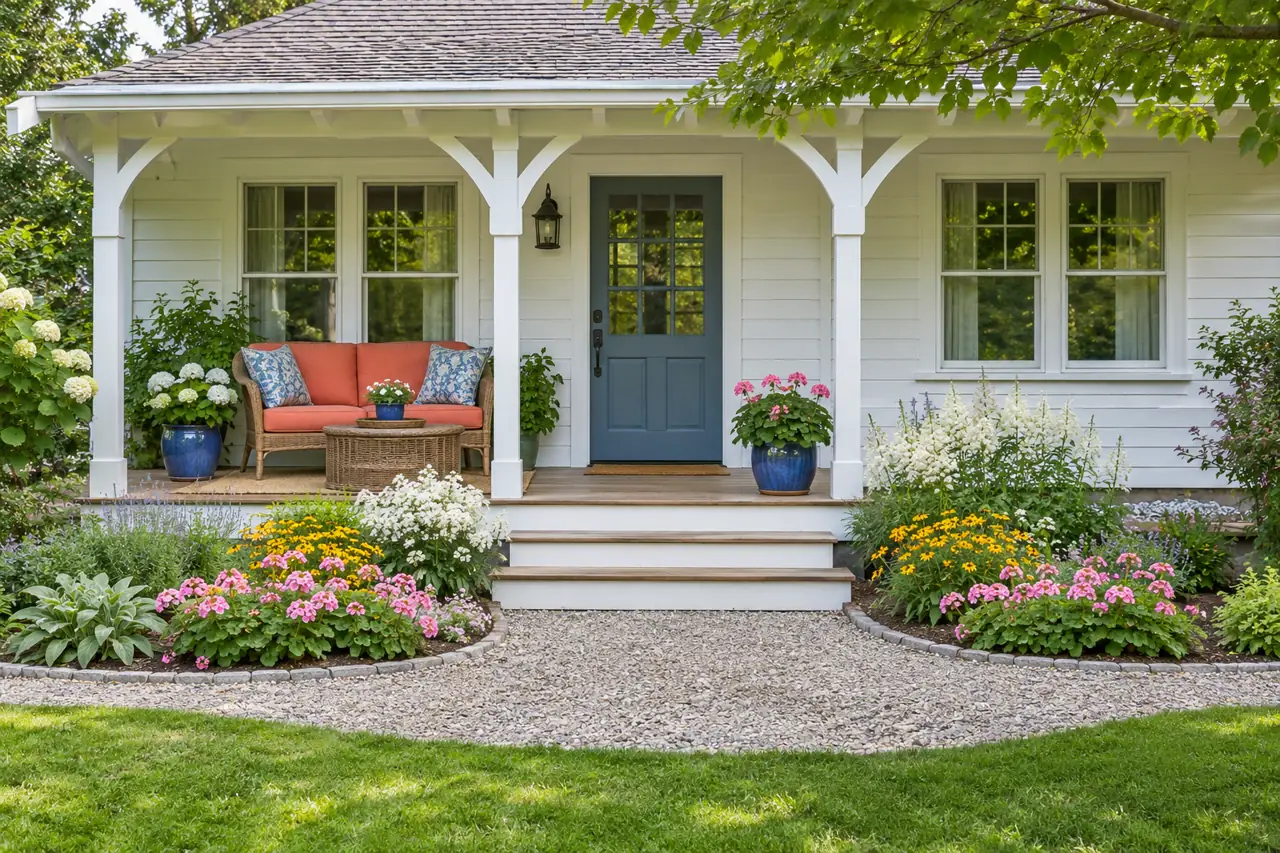
Let the porch remain the main gathering space, with flowers framing its steps and lower edges. A low planting scheme preserves the windows and keeps the entrance easy to find.
Place a painted seat against the porch wall, then repeat one cushion color in pots or flowers near the path.
Rounded beds on either side of the entrance can hold lower perennials, with taller accents positioned away from important sightlines.
Leave room around the foundation and keep ventilation openings, drains, and service access clear.
Check the bed beneath the roof edge separately from the lawn beyond; rainfall and shade may differ noticeably.
Choose plants for those actual conditions, and resist filling every gap against the house simply to reproduce the full look of a mature illustration.
14. A Flower Island Designed to Be Seen From Every Side
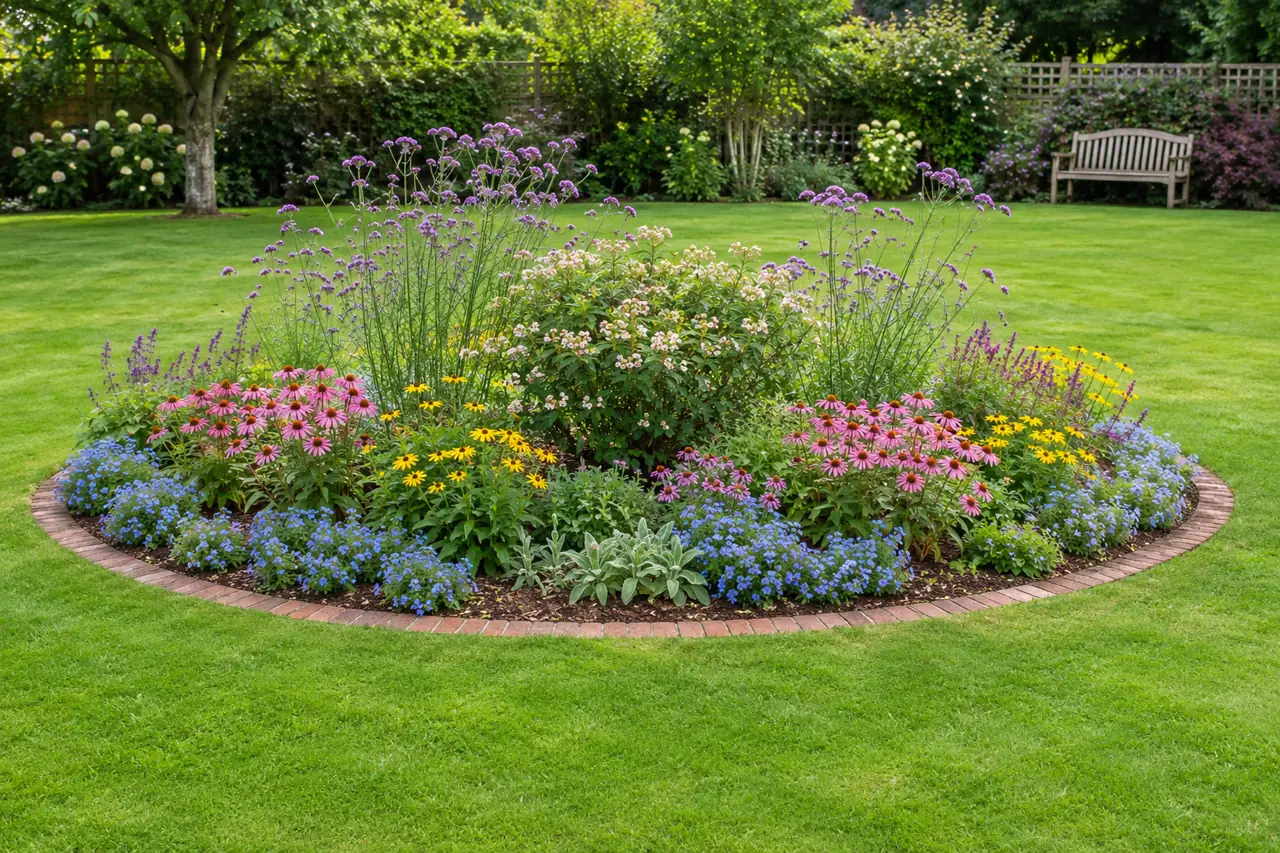
A flower island brings cottage planting into the middle of a larger lawn. Its shape should suit the space, with enough grass around it for easy movement and mowing.
Place the tallest elements near the center, then step down through medium flowers to lower edging plants.
A curved brick mowing edge gives the informal planting a clear outline. Keep the surrounding lawn simple so the island remains the focus.
Look at the proposed bed from the house, the gate, and the seating area before removing turf.
Choose a size you can maintain without stepping among plants.
If the middle will be out of reach, include discreet access points, and check mature shrub widths carefully; a small nursery plant can eventually overwhelm an otherwise balanced circular bed.
15. Flowering Terraces That Follow a Gentle Slope

Where suitable terraces already exist, turn their level beds into a sequence of cottage borders.
Repeating stone and a few flower colors links the separate levels together.
Keep steps and their landings clear, with plants set back far enough that mature growth will not hide the edges.
A small chair on the upper level gives the climb a destination. Lower flowers beside the route allow views across the planting rather than forming a wall.
Choose species for each bed's exposure and moisture instead of assuming the whole slope behaves alike.
New retaining walls, drainage changes, and access routes need appropriate design and any required approvals.
Get qualified advice before construction; the planting idea is adaptable, but an image cannot specify a safe wall, foundation, or stair arrangement.
16. A Hedge-Enclosed Reading Garden
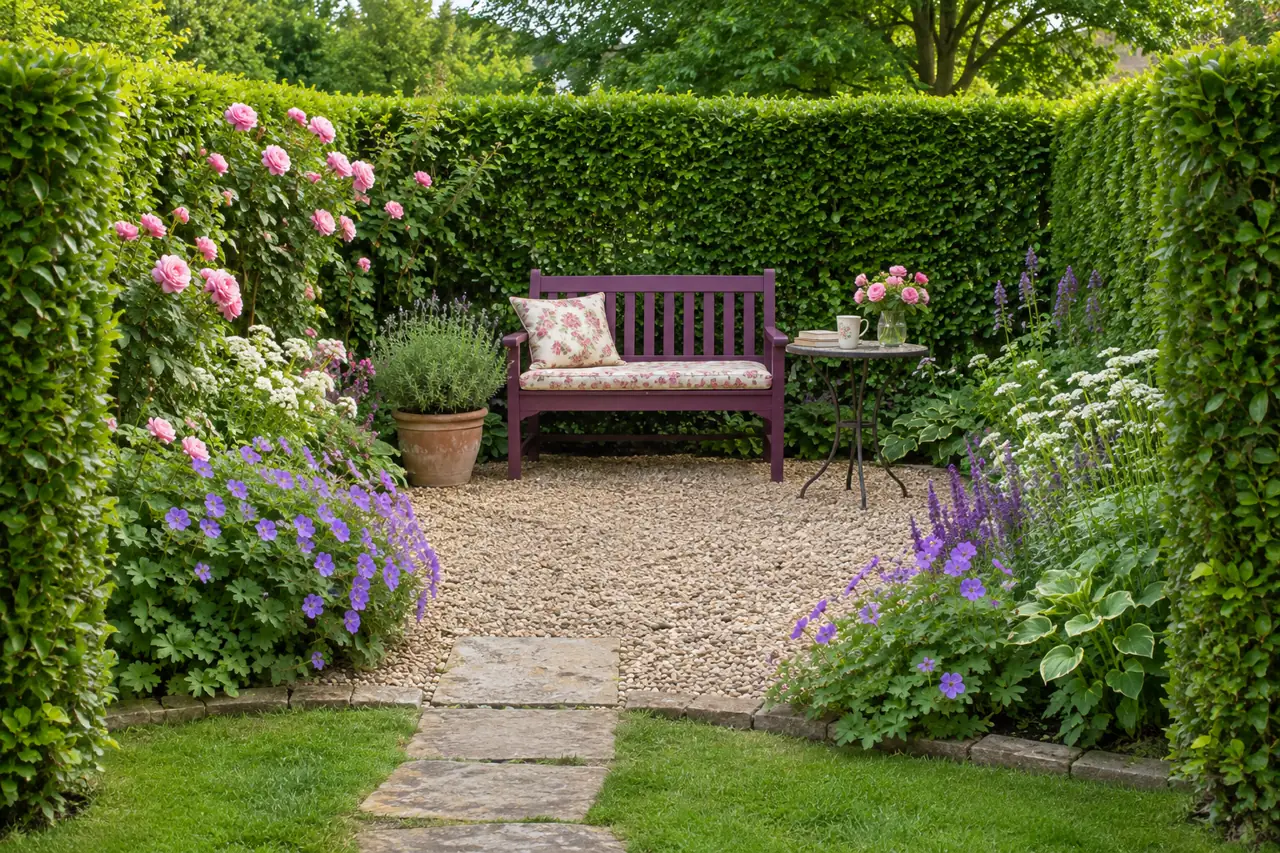
A clipped hedge can turn one corner into a small outdoor room.
Keep the entrance legible, then lead a short path toward a bench on a comfortable gravel or paved pad.
Plant flowers along two edges rather than packing the whole enclosure. The open center gives the seat some breathing room.
A plum-painted bench, floral cushion, and little table are enough furniture here.
I like this layout for its sense of pause: the surrounding garden can stay busy while the seat feels tucked away.
Allow for the hedge's mature width, clipping access, and effect on light.
Choose a manageable species for your climate, and leave enough space between hedge and flowers to care for both without reaching through thorns or repeatedly stepping into the border.
17. A Meadow-Inspired Patch With a Mown Route

A meadow-inspired area offers a looser alternative to tightly arranged cottage beds. A broad mown path and a clean perimeter make the intention clear.
Choose regionally appropriate flowers and grasses for your soil and climate, checking the exact contents of any seed mixture. A generic wildflower label is not enough.
Place a bench outside the planting, where you can enjoy the movement without walking through stems.
Keep a modest footprint at first. You can extend the patch once you understand its seasonal appearance and maintenance needs.
Establishment still involves managing weeds and following a suitable cutting routine.
This is not an instant, maintenance-free flower carpet, and a perennial meadow may look quite different outside its flowering peak; keep the surrounding structure attractive during those quieter periods.
18. A Border That Saves Its Big Moment for Late Summer
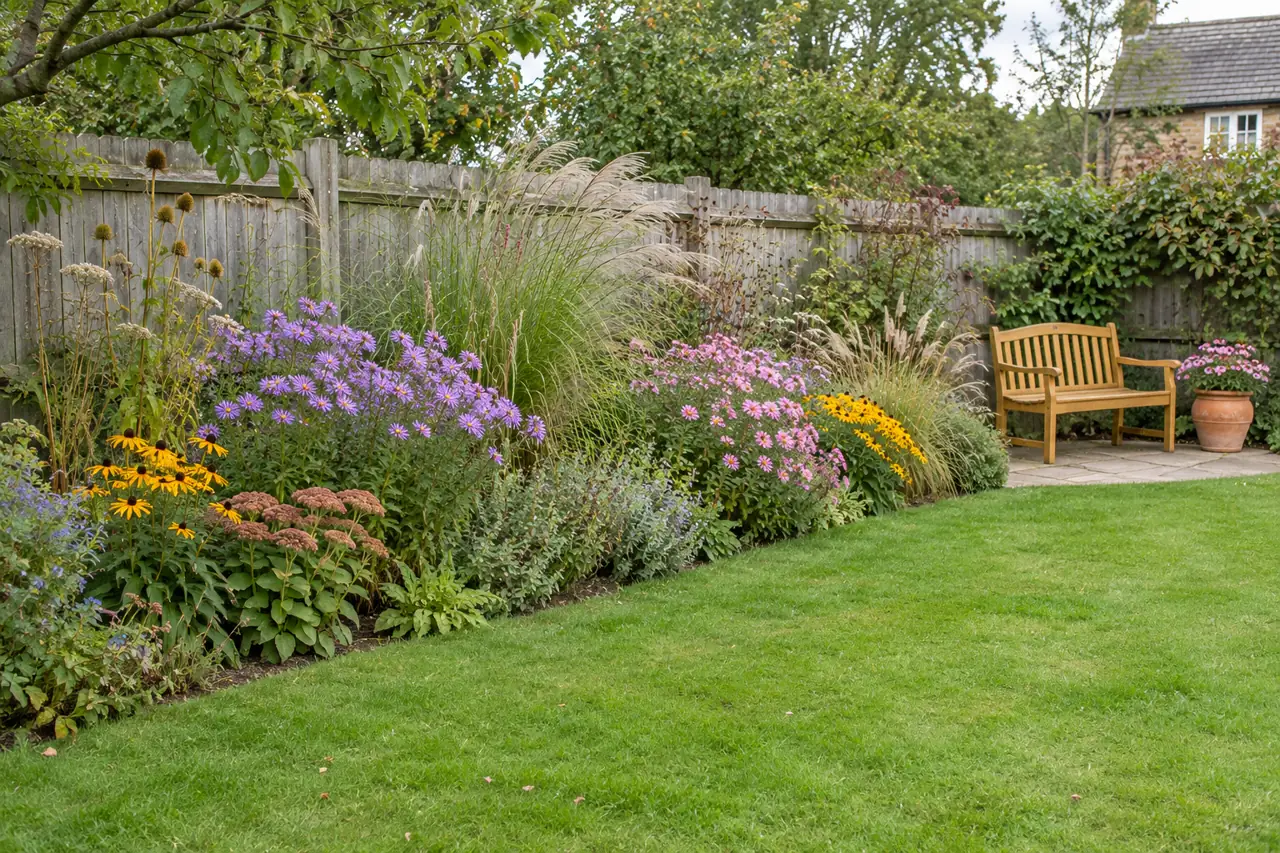
Give one part of the garden a later flowering role instead of asking every bed to peak together.
Asters, rudbeckias, and suitable grasses suggest the effect in many temperate gardens.
Choose locally appropriate varieties and check their actual flowering periods. Heat, frost dates, and climate can shift the display.
Arrange the tallest forms near the back of a sunny boundary bed, with lower flowers beside the sitting area.
An ochre bench and a simple pot keep the space welcoming before the main show begins.
Make a seasonal plan for the same bed's quieter months, using foliage and a visible path or edging to provide shape.
Leave space for mature clumps and budget for division or other maintenance. Resist crowding young plants to imitate an established border immediately.
19. A Spring Bulb Garden With a Plan for What Follows

A curved path through spring bulbs can make the garden feel awake. Group bulbs among later-growing perennials instead of spreading single stems evenly across the bed.
Choose varieties suited to your winter conditions and soil. A small selection repeated in generous patches usually reads more clearly from the house.
A pale bench and a few flowering shrubs can anchor the scene while the lower planting changes.
Think beyond the flower display. Bulb leaves need time to yellow and die back naturally after flowering, so do not plan an immediate tidy cutback.
Position later foliage where it will soften the fading leaves without smothering them.
If you want bulbs in grass, keep that area separate from lawn you must mow early; their after-flowering needs should shape the layout from the start.
20. A Cottage Garden Composed Around the Kitchen Window
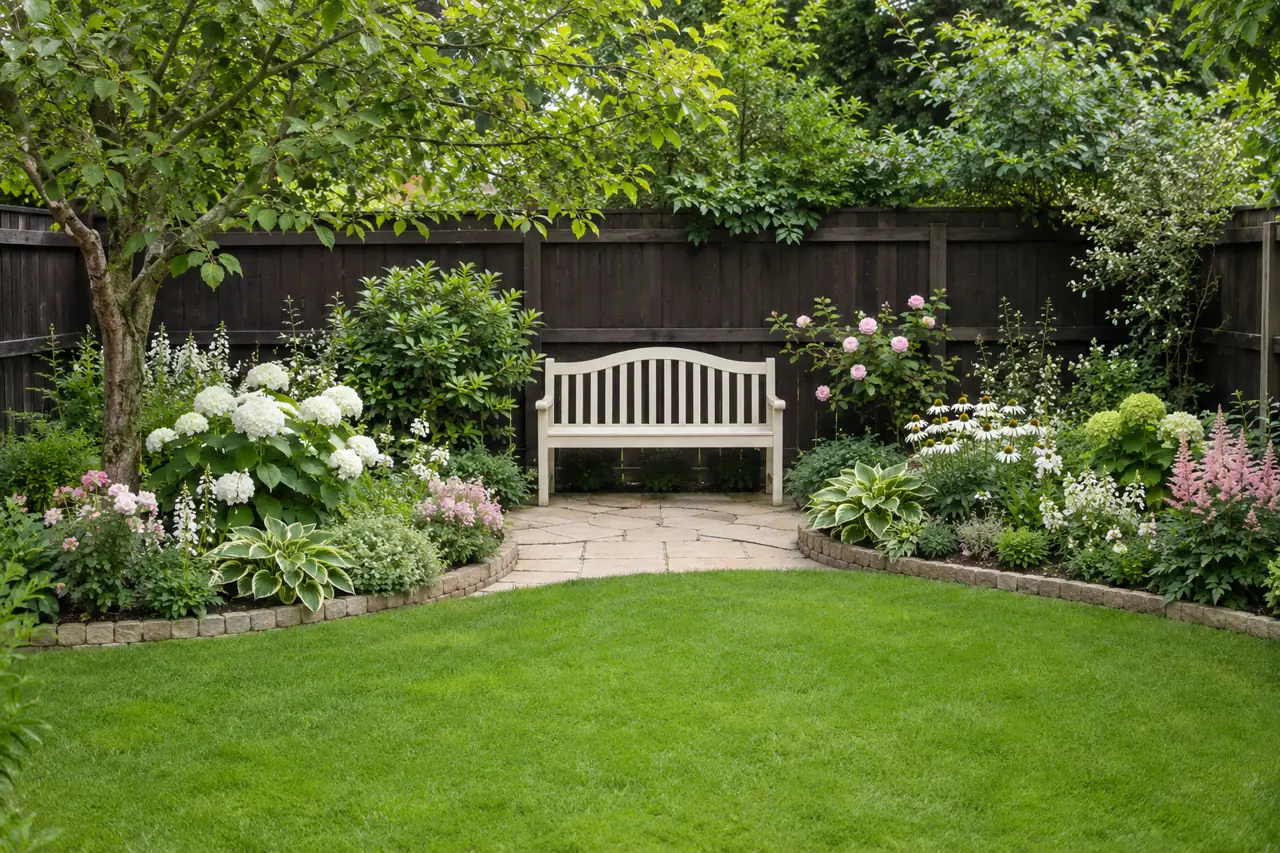
Design this little garden from the view you use most: the kitchen window. A centered bench or simple planted pot can provide a focal point beyond the glass.
Frame it with two offset flower beds and a short connecting path. Leave some open ground so the scene has depth rather than becoming a solid wall of foliage.
White flowers, pale pink accents, and repeated green leaves create a restful composition against a darker boundary.
Choose their species for the actual site; a light-colored flower is not automatically suitable for shade.
Mark the window's sightline before buying plants, and check it while seated as well as standing.
Keep the focal point reachable for maintenance, and allow mature growth below the view you want to preserve throughout the changing seasons.
21. An Outdoor Dining Room With Flowers at the Edges
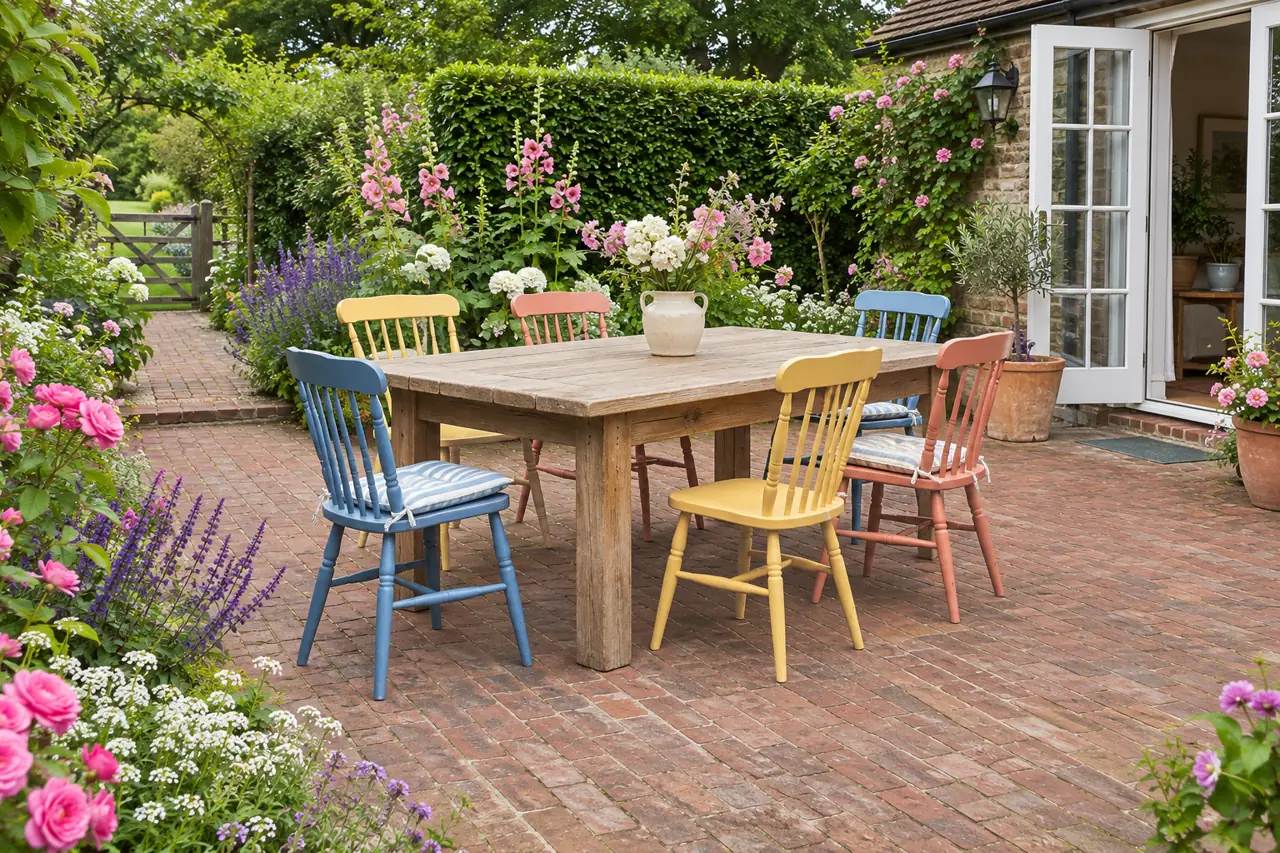
Build this cottage garden around the table first.
A firm, sufficiently roomy terrace should hold the furniture while guests can still pull out chairs and walk past.
Put the deepest flower borders beyond that working area, using a fence or hedge as the backdrop.
Painted chairs and patterned cushions add color that does not depend on bloom time. Repeat a few of those colors in nearby flowers for a connected look.
Keep large pots at the corners rather than beside every chair leg.
Lay out the table and chairs before deciding the bed line, including the route back to the house.
Check that watering will not soak cushions or leave puddles where people sit. Choose nearby plants with users' sensitivities, thorns, and mature spread in mind.
22. A Kitchen-Door Herb Garden With Cottage Character

A small herb garden can feel ornamental and useful at the same time. Divide a simple rounded bed into reachable sections, with a firm standing area beside the kitchen-door route.
Keep the plants you harvest most near the front. Use clear labels so culinary herbs stay distinct from ornamental flowers nearby.
Repeat brick edging and terracotta pots to connect the bed to the house. A small preparation table outside the main path adds a practical finishing touch.
Choose herbs by their growing needs rather than forcing them into one identical watering routine.
Give mint its own managed container instead of allowing it to spread through the whole arrangement.
Keep taller growth away from door swings, and leave enough space to kneel, clip, and carry a basket without trampling neighboring plants.
23. A Cottage Garden for a Stoop and Window Boxes
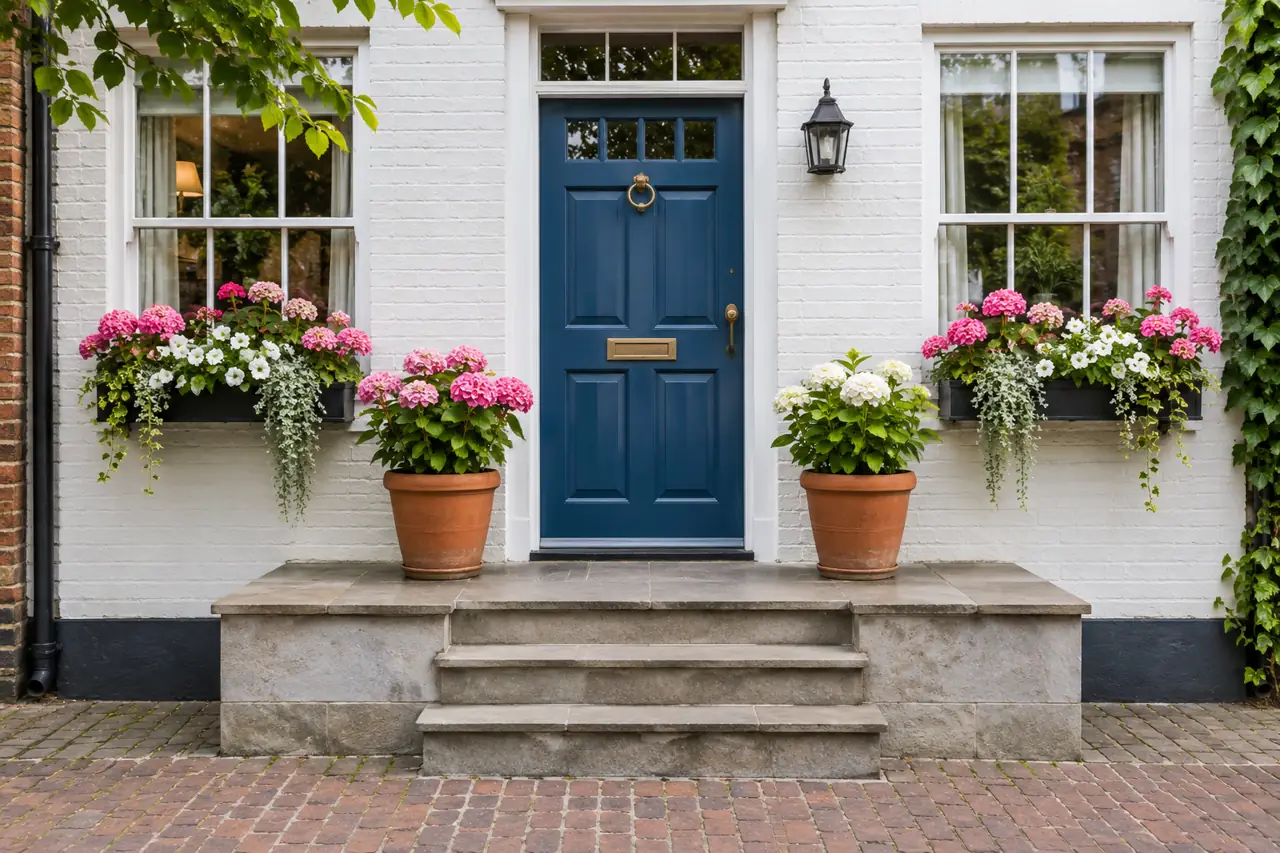
When there is no planting bed, treat the house frontage as a small coordinated garden. Window boxes provide height while substantial pots anchor the steps or a level landing.
Choose one repeated container material and a loose mixture of flower shapes. Pink blooms, small white flowers, and trailing greenery can soften the hard edges.
A painted chair works only if the landing still has generous clearance. Otherwise, let the door color supply that finishing detail.
Keep rails, steps, and the full opening of the door free from foliage.
Use suitable securely fitted brackets for window boxes, and check the load when compost is wet.
Provide drainage without sending water onto a public walkway, and plan a convenient watering routine before placing heavy containers where they cannot easily be moved.
24. A Garden Shed Framed by a Working Flower Border

Make the shed part of the garden rather than hiding it behind tall plants.
Keep a clear path to the doors and build flowering beds around that working space.
A simple potting table beside the wall gives tools and trays somewhere useful to land. Store sharp tools securely when the work is finished.
Place taller flowers near the boundary, with lower planting beside the path and room to reach hinges, handles, and the tap.
A muted blue shed, galvanized buckets, and one patterned seat cushion offer plenty of character.
Before planting, wheel your largest garden equipment through the route and check the doors fully open.
Leave practical access for maintaining the shed itself; roses against every wall can look lovely until painting, repairs, or daily storage becomes difficult.
25. An Open Family Lawn Framed by Cottage Borders
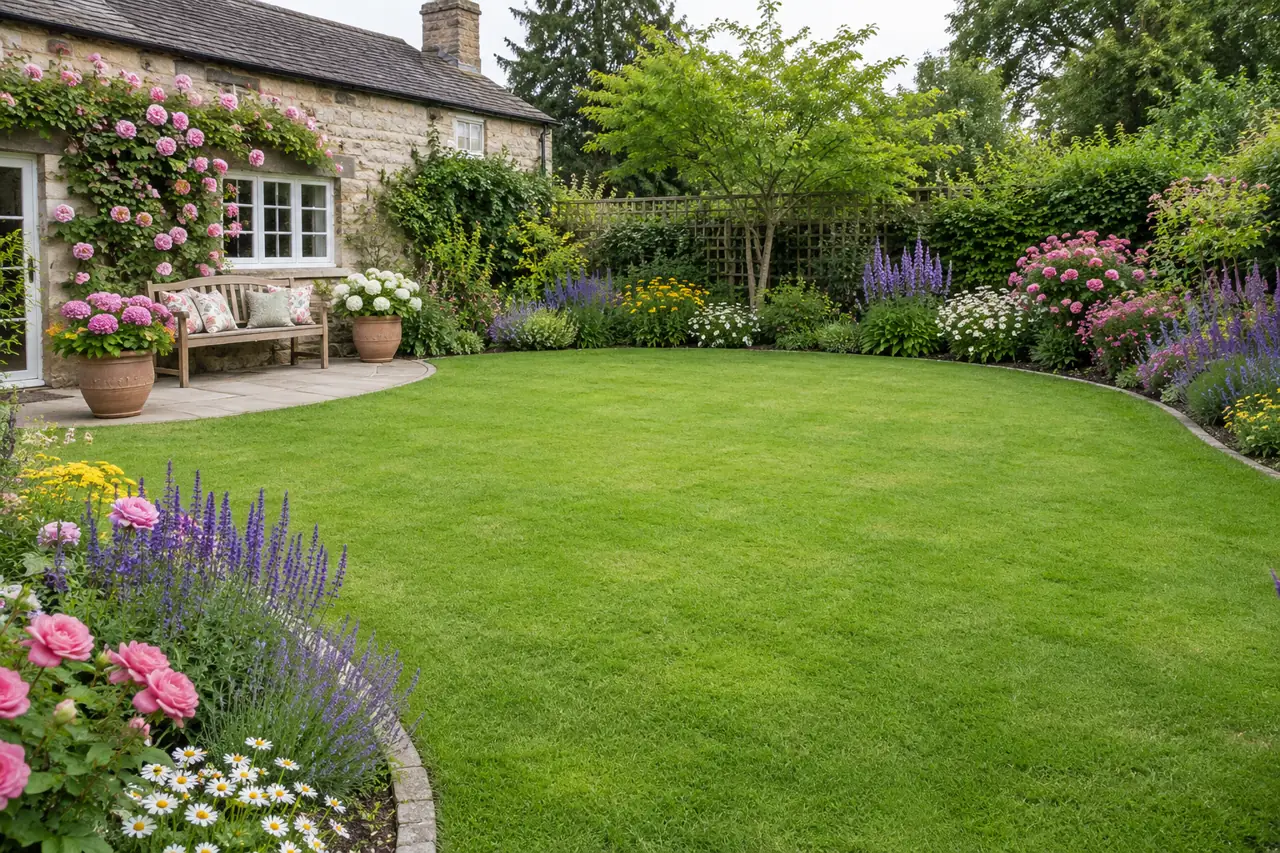
Keep the center of this garden generous and uncomplicated. Flower borders can wrap the perimeter while the lawn remains available for sitting, games, or simply moving through the yard.
Make the nearest bed edges clear and easy to see, with taller planting toward the boundary rather than projecting into the usable space.
A bench on a small terrace gives the whole garden a resting point. Colorful cushions and a few substantial pots finish that area without scattering obstacles across the grass.
Choose the plants for the people and animals who actually use the garden.
Review toxicity, thorns, allergies, and mature spread rather than assuming cottage favorites are harmless.
Start with one well-planned border if time is limited, then extend it only when its watering, weeding, and seasonal care feel manageable.
Start With One View You Want to Enjoy
Choose one of these layouts and sketch it around your existing doors, paths, light, and daily routines. Then shortlist a few plants that genuinely fit.
If soil conditions are uncertain, use the garden soil testing guide before spending money on amendments.
Build the useful framework first. A clear route, a comfortable seat, and a border you can care for give the flowers somewhere to belong.