
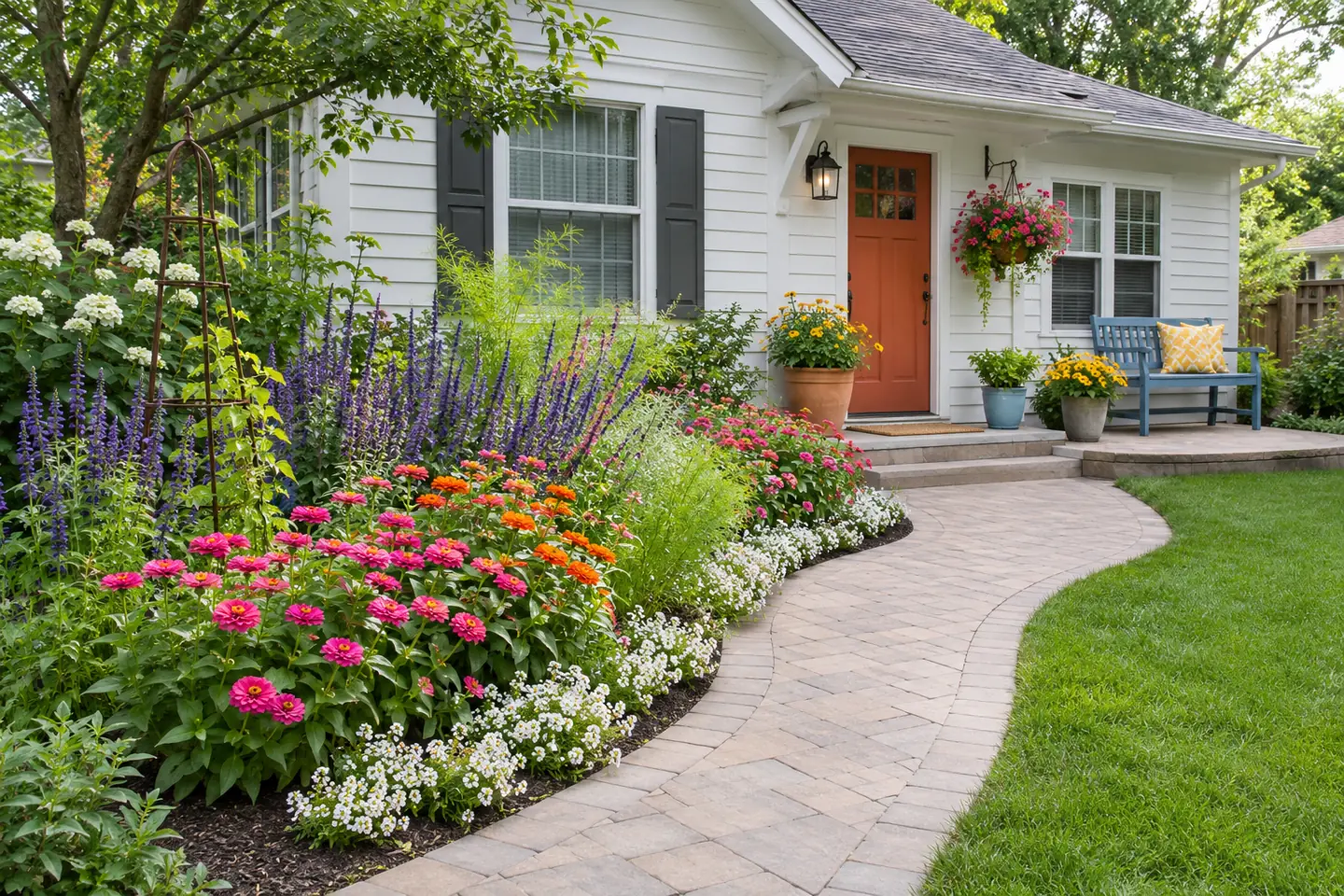
A front flower bed should make the house feel welcoming while leaving the door, windows, and paths easy to use. Start with its shape, then choose plants for the light and soil you actually have.
These 20 flower bed ideas for the front of the house range from colorful cottage borders to shaded porch corners and simpler modern planting.
Borrow a layout, not an entire plant list. Local climate, drainage, mature size, bloom timing, and maintenance needs decide which version will work in your garden.
Image note: These are AI-created design illustrations, not photographs of Claire’s garden or tested builds. Flowering displays are seasonal examples, not identification or construction evidence.
Starting with bare ground? Our guide to starting a flower garden from scratch covers the preparation before planting.
1. A Curving Cottage Border Along the Front Walk
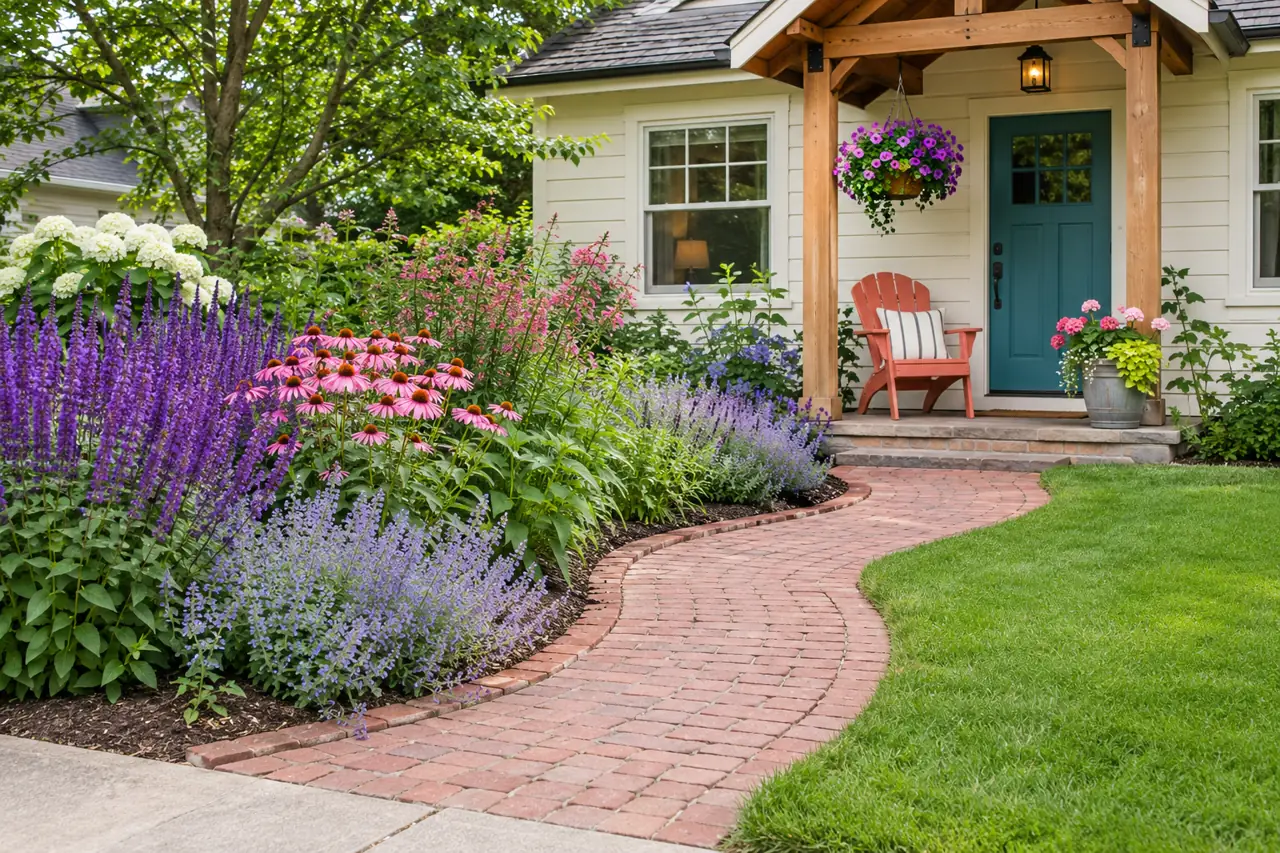
A curving border makes the journey to the front door feel like part of the garden.
Follow the bend with taller salvia and coneflowers, then soften the front with low catmint. Repeat the groups instead of scattering one of everything.
Warm brick paving and a teal door give the flowers a clear backdrop.
A coral porch chair adds another welcoming detail without competing for planting space.
Lay a hose on the lawn to test the curve before removing turf.
Check the route while carrying a bag, and allow for the flowers’ mature spread. The path should still work when the plants fill out.
Choose sun-loving varieties suited to your soil and climate. This generous look needs more bed width than a thin strip beside narrow paving.
Worth checking: NC State Extension: salvia growing conditions.
2. Matched Flower Beds Beside a Straight Entry Path

Two matching beds can make a plain entrance look considered, even when the house itself is quite simple.
Use the same bed outline on each side of a straight path. Repeat compact shrub roses and a lower white flowering edge for a clear, balanced composition.
Keep the front door visible. Modest terracotta pots on the landing can connect the beds to the entrance without narrowing the approach.
Start by matching the structure, then check the growing conditions on both sides.
One bed may receive considerably more shade or roof runoff than the other. Symmetry should not force identical plants into unsuitable conditions.
Select roses for mature size, local disease performance, and maintenance needs. Leave access behind the planting so pruning does not require standing among the flowers.
Worth checking: UF/IFAS: mature plant size and access around the house.
3. A Leafy Flower Bed for a Shaded Front Porch

A shaded porch can have a flower bed with plenty of personality.
The trick is letting foliage carry some of the display.
Combine pink astilbe plumes with burgundy coral bells and green ferns. Their different leaf shapes keep the bed interesting beyond a brief flowering period.
A lavender bench and a botanical cushion make the porch feel connected to the planting. Keep the bench on the porch floor, with the flower bed outside it.
Use an irregular crescent rather than a tight ring around each post.
Check moisture as well as shade before choosing plants. Astilbe is a better fit for suitably moist, drained soil than a dry corner beneath thirsty trees.
Leave the approach open and choose varieties whose mature leaves will not cover the lowest step.
Worth checking: NC State Extension: astilbe moisture and shade needs.
Climate note: Shade and moisture are separate questions. Check below the surface before watering; dry shade and damp shade need different planting choices.
4. A Sunny Gravel Bed With Airy Flower Drifts

If your sunny frontage drains well, an airy gravel bed can look deliberate without being packed from edge to edge.
Group purple salvia, yellow yarrow, and upright sedum with visible gravel between the clumps. Check the requirements of the particular varieties before combining them.
A few natural stones and a blue pot near the door give the composition weight. Keep the main walkway broad and visually simple.
Choose gravel as a surface finish, not as a cure for wet ground.
Compaction and poor drainage need attention before plants go in. Spreading stone over them does not solve the underlying problem.
Allow room to weed between young plants and water during establishment as needed. A dry-looking design still needs care, especially while roots are settling in.
Worth checking: NC State Extension: yarrow site requirements and spreading habit.
5. A Front-Lawn Rain Garden Set Away From the House
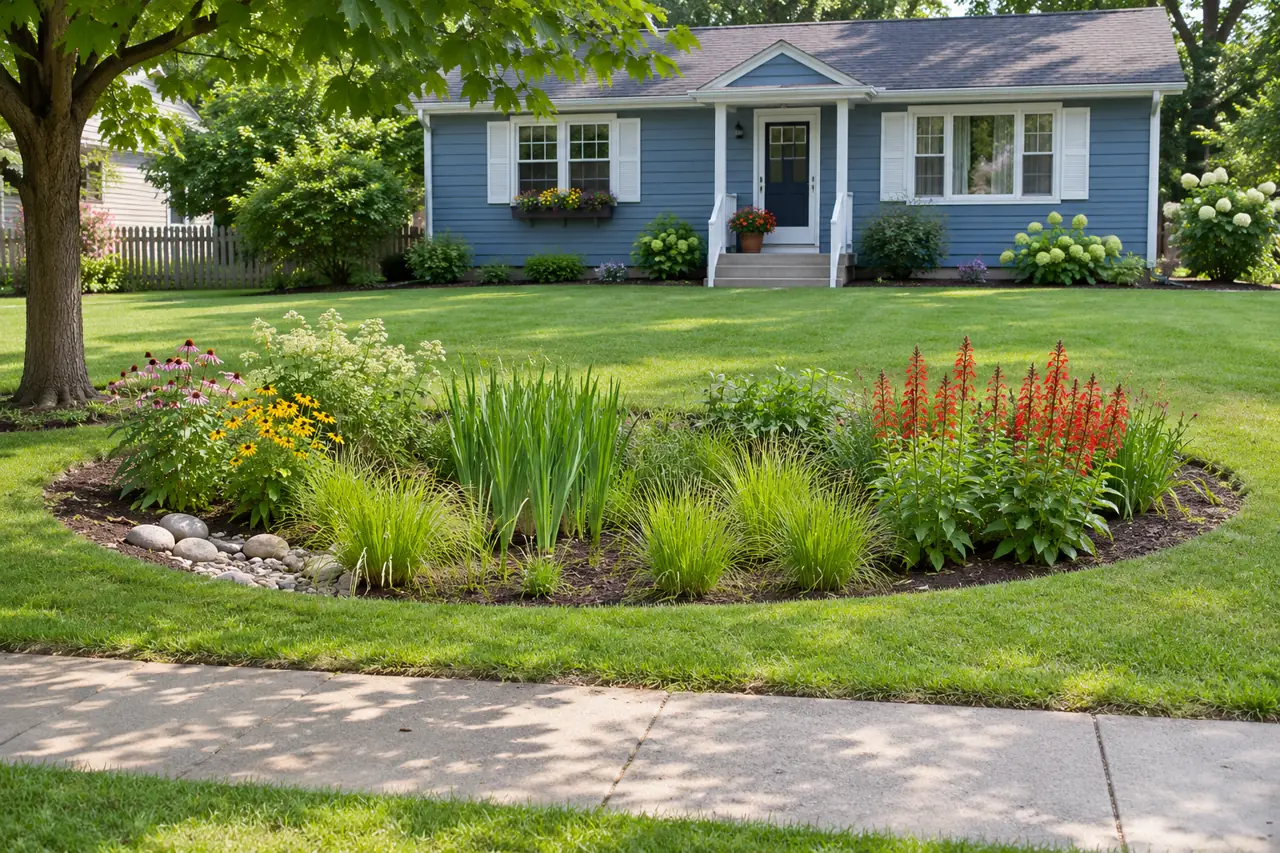
A rain garden can become a flowering feature in the front lawn when the site can safely accept and absorb runoff.
Give the shallow planted area a generous lawn buffer from the house. Use a clear kidney-shaped outline so it reads as an intentional garden.
Sedges, iris foliage, and cardinal flowers offer contrasting shapes where their moisture needs match the planting zones. Choose local species and place them by wetness tolerance.
Plan the drainage first.
University of Minnesota guidance places rain gardens at least ten feet from buildings; local conditions or rules may require more.
Check infiltration, utilities, wells, septic systems, and overflow with appropriate local guidance before digging. This is not a solution for water already collecting beside a foundation.
Worth checking: University of Minnesota Extension: rain-garden placement and assessment.
Before digging: Arrange utility locating through your local service. Rain-garden siting also needs local advice on infiltration, setbacks, and a safe overflow route.
6. A Low Mailbox Island With a Reachable Pickup Spot

A low flower island can give a mailbox a tidy setting without turning mail collection into a gardening obstacle course.
Outline the bed with an oval brick edge. Compact orange marigolds and short pink zinnias provide a cheerful display beneath the mailbox.
Leave a firm, open pickup spot rather than planting flowers right up to the door. Keep the delivery approach equally clear.
The house can remain the distant backdrop, with the same flower colors repeated in a porch pot if you like.
Check local setbacks, delivery requirements, and road sightlines before marking the footprint.
Choose plants by their mature height, not their size in the nursery tray. If the location cannot accommodate planting and safe access together, keep the flowers elsewhere in the front garden.
Worth checking: USPS: mailbox placement and clear delivery access.
7. A Flowering Peninsula That Breaks Up a Wide Lawn

A broad lawn sometimes needs one confident flower bed more than a collection of small planting islands.
Extend an existing border into a rounded peninsula, leaving a comfortable mowing route around its tip.
Pink coneflowers, yellow black-eyed Susans, and a compact clumping grass give the bed different heights and textures. Repeat larger groups so the shape remains legible from the street.
A simple birdbath on a stable pad can provide a focal point.
Keep a small maintenance route to it rather than stepping repeatedly through the planting.
I like to test this outline from an upstairs window as well as the front path.
Avoid sharp leftover lawn corners. The shape should simplify mowing, and the plants should suit the bed’s sun, drainage, and eventual available space.
8. A Low Flower Ribbon Beneath Front Windows
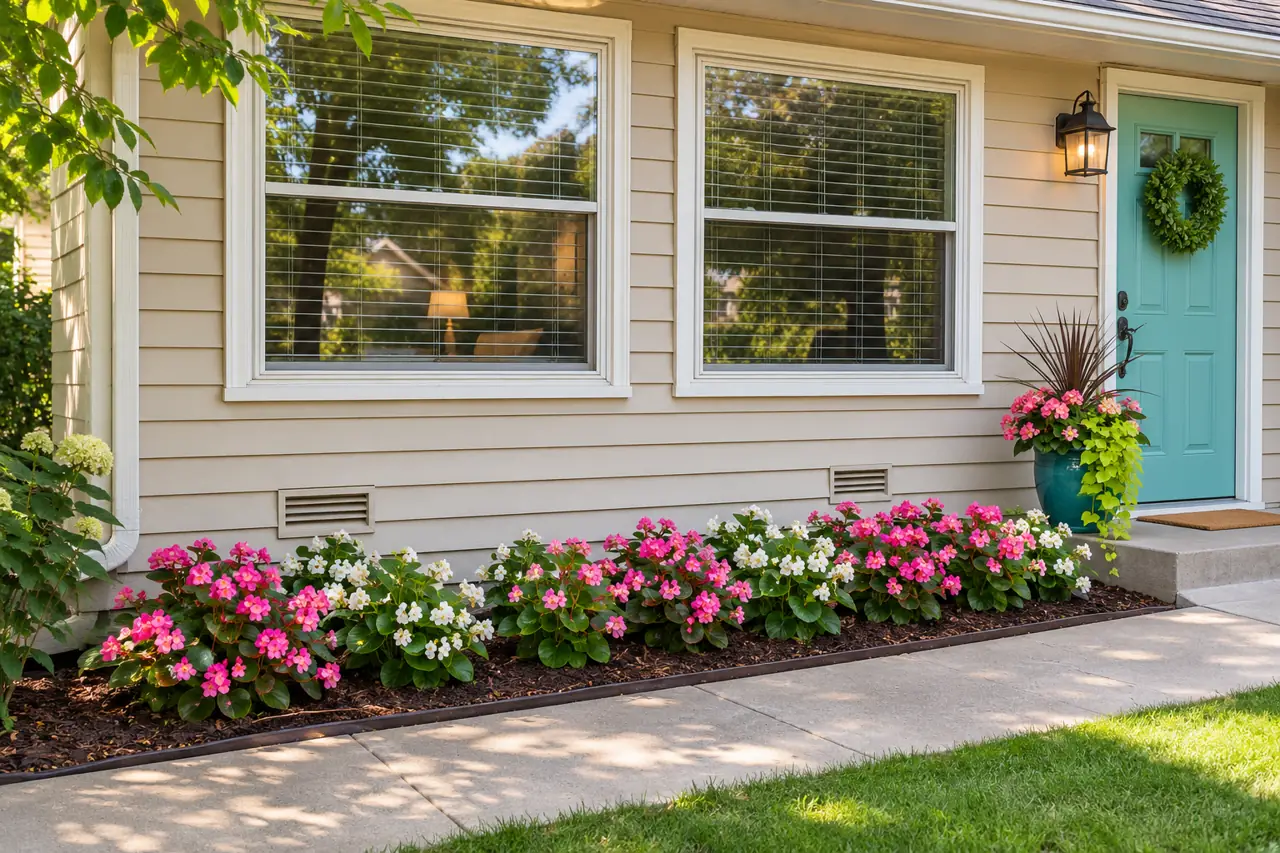
Low windows call for a planting plan that respects the view from indoors as much as the view from the street.
Make a shallow ribbon of compact pink and white wax begonias, using varieties suited to the available light. Their rounded foliage gives the low bed a full outline.
A dark edge and a turquoise door provide enough structure; this arrangement does not need a tall centerpiece.
Measure from the soil to the sill before buying plants.
Check mature height and spread, leaving room to inspect and maintain the wall.
Keep vents, drainage openings, and required inspection clearances unobstructed.
Do not build soil or mulch up against siding to make the bed seem deeper.
Choose another location if the available strip cannot hold plants and necessary building access together.
Worth checking: UF/IFAS: planting around windows.
9. Flower Pockets That Frame the Front Steps
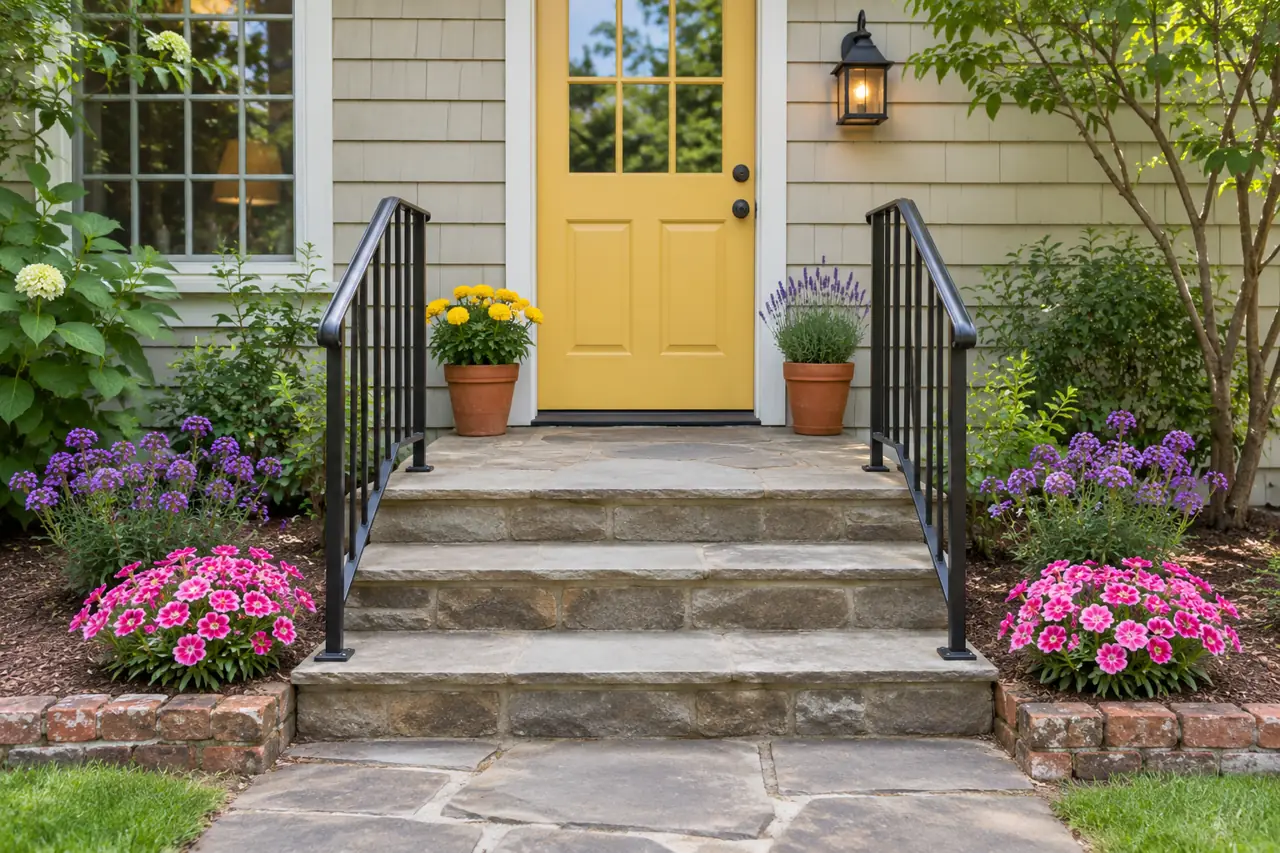
Small flower pockets can frame front steps while leaving the staircase itself completely practical.
Use low pink dianthus beside purple verbena where suitable sunlight and drainage allow. A weathered brick edge connects the pockets to the existing paving.
Keep the flowers outside the handrails and away from every tread.
The yellow door becomes the focal point, while a pair of modest landing pots can repeat the colors without pinching the entrance.
Mark the planted areas after checking how visitors approach, turn, and use the rails. Leave room for someone carrying a parcel.
Choose restrained varieties rather than relying on constant clipping to hold the route open.
Repair damaged or slippery steps before decorating around them. Flowers should frame a sound entrance, not hide a problem that still needs attention.
10. Broad Flower Bands Across a Gentle Front Slope

A gentle front slope can carry broad bands of flowers without being divided into a staircase of retaining walls.
Follow the contour with low plant groups, letting each band widen and narrow naturally. Pink creeping phlox can supply a spring display among other low, locally suitable perennials.
Sedum foliage and scattered stones add texture after the brightest flowers fade. Keep the house visible above the planting.
Use the existing access route rather than making a shortcut through the bed.
Avoid unnecessary regrading, and check where water travels during rain before disturbing soil.
This is a concept for a manageable gentle slope. Steep ground, active erosion, unstable soil, or a proposed retaining structure calls for site-specific professional advice before you choose plants or start construction.
11. A Root-Friendly Woodland Bed Beneath an Existing Tree

An existing tree can anchor a woodland bed, but its roots set the boundaries of the project.
Keep the trunk flare visible at the existing ground level. Never create a raised soil ring around the tree.
Foamflowers and coral bells can form loose pockets where suitable space exists between roots. Let leaf texture do as much work as the flowers.
A curved path and green porch bench beyond the bed make the shady corner feel purposeful.
Use starter-sized plants and hand work. If a root blocks a planting hole, move the plant rather than cutting the root.
Check the tree species and local growing conditions before selecting companions.
Competition for moisture remains important, even with shade-tolerant plants; a leafy canopy does not make the ground beneath it reliably damp.
Worth checking: University of Vermont Extension: planting beneath trees.
12. A Flower Bed Wrapped Around a Front Sitting Nook

Wrap a flower bed around a front sitting nook and the garden gains somewhere to be enjoyed at close range.
Put two turquoise chairs and a small table on firm paving.
A striped cushion can repeat the flowers’ colors without adding more plants.
Outside the pad, combine compact pink roses, violet salvia, and a low flowering edge in a loose C shape.
Keep one side open to the entrance path.
Check chair movement before setting the bed line. You should be able to sit down, move the table, and carry a watering can without brushing through thorny stems.
Choose roses for local conditions and allow air and maintenance access around them.
This works best where seating has its own space; avoid borrowing the width needed for the main front-door route.
13. A Picket-Fence Border With Flowers on Both Levels

A picket fence gives a flower bed a ready-made backdrop when taller blooms rise behind the pale rails.
Place hollyhocks toward the rear of a sufficiently deep sunny border, then use lower annual flowers closer to the fence line.
Pink and burgundy spires, with yellow and lavender accents beneath, create layers rather than one flat strip of color.
Leave the gate opening completely clear. A simple walk to the porch should remain obvious even when the bed is full.
Check the mature height and support needs of the hollyhock variety you choose. Tall stems can become awkward in an exposed, windy frontage.
Retain access for fence maintenance, and investigate local disease issues before committing to a large planting. The fence is a backdrop, not a substitute for suitable growing conditions.
Worth checking: NC State Extension: hollyhock care and limitations.
14. A Small Front Courtyard With Beds Around the Edges
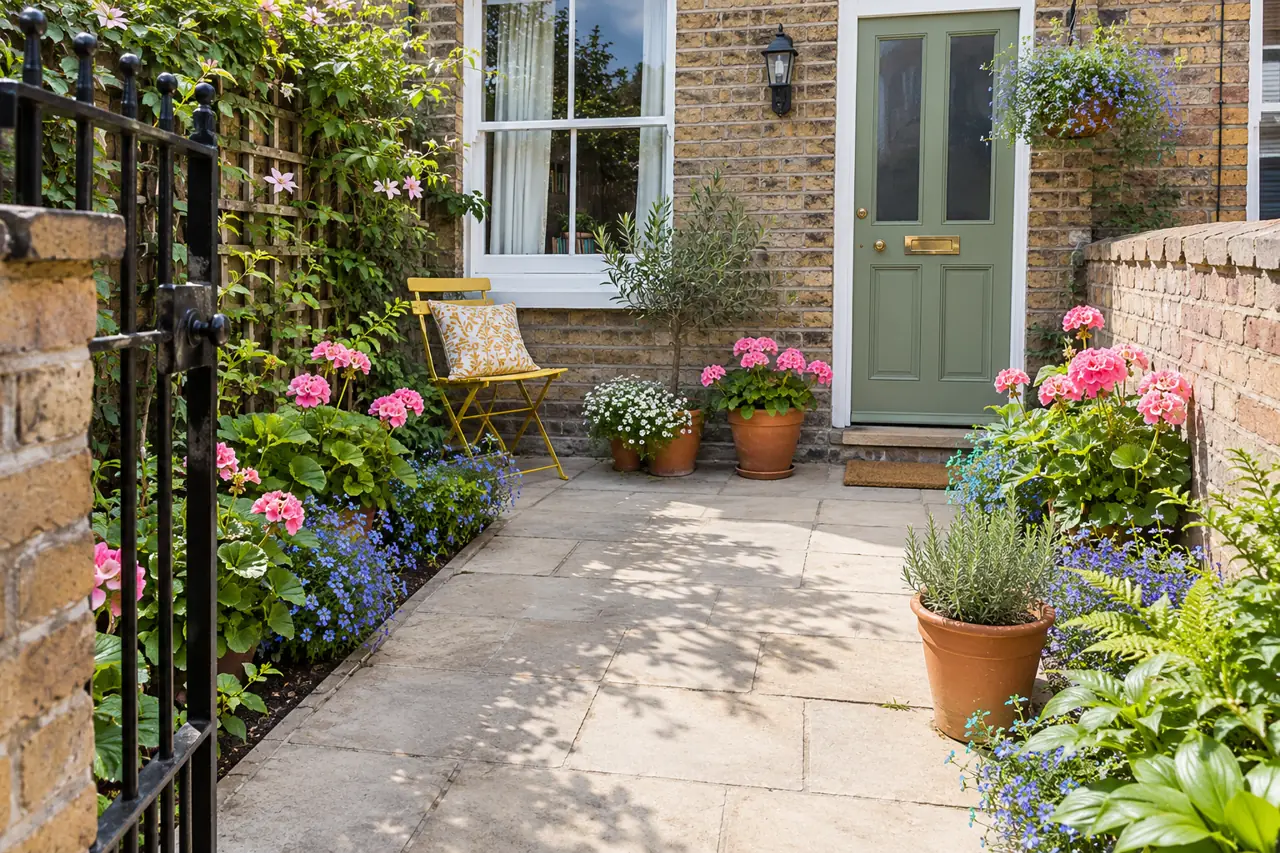
A small front courtyard often works better with flower beds around its edges and useful open space in the center.
Use a narrow L-shaped bed against two boundaries, leaving clearance where building maintenance requires it. Pink pelargoniums and blue flowering annuals can soften the brick backdrop.
A mustard chair belongs in a recess, outside the route from gate to door.
Add only a few terracotta pots, each with drainage and a practical place for watering. Repeating their material connects the courtyard without filling every gap.
Check how much sun the walls actually allow. A bright-looking court can still spend much of the day in shade.
Treat pots and in-ground planting as separate watering checks. Their growing media and drying rates may differ, even when they sit beside each other.
15. A Linear Bed for a Simple Modern Facade
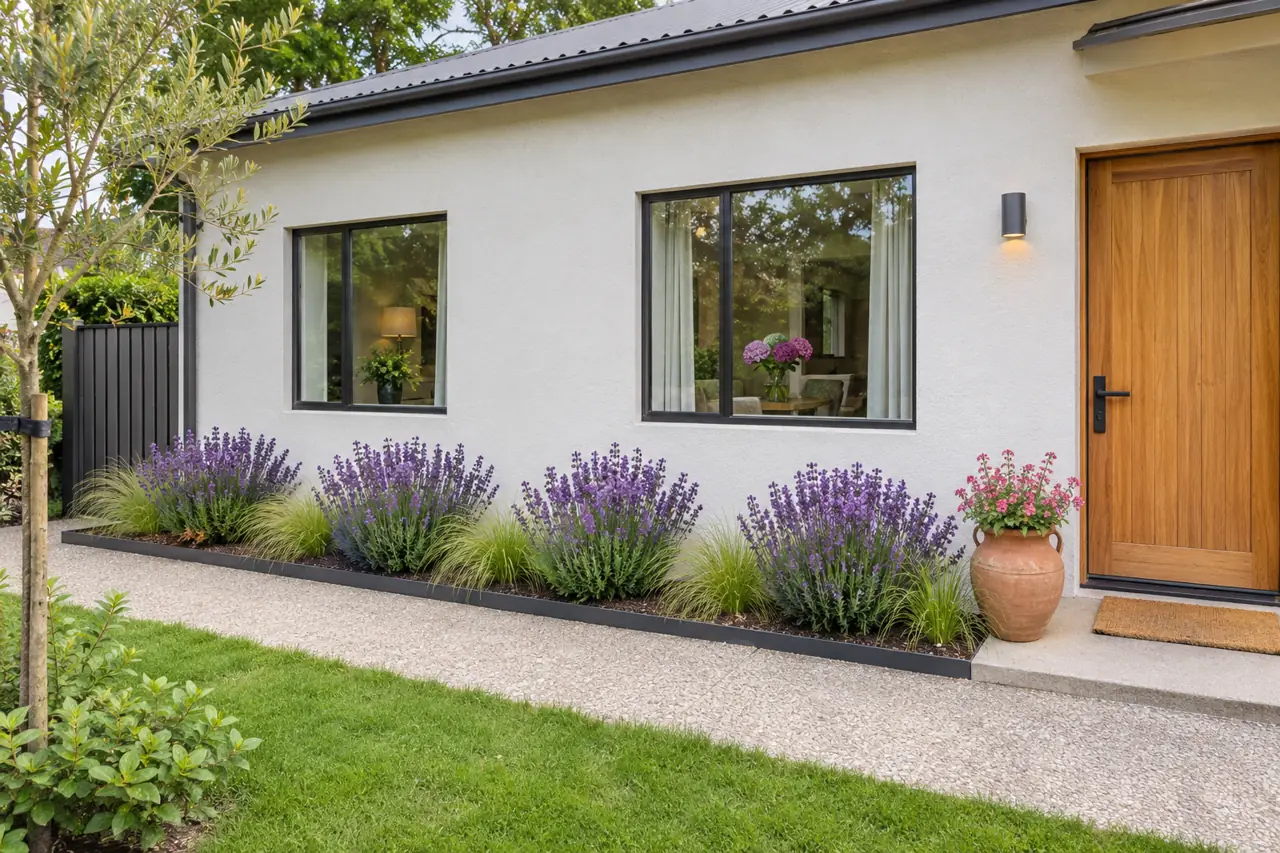
A simple modern facade can look especially good with one long flower bed and a limited planting palette.
Repeat lavender mounds and low clumping grasses along an understated edge. Let the spaces between groups be part of the design rather than an invitation to add more varieties.
Pale paving, a timber door, and one terracotta vessel provide warmth against clean walls.
Check the bed from the street before planting. The rhythm should remain clear without blocking windows or narrowing the approach.
Lavender needs a suitable sunny, well-drained site; cultivar hardiness and tolerance of local winters matter.
If your frontage stays wet, choose different plants instead of copying the picture literally.
Leave service access behind the mature planting, and keep the edging flush and secure wherever it meets a walking surface.
Worth checking: Illinois Extension: lavender drainage and sunlight.
16. A Spring Bulb Bed With Room for Later Foliage
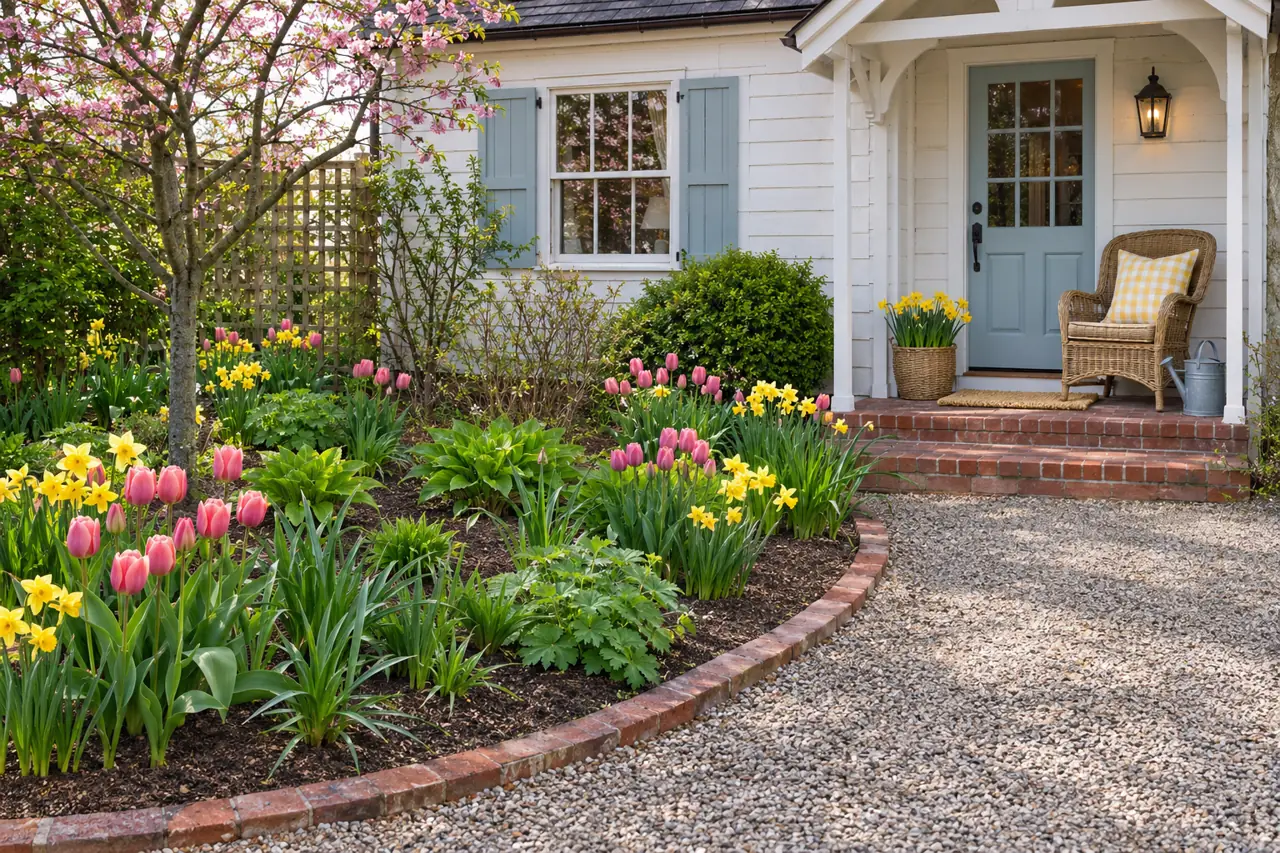
A spring bulb bed makes arriving home feel different after a long winter.
Group pink tulips and yellow daffodils in drifts rather than spacing every flower evenly. Select varieties with overlapping bloom times if you want the colors together.
Emerging perennial foliage can occupy the spaces between those drifts. A brick edge and pale-blue door keep the setting connected to the house.
Leave bulb leaves in place until they naturally yellow; do not cut them early just to tidy the display.
Plan what will provide interest after flowering, without expecting later plants to cover every fading leaf immediately.
Check bulb suitability for your local climate and soil drainage.
This is a seasonal welcome, not a year-round flower promise, and the bed should still look intentional when only its foliage remains.
Worth checking: Illinois Extension: bulb foliage after flowering.
17. A Bold Seasonal Bed for a Warm Front Porch
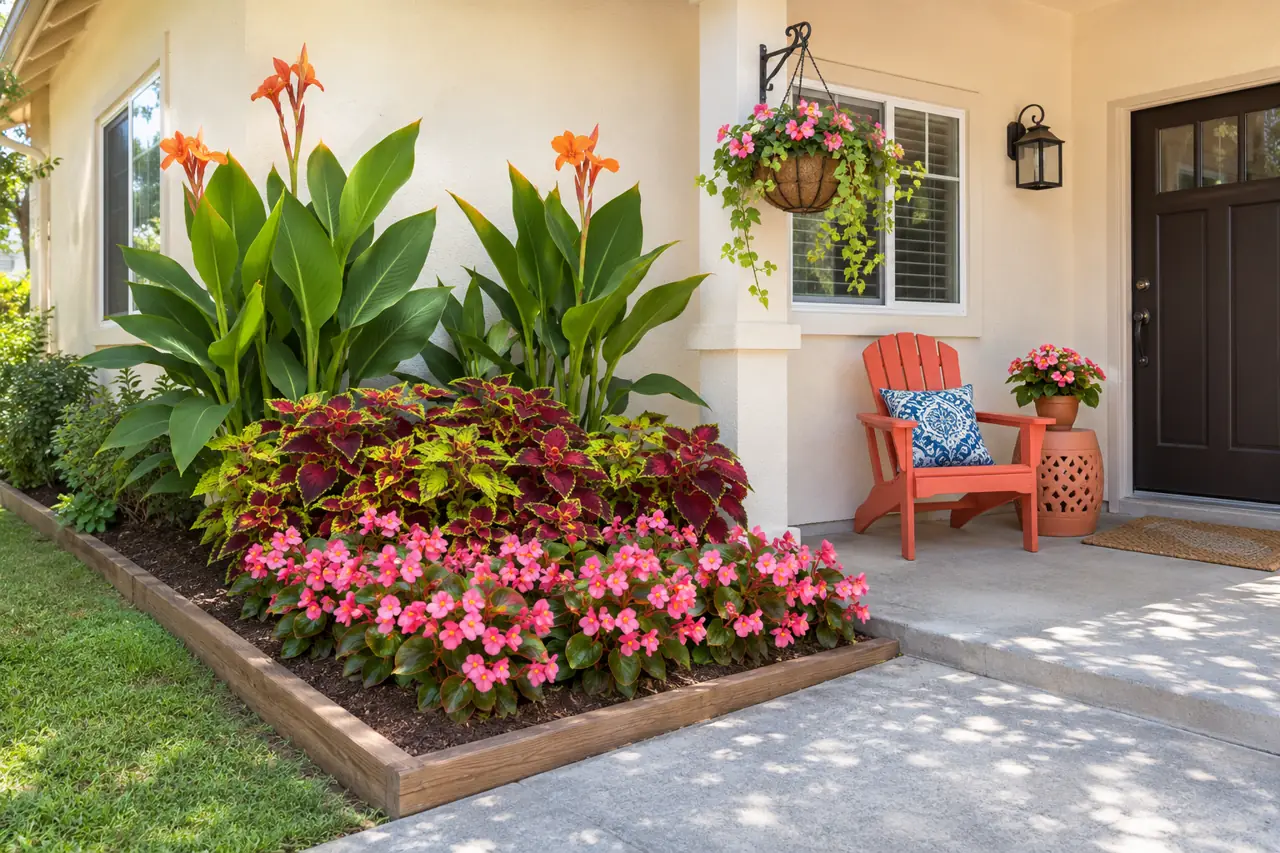
A warm-season front bed can use bold leaves as confidently as flowers.
Place a few canna clumps toward the back, with colorful coleus through the middle and lower wax begonias at the edge. Keep the tallest leaves away from windows.
A coral porch chair, blue patterned cushion, and simple timber edging connect the planting to the entrance. The bed needs a clear outline to hold all that texture together.
Choose cultivars for the actual exposure rather than assuming every coleus or begonia wants identical conditions.
Check mature size before arranging the layers.
Cannas and these tender bedding plants also need a local plan for cold weather, whether that means lifting suitable material or treating the display seasonally.
Keep irrigation and soil changes clear of the house’s required maintenance spaces.
Worth checking: NC State Extension: canna growing conditions and winter care.
18. A White Flower Bed Beside the Evening Arrival Route
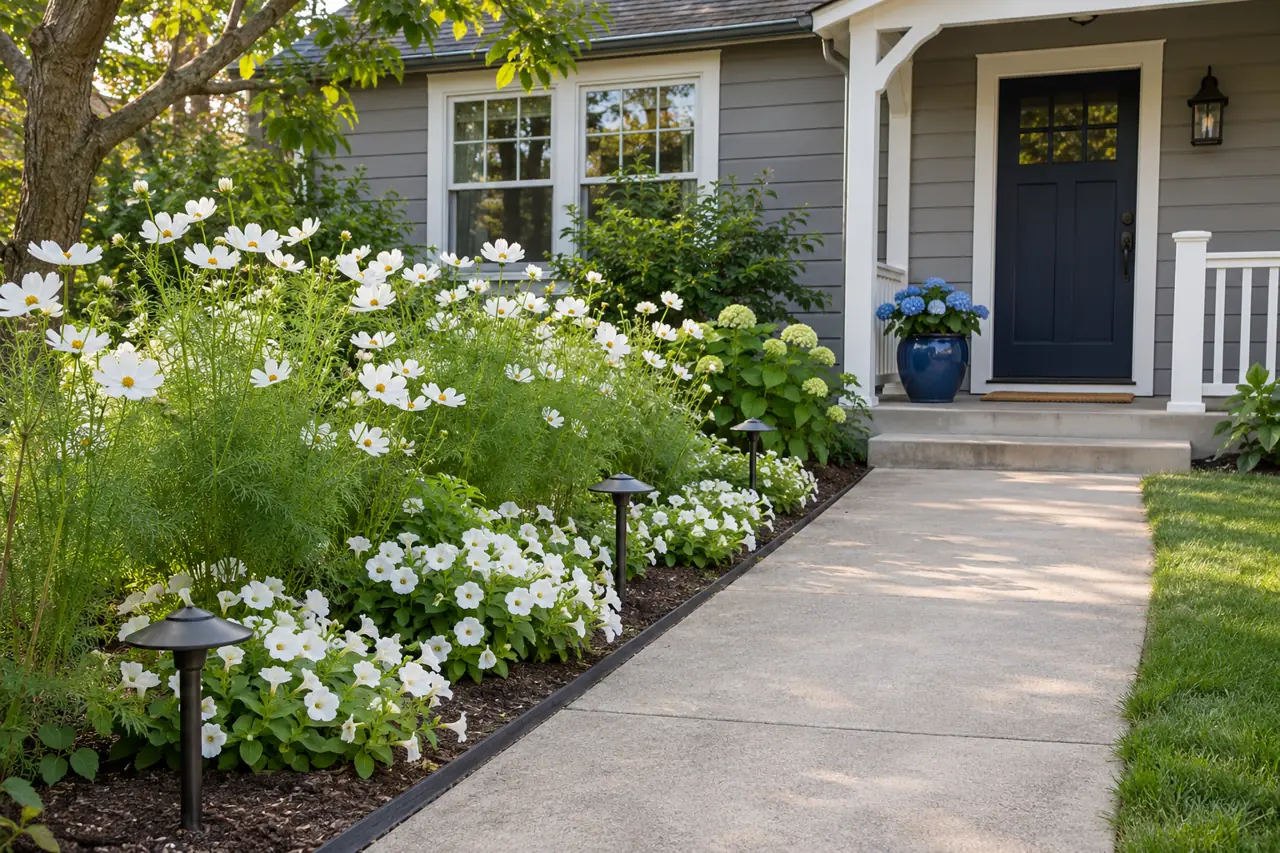
White flowers can make a front path feel calm without making the planting disappear into the house.
Use airy white cosmos behind lower white petunias where sunlight and local growing conditions suit them.
Green foliage provides the contrast that keeps the different layers visible.
A dark edge, navy door, and blue pot near the porch stop the scheme from looking unfinished.
I love how a limited flower palette lets the shape of each plant become more noticeable.
Keep the path clear at mature spread and check the bed in ordinary daylight before adding decorative lighting.
White flowers are not a replacement for safe, properly installed path lights.
Choose compact varieties where space is tight, and allow for routine care rather than expecting a single seasonal planting to remain perfect indefinitely.
19. A Pollinator Bed With a Tidy Front-Yard Frame

A front-yard pollinator bed can feel intentional when a clear boundary frames its looser planting.
Use repeated drifts rather than one specimen of every native flower. Orange butterfly weed, pink coneflowers, and prairie dropseed suggest one sunny composition where those species are regionally appropriate.
A trimmed lawn frame and simple entry walk help the bed belong to the house.
Leave a practical stepping route for care without making it the main visitor path. Keep mature stems away from access and sightlines.
Choose plants from local native-plant guidance, matching their moisture and light needs. Native somewhere does not mean suitable everywhere.
Plan overlapping flowering periods rather than expecting one colorful summer moment to feed pollinators all season.
Check local vegetation rules and choose a manageable first footprint before expanding the bed.
Worth checking: Penn State Extension: planning pollinator-friendly plantings.
20. A Compact Annual Bed You Can Replant in Sections

A compact annual bed is useful when you enjoy changing the front garden rather than keeping one permanent planting scheme.
Create separate patches of magenta zinnias, orange celosia, and yellow zinnias. Repeated colors give the display more order than a mixed handful of unrelated plants.
A reclaimed-brick edge, cobalt door, and simple cream bench make the flower bed part of the entrance.
Keep a discreet flat stepping access gap so you can reach the middle without crushing the edges.
Choose compact varieties for a small footprint, and follow their mature spacing rather than packing them together for instant fullness.
Plan for watering checks, deadheading where useful, and seasonal replacement. This gives you flexible color, but it is a different commitment from an established perennial border.
Worth checking: Illinois Extension: zinnia size, sunlight, and care.
If you prefer the looser planting in the first idea, explore our complete cottage garden ideas for more combinations.
Choose the outline before the flowers
Shortlist two layouts, mark them on the ground, and walk past them with a bag in your hand. Keep the version that gives flowers space without making everyday access awkward.
Before buying amendments, use our soil testing guide to understand pH and nutrient needs. A useful test beats adding products because a flower bed looks tired.