
Start with a golden pothos, snake plant, or ZZ plant if you want a forgiving first houseplant. Match the plant to your window light and watering habits before choosing the prettiest pot.
“Hard to kill” means relatively forgiving in suitable conditions. No plant is indestructible, and a dim room or waterlogged container can defeat even an easy favorite.
These 20 options include compact desk plants, trailing vines, and larger leafy accents. Each setting shows how one plant can fit into a room you actually use.
Image note: All room scenes are AI-created illustrations, not the author’s home or records of tested results. Use the linked botanical reference photographs for identification.
Pets and children: Many plants in this list are harmful if chewed or swallowed. Check the exact scientific name in the ASPCA plant database before bringing a plant into a home with pets.
Keep plants and fallen leaves out of children’s reach, too. A hanging pot is not automatically inaccessible to a climbing cat.
1. Golden Pothos
Epipremnum aureum

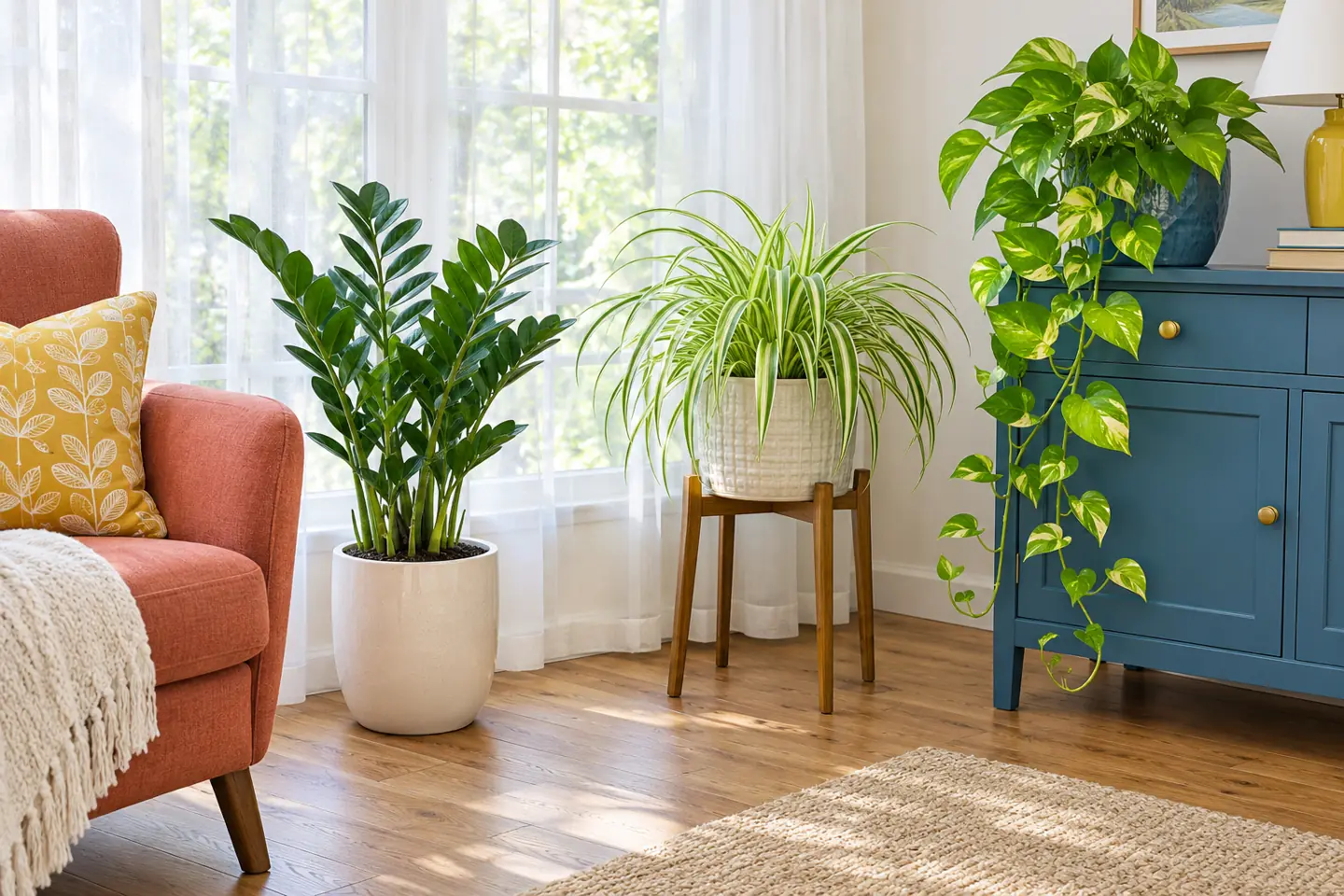
Golden pothos makes a cabinet corner feel planted without taking over the floor.
Let its vines fall beside the furniture rather than across handles or sockets.
Pair a blue pot with an oak cabinet, a coral chair, and one patterned cushion. Keep the growing pot easy to lift out for watering.
Bright, indirect light is a good starting point. Lower light is tolerated, but it can reduce the yellow patterning.
Let the well-drained mix dry between waterings. Standing water inside a decorative cover pot undermines its forgiving reputation.
Prune long stems if you prefer a fuller outline, checking where new growth will fit.
I love how one trailing plant softens a straight cabinet edge.
Leave the watering access open, even when the vines look temptingly lush.
Care and botanical reference photographs: NC State Extension — Golden Pothos.
For a closer look at pruning and placement, see our pothos care guide for longer, fuller vines.
2. Snake Plant
Dracaena trifasciata
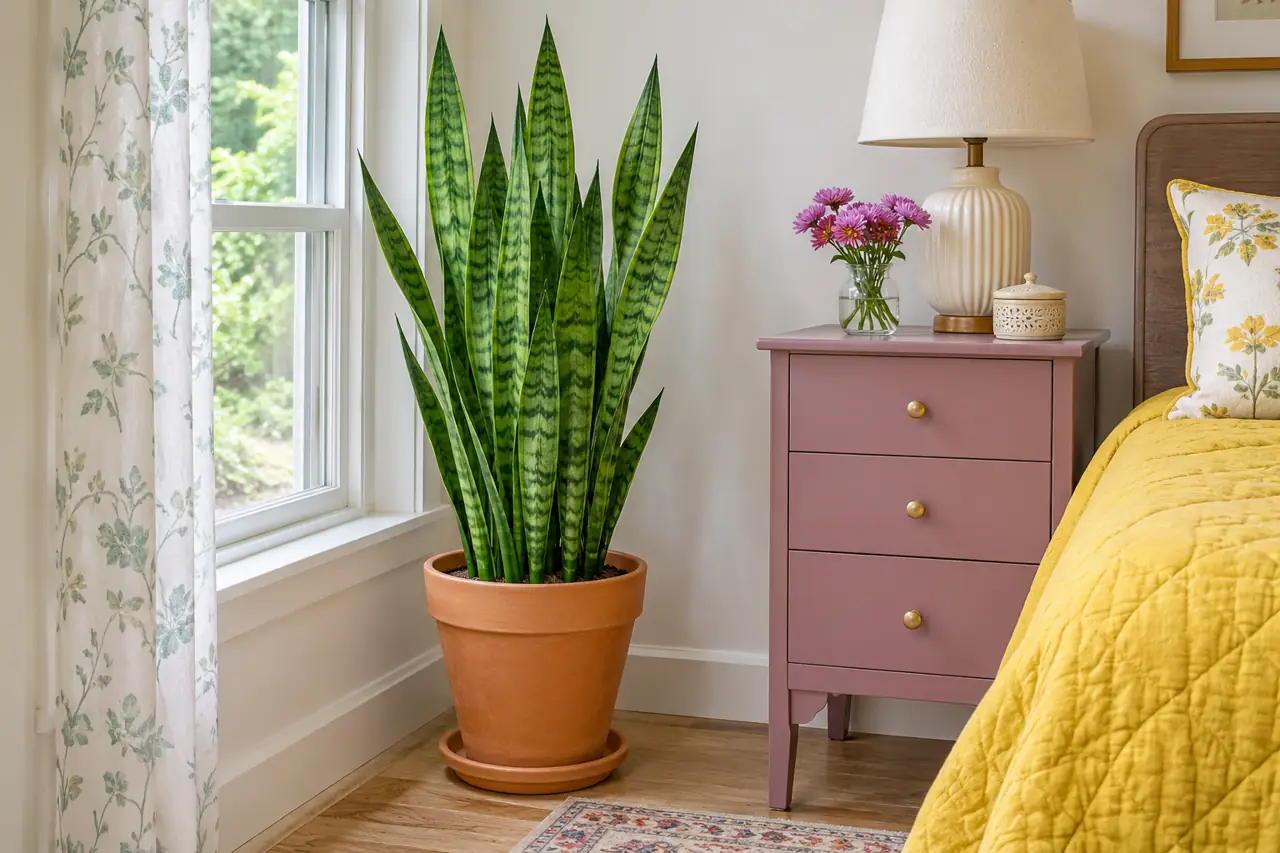
A snake plant brings height to a bedroom without the wide canopy of a small tree. Its upright leaves suit a narrow space beside a cabinet.
Use a terracotta pot against pale walls, with a mauve bedside unit and yellow bedding nearby. Keep the leaves away from passing elbows.
Give it suitable light and a pot that drains freely.
It tolerates lower light, but a windowless corner is not a growing plan.
Allow the mix to dry between waterings rather than giving it a weekly splash.
Too much attention can be the problem here. Wet roots can rot even while the leaves still look substantial.
Choose the plant's eventual leaf height before placing artwork above it, and leave enough room to inspect the soil without moving the bed.
Care and botanical reference photographs: NC State Extension — Snake Plant.
3. ZZ Plant
Zamioculcas zamiifolia
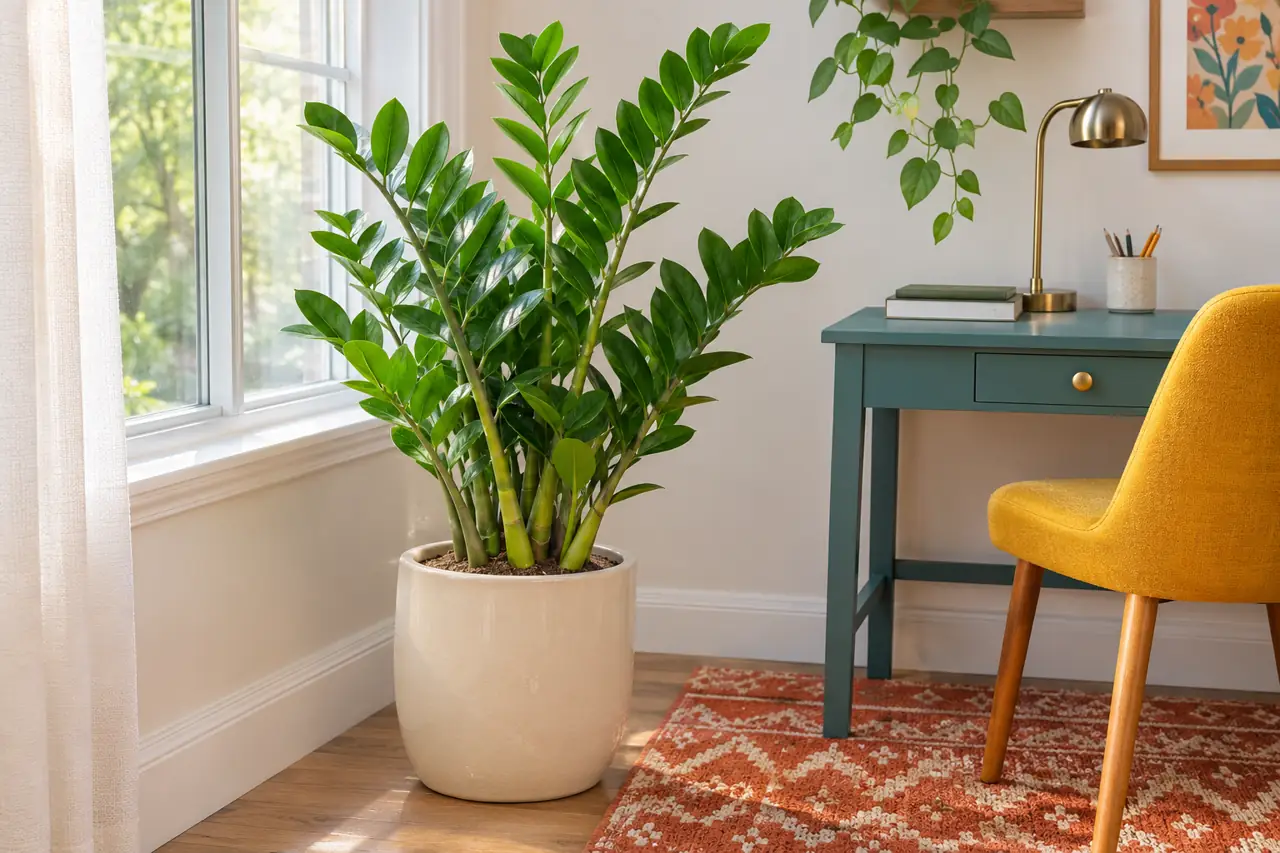
Choose a ZZ plant when you want substantial green foliage with relatively infrequent watering. Its glossy leaflets make a home office feel finished.
A cream floor pot beside a teal desk keeps the composition simple.
Add a mustard chair and a patterned rug, leaving clear space for chair movement.
Bright, indirect light gives it a better growing position than the darkest available corner.
Its water-storing underground rhizomes help it cope with drying. Let the mix dry before watering again, and use a draining container.
Growth can be slow. A lack of new leaves is not a reason to keep adding water or fertilizer.
Keep the pot accessible for checks and choose a size that fits the desk arrangement after the plant spreads outward.
Care and botanical reference photographs: NC State Extension — ZZ Plant.
4. Cast Iron Plant
Aspidistra elatior

Cast iron plant offers broad, quiet foliage for a reading corner that receives gentler light.
Each leaf rises from the base rather than forming a branching tree.
Set a navy pot beside a raspberry chair and a striped cushion. A plain wall lets the leaf shapes do the decorative work.
Protect it from direct sun and use well-drained growing mix. Its tolerance of neglect is useful, but roots still need suitable conditions.
Water according to the mix and growth, easing back when winter conditions slow its needs.
Do not expect it to fill a large empty corner overnight. Buy for the outline you already enjoy.
Leave room around the clump so the leaves can open naturally and you can wipe dust away without folding them against furniture.
Care and botanical reference photographs: NC State Extension — Cast Iron Plant.
5. Spider Plant
Chlorophytum comosum
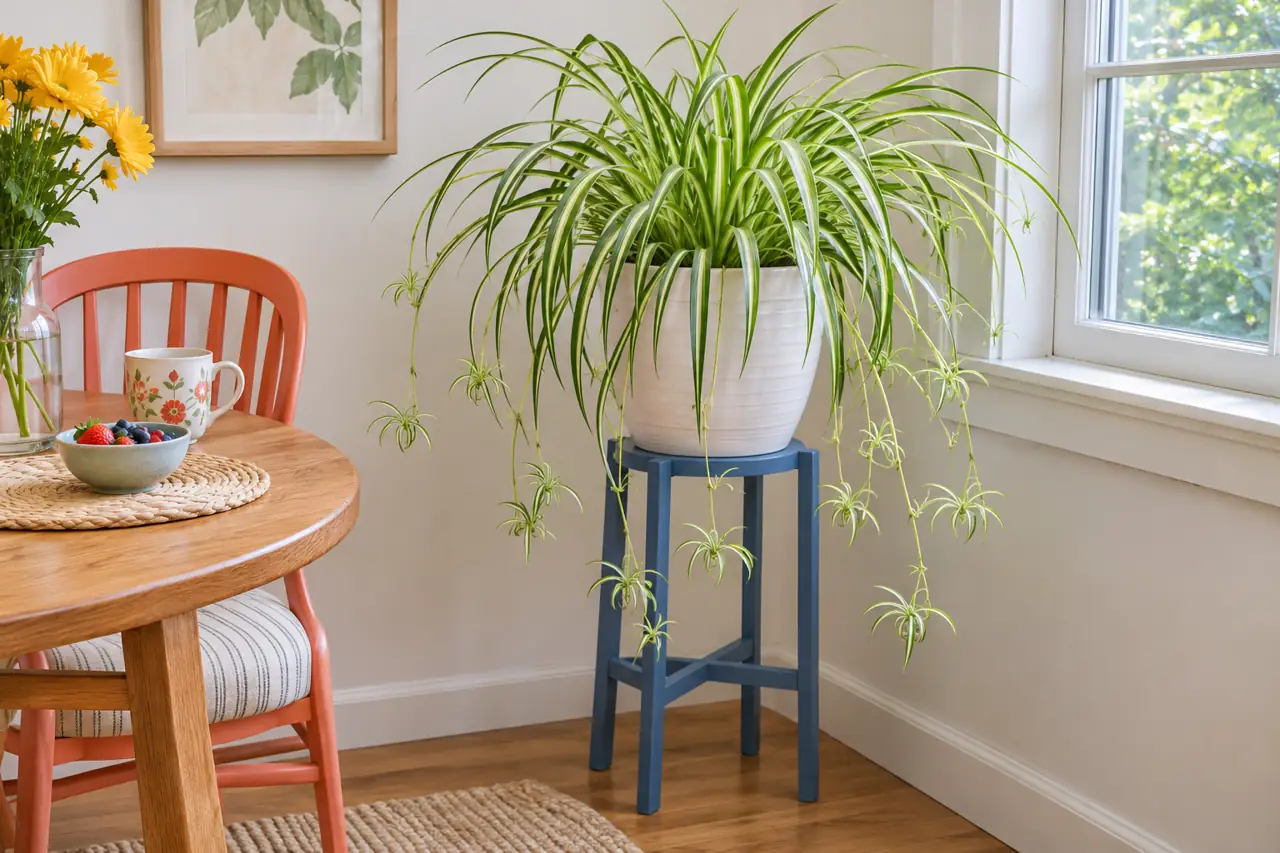
A spider plant turns a modest breakfast nook into a leafy corner. Its arching leaves and dangling plantlets need open space beneath the pot.
Use a stable blue stand beside the window, with a round oak table and coral chair nearby.
Keep the stand outside the route used for carrying hot drinks. The whole arrangement should remain easy to approach.
Medium, filtered light suits it better than scorching direct sun. It adapts to different conditions and can tolerate some drying.
Check moisture before watering, and do not leave its roots sitting in collected water.
Brown tips do not automatically mean thirst; water quality can contribute. Review the plant's conditions before repeatedly soaking it, and give new plantlets room rather than squeezing in another pot.
Care and botanical reference photographs: NC State Extension — Spider Plant.
6. Heartleaf Philodendron
Philodendron hederaceum
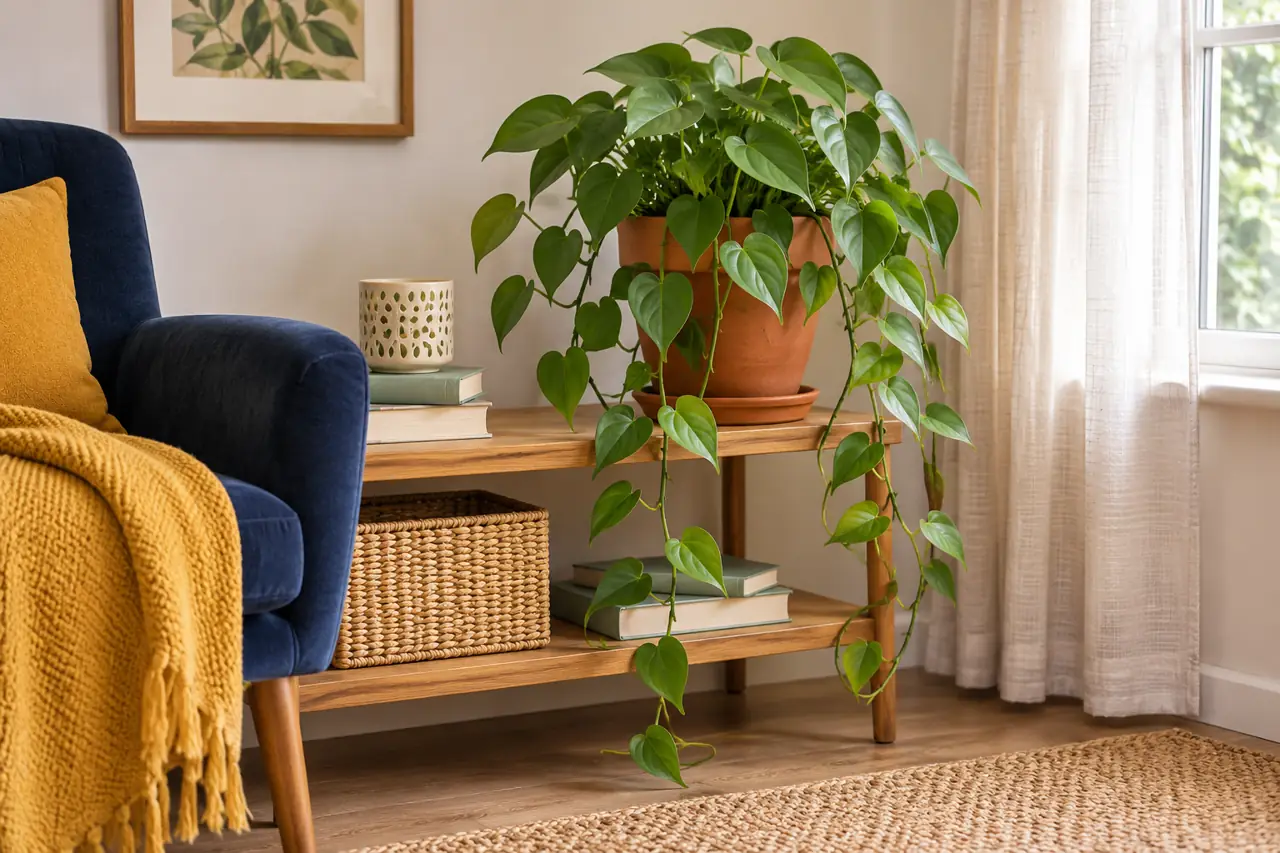
Heartleaf philodendron gives a shelf a soft green edge. Choose it for a small sitting room where you can guide a few vines as they lengthen.
A rust-colored pot, indigo chair, and mustard textile create warmth without needing a crowded collection.
Keep the pot near suitable window light, with enough space to lift it off the shelf. Medium light is preferred, though lower light is tolerated.
The mix should stay slightly moist rather than saturated.
Reduce watering when conditions and growth call for less.
Guide trailing stems away from lamps, cables, and walkways before they become tangled.
This is a living vine, not a fixed ornament. Decide whether it will trail or climb, then leave a route for inspecting the leaves and pot.
Care and botanical reference photographs: NC State Extension — Heartleaf Philodendron.
7. Chinese Evergreen
Aglaonema spp.
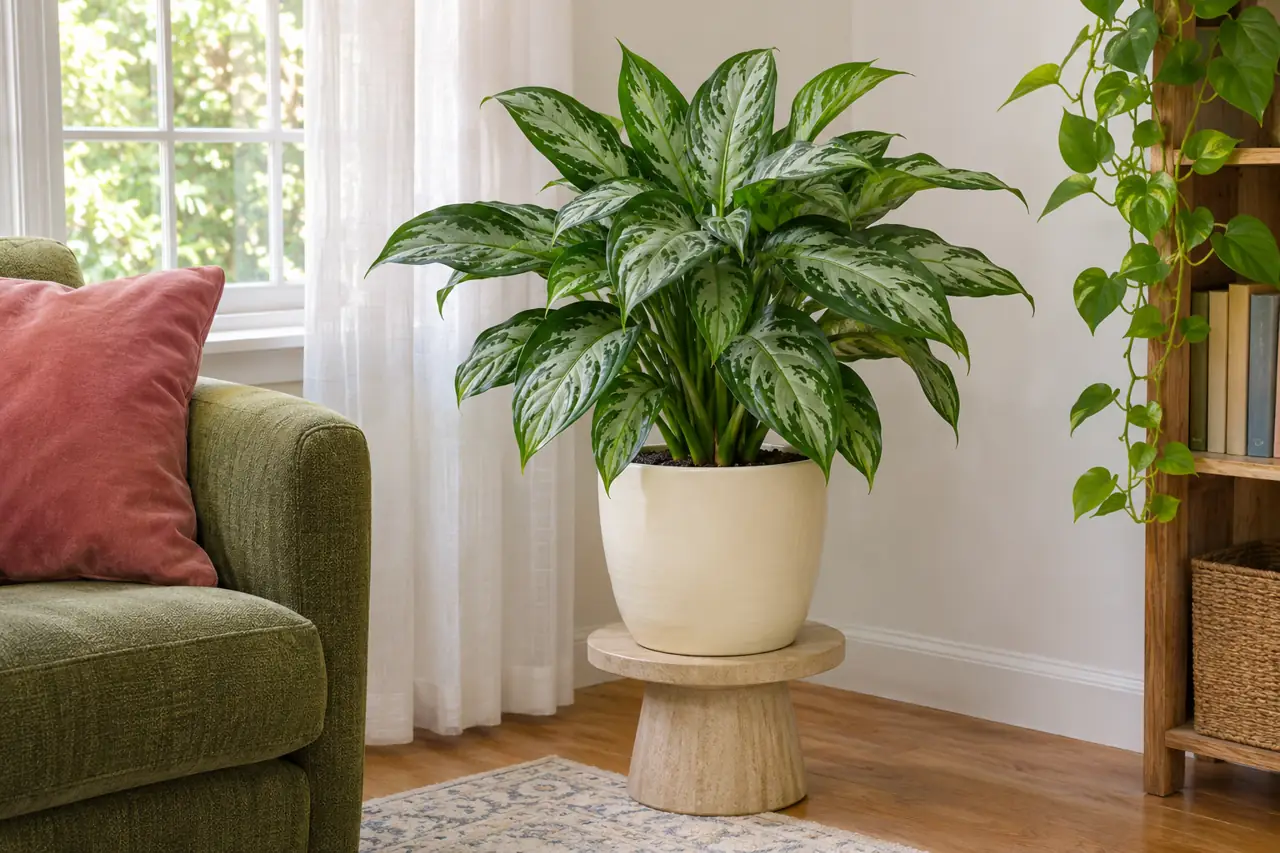
Chinese evergreen makes a useful leafy accent when a room has filtered light rather than a sunny sill.
Choose the variety for its mature size and markings.
A silver-and-green plant in a cream pot looks calm beside a moss-green sofa. A rose cushion and patterned rug supply the stronger color.
Place it where you can see the foliage without pushing the pot against a cold window.
It prefers indirect light and warmth. Keep the mix appropriately moist during active growth, allowing it to dry between waterings rather than staying wet.
Cold drafts and overwatering are important limitations, even for this relatively easy houseplant.
Leave a little space around the leaves.
That makes the arrangement feel generous and lets you check the undersides during routine care.
Care and botanical reference photographs: NC State Extension — Chinese Evergreen.
8. Peace Lily
Spathiphyllum spp.
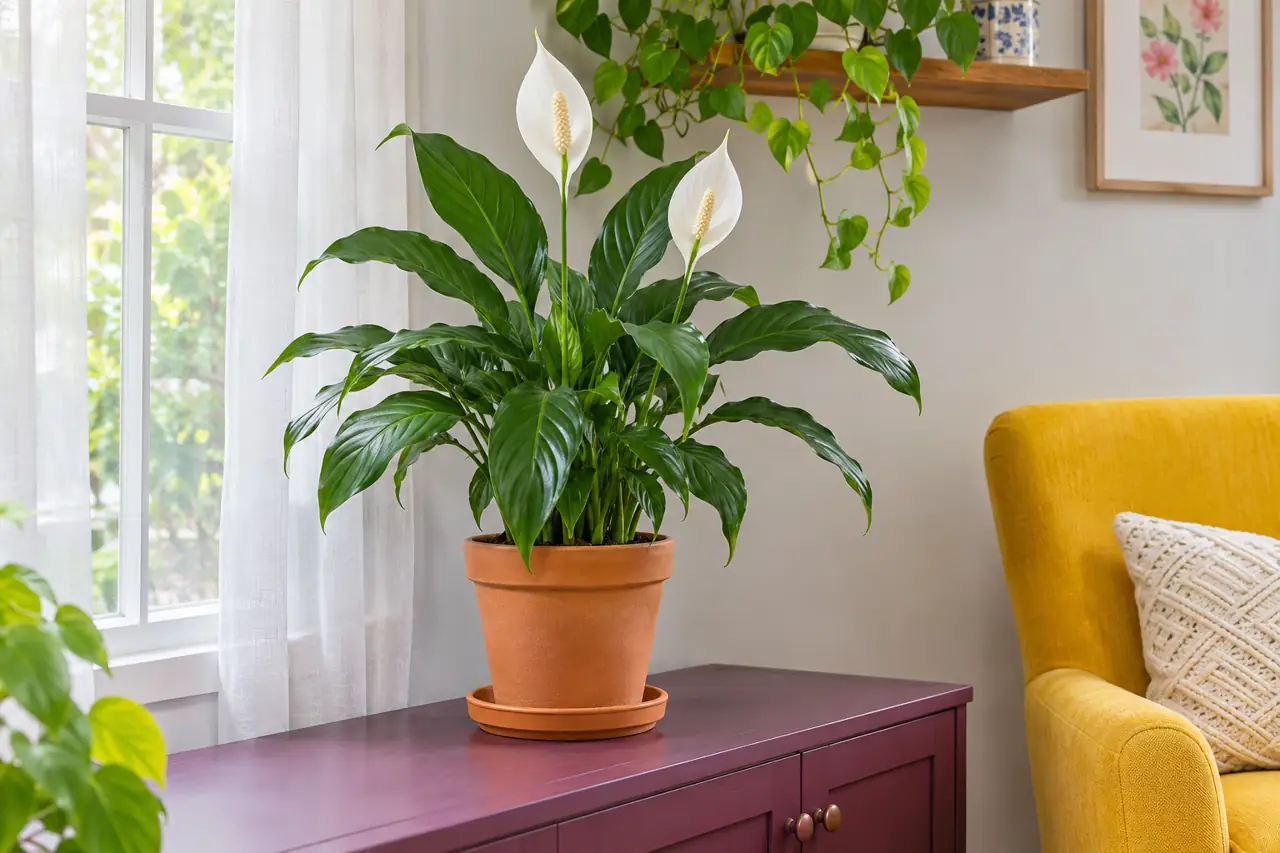
A peace lily suits someone who enjoys checking a plant regularly. It offers glossy foliage and white spathes without needing a sun-baked windowsill.
Use a terracotta pot with a waterproof tray on a plum cabinet. A yellow chair nearby completes a small sitting area.
Provide indirect light and warm conditions, keeping the pot away from cold drafts.
Keep the mix moist but not soggy. This is a different routine from the drought-tolerant plants elsewhere in the list.
Check the mix before responding to drooping leaves; do not make repeated wilting part of the care plan.
Choose the cultivar's size carefully, as some become substantial.
Leave enough cabinet space to lift the pot, empty drainage water, and inspect the broad leaves comfortably.
Care and botanical reference photographs: NC State Extension — Peace Lily.
9. Rubber Plant
Ficus elastica
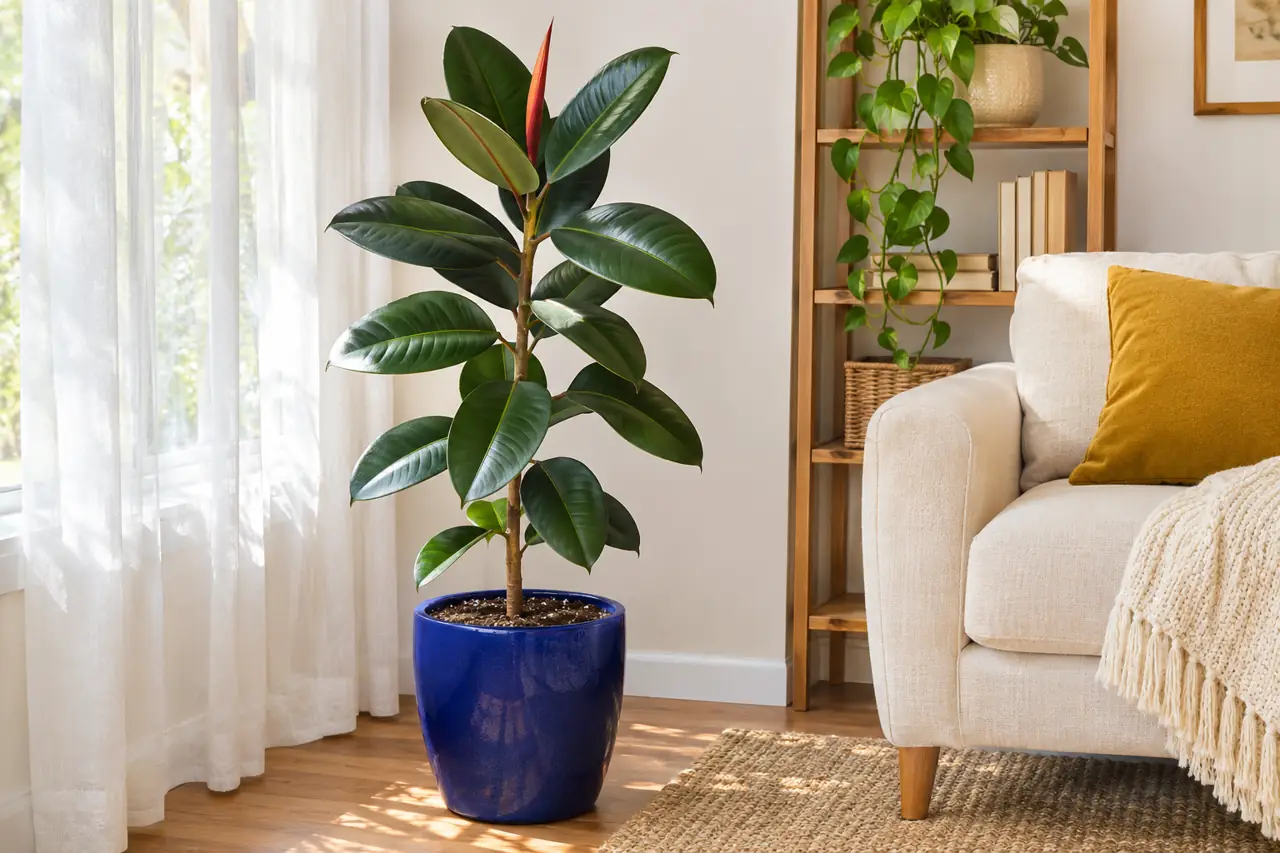
A rubber plant can become the main green feature of a living room. Give its broad leaves their own space instead of squeezing them behind a sofa.
A cobalt floor planter, cream upholstery, ochre cushion, and terracotta rug make a coordinated corner near a bright window.
Bright, indirect light and protection from harsh afternoon sun suit it indoors.
Avoid cold drafts and repeated changes of location.
Water carefully, with less needed when growth slows, and prevent the container from staying wet.
Wipe the leaves gently with a damp cloth when dust builds up. Their size makes this an easy habit to notice.
Plan for a heavier, larger plant over time.
Check both the future canopy and the practical route for moving the pot when necessary.
Care and botanical reference photographs: NC State Extension — Rubber Plant.
10. Corn Plant
Dracaena fragrans

Corn plant adds a taller silhouette to a dining corner without a mass of fine branches. Its arching strap leaves soften the top of the cane.
Put a rust-colored pot near filtered window light, with blue dining chairs and a woven runner nearby.
Leave the leaves clear of chair backs. A plant that brushes everyone at dinner soon becomes awkward to keep.
Bright to moderate filtered light suits it. Direct sun can scorch the foliage, while very low light can change its growth.
Use a draining pot and keep the mix suitably moist during active growth, reducing water when winter conditions slow demand.
Dry indoor air can contribute to brown tips.
Check humidity, water quality, and salts before assuming every damaged tip means the plant needs another drink.
Care and botanical reference photographs: NC State Extension — Corn Plant.
11. Ponytail Palm
Beaucarnea recurvata
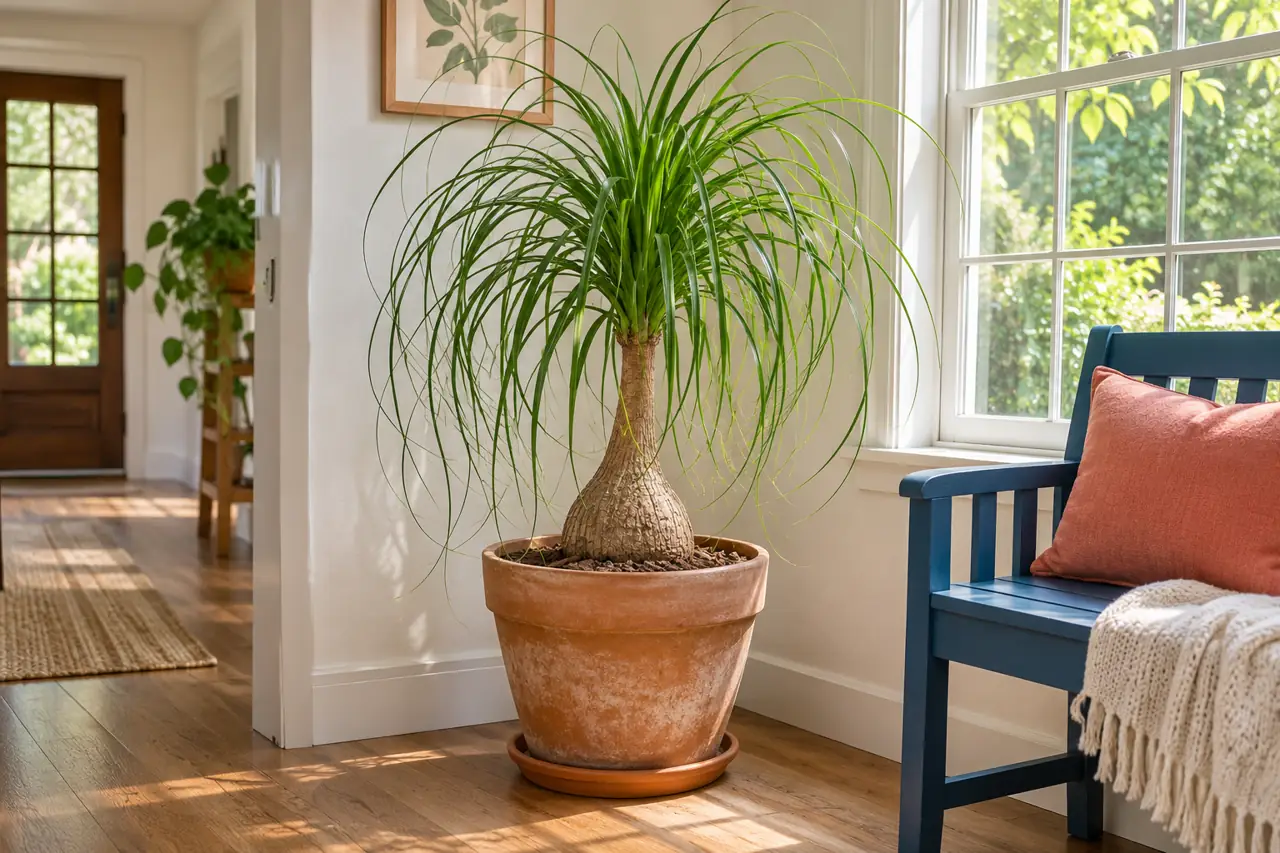
Ponytail palm is a good match for a bright entry nook and a gardener who tends to forget rather than overwater.
Its swollen base and fountain of narrow leaves give one pot a strong shape. It is not a true palm.
Place it in a broad terracotta container by a sunny window, with a blue bench and coral cushion set safely beside it.
Use a fast-draining mix suitable for succulents.
Water thoroughly when needed, then let the growing medium dry before watering again.
Its stored water helps it tolerate dry periods, but it still needs light and care.
Keep the leaf spread out of the doorway and plan for gradual enlargement. A small shop specimen should not be treated as permanently windowsill-sized.
Care and botanical reference photographs: NC State Extension — Ponytail Palm.
12. Jade Plant
Crassula ovata
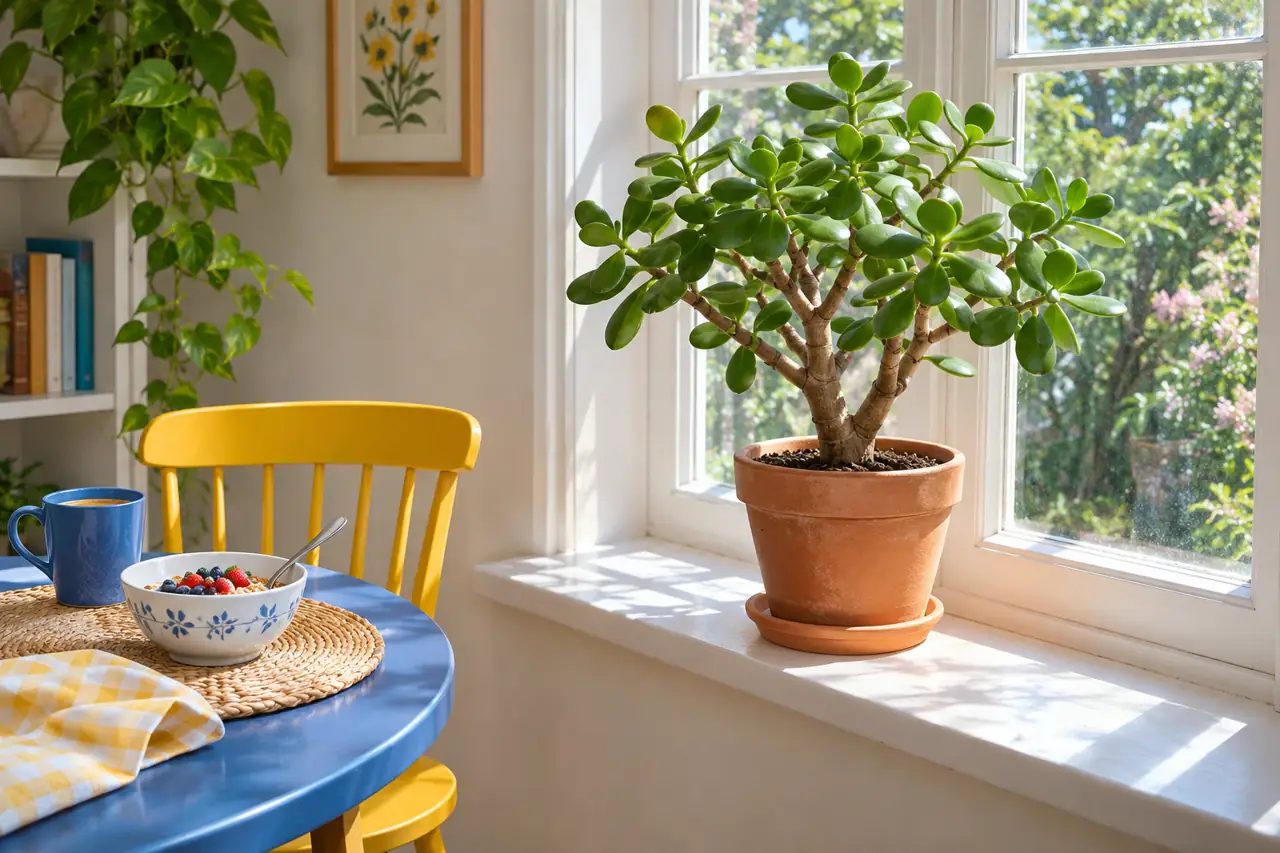
Jade plant brings the shape of a little branching tree to a sunny breakfast area. Its thick leaves reward a restrained approach to watering.
Set a terracotta pot on a broad, stable sill or low stand.
A yellow chair and blue table can make the whole corner feel cheerful.
Give it bright light in a suitable sunny position, with protection from harsh conditions as needed.
Water when the mix is dry, using a pot that lets excess escape. Overwatering can cause leaf loss and root problems.
Avoid placing it where the branches get knocked while curtains are opened. A mature jade can become top-heavy.
Choose a balanced container and leave room to inspect the mix.
This is a patient foliage project, not a promise of indoor flowers.
Care and botanical reference photographs: NC State Extension — Jade Plant.
13. Aloe Vera
Aloe vera

Aloe vera works as a sculptural accent for a bright window area. Give its spreading rosette room rather than using it as a tiny shelf filler.
A wide clay pot on a low bench pairs well with a sage chair and coral woven cushion.
Keep the leaf tips outside the walking route, particularly where someone might sit down or open a curtain.
Use very well-drained succulent mix and a container with drainage holes. Let the growing medium dry completely between waterings.
A bright position matters; this is not a choice for the dimmest room. Watch conditions as seasonal sunlight changes.
Offsets can gradually fill the container, so allow for future width.
Choose aloe for its appearance and manageable care rather than treating the plant as a home-remedy kit.
Care and botanical reference photographs: NC State Extension — Aloe Vera.
14. Zebra Haworthia
Haworthiopsis attenuata
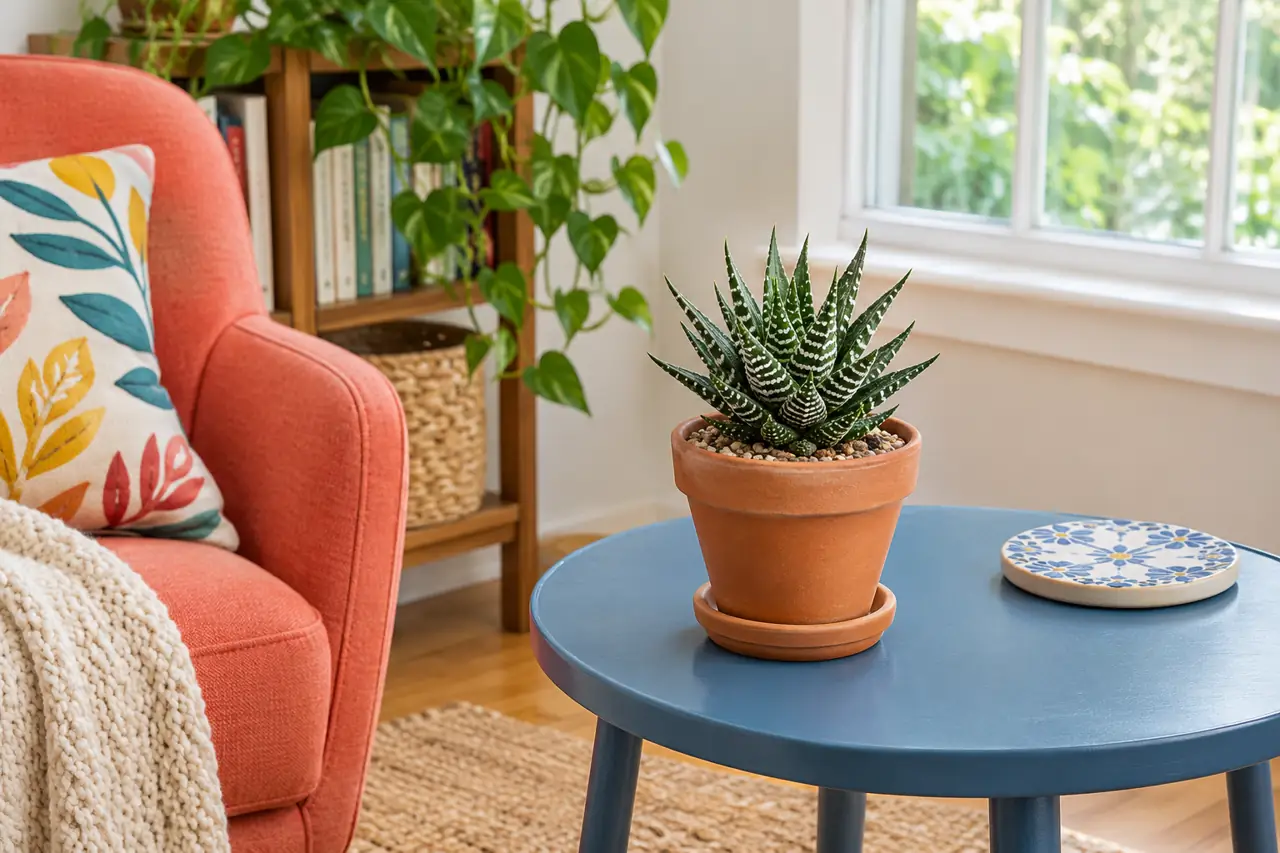
Zebra haworthia gives a small table a distinct plant shape without demanding the footprint of a large aloe. Its striped, pointed leaves form compact rosettes.
Place a small terracotta pot on a blue side table near bright, indirect light. A coral chair and patterned cushion finish the nook.
Keep the plant visible and reachable instead of surrounding it with ornaments. Small pots are easy to overlook during care.
Use a well-draining succulent mix and allow it to dry between waterings.
Too much water is a more useful concern than a strict calendar.
Avoid harsh direct sun and cold drafts. Gradual changes are easier to assess than repeatedly moving it between extremes.
Check the botanical label when buying; several unrelated plants are sold under the common name zebra plant.
Care and botanical reference photographs: NC State Extension — Zebra Haworthia.
15. Baby Rubber Plant
Peperomia obtusifolia
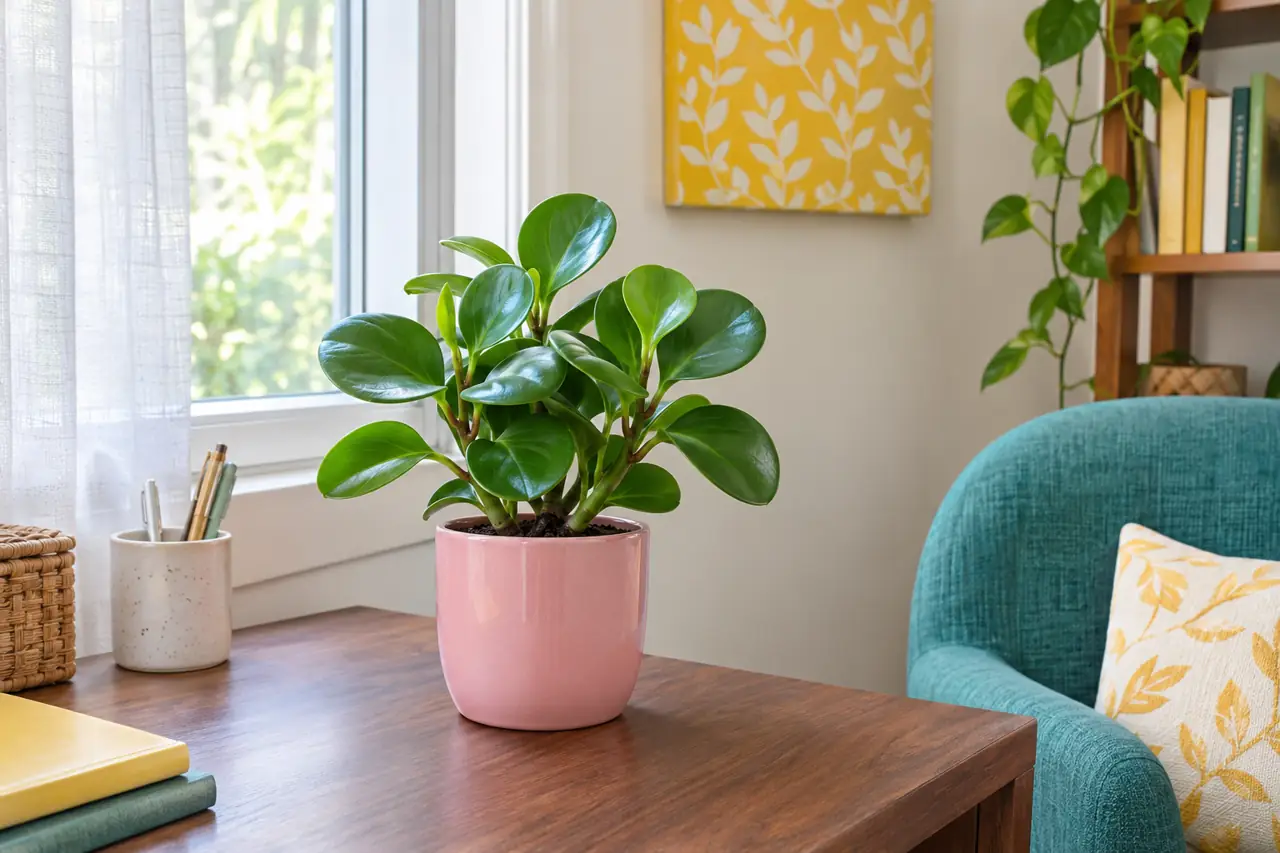
Baby rubber plant is a compact option for a desk that cannot accommodate a tree.
Its rounded, glossy leaves provide plenty of presence in a small space.
Use a pink cover pot with a removable draining inner pot, a walnut desk, and a teal chair.
A yellow patterned board behind the desk gives color without competing with the foliage. Keep the plant away from keyboard splashes.
Bright, indirect light suits it, while strong direct sun can scorch its leaves.
Avoid waterlogged mix and prolonged extremes of dryness. Check below the surface before deciding that its thick leaves mean it needs no attention.
Leave room to lift the inner pot for watering. This peperomia is different from the large rubber tree, despite their confusing common names.
Care and botanical reference photographs: NC State Extension — Baby Rubber Plant.
16. Wax Plant
Hoya carnosa

Wax plant is a satisfying first vine for a bright room when you are happy to enjoy leaves before flowers.
Train a few stems around a small freestanding hoop, leaving others to trail from a stable shelf. Keep the pot within easy reach.
A cream container, raspberry chair, blue throw, and oak floor give the arrangement a warm backdrop.
Bright, indirect light and a loose, fast-draining mix suit Hoya carnosa. Let the medium dry between waterings without leaving it neglected indefinitely.
Flowering takes suitable conditions and patience. Do not remove old flowering spurs casually, because they can produce flowers again.
Guide new stems before they catch behind furniture.
I like a modest support here: enough to organize the vine without hiding its natural shape.
Care and botanical reference photographs: NC State Extension — Wax Plant.
17. Thanksgiving Cactus
Schlumbergera truncata
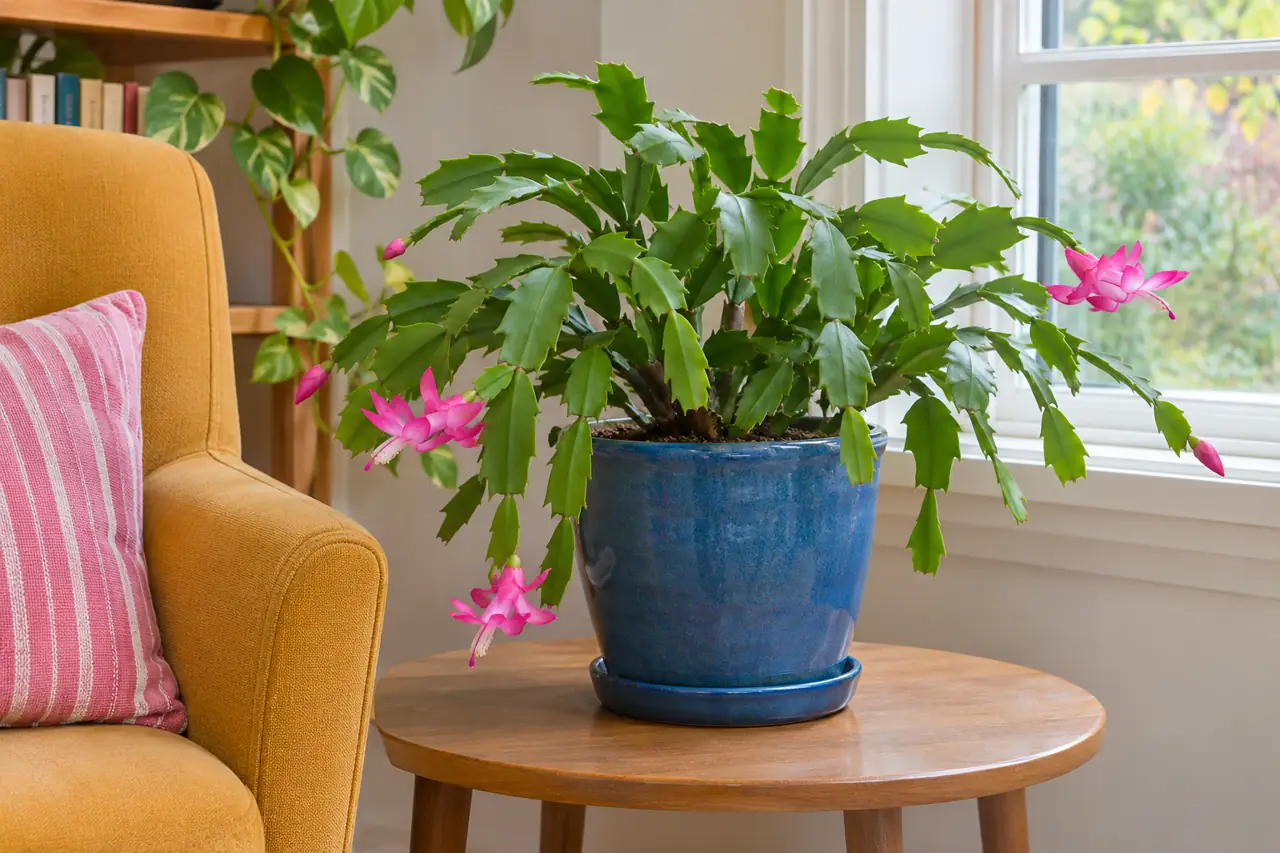
Thanksgiving cactus offers a beginner a flowering plant with a trailing outline. It needs a different routine from a desert cactus.
Put a blue planter on a low table near filtered window light, with an ochre chair and pink striped cushion nearby.
Leave room for the arching stems and emerging buds. Avoid placing the pot where a curtain regularly catches it.
Use a moist but well-drained growing mix, and avoid both overwatering and prolonged neglect. Protect it from scorching direct sun.
The pointed edges of its flattened stem segments help distinguish it from a true Christmas cactus. Check the label and linked reference photographs.
Repeat flowering depends on conditions, including suitable dark periods and temperature.
Enjoy the plant's shape year-round rather than expecting continuous flowers from an unchanged spot.
Care and botanical reference photographs: NC State Extension — Thanksgiving Cactus.
18. Monstera
Monstera deliciosa
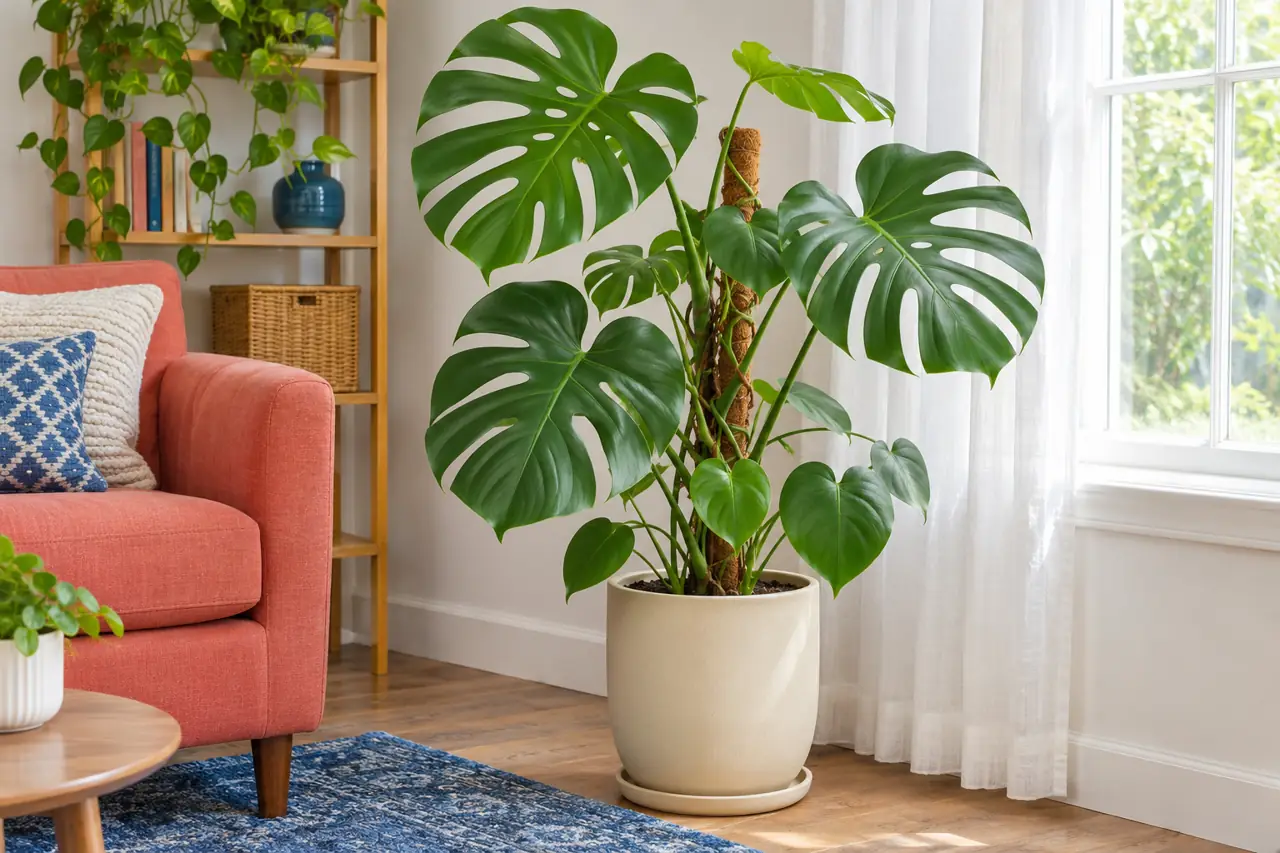
Monstera is an approachable choice when you have genuine room for a large foliage plant.
It is less suitable for someone seeking a permanently compact desk ornament.
Use a cream floor pot near a bright, filtered window, with a coral sofa and blue rug offset from the leaves.
Provide a sturdy support and keep the approach to the pot clear. The mature outline matters more than the nursery-pot footprint.
Water thoroughly when needed, allowing the upper part of the mix to dry before watering again.
Wipe dust from the leaves and check that ties allow growth.
Do not expect every young leaf to have the same splits or holes.
Choose a manageable starting size, then leave room for the stems and canopy to extend without blocking seating.
Care and botanical reference photographs: NC State Extension — Monstera.
19. White-Edged Swedish Ivy
Coleus forsteri ‘Marginatus’
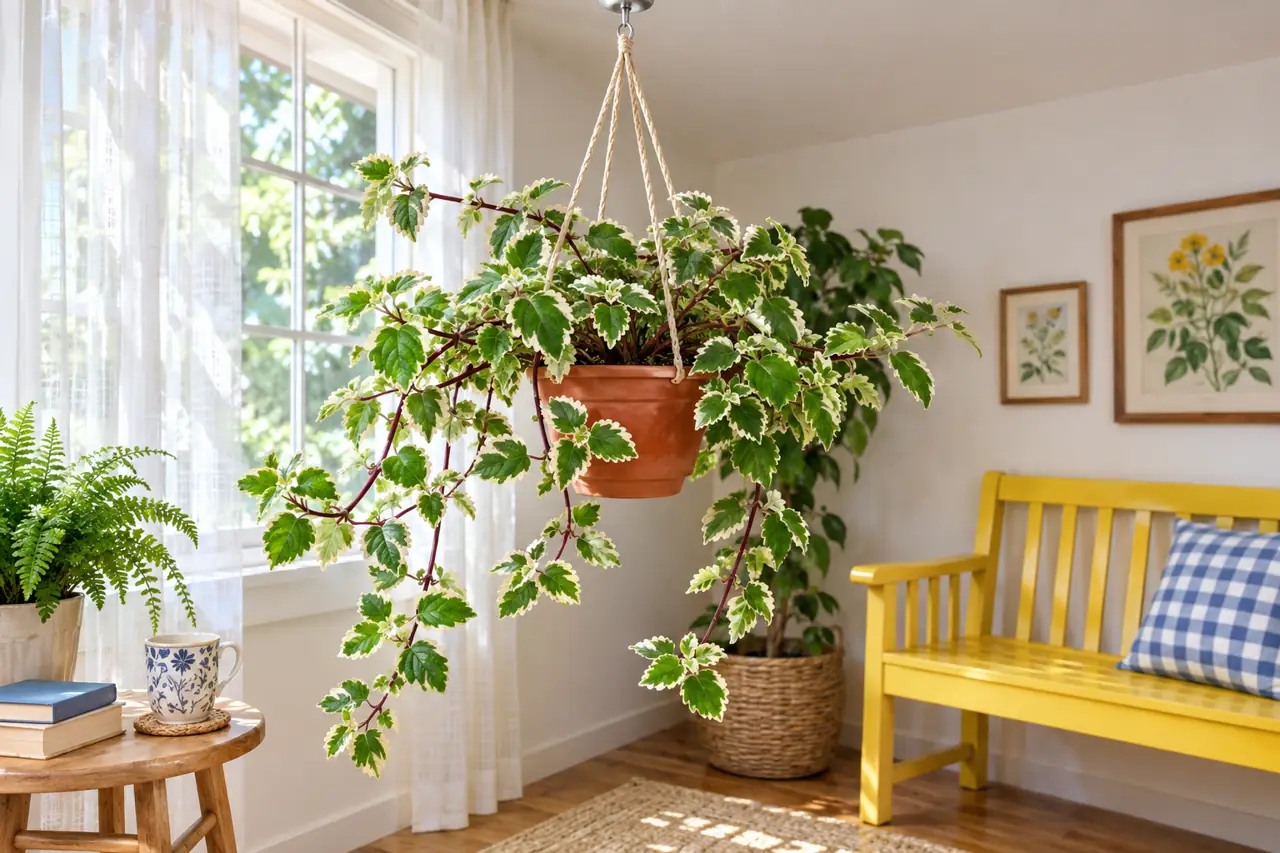
White-edged Swedish ivy adds a lighter trailing texture to a bright corner. Buy the labeled plant, since several different species share the Swedish ivy name.
For this setting, choose Coleus forsteri 'Marginatus', with green leaves edged in cream. A terracotta hanging pot keeps the foliage easy to see.
Position it near bright, indirect light above an offset yellow bench. A blue gingham cushion connects the colors without crowding the plant.
Use a secure support rated for the filled, wet pot, and keep watering access practical.
It prefers rich, well-drained mix and tolerates a range from dry to moist conditions. Do not leave drainage water trapped around the roots.
Guide the spreading stems away from the sitting area and use the botanical label when seeking care advice.
Care and botanical reference photographs: NC State Extension — White-Edged Swedish Ivy.
20. Grape Ivy
Cissus alata
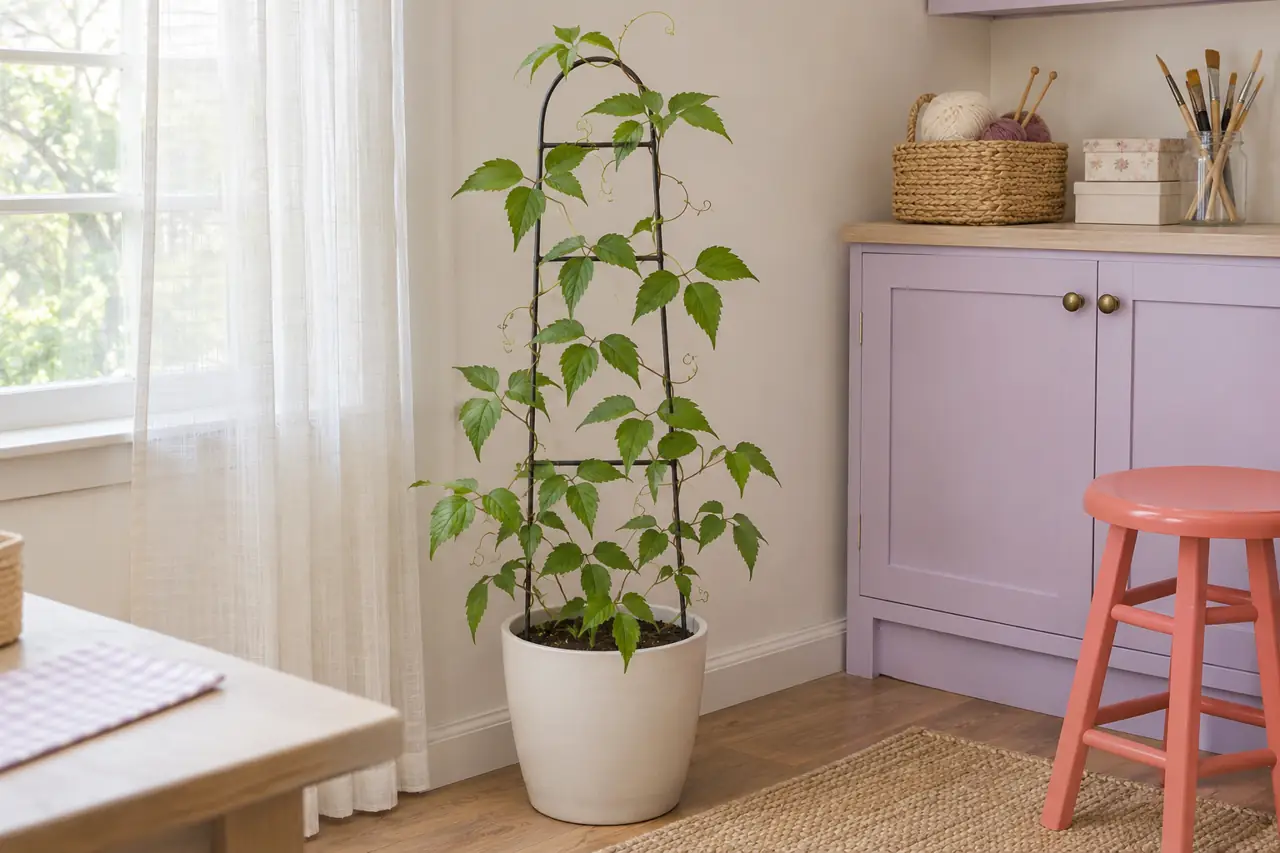
Grape ivy is useful when you want a leafy climber with a small trellis rather than another upright floor plant.
Its shiny, toothed leaflets can fill a bright craft-room corner. Keep the support freestanding so growth does not become attached to furniture.
A pale pot beside a lilac cabinet, coral stool, and woven mat creates an inviting place to work.
Provide bright, indirect light and a well-drained mix. Check moisture between waterings and avoid swinging from saturation to prolonged dryness.
Prune to keep the outline manageable, leaving access to the pot and the window. Inspect stems and leaves during routine care.
This is Cissus alata, often labeled Cissus rhombifolia, rather than outdoor Boston ivy.
Confirm the name before buying a plant sold simply as grape ivy.
Care and botanical reference photographs: NC State Extension — Grape Ivy.
Start with one good match
You do not need all 20. Choose the plant that fits your light, available space, and natural care habits, then give yourself time to learn its rhythm.
Indoor conditions change with season, climate, heating, and air conditioning. Watch the actual plant and growing mix rather than copying someone else’s watering calendar.
If direct sun is limited, explore our plants for rooms without direct sunlight, while remembering that every living plant still needs suitable light.