
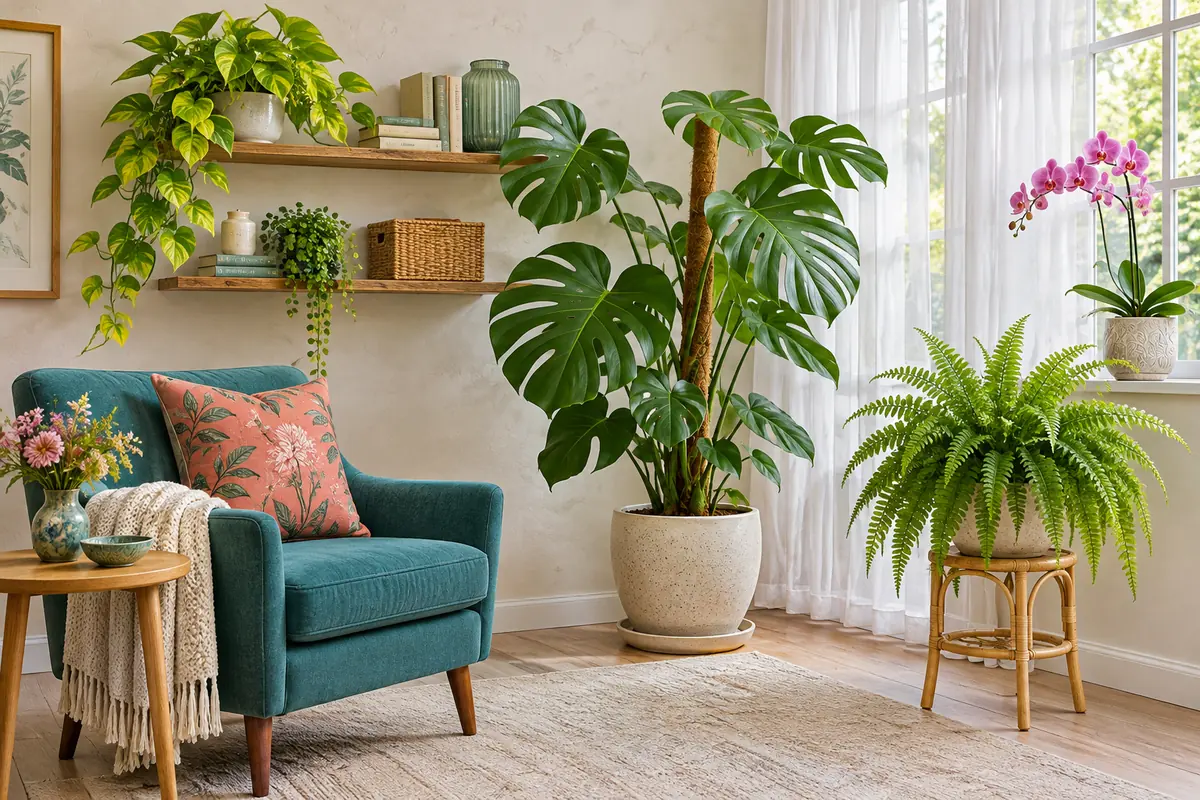
A leafy room can feel fuller before a plant adds a single new leaf. The arrangement matters: a trailing edge, a supported column and room to sit.
These twelve houseplants can fill out well in favorable conditions. Each setting below pairs the plant with a workable layout, suitable light and a care limitation.
“Instant jungle vibes” means arranging existing foliage for an immediate visual effect. New growth still takes time, and these choices are not a ranked race.
I’d start with the chair and the window, then fit the plants around them. Leave room to reach the pots when everything grows.
Before choosing: Many plants here are harmful if eaten, and some have irritating sap. Check the exact botanical name for your household.
Keep unsuitable plants inaccessible to children and pets. A high shelf alone does not reliably prevent a climbing pet from reaching foliage.
Find a plant setting for your room
- 1. Golden pothos for a bookcase reading corner
- 2. Heartleaf philodendron on a slim library support
- 3. Silver-striped inch plant beside a breakfast bench
- 4. Creeping pilea on a low tiled-room stand
- 5. Arrowhead foliage for a bright sitting alcove
- 6. Swiss cheese vine beside a studio desk
- 7. Large-leaved monstera as a living-room anchor
- 8. Mini monstera for a narrow lounge corner
- 9. Grape ivy as a dining-corner backdrop
- 10. Umbrella tree for an open sitting-room corner
- 11. Boston fern in a windowed dressing nook
- 12. Colorful coleus for a bright window garden
Choose the silhouette that fits your space
Choose a growth direction before buying a larger plant. The visible shape and the space you can maintain matter as much as the pot.
A free edge on a low shelf
Try a trailing shape such as pothos or inch plant. Keep the pot reachable and the stems clear of books, handles and the floor.
A small floor footprint with height available
Consider a supported climber. Measure the whole support and the developing leaf canopy, then check that you can still reach the growing mix.
An open corner beside seating
A broad monstera, fern or umbrella tree can provide volume. Mark the mature spread you are willing to accommodate before arranging the chair.
Keep the window useful, too. Opening blinds, cleaning glass and reaching the latch should remain possible after the plants fill out.
1. Golden pothos for a bookcase reading corner
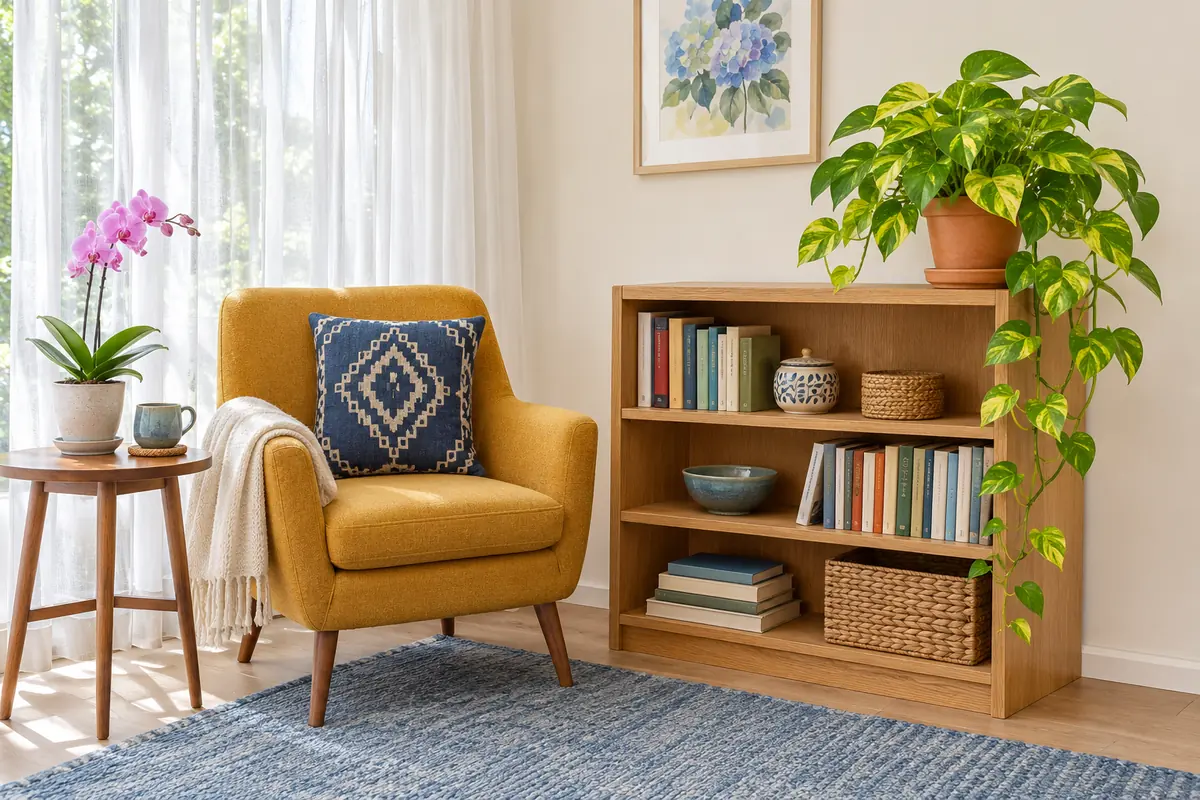
A golden pothos softens the edge of a low oak bookcase without taking over the chair beside it. Let the vines fall down one side.
A mustard armchair, blue patterned cushion and simple woven rug make the corner feel settled. Keep the books you use clear of trailing stems.
Penn State describes pothos as vigorous in moderate to bright light. Give this arrangement indirect daylight rather than a dim shelf across the room.
Use a drainage pot inside a waterproof outer container, checking for collected water after watering. Keep the pot reachable without standing on furniture.
I love how a few loose trails connect the shelf to the floor visually.
Trim when stems obstruct access. Keep foliage beyond the reach of children and pets.
2. Heartleaf philodendron on a slim library support

For a leafy column beside a reading chair, train heartleaf philodendron onto a narrow freestanding support in a stable floor pot.
Plain green heart-shaped leaves sit beautifully against a pale blue wall. Add a walnut chair, plum upholstery and a rust patterned throw for warmth.
This climbing philodendron has a rapid growth habit. Medium indirect light suits it better than expecting a dark library corner to fill quickly.
Guide new stems gently and keep ties loose. Set the support where you can reach the potting mix and remove fallen leaves without moving furniture.
Leave the neighboring table free for a book and cup. The limitation is ongoing pruning: a vigorous vine still needs boundaries, especially beside a frequently used seat.
3. Silver-striped inch plant beside a breakfast bench
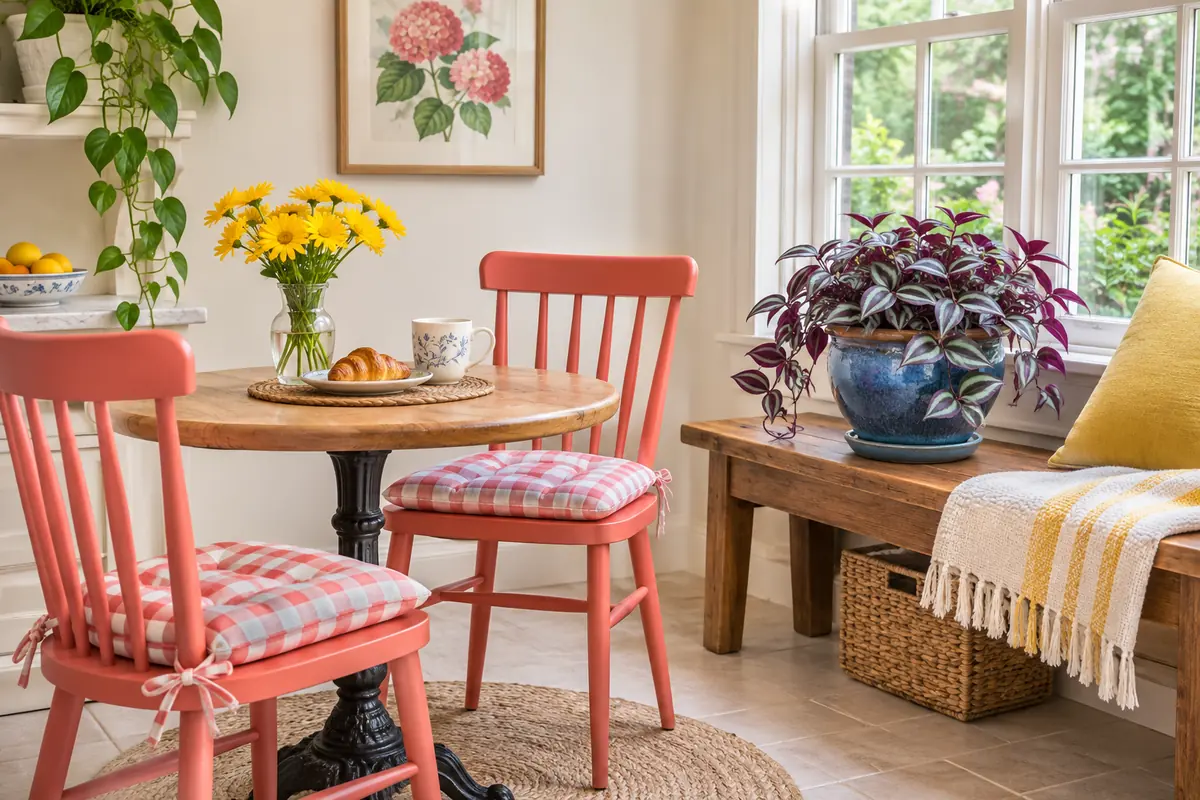
Inch plant brings a different kind of fullness: a low, colorful cascade rather than a green wall.
Place it at the window end of a sturdy breakfast bench.
Its silver-striped leaves and purple undersides echo coral chairs and checked seat pads. A small vase of yellow flowers finishes the table.
Tradescantia zebrina grows quickly and responds to trimming. Give it filtered sunlight and well-drained potting mix, allowing some drying between waterings.
Keep the pot separate from cushions so damp leaves and watering spills cannot mark the fabric.
As stems lengthen, trim leggy growth to maintain the mound and keep seating usable.
Low light can leave this arrangement sparse and less colorful. Its sap can also irritate skin, so handle cuttings carefully.
4. Creeping pilea on a low tiled-room stand

Creeping pilea makes a small pot look abundant with crinkled, roundish leaves spilling over the rim. Use a low plant stand rather than a high hanging position.
The arrangement pairs a green-painted stand with terracotta tiles, a cane stool and a blue floral cushion. Keep a white storage cabinet visible behind it.
Pilea nummulariifolia is a fast-growing, moisture-loving houseplant. Its small foliage rewards a position where you can notice the texture and check the mix easily.
Water when the top inch is dry, then let excess drain. Do not copy a drought-tolerant succulent routine for this pot.
Trim trails before they reach the floor. Keep cuttings contained rather than discarding them outdoors, where spreading growth may become troublesome.
Keep separate watering checks within a plant group
You can arrange pots together visually while keeping their growing media separate. This comparison helps you plan which pots need different checks.
| Care grouping | Examples | Watering check |
|---|---|---|
| Allow drying between drinks | Golden pothos; grape ivy | Check the actual mix in each pot before watering. |
| Watch the upper inch | Mini monstera; creeping pilea | Their guides use a dry top inch as a watering cue. Check each pot separately. |
| Avoid prolonged drying | Boston fern; coleus | Keep suitable moisture while allowing excess water to drain. |
These are starting cues from the linked plant guides, not a shared watering calendar. Pot material, roots, light and room conditions change drying speed.
For examples with detailed moisture guidance, compare mini monstera, creeping pilea and Boston fern.
Missouri Extension explains why one watering schedule cannot fit every houseplant. Drain watered pots and check outer containers for collected water before returning them to the display.
5. Arrowhead foliage for a bright sitting alcove
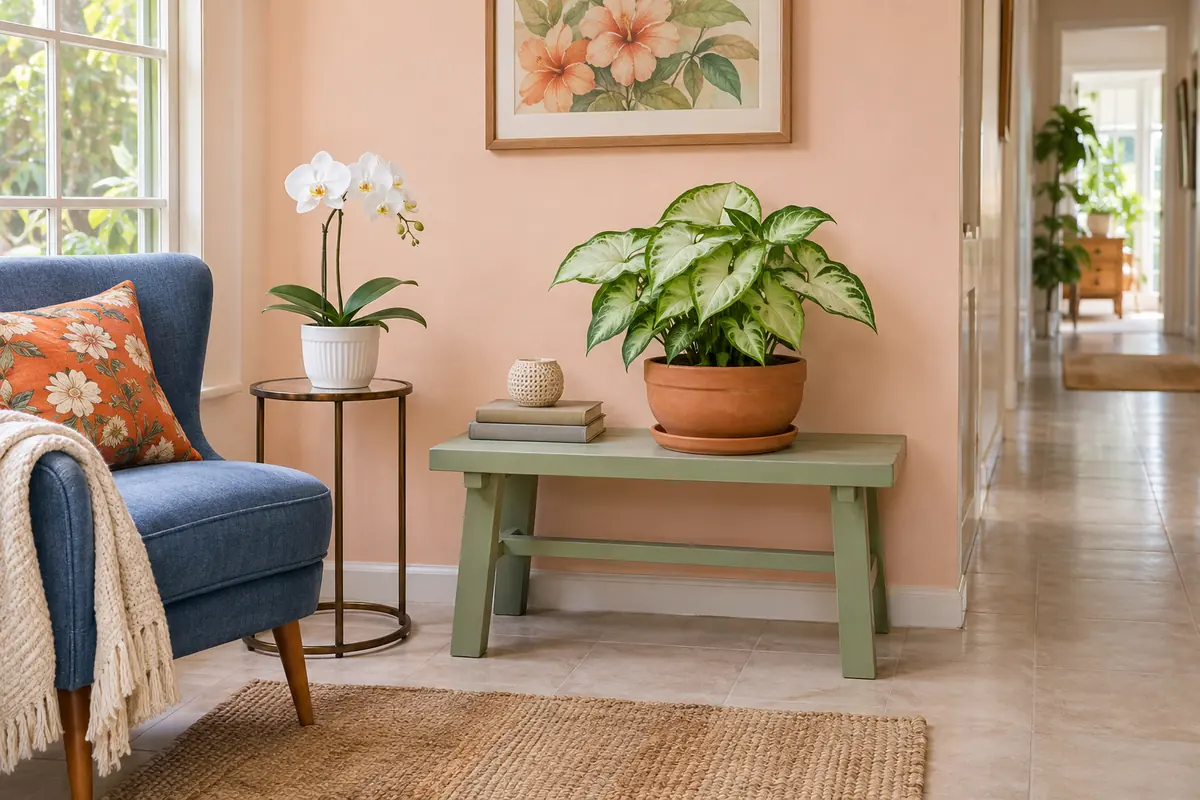
A bushy arrowhead plant adds a middle layer between a floor rug and the taller furniture. Place it on a low bench beside a sitting alcove.
Choose green-and-silver foliage against a peach wall, with a blue chair and an orange floral cushion nearby.
Missouri Extension describes arrowhead plant as a fast-growing climber. Young plants can look compact, but their later vining habit changes the space they need.
Provide warm conditions and indirect light. NC State cautions against direct sun and explains how pruning can preserve a bushier shape.
Keep the bench outside the main passage and leave room to lift out the inner pot.
Revisit the arrangement as stems develop. The aim is a usable alcove with foliage, not a hallway narrowed by unchecked growth.
6. Swiss cheese vine beside a studio desk
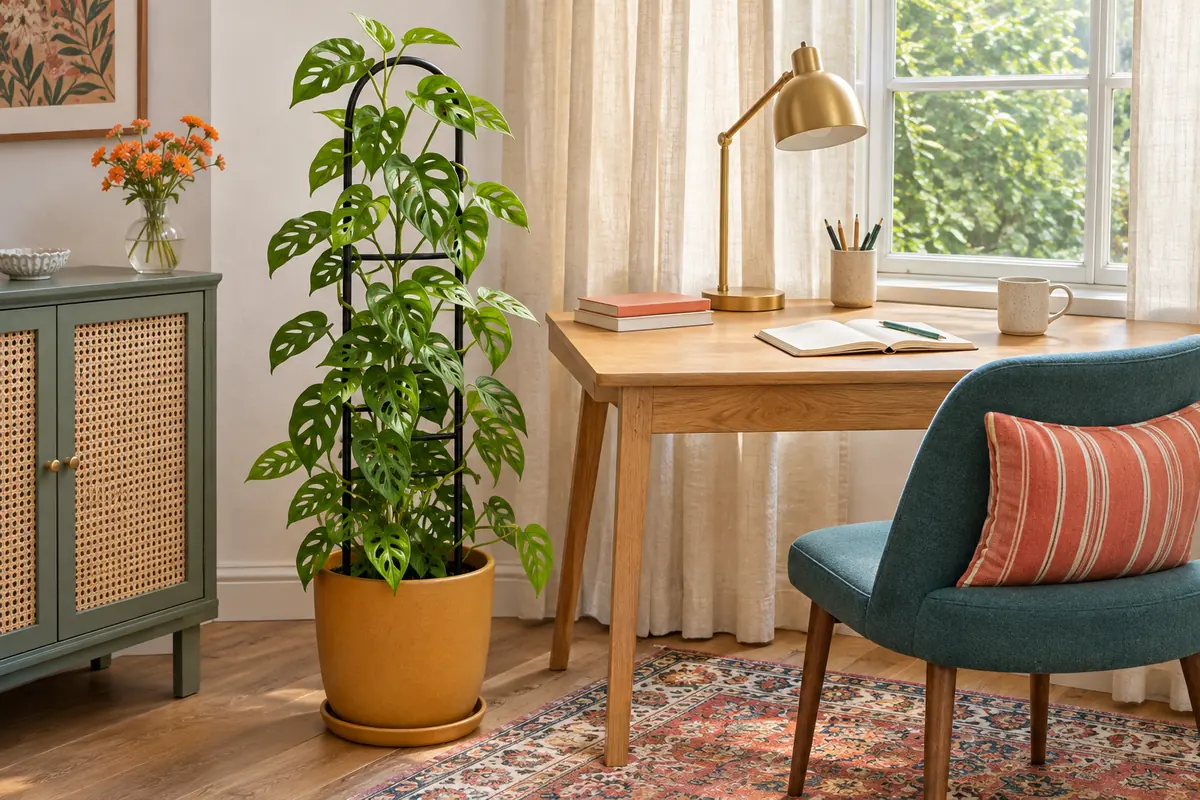
Swiss cheese vine gives a studio corner a light, open screen. Train Monstera adansonii up a slender support beside the desk, keeping its writing surface clear.
Its perforated leaves stand out against linen curtains. An ochre pot, teal chair and coral striped cushion keep the studio cheerful, with clear writing space and a small gap between the foliage and the curtains.
NC State identifies this smaller monstera as fast growing. Provide bright indirect light, warmth, humidity and support, with the pot reachable on the floor away from equipment.
Guide stems as they extend, checking that the chair still pulls out freely. Dry air and harsh direct sun can undermine the lush effect, so choose the location before buying.
7. Large-leaved monstera as a living-room anchor
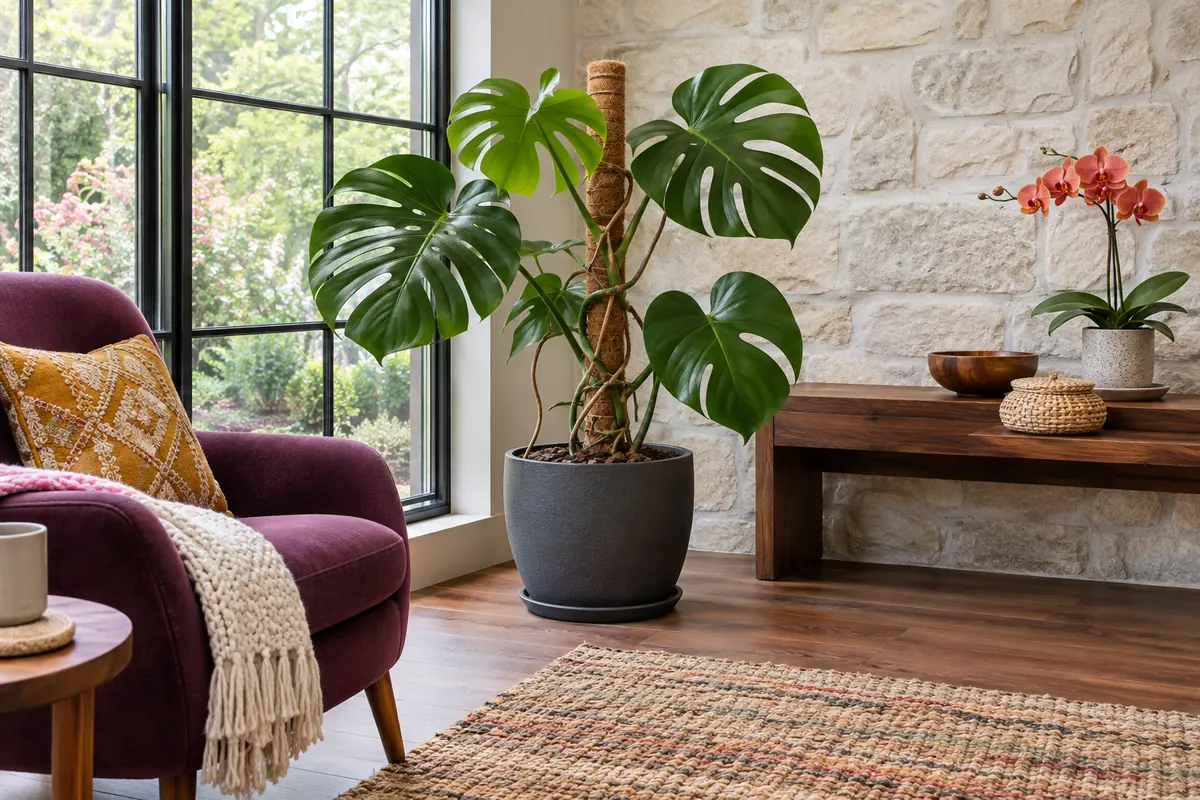
When the room has spare floor space, Monstera deliciosa supplies a broad leafy anchor. Its large divided leaves create volume without requiring a collection of small pots.
Set a supported plant beside a low walnut bench, with a plum chair and an ochre patterned cushion nearby.
A pale stone backdrop makes the leaf shapes easy to appreciate. Keep curtains, walkways and the window handle accessible.
This rapidly growing climber needs sturdy support and moderate brightness without harsh direct sun. Water thoroughly, allowing part of the upper mix to dry before watering again.
Choose the pot and support for the growing plant, not just its current appearance.
The main constraint is spread.
A narrow room may be better served by one of the smaller climbing settings below.
8. Mini monstera for a narrow lounge corner
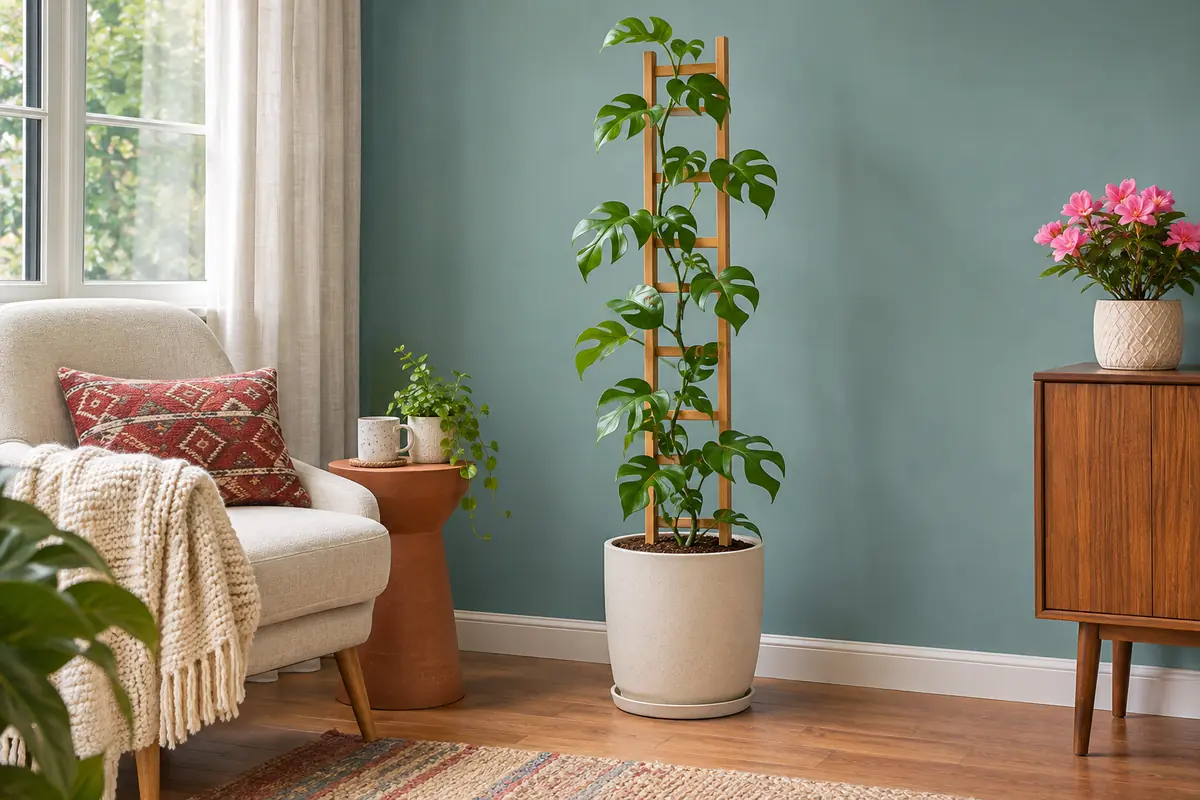
Mini monstera offers divided leaves on a slimmer vine, making a vertical arrangement beside a lounge chair easier to manage than a large spreading monstera.
Despite the name, Rhaphidophora tetrasperma is a different genus. NC State lists rapid growth, so give the vine a stable ladder or trellis from the start.
A blue-green wall, cream chair and terracotta side table create a quiet composition. Add one patterned red cushion and keep the floor around the pot open.
Provide bright indirect light and well-drained mix, watering when the top inch is dry.
Guide new growth onto the support rather than letting it grab nearby furniture. This is a smaller-leaved option, but its stems can still outgrow the allotted corner.
9. Grape ivy as a dining-corner backdrop
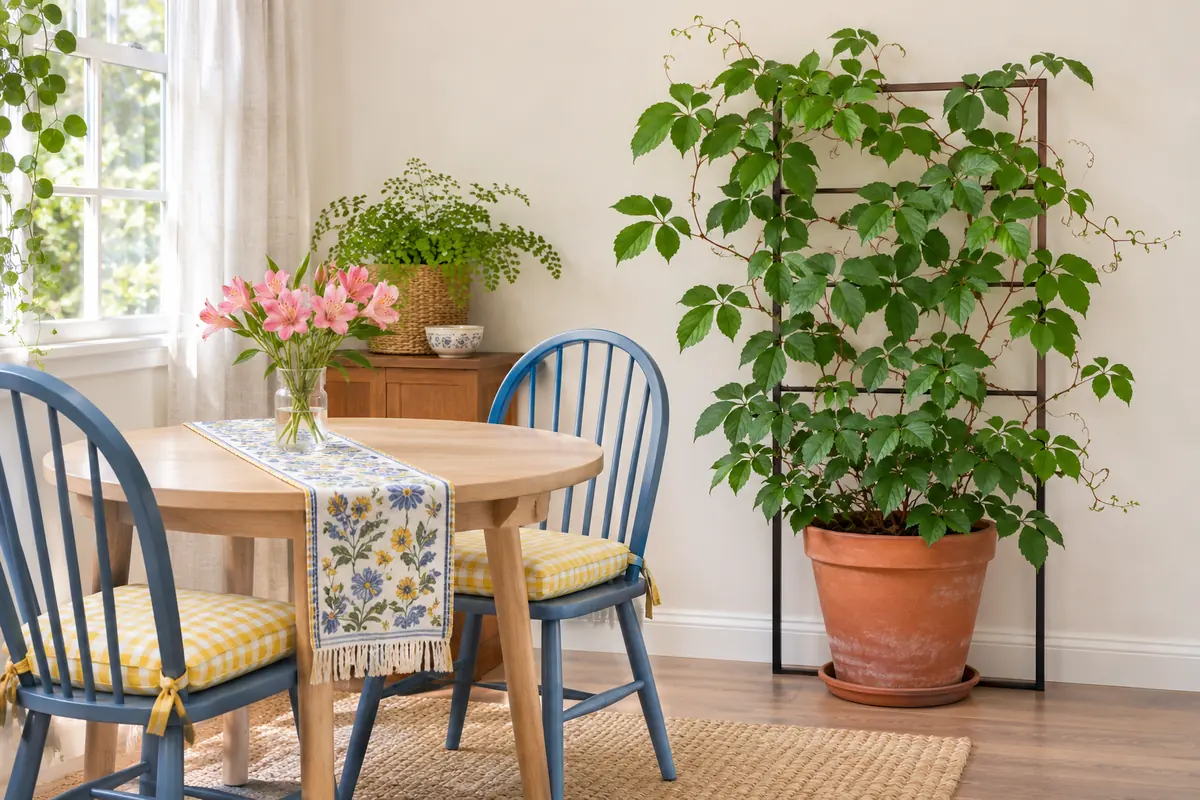
Grape ivy can fill a low freestanding trellis behind a small dining table. Its toothed leaflets bring a finer texture than the broader leaves of monstera.
Use terracotta against a plain cream wall, with blue spindle chairs and yellow checked cushions. A patterned runner and separate flower vase tie the dining arrangement together without covering the entire wall or blocking daylight from the nearby window.
Cissus alata is a rapid-growing tendril climber suited to bright indirect light. Let the mix dry between waterings while avoiding prolonged drought, and keep the pot reachable from the side.
Leave room to pull out every chair. Prune to the intended outline, preventing tendrils from attaching to curtains or furniture you regularly move around the room.
10. Umbrella tree for an open sitting-room corner
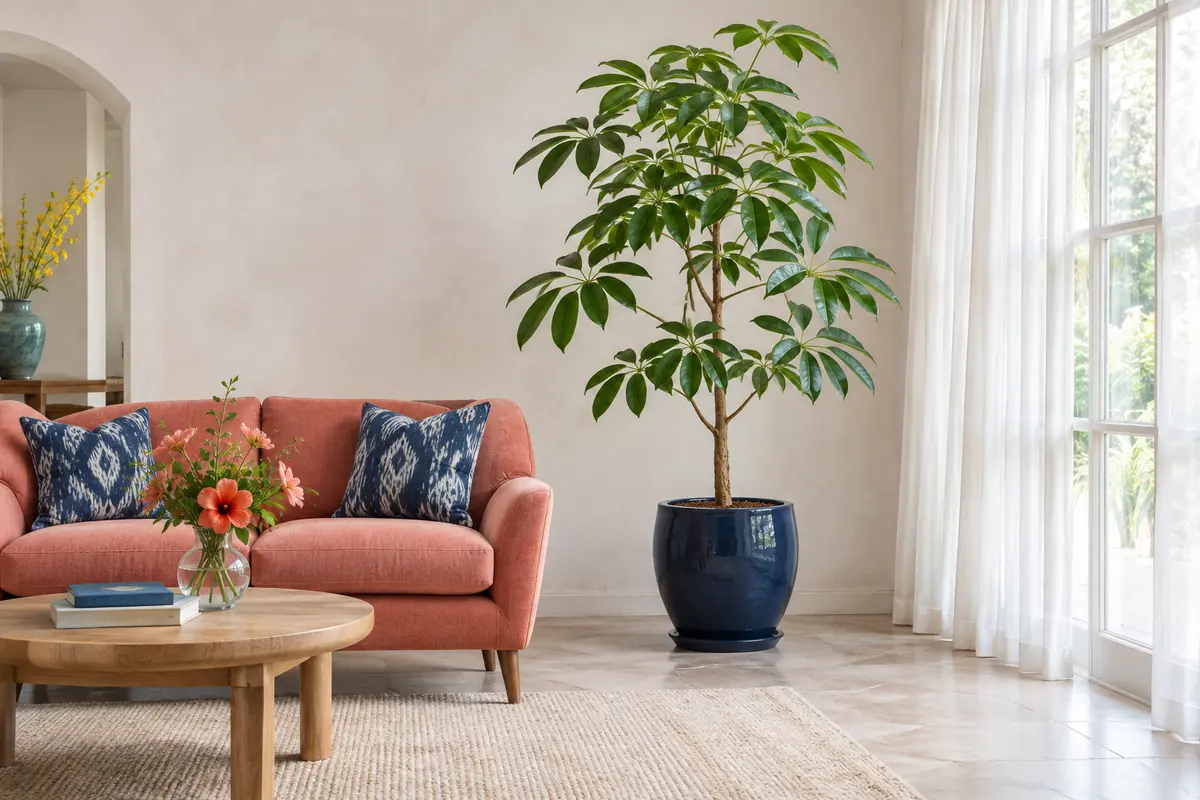
An umbrella tree creates height with a clear trunk and a canopy of radiating leaflets. It suits a spacious sitting room with room beside the sofa.
A deep blue floor pot balances coral upholstery and indigo patterned cushions. Keep the wall simple so the branching silhouette remains the focus.
Heptapleurum actinophyllum has a rapid growth rate and can become a substantial indoor plant. Give it bright light, protecting it from harsh afternoon sun.
Leave space around the canopy and check that branches cannot obstruct a door or catch a curtain.
Pruning may become necessary as it grows. Choose another setting if you need a permanently compact plant.
Its sap can irritate skin, and the plant is harmful if eaten. Keep it inaccessible to children and pets.
11. Boston fern in a windowed dressing nook
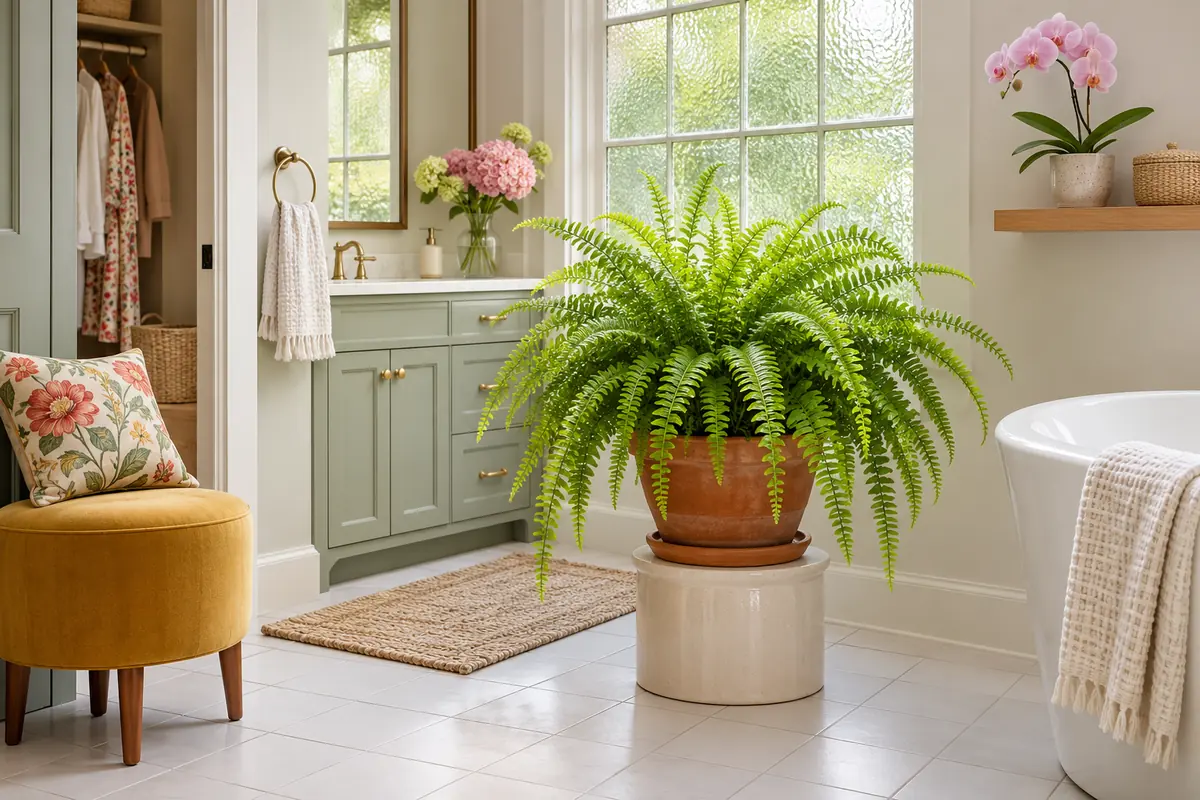
A Boston fern creates a broad, feathery layer on a low pedestal.
A bright windowed bathroom or dressing nook can suit this shape beautifully.
Combine terracotta with a sage cabinet, white tiles and a mustard stool. A floral cushion adds color while the fern supplies the soft outline.
Boston fern grows rapidly with bright indirect light and sufficient humidity. Keep its potting mix moist without allowing the container to stand in water.
Position the pedestal beyond the splash zone, leaving access to drawers and the walkway. Let the fronds arch freely rather than pressing them against glass.
A dry, heated room is the important limitation.
Bathroom humidity also varies, and a windowless bathroom needs suitable grow lighting rather than an assumption of enough light.
12. Colorful coleus for a bright window garden
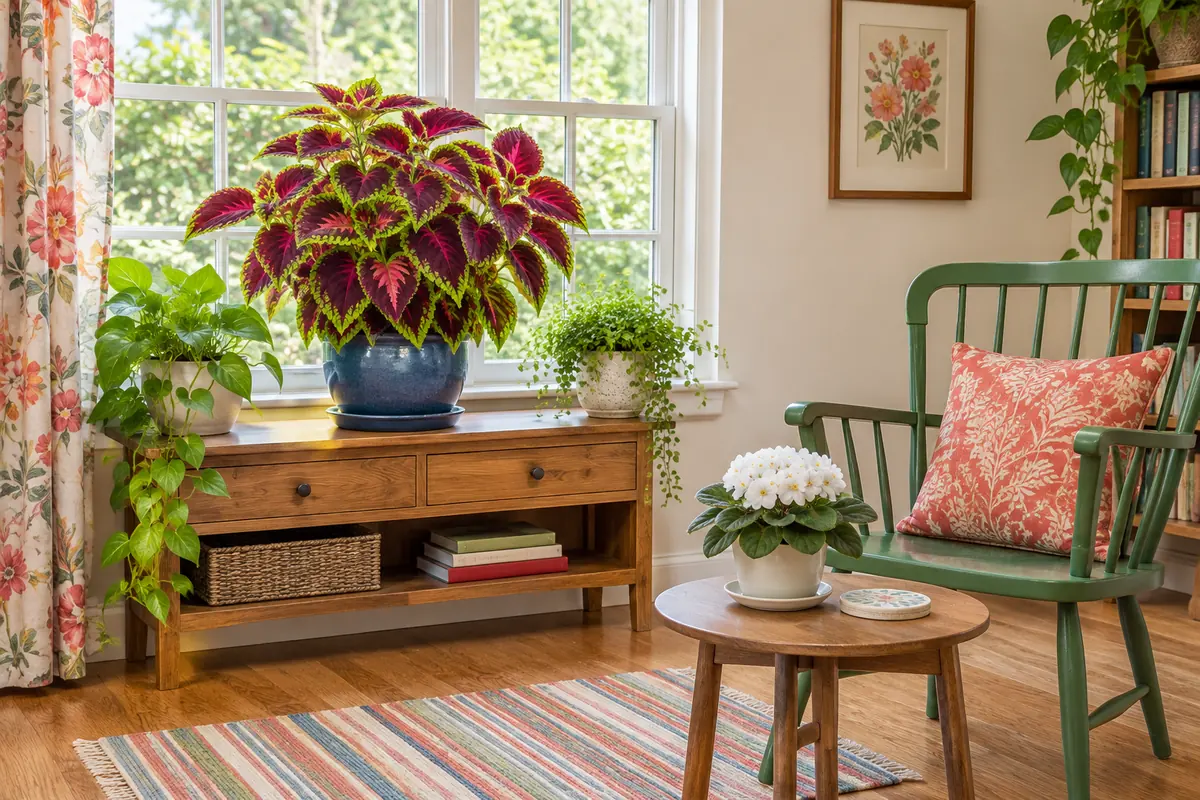
Coleus adds fullness through colored foliage, so a green room can gain contrast without relying on flowers. Put a bushy plant on a low window console.
Burgundy, pink and lime leaves work with a blue pot, green-painted chair and coral patterned cushion. Keep the console simple enough to lift the pot easily.
Clemson describes rapid seasonal growth in coleus, while NC State specifies bright light for indoor plants. Actual indoor growth depends on the cultivar and conditions.
Pinch stem tips to encourage a fuller shape, and keep the mix moist but well drained.
Choose a position with enough light to avoid a stretched, sparse plant. Watch for indoor pests and keep fallen leaves and cuttings away from pets and children.
Check these conditions before adding more plants
Work through the available space
Illustrative example: a clear strip beside a chair measures 120 centimeters across. A pot measuring 35 centimeters across leaves 120 − 35 = 85 centimeters.
That is the space remaining before allowing for leaves, a support or chair movement. Measure those too; this example is not an accessibility clearance standard.
Check light at leaf height
Watch the chosen position during the day and across seasons. A bright-looking room can still have a dim corner behind a chair or tall cabinet.
Illinois Extension explains how light limits houseplant growth. If the spot is unsuitable, improve the position or add appropriate grow lighting before expanding the collection.
Respond to the plant you have
Check new leaves, stem spacing, pot moisture and root condition before increasing fertilizer. Several different problems can produce weak growth.
Compare observations with the linked care guide for that species. Missouri’s houseplant guidance explains that extra fertilizer cannot compensate for inadequate light.
Use houseplant fertilizer according to its label and the plant’s active growth. A winter slowdown is a reason to reassess conditions, not to force a larger dose.
Questions before you build an indoor jungle
How quickly will these plants fill the room?
There is no reliable timetable for every home. Growth changes with species, cultivar, season, light and care, even among plants described as vigorous.
For an immediate display, choose plants whose existing foliage already creates a pleasing arrangement. Allow space for subsequent growth instead of expecting bare stems to fill instantly.
Can I use a room without windows?
Use suitable grow lighting and follow the fixture’s directions for placement and operation. A decorative ceiling light should not automatically be treated as adequate plant lighting.
Should I plant everything in one container?
Separate drainage pots make it easier to meet different moisture needs and inspect each plant. Arrange the outer pots as one group without sharing saturated growing mix.
Does a long vine mean a healthy, fast-growing plant?
Judge the whole plant. Thin stretched growth and sparse leaves can accompany poor light, so look at leaf quality and conditions as well as stem length.
Can these pots go outdoors in summer?
Check local temperatures, the species’ requirements and any invasive-plant restrictions first. Acclimatize plants gradually and keep cuttings contained rather than discarding them into the landscape.
Choose the corner, then the plant
Measure one usable spot, watch its light and choose the growth shape that fits. Start with an arrangement you can water, prune and enjoy without moving the room around.