
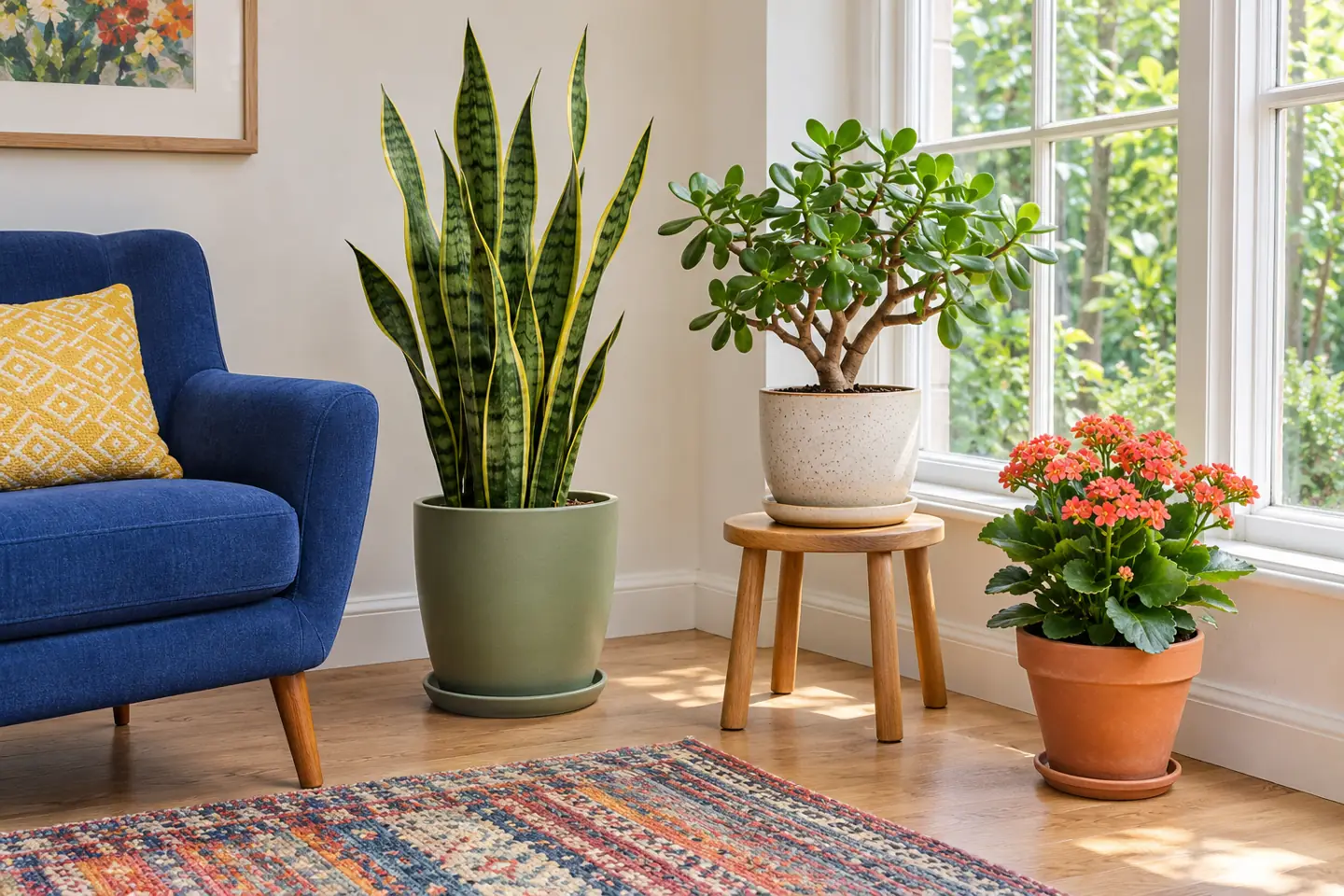
Snake plants, ZZ plants and several succulents can suit a home where daily watering is unrealistic. Start with the light you have, then choose a plant and container that fit it.
However, no plant on this list comes with a reliable once-a-month watering guarantee. Light, temperature, season and the potting mix all change how quickly a container dries.
These twelve settings pair resilient plants with workable furniture layouts, accessible pots and a little color. Use the care checks alongside the room ideas.
The useful rule: Drought tolerance means some resilience between suitable waterings. It does not mean a plant needs no light, drainage or attention.
Maryland Extension advises watering according to need rather than a fixed calendar. A warm sunny apartment and a cool winter room will not dry pots at the same rate.
Find a plant and its room setting
- 1. Snake plant for a narrow reading nook
- 2. ZZ plant for a tidy home office
- 3. Jade plant for a sunny dining window
- 4. Ponytail palm for an open lounge corner
- 5. Aloe for a bright kitchen station
- 6. Haworthia for a small writing desk
- 7. Gasteria for a colorful sideboard
- 8. Echeveria for a sunny window bench
- 9. Burro’s tail for a protected window corner
- 10. Cast-iron plant for a filtered-light daybed
- 11. Elephant bush for a sunny breakfast table
- 12. Flowering kalanchoe for a bright console
Choose by light before choosing by watering frequency
Use the actual light at leaf level. Window direction alone cannot account for neighboring buildings, trees, curtains or local seasonal changes.
Sunny window space
Start by considering jade, ponytail palm, echeveria or elephant bush. Keep their pots accessible, and introduce stronger light gradually.
Bright, filtered daylight
Consider ZZ, haworthia, a suitable gasteria or flowering kalanchoe. Filter harsh sun where the plant’s individual guidance calls for it.
A position with less direct light
Snake plant and cast-iron plant tolerate lower light. Neither belongs in a completely dark room without appropriate supplemental lighting.
These are starting groups, not identical care requirements. Minnesota Extension explains how indoor light affects plant growth.
1. Snake plant for a narrow reading nook

A snake plant gives a reading corner height without spreading across the floor. Stand its terracotta pot beside a rust armchair, leaving the striped leaves clear of the curtain.
An oak book table and navy patterned cushion soften those upright lines. Keep a little open floor between the pot and your feet.
Choose a container with drainage and a saucer you can lift and empty. The plant should sit in the light, rather than behind the chair.
Snake plant tolerates lower light, but a brighter position gives you more placement options. Let the potting mix dry between waterings.
Check before watering even when several weeks have passed. Winter drying can be slow; a warm, bright room changes the interval.
2. ZZ plant for a tidy home office

Set a ZZ plant on a low stand beside the desk, where its arching stems have space beyond the keyboard. A deep teal pot looks lovely against walnut.
Add a yellow chair and a simple striped rug. One generous plant makes this arrangement feel settled without covering the working surface.
Place it near a window with bright, indirect light. Keep strong direct sun off the leaves.
ZZ plant stores water in its rhizomes and tolerates drought. Allow the mix to dry between waterings, with extra restraint during slower winter growth.
I like a removable nursery pot inside a decorative container here. Lift it out to water and let it drain fully.
Keep this plant away from pets that chew foliage.
3. Jade plant for a sunny dining window

Give a jade plant a broad window ledge where its branching shape can stand against a pale wall. Its thick leaves make a satisfying contrast with fine woven seating.
Use a sturdy clay pot and an accessible saucer. A round oak table, floral bench cushion and cobalt vase of yellow flowers complete the dining corner.
Keep the vase separate from the plant pot. You can refresh the room’s color without disturbing the roots.
Jade needs a bright position and watering when the mix dries. Reduce watering in fall and winter rather than following the summer routine.
Allow room for the canopy to broaden, and check that the ledge can carry the planted pot. A narrow shelf is an awkward substitute.
Watering decision: check the pot, then choose the action
Set a reminder to inspect plants, rather than an instruction to water them. Follow the individual plant’s drying requirement.
Mix is still moist
Wait before adding more water. Check again later, and make sure a decorative outer pot is not holding runoff.
Mix has reached the plant’s dry stage
Water the root zone thoroughly until excess drains, then empty the saucer. A few routine drops are not a substitute for properly wetting the mix.
Leaves wilt while the mix is wet
Do not automatically water again. Review drainage and root conditions; wilting alone does not identify thirst.
You are unsure beneath the surface
Compare moisture below the surface with the pot’s weight, lifting only if safe. Most succulents need more drying than a general houseplant rule allows.
Maryland Extension’s watering guidance explains moisture checks, pot weight and draining excess water. For succulent-specific care, also see Minnesota Extension’s cacti and succulent guide.
4. Ponytail palm for an open lounge corner
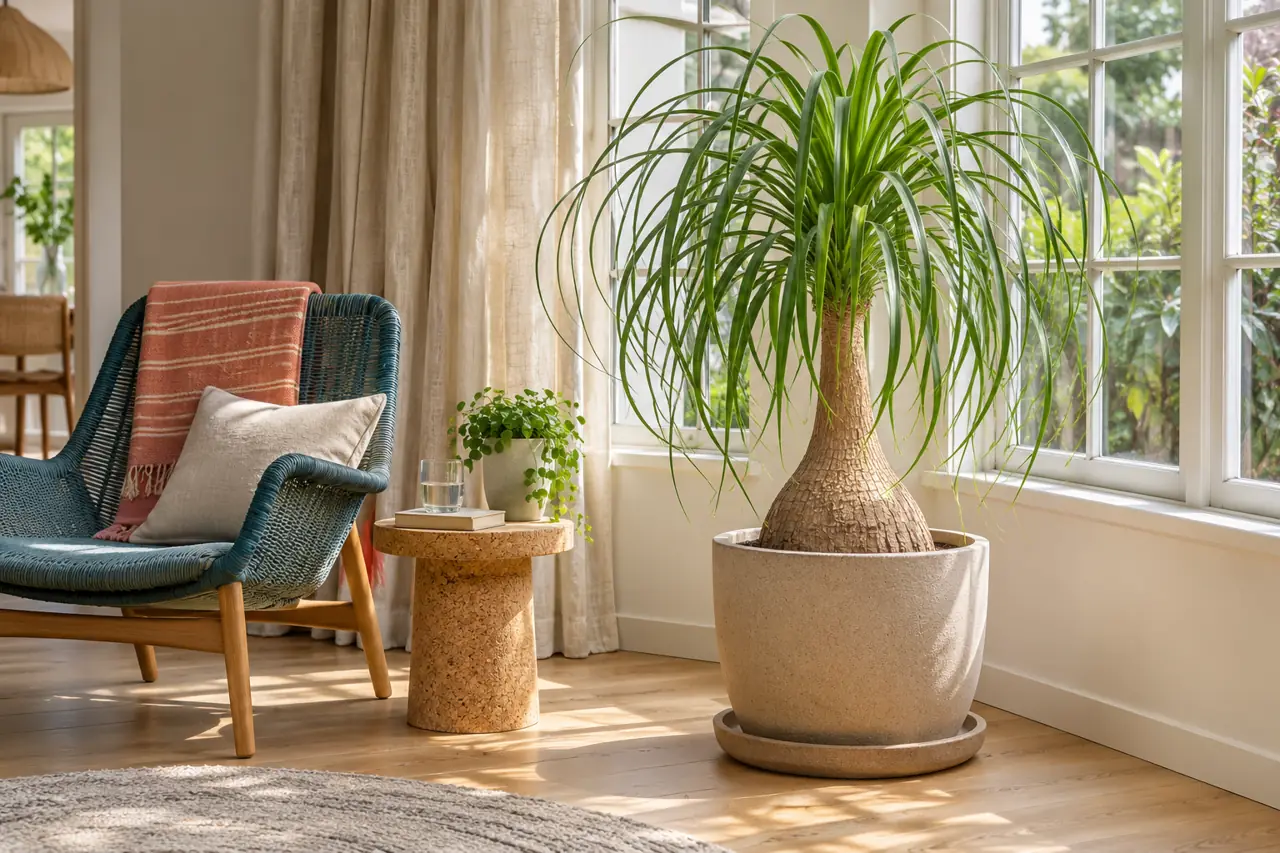
A ponytail palm brings movement to a sunny lounge without needing a cluster of smaller pots. Its long, curling leaves look particularly good beside a woven blue chair.
Leave space around the crown.
Those fine leaves should fall freely, rather than brushing a lampshade or catching on a door.
Choose a heavy, broad pot with drainage. Keep the swollen trunk base visible above the mix.
A coral striped throw, cork table and linen curtain give the corner warmth. The plant remains the tallest element.
Ponytail palm stores water in its swollen base. Use a freely draining succulent mix, water thoroughly when needed and let it dry between drinks.
Reduce watering during winter. It is slow growing, but still needs a bright home and eventual space.
5. Aloe for a bright kitchen station
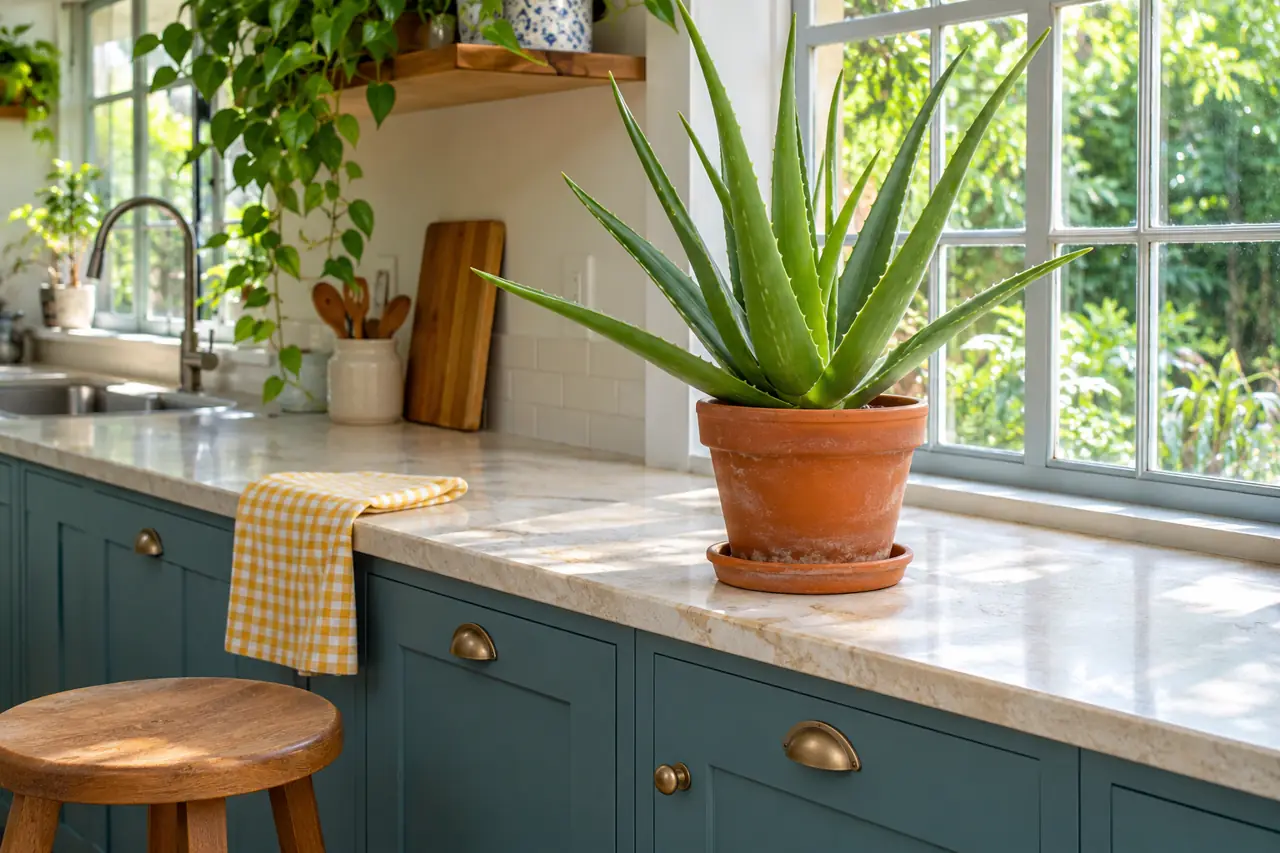
Use aloe as the sculptural center of a bright kitchen-window counter. Its pointed leaves suit a simple terracotta pot against blue-green cupboards.
A yellow checked towel adds color below the foliage. Keep the surrounding counter clear so the plant does not become an obstacle during meal preparation.
Choose a draining pot and an empty saucer that protects the surface. Position the leaves beyond elbow range, especially beside a narrow walkway.
Aloe needs very well-drained mix and drying between waterings. Check the whole root zone rather than assuming a dry surface means the pot is ready.
Water less during winter and watch for offsets filling the container. This is an ornamental arrangement; do not treat the plant as a kitchen ingredient or remedy.
6. Haworthia for a small writing desk

A compact haworthia gives a writing desk a planted focal point without swallowing the notebook space. Place a low clay pot near the window end.
Pair it with a lilac chair and a patterned pencil cup. Pale timber and a cream wall keep the tiny rosette easy to notice.
Choose a spot with bright, indirect daylight.
A decorative desk lamp does not automatically provide suitable growing light.
Haworthia includes small, fleshy-leaved rosettes suited to containers. Use well-drained mix and allow it to dry between waterings.
Check small pots regularly: their modest volume does not guarantee a long interval. Keep the saucer accessible instead of surrounding it with books.
Look at the botanical label when buying, since related succulents are often sold under similar common names.
7. Gasteria for a colorful sideboard
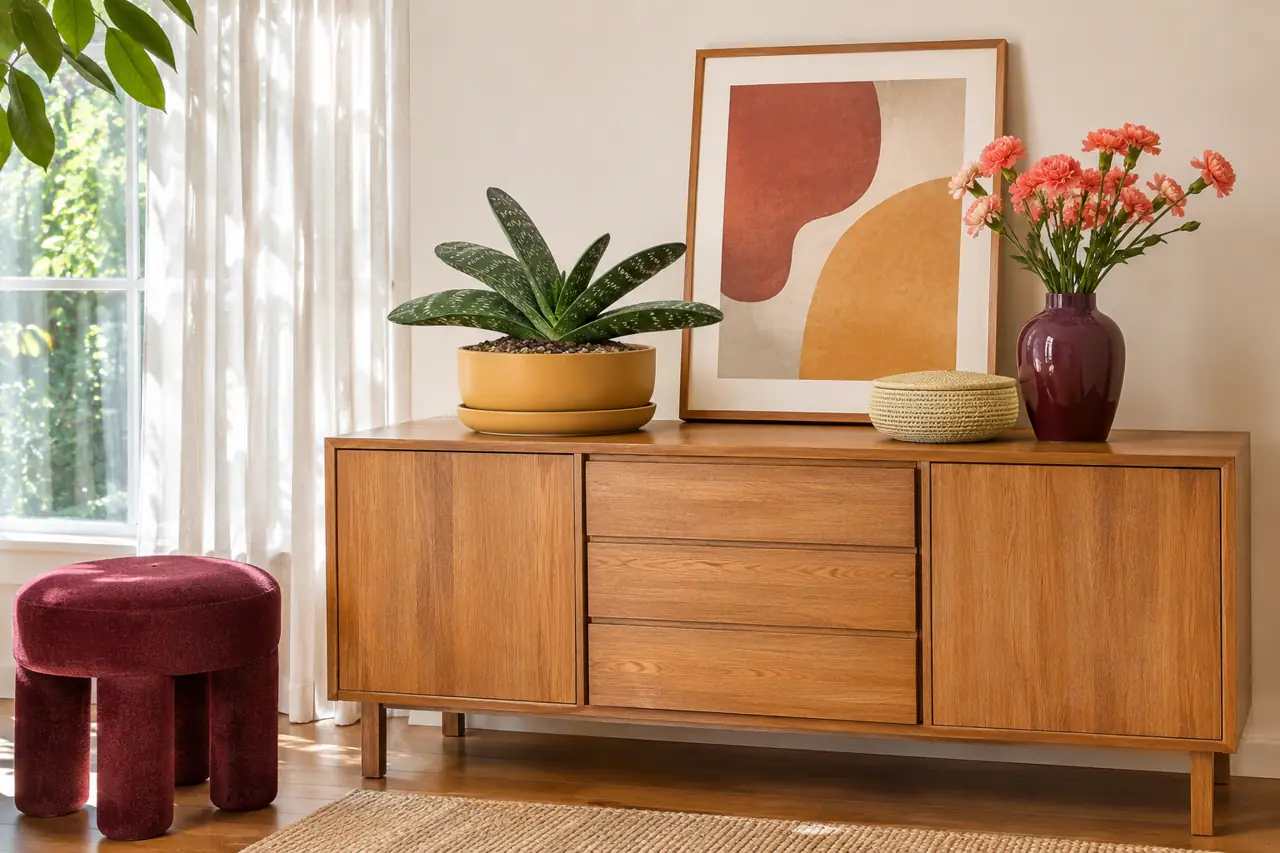
A speckled gasteria makes a handsome low layer on a sideboard. Set its broad pot beside a framed print, with the leaves visible against a quiet section of wall.
An ochre container, plum vase and maroon stool make the arrangement feel warm. Keep cut flowers in their own vessel.
Put the plant at the window end, where curtains filter strong light. Leave enough space to remove the pot without shifting the artwork.
Gasterias are drought-resistant succulents, but care varies with the species. Buy a labeled plant and follow its particular growing instructions.
For example, the RHS recommends free-draining cactus mix and bright, filtered light for Gasteria batesiana. Water moderately during growth and keep it dry when dormant.
A monthly reminder can prompt a check. It should not force a drink.
8. Echeveria for a sunny window bench
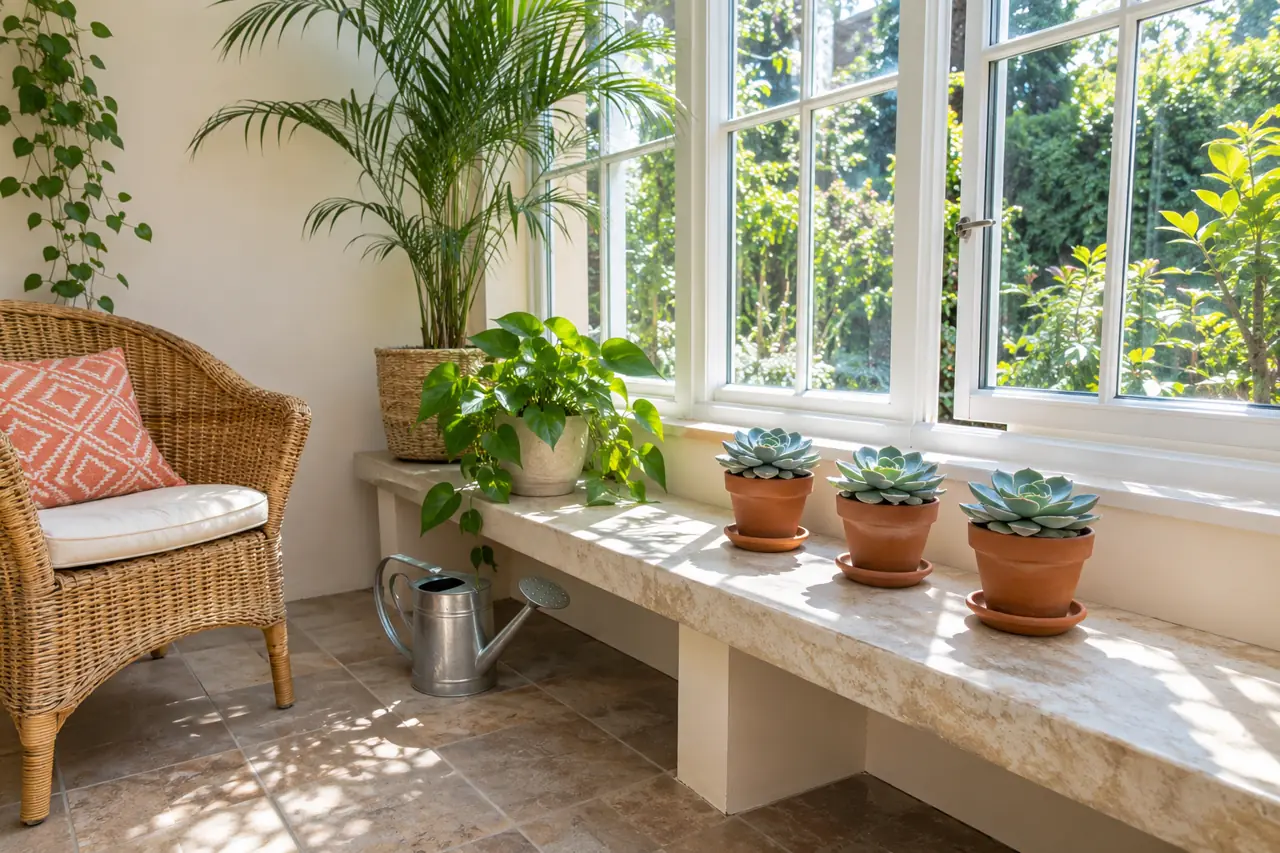
Arrange three echeverias in separate small clay pots along a sunny window bench. Their low rosettes create a repeating planted edge without hiding the glass.
Keep some bare stone between containers. A woven chair, coral geometric cushion and patterned floor provide the taller and softer layers.
Each pot needs its own drainage and saucer. Separate containers also let you water individual plants when their mix dries.
Echeveria needs a bright, sunny indoor position. A distant shelf may suit the decorating plan while providing too little light for compact growth.
Use a freely draining succulent mix and keep water from collecting beneath the pots. Move plants into stronger sun gradually.
Check the drying rate after sunny weather; a small pot can need attention sooner than expected.
9. Burro’s tail for a protected window corner

Let burro’s tail spill from a shallow pot on a stable pedestal beside a bright window. Its trailing stems supply the lower planting layer without another floor container.
Set a mustard chair far enough away that neither your sleeve nor a cushion brushes the leaves. A navy pattern and terracotta floor give the corner cheerful contrast.
Keep a clear route to the window and a plain backdrop behind the tails. This is a protected display, rather than a busy hallway plant.
Burro’s tail needs strong light, well-drained mix and drying between waterings. Reduce watering during slower winter growth.
Its fleshy leaves detach easily, so choose the position before the stems become long. Check moisture gently and avoid repeatedly carrying the whole arrangement around the room.
10. Cast-iron plant for a filtered-light daybed
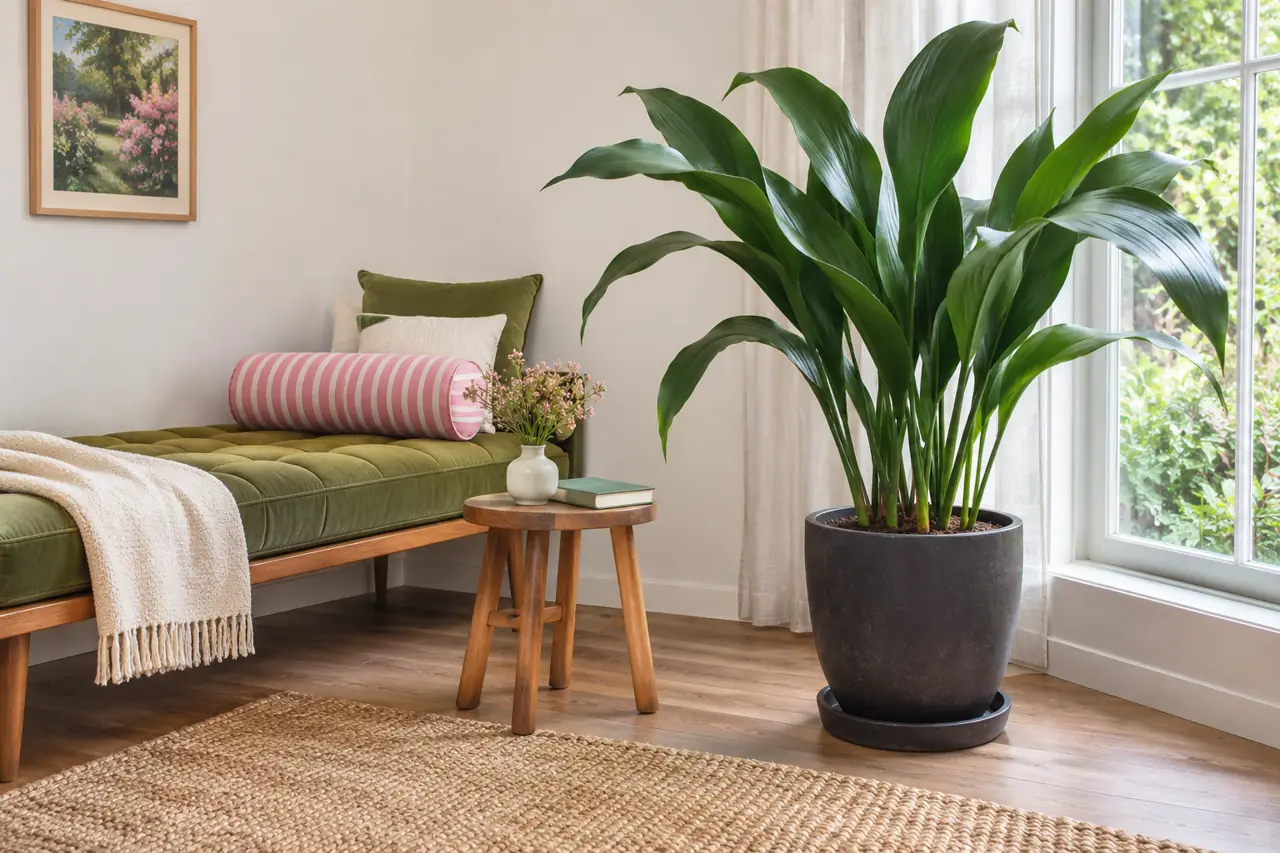
A cast-iron plant gives a daybed corner broad, calm foliage. Place its charcoal pot beside a window, outside the direct sunbeam.
The leaves rise individually from the base, making a full green layer against a pale wall. Give them room beyond the edge of the seat.
Add a pink striped bolster and a jute rug. A small timber stool holds a book without competing with the foliage.
Cast-iron plant tolerates drought and shade, but it needs regular watering during spring through fall. Water sparingly in winter.
That distinction matters: resilience is not a reason to leave an actively growing plant dry for a whole month.
Use well-drained mix, check moisture and keep drainage accessible. A dim room still needs enough daylight or a suitable grow light.
11. Elephant bush for a sunny breakfast table
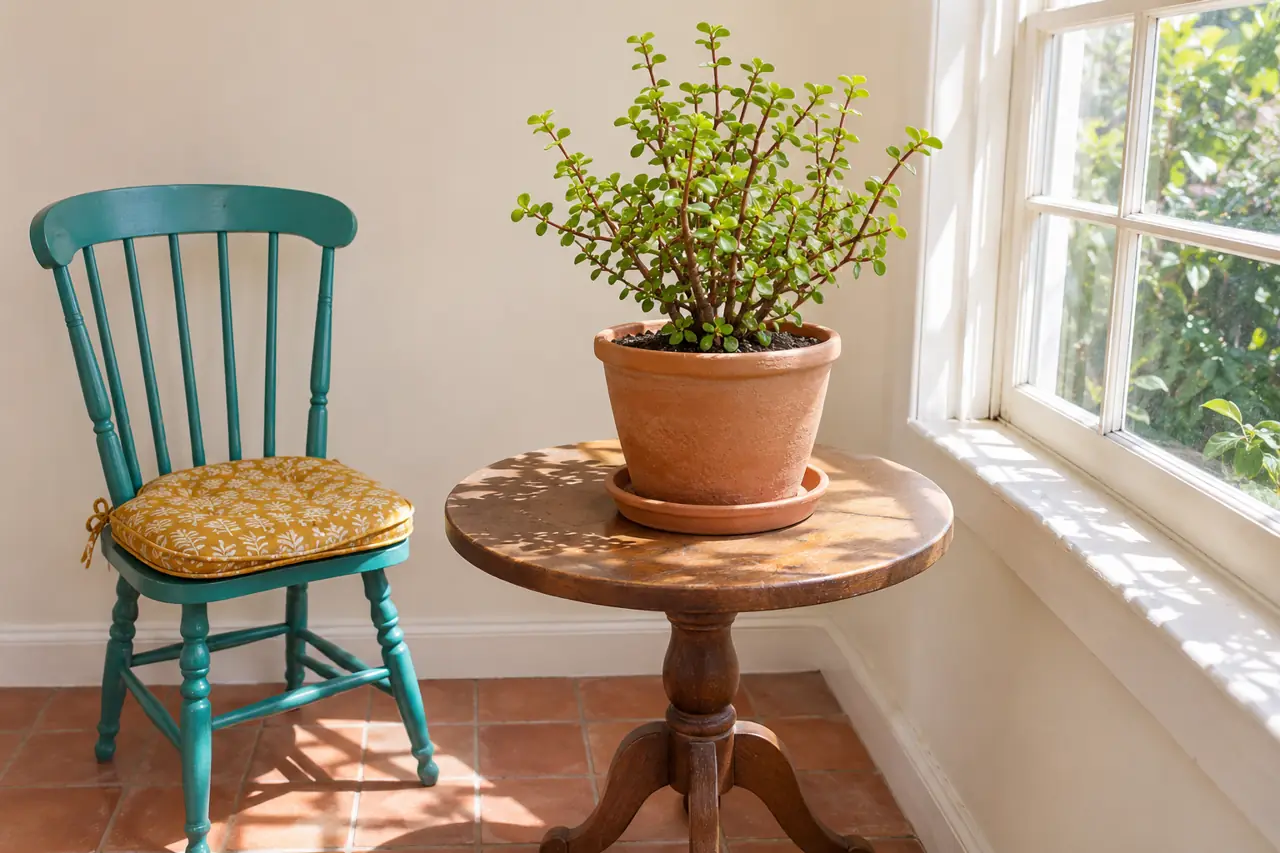
Elephant bush offers a finer texture than jade, with small rounded leaves on reddish branching stems. Give it a sunny window table of its own.
A broad clay pot, teal chair and saffron patterned seat pad make a cheerful breakfast corner.
Leave enough bare tabletop to reach the saucer comfortably.
Choose a sturdy table and keep the container away from the edge. The arrangement should stay steady when someone moves the chair.
Elephant bush needs bright light and a very freely draining mix. It tolerates drought, but grows better with suitable watering than with prolonged neglect.
Check the mix before watering and reduce water during winter. Acclimate the plant gradually when changing its light exposure.
I love how the small leaves soften a sunny corner without hiding the window.
12. Flowering kalanchoe for a bright console
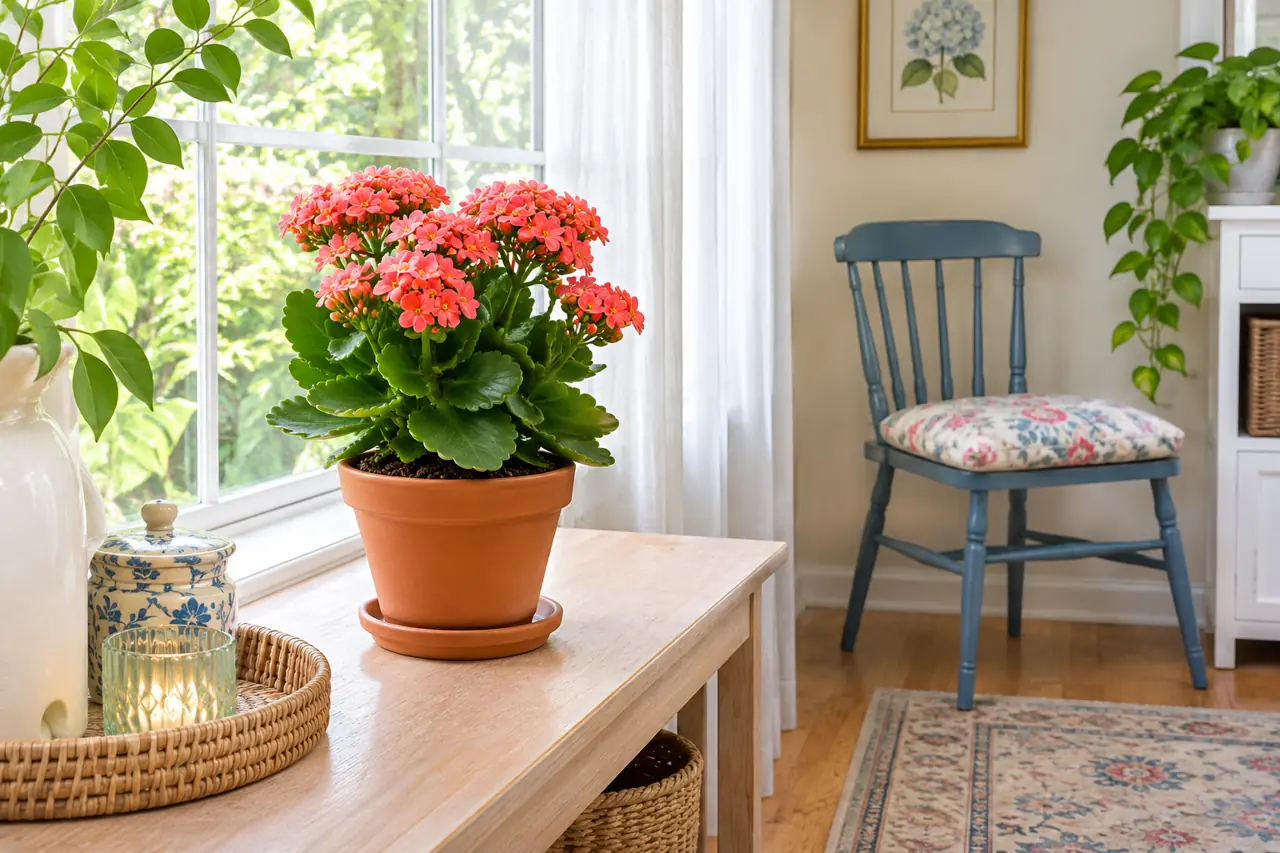
Choose flowering kalanchoe when you want a compact succulent arrangement with real flower color. Coral clusters look lovely above its glossy, scalloped leaves.
Set a clay pot on a pale console near bright, filtered daylight. A blue chair, floral cushion and muted patterned rug finish the room.
Keep the plant separate from other containers so watering remains easy. Strong, prolonged direct sun can scorch it.
Kalanchoe tolerates drought, but should be checked as conditions change. Let the mix dry before watering thoroughly, then empty the saucer.
Enjoy the flowering period without expecting uninterrupted blooms all year. Reblooming depends on appropriate light and dark periods.
Place this plant out of reach of children and pets: it is toxic if eaten. Choose another display if safe placement is impractical.
Before a trip: make a plant-by-plant handover
This planning checklist turns a vague “water the plants” request into something a helper can actually use. It is not a guarantee of a particular time away.
Record the actual drying pattern
Note the last watering date, moisture checks and when the plant next needed water. Do this under the conditions it will have while you are away.
Recheck the room conditions
Consider heating, air conditioning, strong seasonal sun and closed curtains. Do not move a sun-loving plant into darkness to stretch the interval.
Give a condition, not a date
Label each pot with its drying requirement. Ask the helper to check and drain it, rather than flood every container on arrival.
Leave access and a backup contact
Clear the watering route and explain which pots lift out. Leave photographs of the actual plants and a way to ask about unexpected changes.
A newly bought plant or freshly changed setup has no established drying pattern yet. Arrange checks rather than assuming it can manage until your return.
A few practical questions
Can any of these houseplants go a month without water?
Some established snake plants or ZZ plants may have long intervals under cool, slower-growth conditions. That is a possibility to check, rather than a promise for every plant, pot or season.
Should I buy an oversized pot to hold more water?
Choose a draining container suited to the plant and root ball. Do not try to create a month-long reservoir by surrounding a small plant with a large volume of wet mix.
Are these plants safe around pets?
This is not a pet-safe plant list. Several entries, including ZZ and kalanchoe, require protection from chewing; check the exact plant before bringing it into a home with pets.
Build the arrangement around the plant’s needs
Choose one workable window position, a draining pot and a plant whose mature shape fits the space. Add the chair, textile or flower vase around that practical foundation.
What I like to do when planning is leave the watering route visible from the start. A lovely display is easier to keep when checking the pot takes only a moment.