

A tomato can fit in a pot and still be the wrong plant for your patio. The useful question is how much room it needs once the branches are carrying fruit.
For a low planting, start by comparing Patio Choice Yellow, Terenzo and Lizzano. For slicing tomatoes, reserve a larger growing area for Celebrity, Galahad or Mountain Merit.
These twelve selections cover different spaces and kitchen uses. “Best” means a good match for those needs; the list draws on extension guidance and published variety records, rather than personal trials or a universal taste ranking.
Choose a spot with at least six hours of direct sun, and check the mature plant size before choosing the container. Iowa State’s container guide explains the light, drainage and growing-space basics.
Jump to a tomato variety
- Patio Choice Yellow F1
- Terenzo F1
- Lizzano F1
- Fantastico F1
- Celano F1
- Red Racer F1
- Early Resilience F1
- Galahad F1
- Mountain Merit F1
- Celebrity hybrid
- Purple Zebra F1
- BadaBing! F1
Make a shortlist from your available space
Start with the plant’s footprint, then choose the fruit you want to eat. These are different jobs, not a ranking from first to worst.
Keep the planting low
Compare Patio Choice Yellow and Early Resilience. Choose yellow cherries for fresh picking or a Roma type for cooking.
Let stems trail
Compare Terenzo, Lizzano and Fantastico. Check basket volume, watering access and the capacity of every fixing.
Reserve space for slicing fruit
Compare Celebrity, Galahad and Mountain Merit only if a large pot, cage and mature branches will fit.
Use spare vertical room
Consider Purple Zebra for striped fruit. An indeterminate plant continues growing; plan the support and ongoing training.
1. Patio Choice Yellow F1: a low yellow-cherry plant
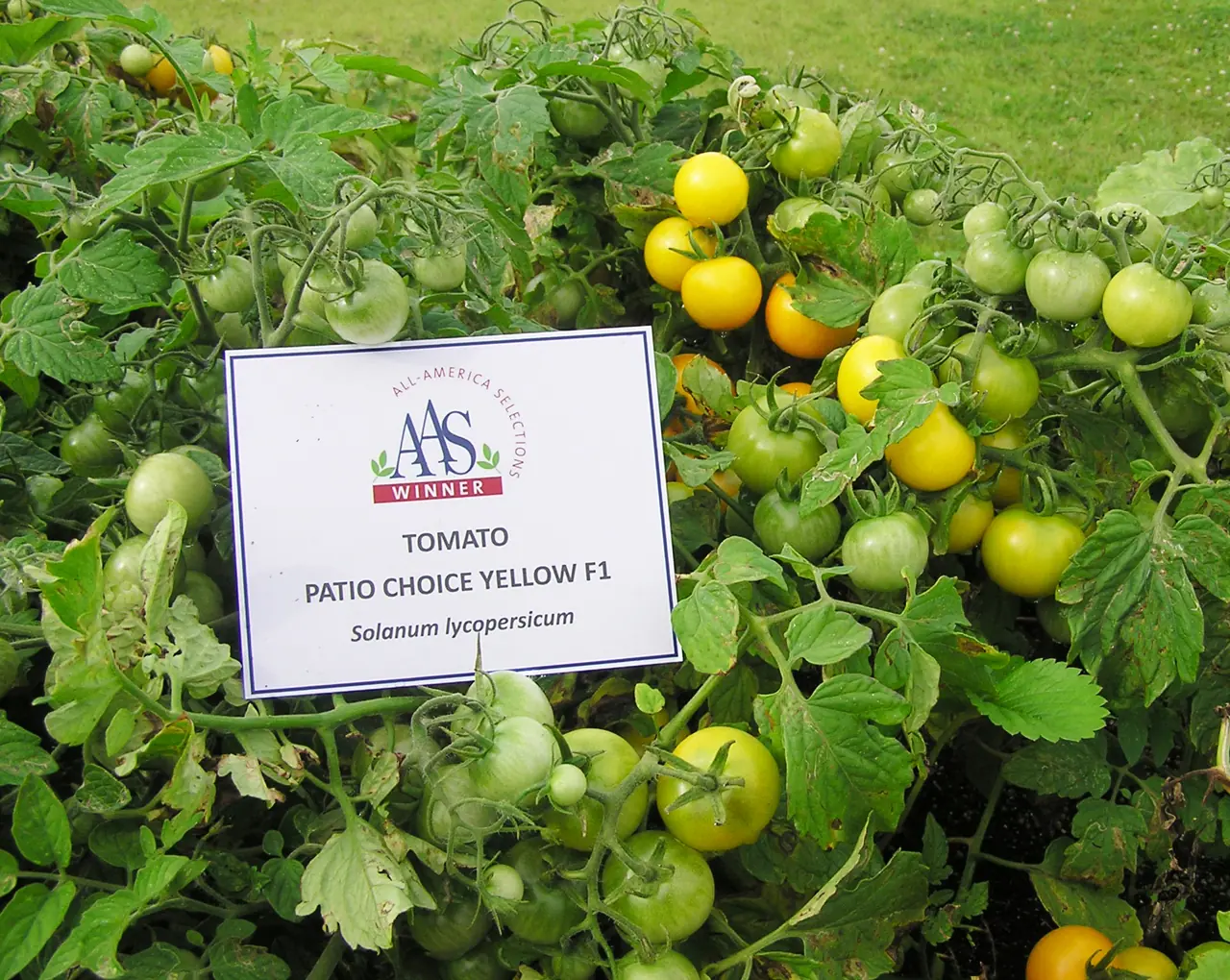
Patio Choice Yellow is a useful starting point when a tall tomato would crowd the furniture. Its compact, determinate habit keeps the planting low.
AAS lists plants at roughly fifteen to eighteen inches tall, with small golden-yellow cherry fruit.
Picture one plant in a generous blue pot beside a sunny seating corner, with pink flowers in a separate container.
I love how the yellow fruit makes a practical food pot feel decorative without adding another ornament.
Leave the rim accessible for watering, and allow for the plant’s spread beyond the pot.
Choose it for small fresh harvests and a low silhouette. Compact does not mean maintenance-free: check moisture regularly, and do not expect a small root space to support unlimited production.
Variety record: Patio Choice Yellow F1. Photograph courtesy of All-America Selections.
2. Terenzo F1: red cherries for a trailing basket
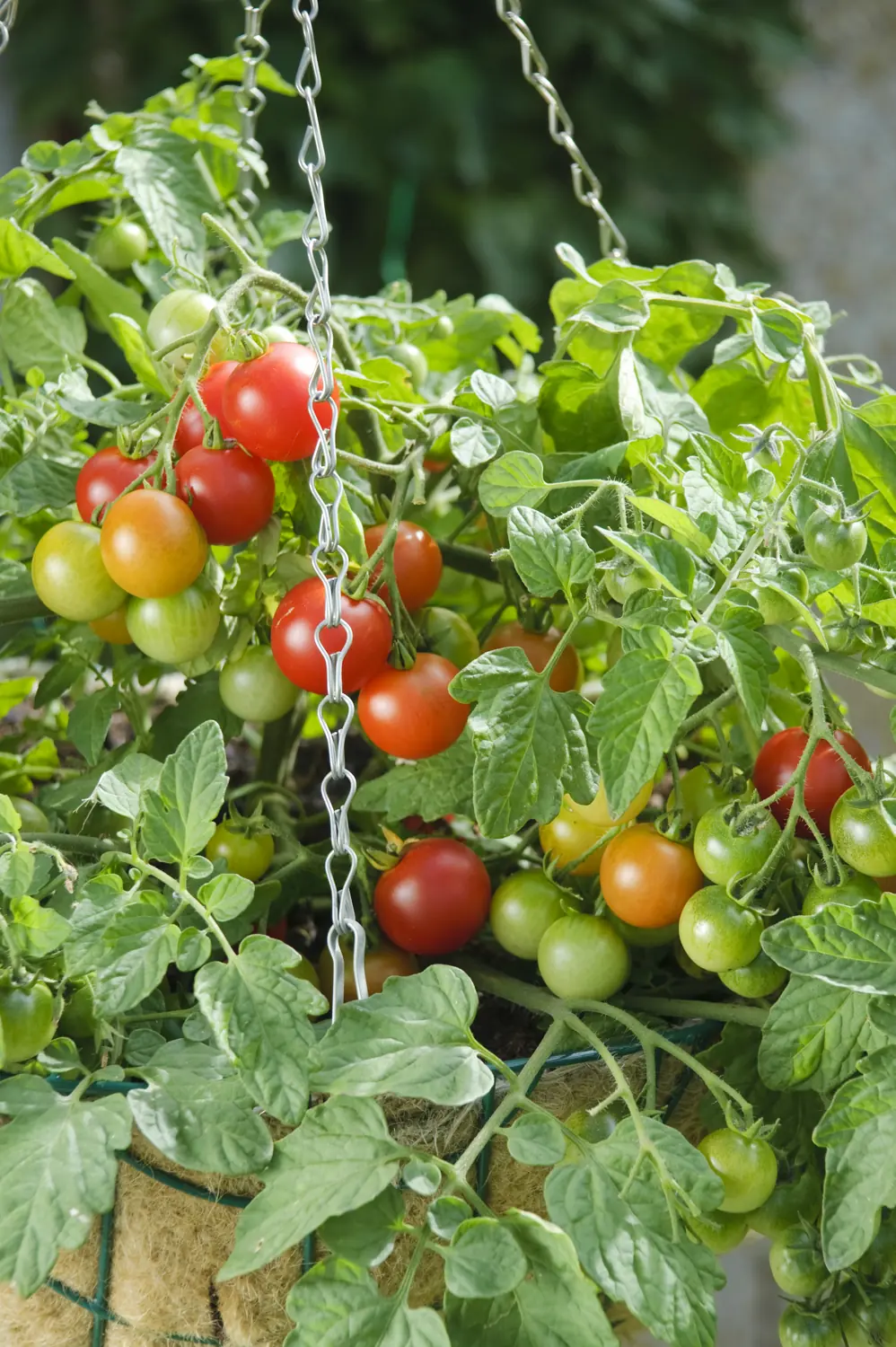
Terenzo belongs on the shortlist when you want tomatoes to spill over a container rather than climb a tall cage.
The AAS variety sheet describes a low, trailing determinate plant carrying round red cherry tomatoes.
A large basket can make the plant part of a sheltered patio corner.
Keep the basket within comfortable watering reach, above a clear surface rather than a chair or busy doorway.
Use a hanger and fixing appropriate for the fully watered container and mature plant.
An attractive hook alone does not establish that capacity.
On the ground, a stable raised planter can display the trailing growth without an overhead fixing.
The tradeoff is access: cascading stems should remain easy to inspect and pick, with room around the sides instead of foliage pressed against a wall.
Variety record: Terenzo F1. Photograph courtesy of All-America Selections.
3. Lizzano F1: a low, spreading cherry with late-blight tolerance
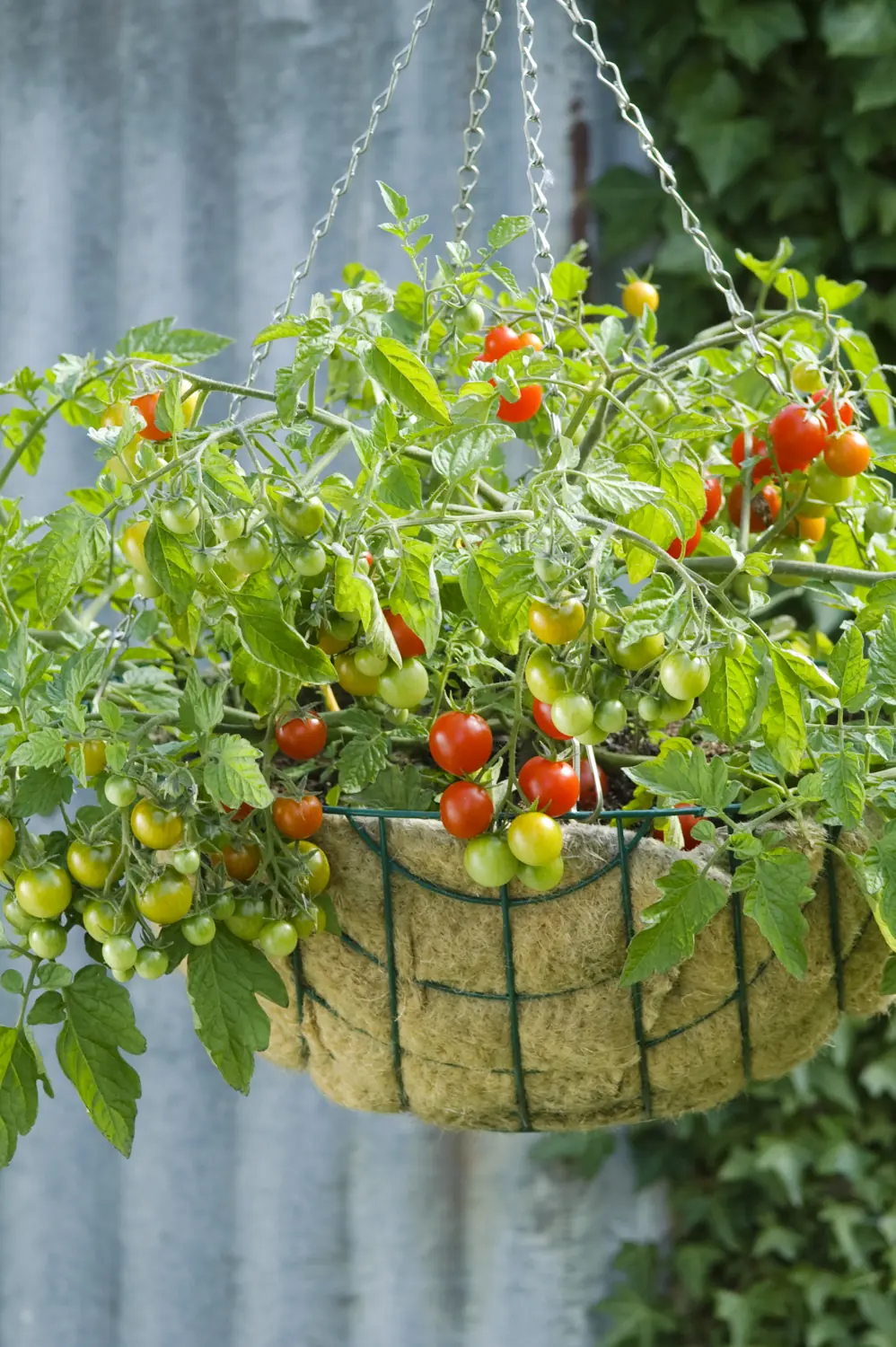
Lizzano offers a low, trailing shape with small red cherry fruit. AAS describes it as semi-determinate and reports tolerance to late blight.
That combination makes it worth comparing when you want a basket tomato but also have a history of that specific disease locally.
Use the tolerance as one selection factor, not a reason to stop checking the plant.
On a patio, give its spreading stems their own space above pale paving or a simple timber stand.
A small support can help keep growth organized; separate herb pots can finish the corner without sharing its roots.
Leave room to reach the soil from more than one side.
The low habit is useful, but a crowded basket can still hide ripe fruit and make an ordinary watering job unnecessarily awkward.
Variety record: Lizzano F1. Photograph courtesy of All-America Selections.
4. Fantastico F1: grape tomatoes on a spreading bush
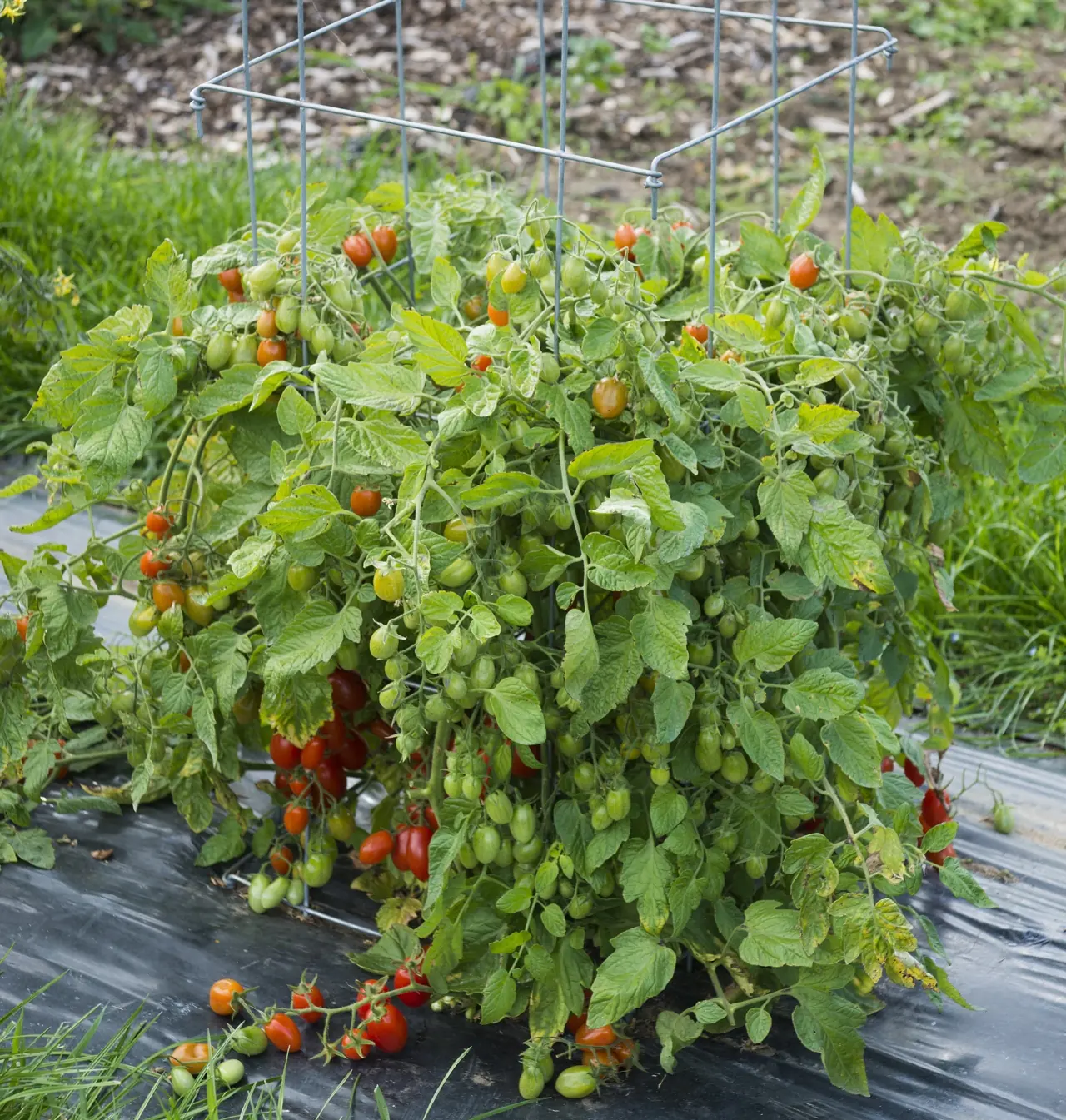
Fantastico is a practical alternative to round cherry tomatoes if you prefer small, elongated grape fruit. Its determinate plant has a spreading, bushy habit.
AAS describes fruit held toward the outside of the plant, a useful trait when you are picking around a container.
Set a supported plant in a broad patio pot with a clear working edge. Terracotta, a pale wall and a separate purple-flowered pot make a simple kitchen-door arrangement.
Install the cage while the plant is small rather than threading it over full branches later.
This variety can also suit a large basket, but the growing method changes its shape and height.
Do not read a short basket-grown height as a promise that every plant will stay equally low in an upright pot.
Variety record: Fantastico F1. Photograph courtesy of All-America Selections.
Four label checks that prevent the wrong purchase
Read the actual packet or nursery label before paying. Similar fruit names do not guarantee similar plants.
Count from the right starting point
“Days to harvest” may begin at sowing or transplanting. Compare like with like, and allow for local weather rather than treating the number as a deadline.
Keep the full hybrid name
F1 denotes a first-generation hybrid. Saved seed may not reproduce the same traits; buy the named hybrid again if you need that particular combination.
Match resistance to a named problem
Check the disease name and the level of resistance. Resistance or tolerance is not immunity, and no cultivar covers every tomato disease.
Separate fruit size from plant size
A cherry tomato can grow on a large vine. Read mature height, spread and growth habit alongside the fruit description.
AAS explains F1 seed; Iowa State explains disease resistance.
5. Celano F1: a bushy grape tomato for a caged patio pot

Celano bridges the gap between tiny patio bushes and large roaming vines.
It is a semi-determinate grape tomato with a strong, bushy habit.
AAS lists it at around three to four feet tall and recommends support.
That is enough height to become the main planting feature beside a table, rather than another small pot on it.
Choose a stable container and fit a suitable cage before the branches spread.
Keep a low flower pot at the outer edge and leave a route behind the tomato for picking.
Celano is also listed as late-blight tolerant, though that does not cover every cause of damaged foliage.
The important limitation is width. Allow space for the mature bush and your hands, especially where chairs need to pull away from the table.
Variety record: Celano F1. Photograph courtesy of All-America Selections.
6. Red Racer F1: cocktail fruit between cherry and slicer size

Red Racer is worth a look when cherry tomatoes feel too small but a large slicing plant would dominate the patio.
Its round cocktail fruit is larger than a typical cherry, while the determinate plant stays comparatively contained.
AAS lists an approximate height of three feet.
Use one plant as the center of a generous pot, with enough room to reach the rim and check the branches.
A turquoise chair and a separate white flower container can make this a cheerful lunch corner without surrounding the tomato with competing plants.
Some support can keep fruiting branches organized even where the variety description treats staking as optional.
Choose it for salads and small slices. It will not replace a large beefsteak if the sandwich-sized slab is the part you enjoy most.
Variety record: Red Racer F1. Photograph courtesy of All-America Selections.
7. Early Resilience F1: a compact Roma type for cooking

Early Resilience changes the purpose of the patio harvest. This determinate Roma type is aimed at cooking rather than a bowl of tiny snacking tomatoes.
AAS lists a bushy plant around two feet tall, carrying blocky red fruit.
A broad pot near the kitchen door makes sense, provided the doorway still opens fully. Keep a harvest bowl on a nearby table and place decorative herbs in their own pots.
Its compact form is appealing when you want usable fruit without a towering screen of foliage.
Plan for a harvest window rather than expecting the same small picking every day.
The name is not a guarantee of a particular harvest date. AAS gives a range for the full crop, and local warmth, planting time and growing conditions still decide the pace.
Variety record: Early Resilience F1. Photograph courtesy of All-America Selections.
8. Galahad F1: a large red slicer for a substantial tub
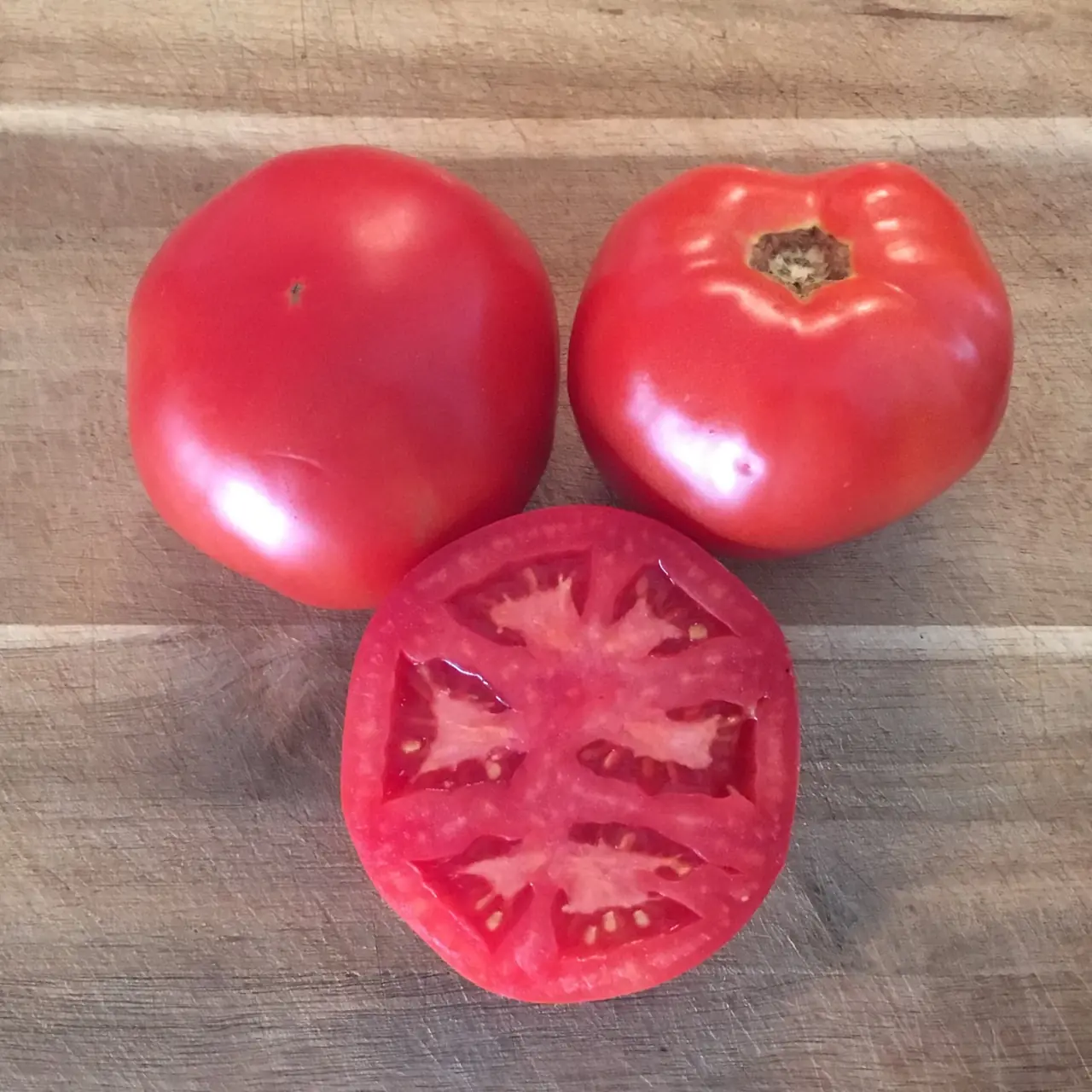
Galahad is the choice to compare when the goal is a substantial slicing tomato rather than a snack-size harvest.
AAS describes a determinate plant around four feet tall, carrying large red fruit.
This belongs in a substantial patio tub with a strong cage, not a decorative tabletop planter.
Position it at the back of a sunny ground-level terrace, leaving an open route around the front for checking the crop.
A low bench and separate orange flowers can complete the setting without competing for the tomato’s root space.
The plant’s listed disease resistances include late blight, which may matter where that disease is a recurring concern.
Treat the container fit as a planning decision: a four-foot, fruit-laden plant needs more room and stability than the word determinate might suggest.
Variety record: Galahad F1. Photograph courtesy of All-America Selections.
9. Mountain Merit F1: a slicer for a roomy patio growing area

Mountain Merit suits a patio that has room for a proper vegetable-growing station.
It is not one of the miniature plants in this list.
AAS lists a bushy height of four to five feet and dark-red slicing fruit.
Use a large container with secure support, keeping the plant clear of doors and furniture.
On a ground-level paved area, a simple backdrop and a nearby watering point make this working corner easier to maintain.
Let smaller flower pots provide the finishing color beyond the crop’s spread.
AAS describes a concentrated harvest window, which is useful if you want several ripe tomatoes together.
The limitation is the footprint: both the container and the mature foliage need space. Choose a smaller variety if the only available position is a narrow passage.
Variety record: Mountain Merit F1. Photograph courtesy of All-America Selections.
Work out the potting-mix total before shopping
Illustrative calculation using usable fill volumes, not the outside dimensions or nominal nursery-pot number. One US liquid gallon is approximately 3.785 liters.
Add both containers
Example: one pot with 5 US gal of usable fill volume plus one with 10 US gal = 15 US gal.
Convert the total
15 × 3.785 = 56.8 L, rounded. Two 30-liter bags provide 60 liters before deductions for root balls and adjustments for settling.
Check the actual fill line
Leave watering headspace and account for the transplant’s root ball. Measure the growing volume; a wide rim can exaggerate a pot’s apparent capacity.
Check the site before filling
Wet mix, the container and the mature plant add weight. Confirm balcony or deck suitability and permissions before positioning heavy planters.
10. Celebrity hybrid: a familiar all-purpose container slicer
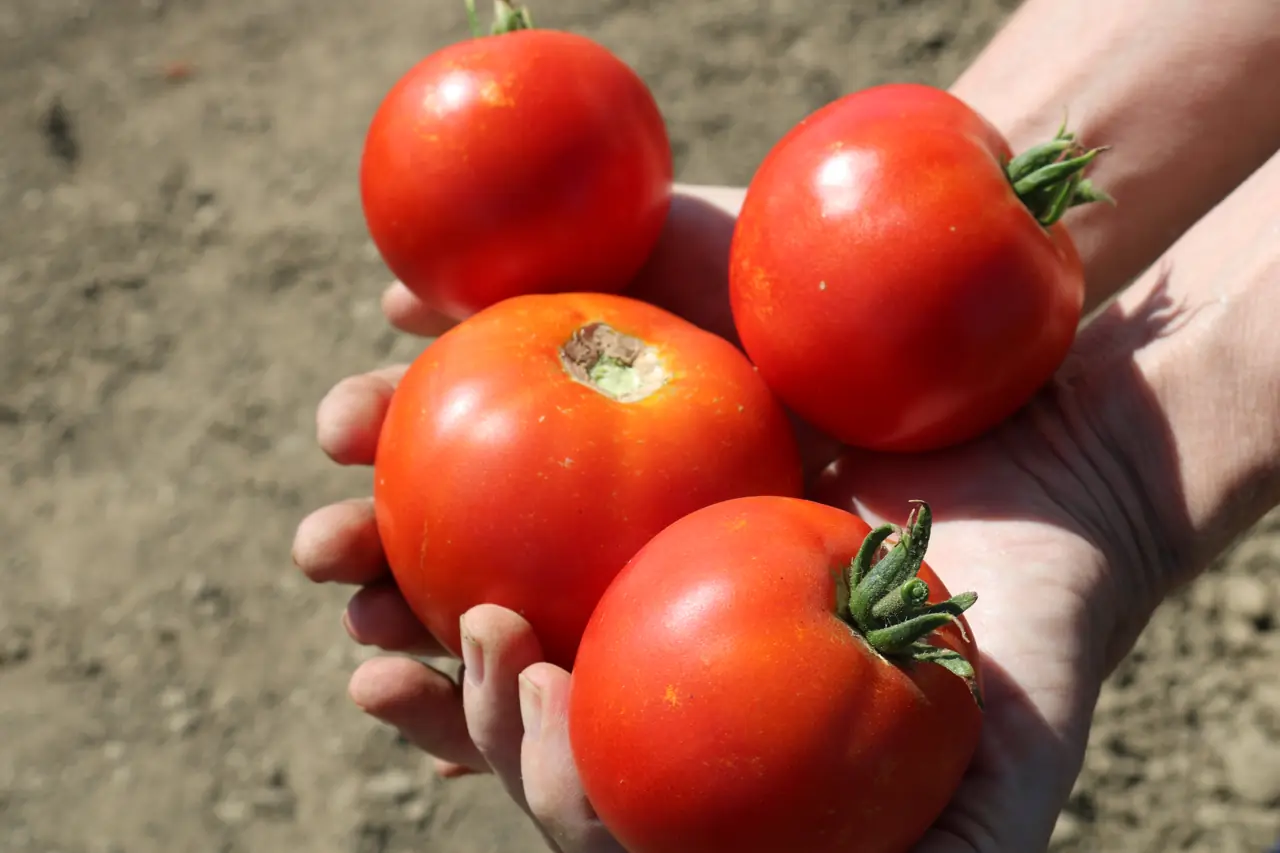
Celebrity fits here as a slicing option with a manageable bush habit. Iowa State includes it among suggested container cultivars.
It still needs a generous pot and room for its mature branches.
AAS lists plants around four feet tall, so plan the support and the surrounding walking space before buying the transplant.
A broad container beside a sunny fence can work well, with the cage visible and accessible from the front.
Keep cushions and decorative pots beyond the watering area rather than tucked beneath the branches.
You may see Celebrity described as determinate or semi-determinate. Use the supplier’s current plant description when planning its season.
Choose it for versatile kitchen use, while remembering that a compact habit is relative to a large tomato vine, not to a small flower pot.
Variety record: Celebrity hybrid. Photograph courtesy of All-America Selections/Seminis.
11. Purple Zebra F1: striped fruit when you have vertical room

Purple Zebra adds striped fruit to a container collection, but it asks for a different kind of space.
This is an indeterminate tomato, not a low patio bush.
AAS lists dark-red to purple-toned fruit with green stripes and a rich red interior.
Give it a substantial pot and a dependable upright support where you can continue training the growth.
A plain pale backdrop helps the fruit stand out, with a patterned chair cushion farther from the watering zone.
I would choose this for a patio with spare height rather than try to squeeze it beneath a low balcony ceiling.
Its container suitability does not mean its vines stop growing at the pot rim.
Check the supplier’s mature-size guidance, then decide whether the support and ongoing attention fit your available space.
Variety record: Purple Zebra F1. Photograph courtesy of All-America Selections.
12. BadaBing! F1: a shorter upright plant with large cherry fruit

BadaBing! is an unusual option: AAS describes it as indeterminate but lists a comparatively modest height of thirty-six to forty inches.
It carries large red cherry fruit, approaching cocktail size.
That combination is worth comparing if you want an upright supported plant without choosing a much taller cherry vine. Use a substantial container in an open sunny corner, with the support installed at planting.
A coral pot, low timber seat and separate blue flowers can make the growing area feel part of the patio.
The AAS disease profile distinguishes high resistance to certain diseases from intermediate resistance to early blight and Septoria leaf spot.
Do not turn that profile into a promise of spotless leaves. Match it to local disease concerns, and keep inspecting the plant throughout the season.
Variety record: BadaBing! F1. Photograph courtesy of All-America Selections.
Match the season to your location. Set plants outside after frost danger has passed and conditions have warmed. A hardiness-zone number alone does not give you a transplant date.
Check local extension guidance for your planting window, especially where summer heat, short seasons or wet weather change the choices.
Questions to settle before ordering
What size container should I buy?
Use the specific variety’s recommendation where available. Maryland Extension lists two gallons as a minimum for cherry tomatoes and five for standard tomatoes, while noting that larger containers can support more growth.
Those are minimums, not a target for every plant here. A large slicer or vigorous vine needs a more generous container than a miniature bush; compare total volume, depth and the mature support together.
Maryland’s container-sizing guidance is a useful starting point. Give each tomato its own container unless a larger planter has been deliberately sized for multiple plants.
Do these plants need daily watering?
Check the mix rather than following a fixed calendar. Sun, wind, plant size and the container material change how quickly it dries.
Water thoroughly when needed and let excess drain. Keep the root zone consistently moist without leaving an ordinary pot sitting in standing water.
Are the listed heights and harvest dates exact?
No. Published variety records describe expected growth under particular conditions; your climate, pot size and care can change the result.
For Celebrity, the AAS description gives about seventy days from transplant while its details table lists seventy-five. Use the current seed supplier’s estimate for planning, with room for weather delays.
Choose one pot for the way you actually eat
Pick the fruit use first: cherries for casual picking, grape tomatoes for salads, or a slicer for lunch. Then check whether the mature plant and its support fit the space you can water easily.
One well-placed plant is a better starting point than three varieties you cannot reach.