A desk plant looks more at home when there is still space for your notebook. Start with a small specimen and a place you can reach easily.
Fluorescent light can support foliage plants, provided enough reaches the leaves for long enough each day. Ordinary ceiling lighting is not automatically a suitable growing setup.
These ten choices offer different shapes for different desks, from low rosettes to short trailing vines. Each setting keeps the working area open.
Check light, mature size and watering access before choosing. The best match depends on your actual workstation, including weekend lighting and heating or air-conditioning.
Quick answer: Chinese evergreen, snake plant, ZZ, pothos and heartleaf philodendron are useful starting choices for adequately lit desks. Spider plant generally benefits from a brighter setup.
Minnesota Extension includes many of these foliage plants among lower-light choices. Check actual light and duration first; this is not a list of plants that need no light.
Find a plant and its desk setting
- 1. Bird’s-nest snake plant for a compact desk corner
- 2. A small ZZ plant on a quiet desk return
- 3. Golden pothos for a controlled trailing edge
- 4. Heartleaf philodendron on a low support
- 5. Chinese evergreen beside a broad writing space
- 6. Young cast-iron plant for a generous desk return
- 7. A young parlor palm at a rounded desk end
- 8. Spider plant for a broad, open desk end
- 9. Compact peace lily as a foliage-first desk plant
- 10. Young arrowhead plant for a softly patterned corner
Check the desk light before buying the plant
The useful question is how much suitable light reaches the leaves, not simply whether the room has fluorescent tubes.
Measure where the leaves will sit
UF/IFAS explains why human eyes misjudge indoor brightness. Compare the actual desk position with a brighter location using a suitable light meter.
Phone apps provide approximations, not a guarantee of adequate plant light. Record the position, time and lighting conditions when comparing readings.
Check hours, including closed days
Ask when ceiling lights, motion sensors and weekend shutdowns leave the plant in darkness. A bright workday does not describe the whole week.
For a dedicated foliage-plant lighting setup, Minnesota Extension suggests 12–14 total light hours per day. Account for daylight and allow a dark period.
Assess distance and obstruction
A tube high above a desk is different from a suitable fixture near foliage. Shelves, screens and dividers can block light from reaching the plant.
Follow the fixture guidance for distance and coverage. Ask about workplace rules before adding a lamp or timer; keep cables and watering access practical.
Choose foliage before flowers
Lower-light tolerance does not promise dense growth or reliable flowering. Select a healthy foliage plant whose size fits the measured position.
If the site remains inadequate, use a brighter permitted position or a suitable plant light. Do not try to solve a light shortage with extra fertilizer.
Maryland Extension identifies intensity, duration and quality as important light factors. Fluorescent lighting can work, but no plant on this list can live indefinitely without enough light.
1. Bird’s-nest snake plant for a compact desk corner
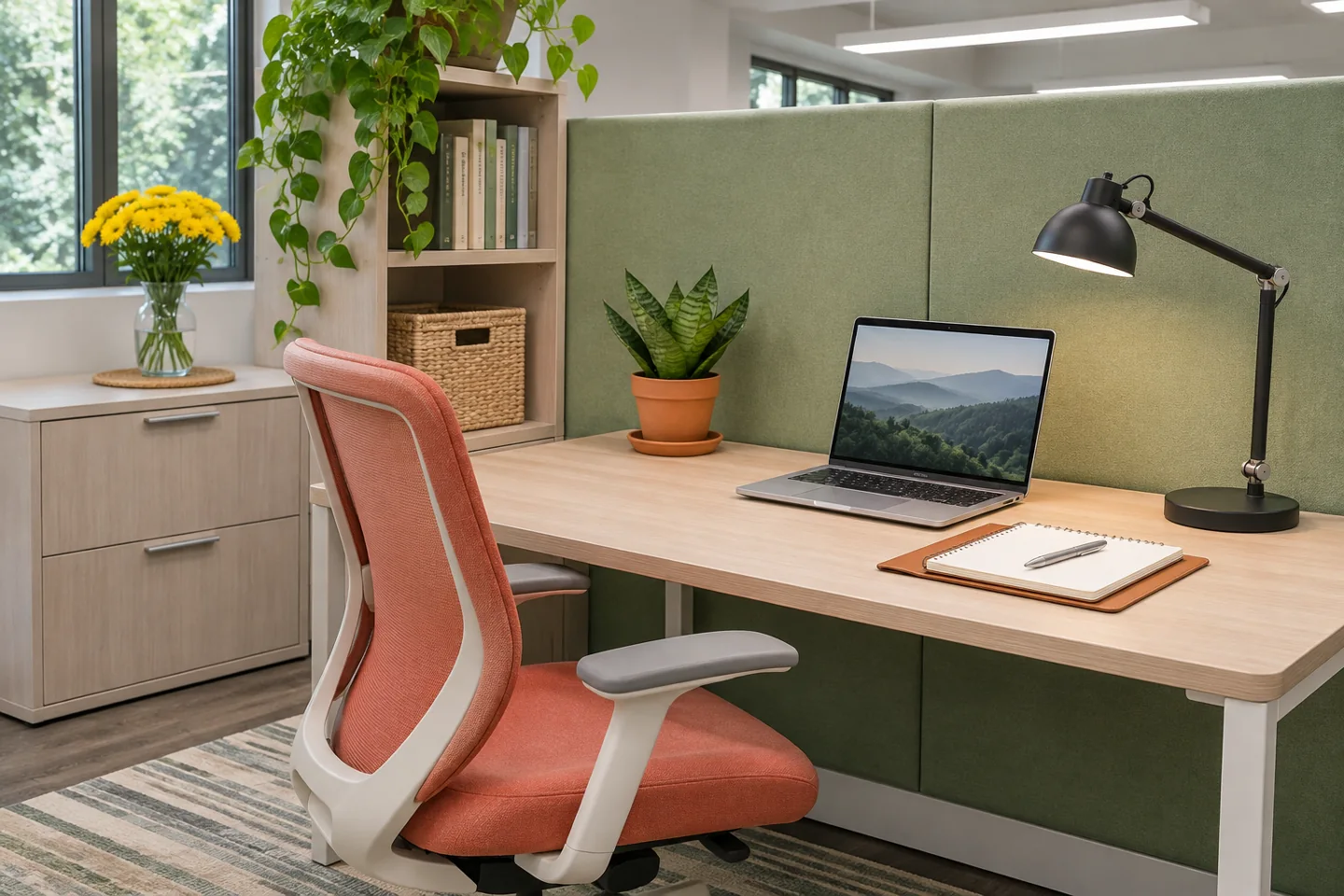
A low snake-plant rosette gives a small desk some structure without hiding the monitor.
Pair a terracotta pot with pale timber and a coral chair.
Keep the writing area open, with a patterned rug adding color below rather than more objects beside the keyboard.
Choose a labeled bird’s-nest type such as ‘Hahnii’. NC State describes its short, funnel-shaped leaf rosette.
Use a draining inner pot and check that the mix has dried before watering. Empty any runoff before returning it to the desk.
The low silhouette is useful, but shade tolerance is not a substitute for adequate light.
Measure the actual position and keep the pot away from elbows; even a compact clump needs room to widen.
2. A small ZZ plant on a quiet desk return
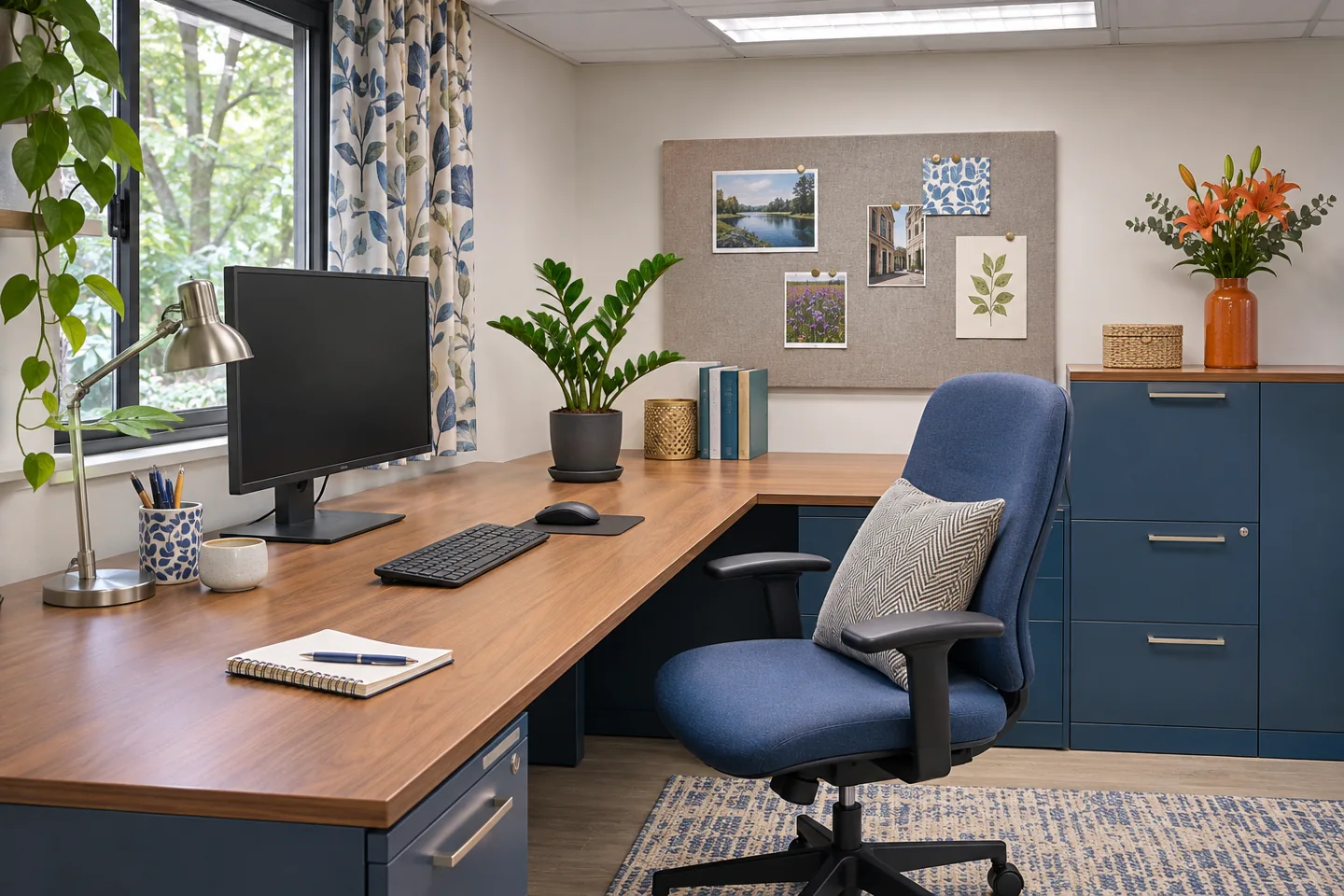
A young ZZ plant suits a work area with closed storage and a clear desktop. Set its cream pot on the return, where glossy leaves contrast with blue cabinetry.
A fabric chair and herringbone cushion soften the straight lines. Leave the monitor, notebook and charging route separate from the plant.
NC State specifically notes ZZ’s tolerance of fluorescent-only light, while explaining that it does best in bright indirect light.
Let the mix dry between waterings instead of adding a little water every Friday.
Choose the plant by its present spread and leave space for new upright growth.
ZZ is slow growing, but it can eventually become a much larger plant. Plan a move when it begins crowding your working area.
3. Golden pothos for a controlled trailing edge
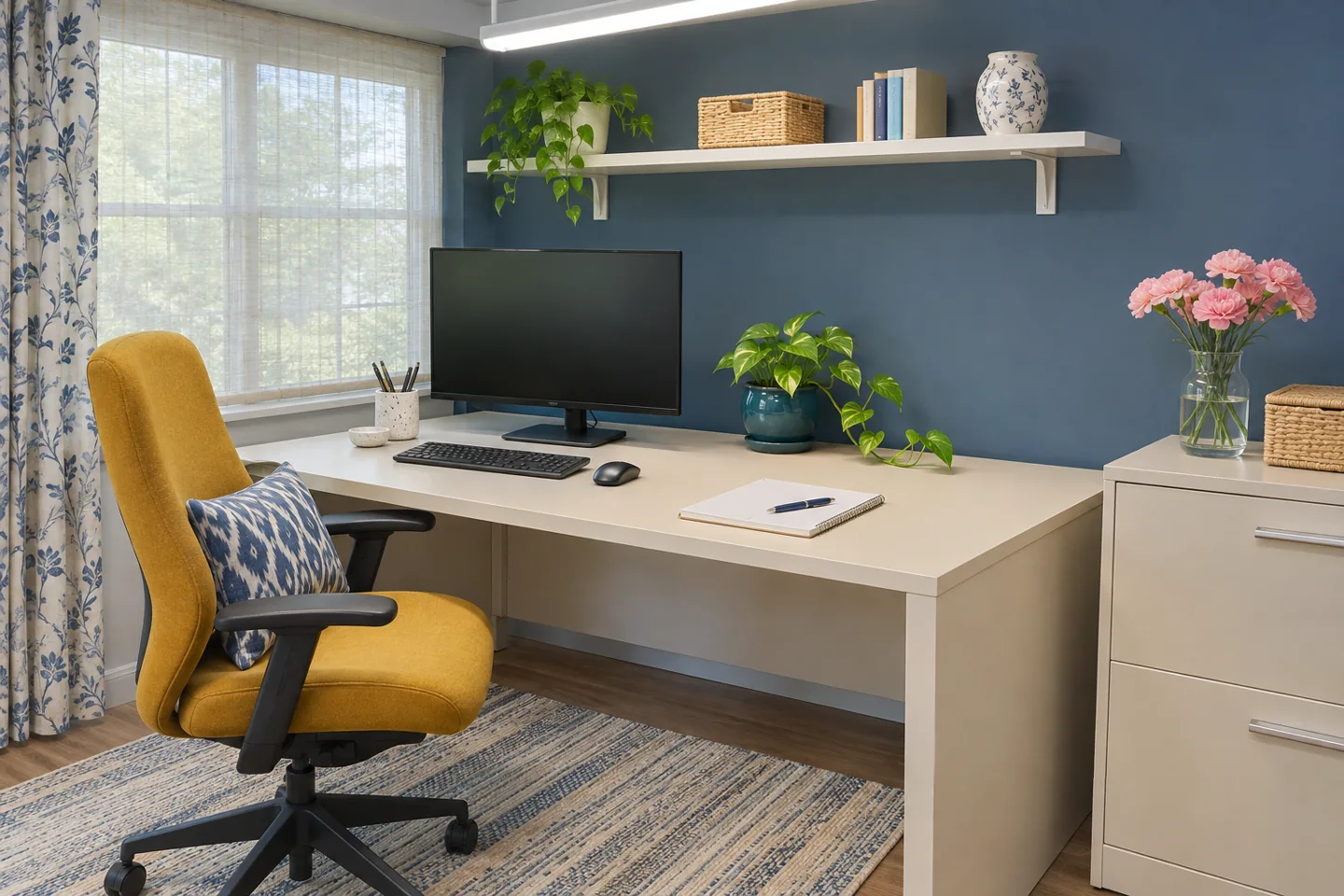
A few short pothos vines soften a broad cream desk without turning it into a plant shelf. A teal pot and mustard chair create a cheerful contrast.
Keep the trailing stems on the outer desk edge, clear of cables and the chair’s wheels.
Put a flower vase on separate storage.
Pothos prefers bright indirect light and tolerates lower light. Its yellow markings may become less prominent in a dim position.
Pick a modest plant and prune wandering stems before they reach the keyboard.
Water according to the mix, using a draining pot that can be lifted out for a thorough drink.
A fluorescent-lit room can work, but a dark shelf behind the monitor is a different growing position. Check the leaves’ light, not the room’s label.
Fit the plant around the work, not the other way around
Use this selector after checking the light. These are layout starting points, not identical watering or lighting requirements.
| Desk situation | First choices | Space check |
|---|---|---|
| Little spare surface | Bird’s-nest snake plant; small ZZ | Leave room to lift out the pot |
| A usable trailing edge | Pothos; heartleaf philodendron | Keep stems clear of cables and wheels |
| A broad return | Young cast-iron plant; parlor palm | Measure the whole leaf canopy |
| A brighter growing position | Spider plant; arrowhead plant | Check actual leaf-level light |
A simple footprint check
For illustration, a 6-inch-wide pot on a 9-inch-wide coaster leaves 1½ inches around each side: (9 − 6) ÷ 2 = 1.5.
That measures only the pot and coaster. Leaves, your hand and the route for lifting it out need additional space; a small pot may carry a wide plant.
Plan the next size
Buy by the plant’s current canopy and expected growth, not just the nursery-pot diameter. Decide where a young palm or broad-leaved clump can move later.
A draining nursery pot inside a suitable outer pot makes sink watering easier. Return it only after runoff has drained and the outside is dry.
4. Heartleaf philodendron on a low support
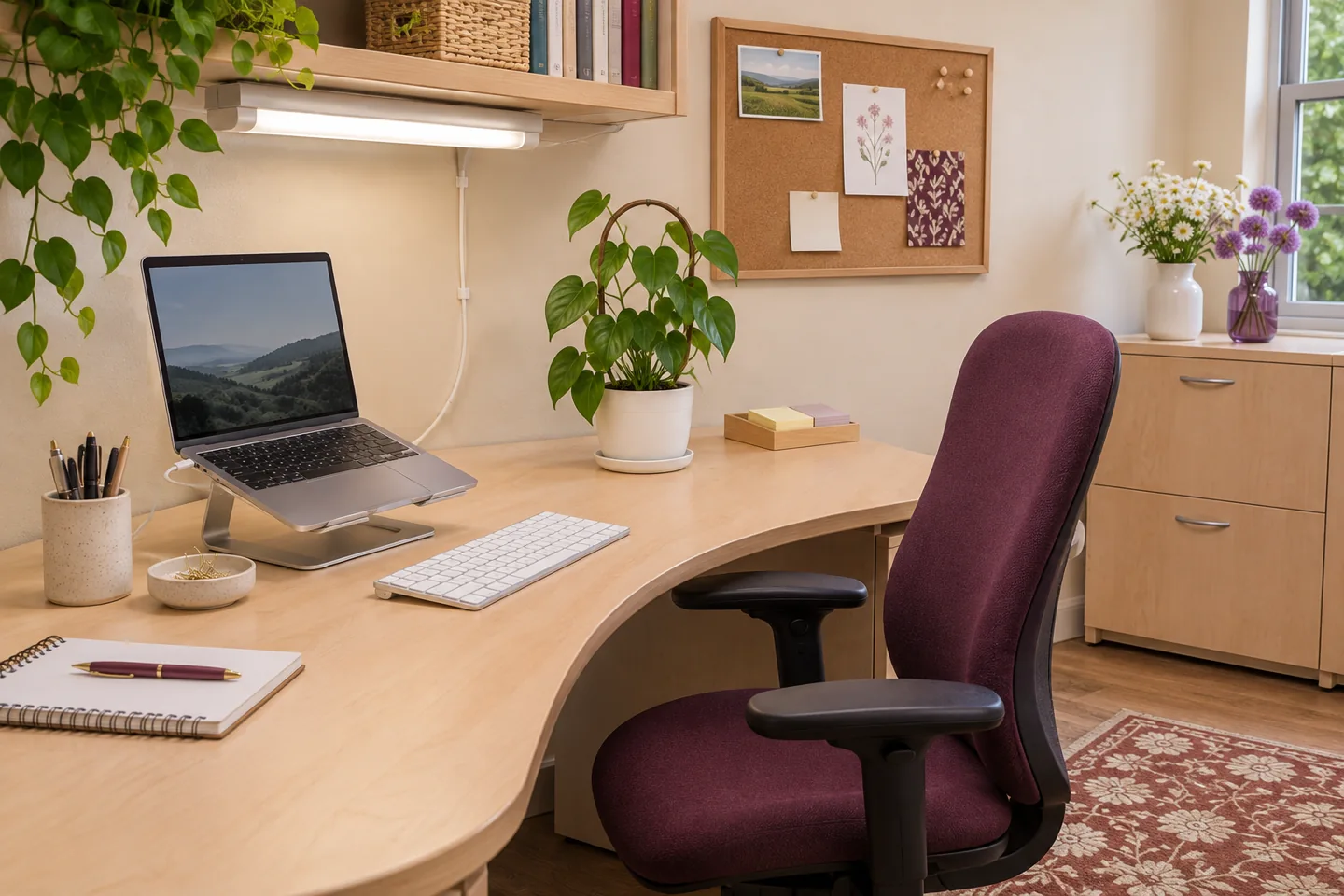
Train a small heartleaf philodendron around a low support at the back of a curved timber desk. The green outline softens a cork board and simple plaster wall.
A plum chair and patterned rug add warmth while the open center stays available for work.
Heartleaf philodendron tolerates low light but prefers medium light. Use the brighter part of your workstation rather than a cupboard-like recess.
Keep the support low enough that you can see the screen and reach the pot. Check moisture before watering, and avoid leaving the inner pot standing in collected water.
The vine will keep extending. Trim it to maintain the arrangement; winding long stems around office equipment makes both maintenance and cleaning unnecessarily awkward.
5. Chinese evergreen beside a broad writing space
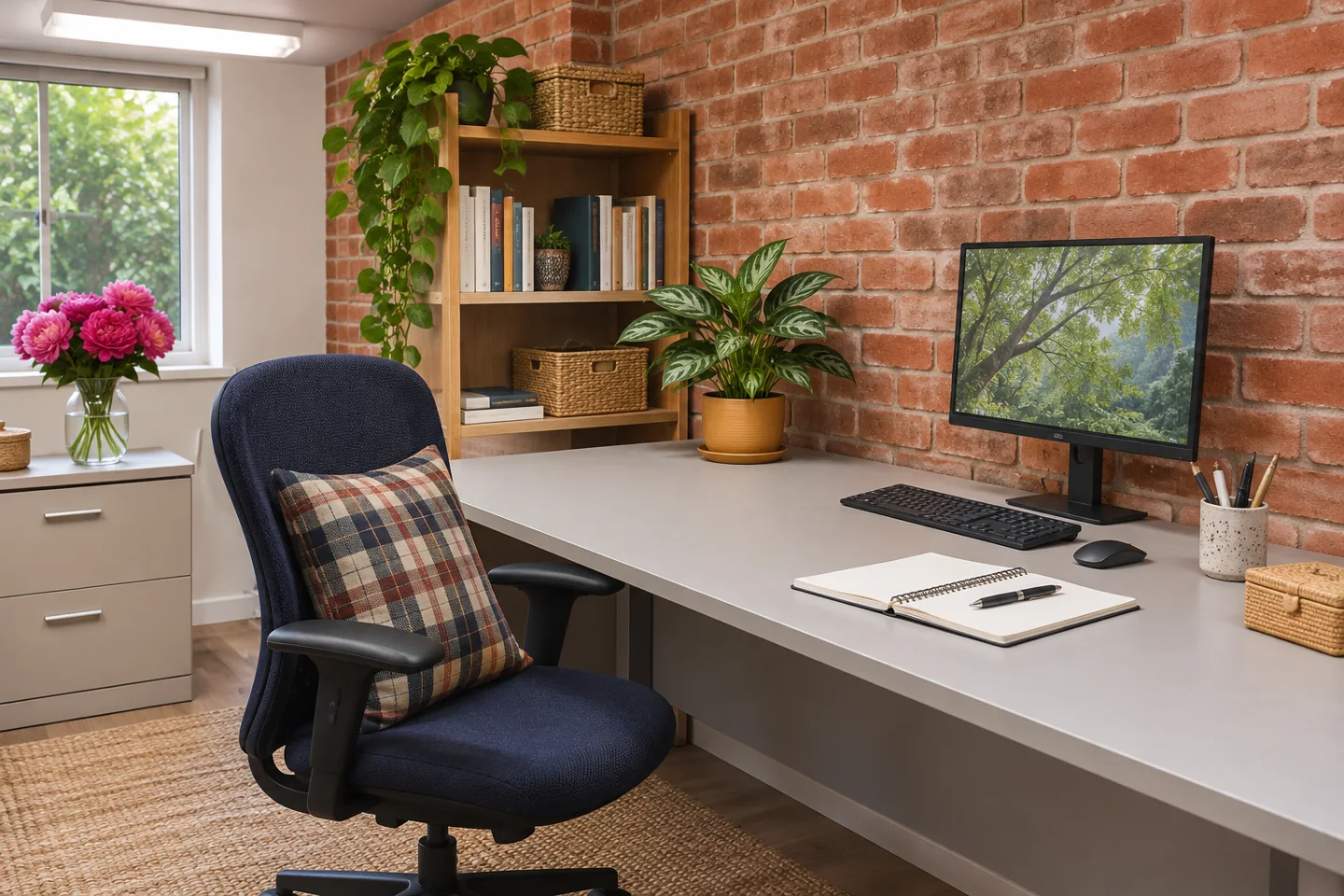
Green-and-silver Chinese evergreen brings a fuller leaf shape to a pale desk.
An ochre pot, navy chair and nearby pink flowers make the office feel considered.
Keep the main clump behind the writing zone, not between your face and the monitor.
NC State lists Chinese evergreen for low-light indoor locations. Choose a small, healthy plant rather than assuming every colorful cultivar has identical needs.
Avoid cold drafts and check the mix before watering. Let excess drain away before placing it back in its outer pot.
I love how the silver markings brighten a brick backdrop without adding another desk ornament.
The bushy spread is also the limitation. Measure the whole leaf canopy and leave yourself enough room to open folders comfortably.
6. Young cast-iron plant for a generous desk return
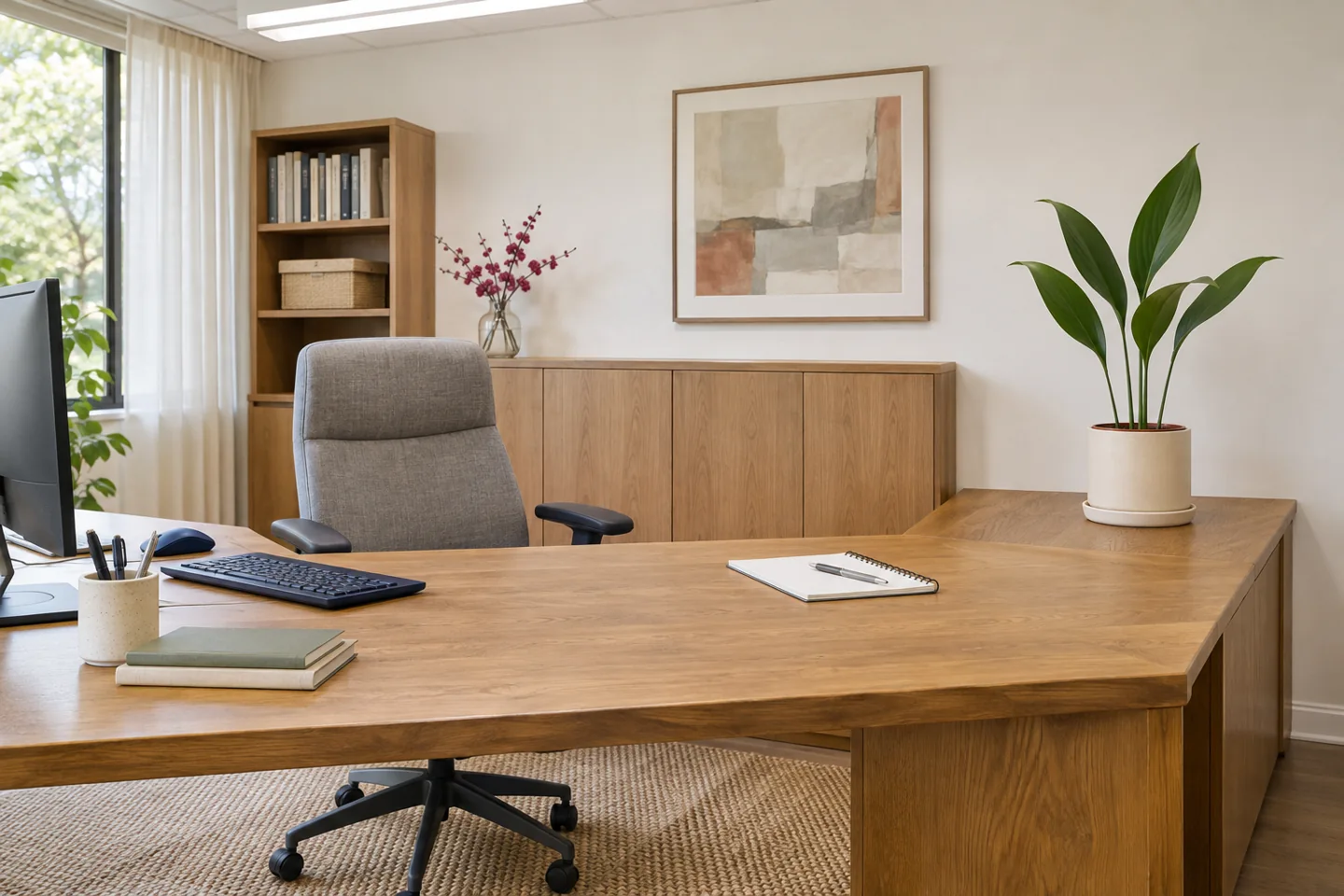
A young cast-iron plant gives a quiet wood-and-linen office a broad green accent. Its upright leaves look best with simple framed art and a largely empty desktop.
Use a deep, stable desk return rather than squeezing the pot beside a laptop.
Cast-iron plant tolerates shade and grows well in containers. Give it adequate artificial light, a draining pot and access for checking the mix.
Wipe dust from the broad leaves and keep them clear of shelving edges.
This is a choice for a roomy workstation, not the smallest cubicle.
The plant can reach around 2 feet tall and form a wider clump. Once it crowds your sightline or working surface, move it to a suitable larger position.
7. A young parlor palm at a rounded desk end
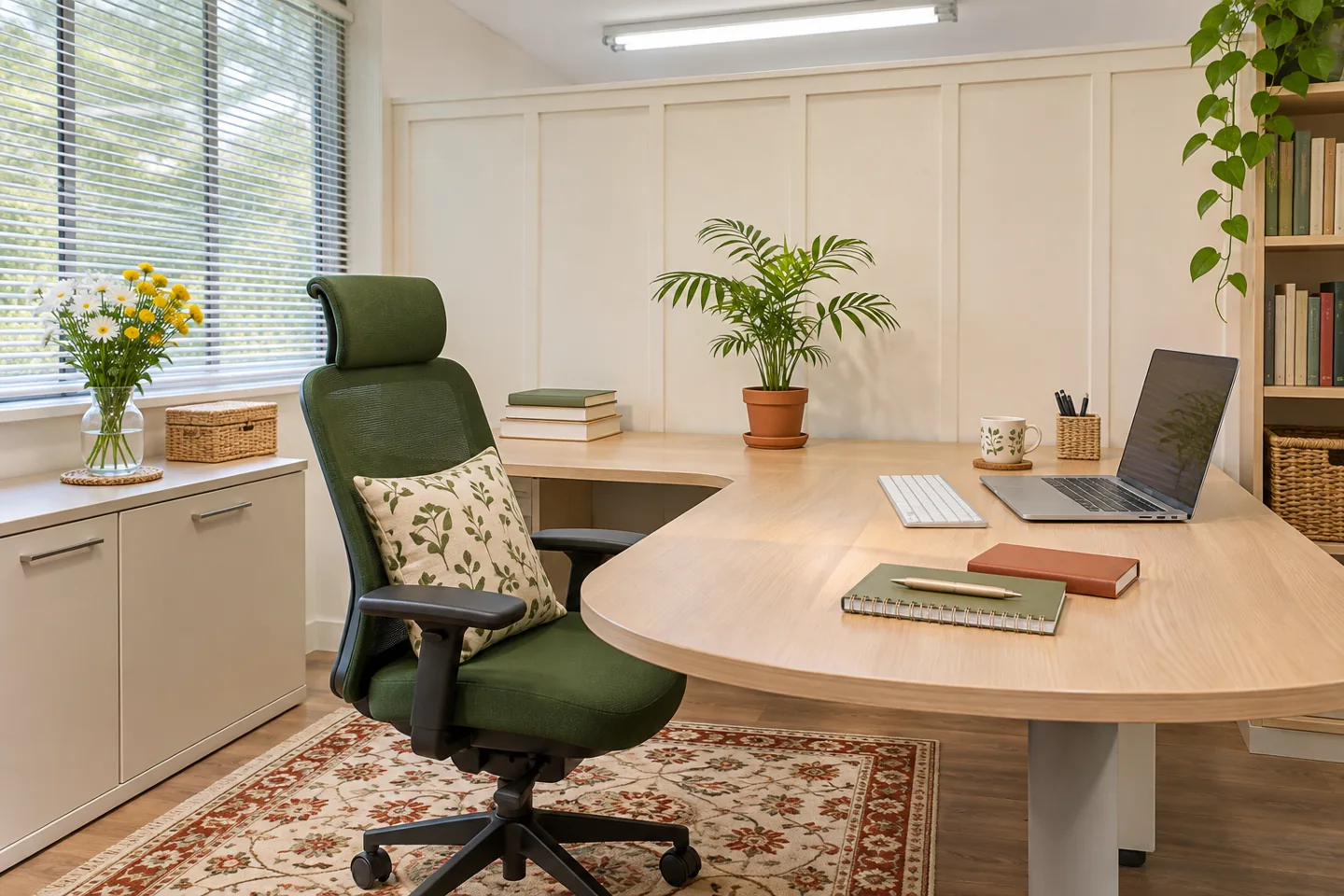
A small parlor palm adds an airy layer to a rounded timber desk.
Fine fronds soften paneling, while a green chair and botanical cushion keep the palette connected.
Set the pot at the broad rear end, with room for fronds to spread away from the screen.
Parlor palm tolerates low light but grows best in bright indirect light. It is a candidate for an adequately lit office, not a dark interior corner.
Keep the mix lightly moist without leaving it soggy, and protect the plant from cold drafts.
Allow enough clearance to reach the pot without bending the fronds.
This is a young-plant arrangement. Parlor palms can grow well beyond desk size, so check the eventual move before buying a larger specimen.
8. Spider plant for a broad, open desk end
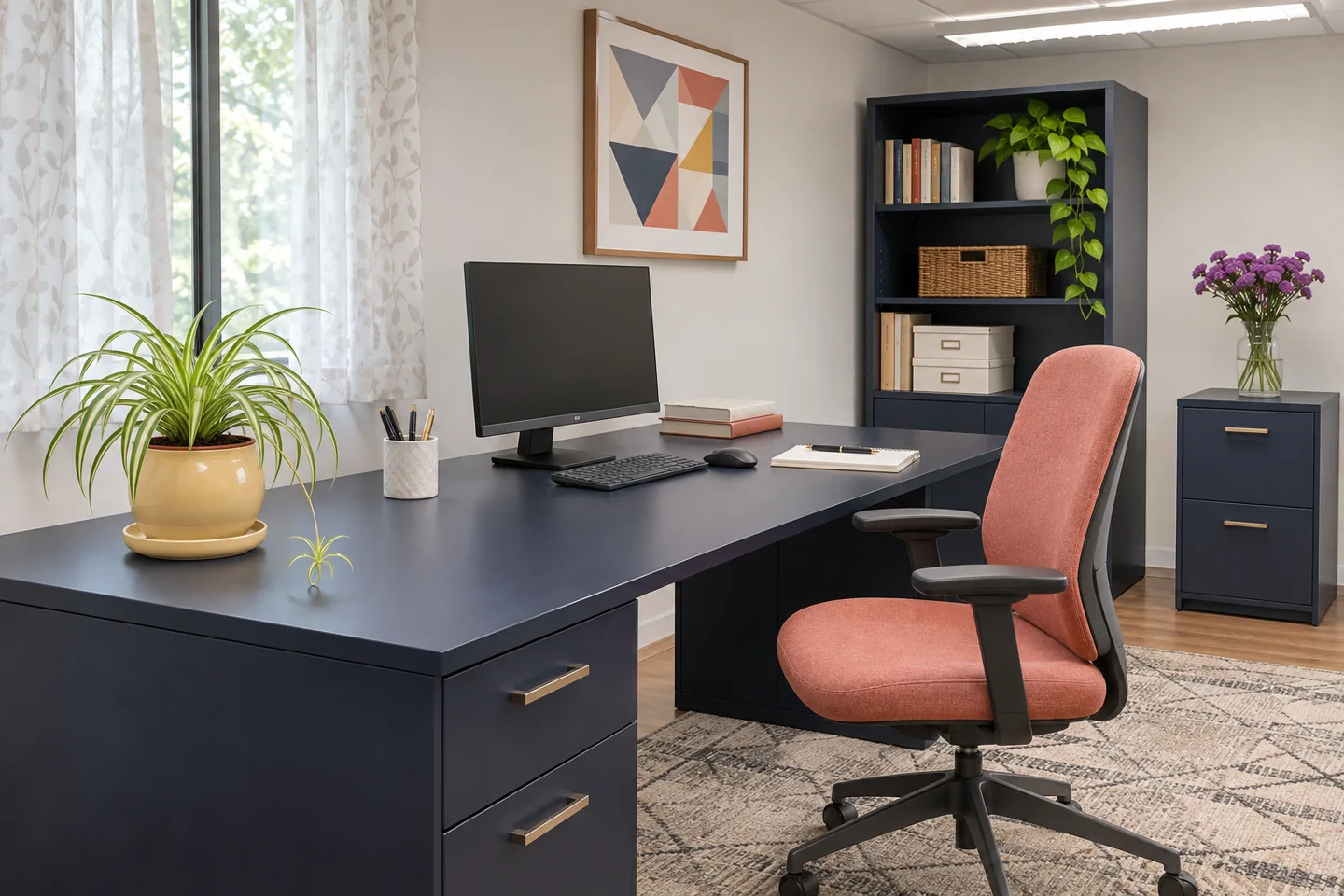
A small spider plant can lighten a navy desktop with arching green-and-cream leaves. A pale yellow pot, coral chair and geometric print make the whole corner inviting.
Keep the plant at a broad desk end so leaves fall into free space rather than across paperwork.
Spider plant prefers medium light, making it a better option for a brighter fluorescent setup or a desk with useful indirect daylight.
Check the mix regularly and let excess water drain after watering. Guide any developing runner away from the chair and cables, or remove it when it becomes awkward.
A small pot does not guarantee a small footprint. The arching foliage can spread farther than expected, so measure that reach before choosing its place.
9. Compact peace lily as a foliage-first desk plant
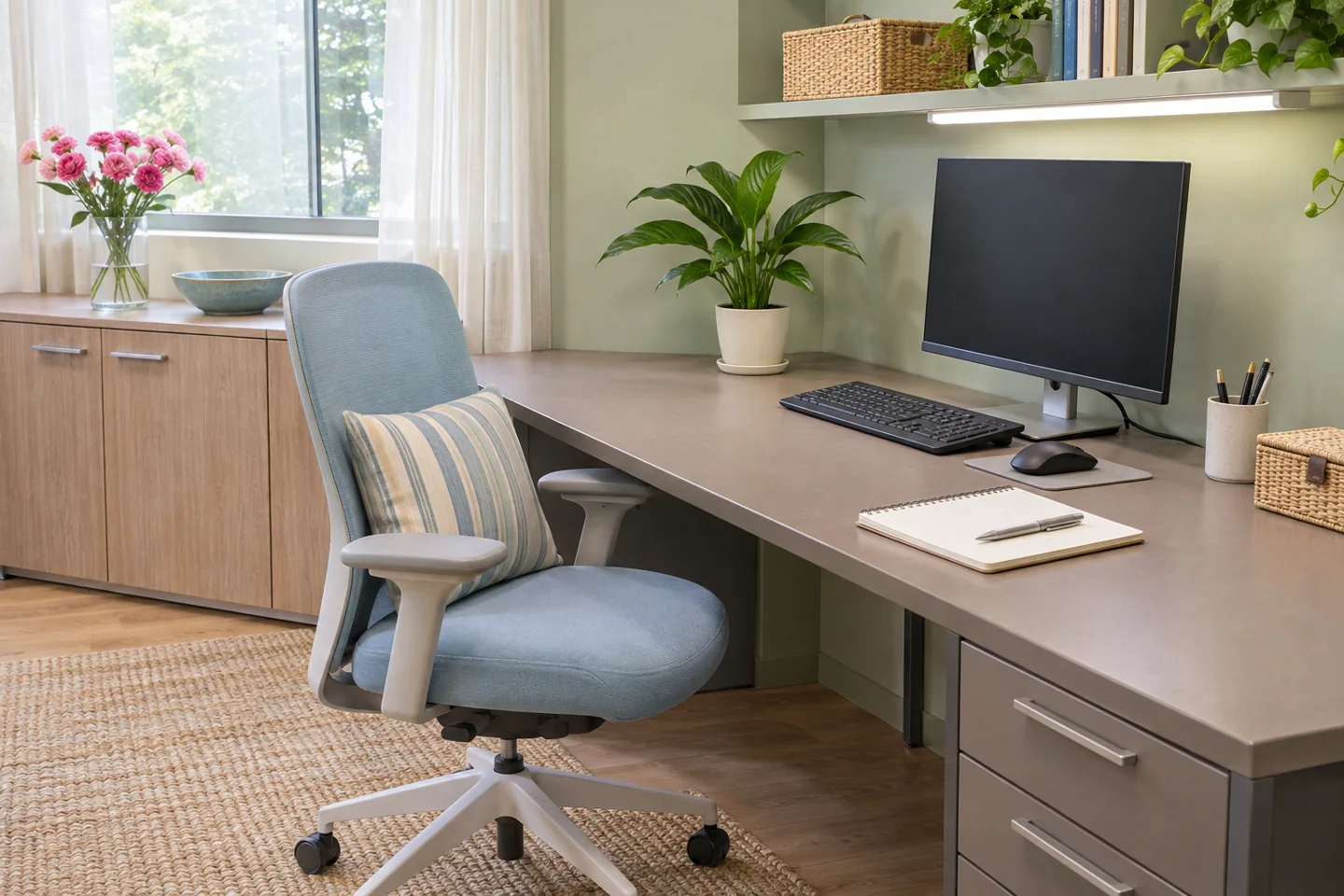
A compact peace lily gives a broad grey desk a lush green corner. Pair a cream pot with a powder-blue chair and a small striped cushion.
Use separate pink flowers on a cabinet for color; you do not need to depend on the plant blooming.
Peace lilies tolerate shade, and smaller forms are available. Check the label because some grow much larger than a desk can comfortably hold.
Keep the mix moist rather than soggy. Inspect it before watering instead of waiting for repeated dramatic wilting.
Leave a clear route to lift the pot out and drain it at a sink.
In low light, treat healthy foliage as the goal. If flowers matter most, assess whether you can provide a brighter growing position.
10. Young arrowhead plant for a softly patterned corner
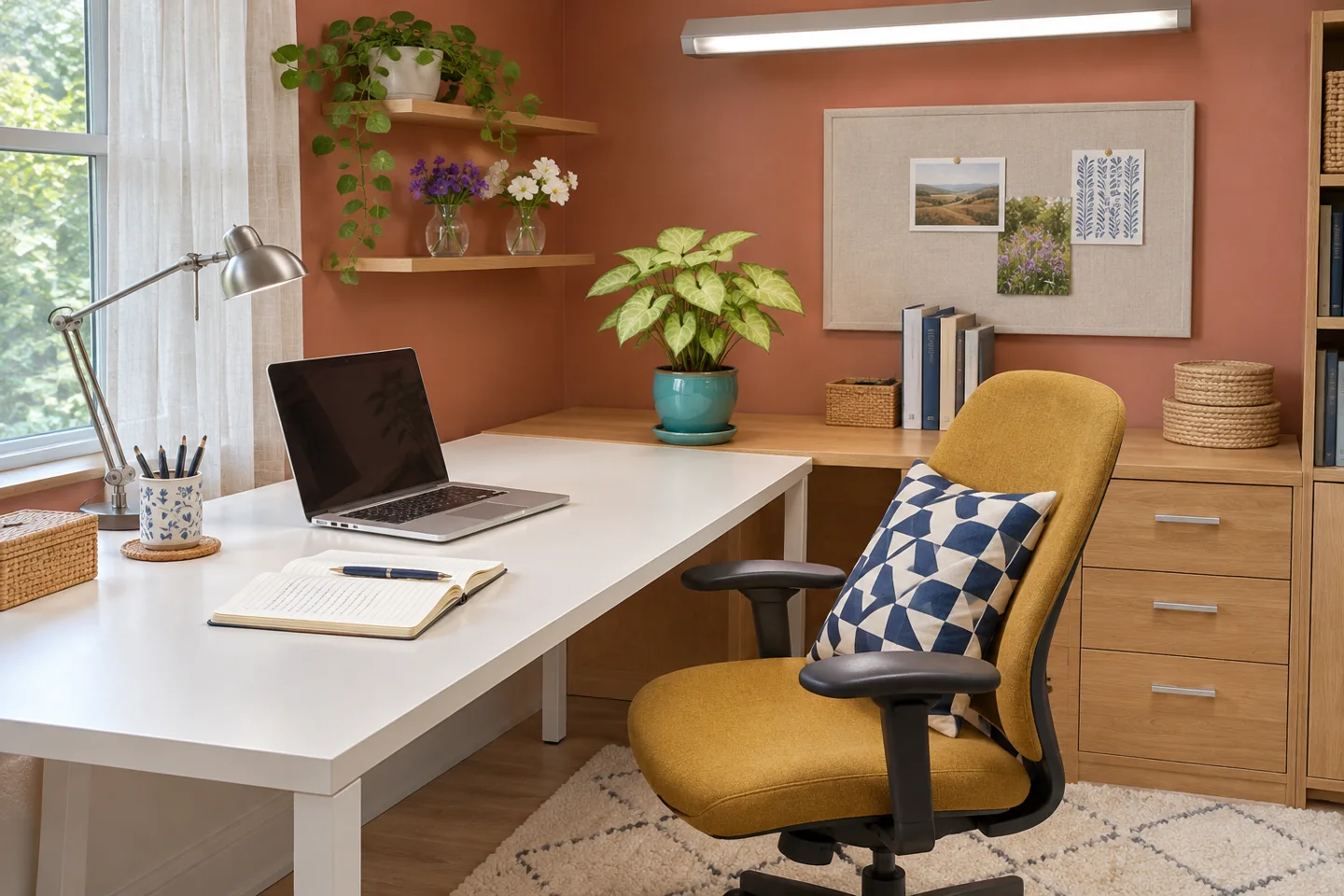
A juvenile arrowhead plant brings a soft triangular leaf shape to a white desk and oak return.
A turquoise pot works well against a warm clay-colored wall.
A mustard chair and geometric cushion supply the color, with a clear notebook space in front of the plant.
Young arrowhead plants are bushy, then become more vine-like with age.
Choose a compact specimen and maintain its shape with appropriate trimming.
Use adequate indirect or artificial light, checking the actual position rather than hiding it beneath a shelf.
Keep it away from drying vents and inspect the mix before watering.
This plant likes humidity, so a harsh, dry office may be a poor fit. Choose a tougher alternative if the location cannot meet its needs.
Before a weekend or holiday: leave a useful plant handover
A little information helps a colleague care for the plant without turning every visit into another watering.
Record the light arrangement
Note the plant’s position and any permitted light timer. Confirm what happens to lighting when the office is closed.
Do not leave a plant in darkness because the workday setup looked bright. Arrange suitable light or a more appropriate temporary location.
Give a moisture condition
Write the plant’s drying requirement and where to check it. Record the last actual watering, rather than telling a helper to water all pots together.
If the mix is still moist, wait. When it reaches the plant’s suitable watering stage, water thoroughly, drain and empty collected runoff.
Make checking the pot easy
Keep the pot accessible and explain how the inner container lifts out. Clear papers and electronics from the watering route.
Name one caretaker so several well-meaning people do not each add water. Leave a contact for unexpected changes.
Describe what needs investigation
Ask the helper to report persistent wilting, leaf loss or visible pests. Wilting can occur with wet roots as well as dry mix.
Check moisture, drainage and recent conditions before adding more water. Use photographs of the actual plant if local horticultural advice is needed.
Maryland Extension recommends watering to need rather than a calendar and draining excess water. Match that check to each plant; snake plant and peace lily do not share one drying rule.
Office plant questions worth settling first
Can a plant live in an office with no windows?
Yes, with suitable artificial light of adequate intensity and duration. Ceiling lights intended for people may leave the leaves too dim; measure and provide an appropriate plant light when needed.
Do office plants need light overnight?
Leave a dark period. Follow the plant and fixture guidance rather than leaving a lamp on continuously; a timer can make a suitable routine more consistent.
Will these plants clean the office air?
Choose them for their appearance and the pleasure of caring for them. A review of potted-plant air-cleaning studies found their practical effect too small to replace normal building air exchange.
Are all ten suitable around pets?
This is not a pet-safe plant list. ASPCA lists several common entries as toxic if chewed; check the exact plant before bringing it into a shared or pet-friendly workspace.
Make space for one well-placed plant
Choose one desk position, check the light and measure the leaf canopy you can accommodate. Then pick a small plant with a care routine you can actually manage.
What I like to do when planning is leave a clear lifting route from the start. A plant is easier to enjoy when checking and draining its pot stays simple.