
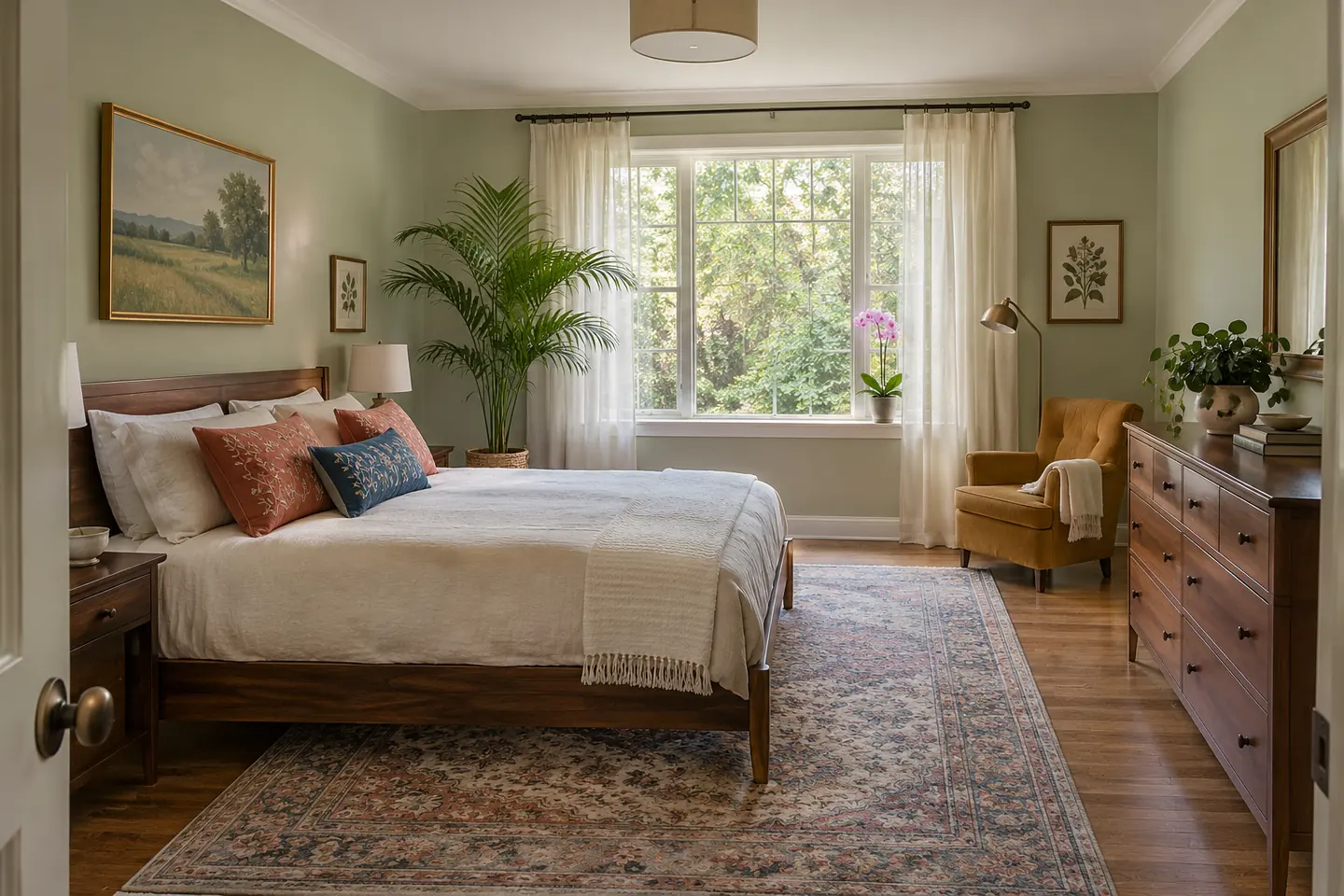
A bedroom plant needs a place to live, not just a gap to fill. The best choice fits your daylight, your watering habits, and the space you actually use.
For a compact bedside, start with baby rubber plant. For a floor accent, consider snake plant or parlor palm; for flowers, try a moth orchid near suitable light.
These twelve bedroom plants come with complete placement ideas, from colorful reading corners to simple window-side displays. Choose the setting your room can support.
The calm here comes from the arrangement: uncluttered furniture, comfortable access, and greenery you can care for easily.
Choose plants for their appearance and growing needs. Iowa State Extension explains why sealed-chamber air-cleaning results do not translate to ordinary rooms.
Before choosing: This is not a pet-safe plant list. Check the exact botanical name in the ASPCA database and choose a position that children and pets cannot access.
Find a bedroom arrangement
- 1. Snake plant for a narrow dresser-side space
- 2. ZZ plant for a tidy, low-fuss dresser arrangement
- 3. Cast iron plant for a softer vintage bedroom
- 4. Golden pothos for a reachable bookcase garden
- 5. Heartleaf philodendron for a contained reading nook
- 6. Spider plant for an airy window-side stand
- 7. Parlor palm for a generous reading corner
- 8. Baby rubber plant for a usable bedside cabinet
- 9. Rubber plant for a bold floor-level focal point
- 10. Wax plant for a neat, patterned dresser display
- 11. Moth orchid for a window-side splash of pink
- 12. Prayer plant for a layered, colorful low display
Make a daylight note before buying
Observe the proposed position with the room arranged as you actually use it. Record these four details on your phone.
Curtains open or closed?
Check the hours you normally open blackout curtains. A bright bedroom photograph can hide a very different daily routine.
Where does the light land?
Note whether the leaves would sit beside the window, behind furniture, or against a shaded wall. Measure the real position.
Morning and afternoon
Check at different times. Record direct sun, overhanging buildings and outdoor trees rather than labeling the entire room “bright.”
Recheck when conditions change
Repeat after a seasonal change or furniture move. Compare the new observations with the plant’s growing requirements.
For a room without usable daylight, see our explanation of windowless rooms and grow lights. Room humidity differs, but the need for usable light still applies.
1. Snake plant for a narrow dresser-side space
Dracaena trifasciata
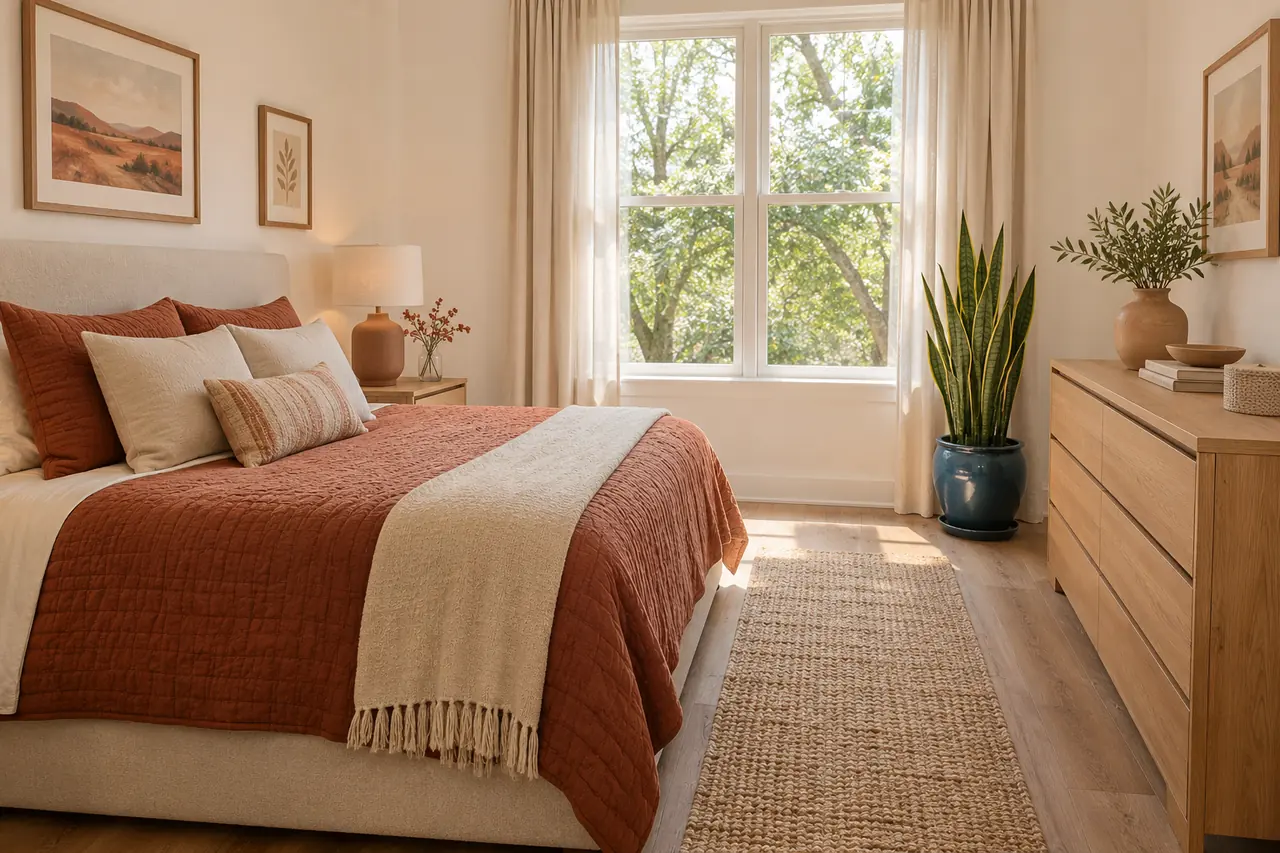
A snake plant brings a clean vertical line to a bedroom where a spreading plant would crowd the furniture.
Give it its own floor position.
Set a blue glazed cover pot beside an oak dresser, then repeat that blue in a cushion. A rust quilt warms the plain walls.
Keep the leaves clear of drawer fronts and the walking route. The plant should finish the corner without turning it into an obstacle.
Use a draining inner pot and let the mix dry between waterings. Empty the cover pot after watering, especially during slower winter growth.
Check the eventual size on the label before buying a tall specimen.
2. ZZ plant for a tidy, low-fuss dresser arrangement
Zamioculcas zamiifolia
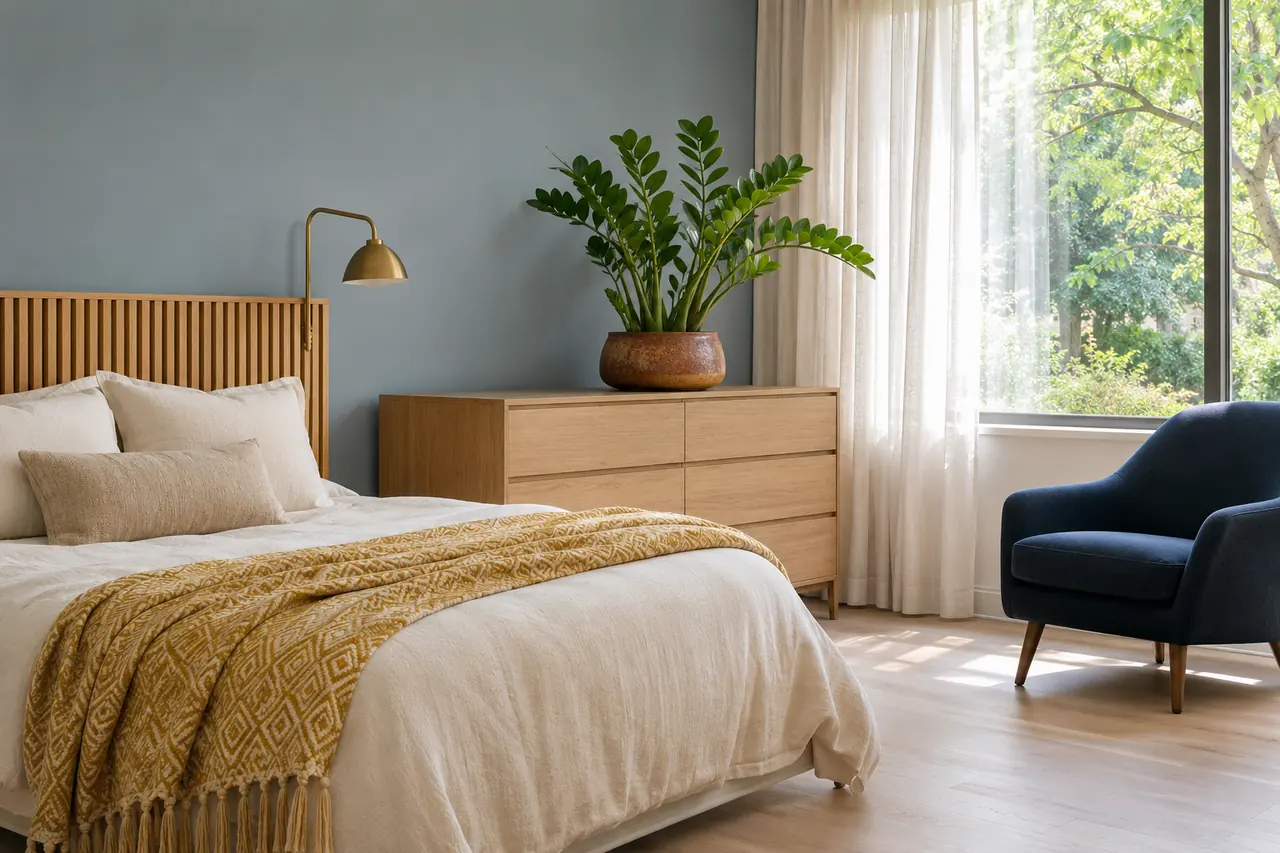
For a bedroom with strong furniture lines, a ZZ plant adds softer curves without a curtain of trailing stems. Its glossy leaflets provide the detail.
Place it on a broad dresser near a bright window, with blue-gray walls behind it and a mustard throw across the bed.
Leave the rest of that dresser mostly open. One shallow dish is enough; several small ornaments would compete with the arching foliage.
Bright indirect light is a good target. Avoid strong direct sun, which can scorch the leaves.
The thick underground rhizomes store water, so allow the potting mix to dry between waterings rather than topping it up automatically.
I like this as a single-plant arrangement: quiet, structured, and easy to reach when the pot needs checking.
3. Cast iron plant for a softer vintage bedroom
Aspidistra elatior
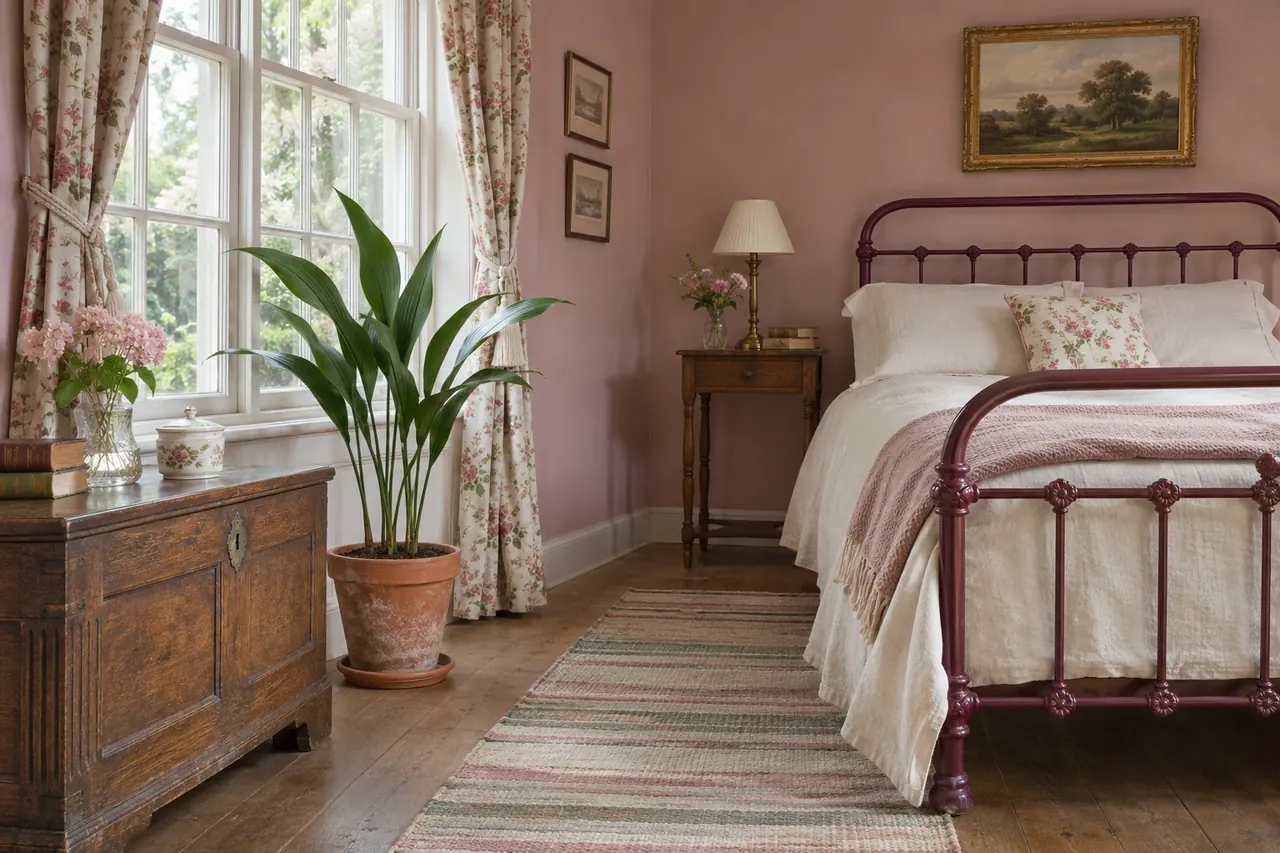
Broad cast iron leaves suit a bedroom with a wooden chest and a painted metal bed.
They add fullness without needing a trailing display.
Use a plain terracotta pot and a waterproof saucer beside the chest.
Burgundy bed rails and faded floral curtains give the green foliage a backdrop.
Leave a clear strip between pot and bed so the leaves aren’t brushed every time you walk past.
Keep the mix well drained and adjust watering to its moisture and growth. Winter usually calls for less water.
Choose the pot for the root ball, not an oversized decorative container that stays wet for too long.
4. Golden pothos for a reachable bookcase garden
Epipremnum aureum
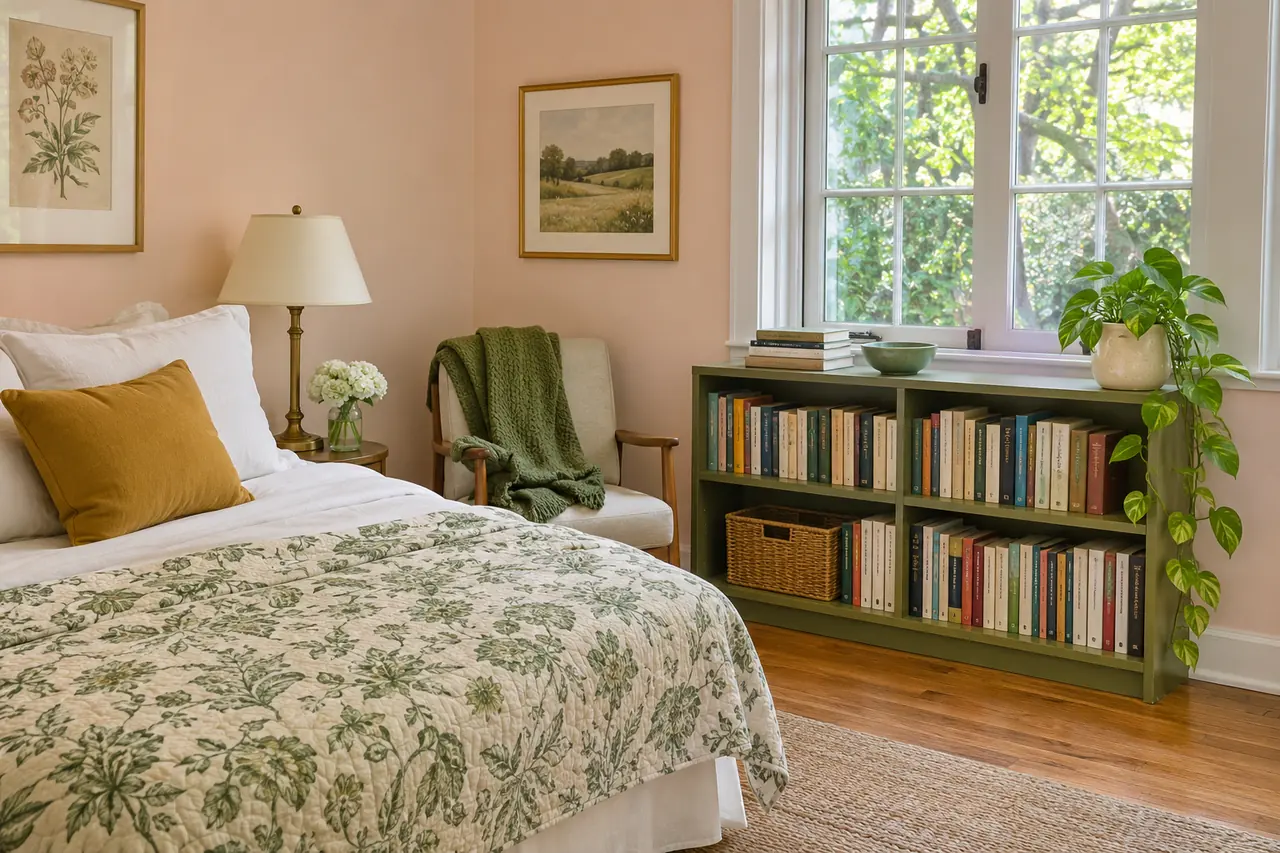
A low bookcase makes a better pothos display than an unreachable shelf above the pillows.
You can inspect the pot without climbing over the bed.
Choose an olive-painted unit beside a window, with a cream planter at one end. Let a few stems fall down the outer side.
A green floral quilt and ochre cushion complete the room without adding more pots. Keep books away from the watering area.
Let the draining mix dry between waterings and empty collected runoff. Trim wandering stems before they reach drawer handles or electrical cords.
The result feels leafy and relaxed while keeping the bedside surface free for everyday use.
Check the space the leaves will occupy
A worked furniture-planning example, not a minimum spacing rule. Replace these figures with your own measurements.
Start with the surface
Example: a cabinet top measures 80 cm wide. Keep the depth and the pot’s stable footprint in mind too.
Measure the whole plant
If the foliage occupies 30 cm, reserve that width rather than measuring only the smaller pot. Allow for growth.
Reserve everyday use
A lamp or clock needs 20 cm in this example. 80 − 30 − 20 = 30 cm remains.
Test the arrangement
Use temporary markers to check the remaining space. Open drawers, move curtains, and lift the pot as if taking it to the sink.
The remaining width is not a safety or accessibility standard. If the setup feels cramped or unstable, choose another position.
5. Heartleaf philodendron for a contained reading nook
Philodendron hederaceum
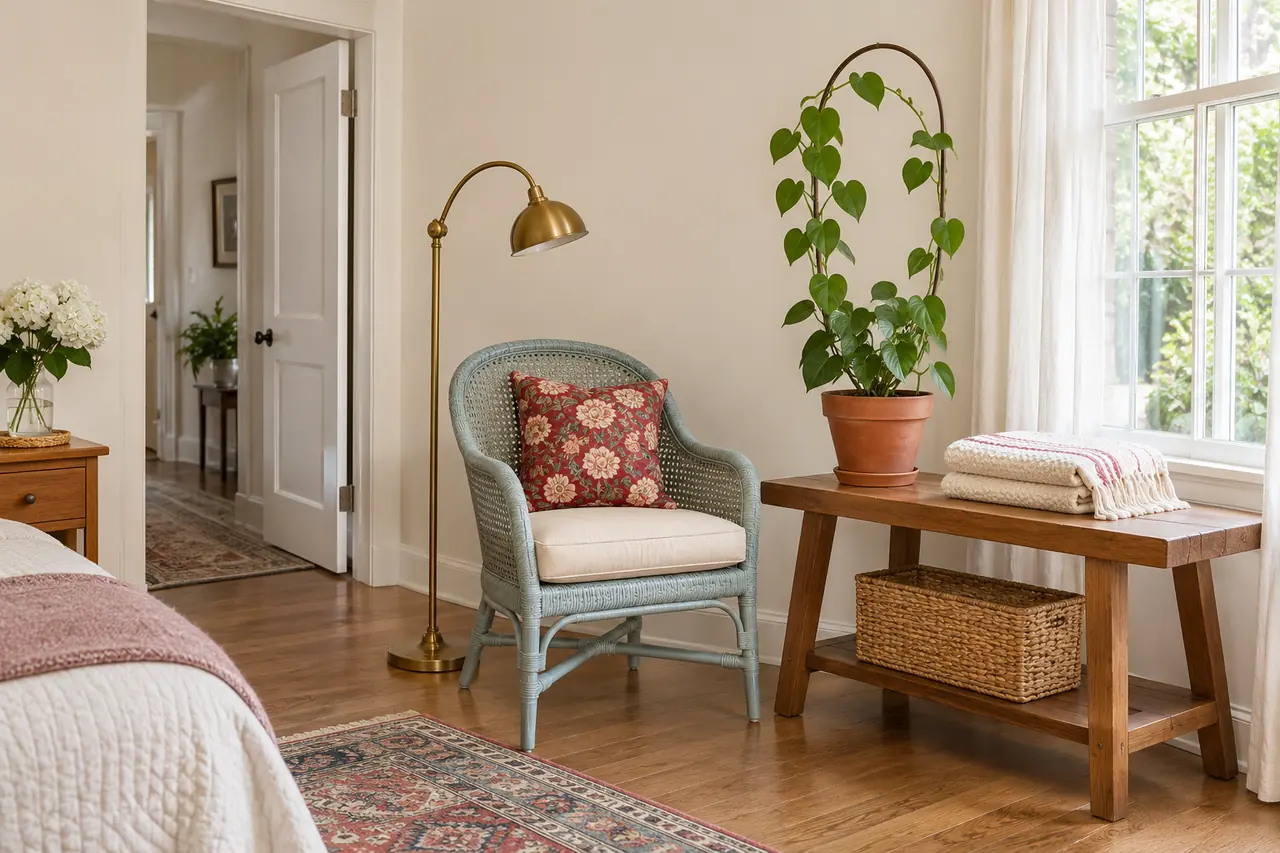
If you want a vine without loose stems everywhere, train heartleaf philodendron around a small support fixed securely inside its pot.
Set the pot on a broad side table beside a pale blue reading chair. A red floral cushion and cream wall make the green hearts stand out.
Keep the arrangement beside a window rather than behind the chair, where light and access can both become awkward.
Use a well-drained mix and keep it lightly moist rather than saturated. Check moisture before watering, with less frequent applications when growth slows.
Guide new stems back onto the support. Leave the lamp, its cable, and the chair’s moving space completely separate.
6. Spider plant for an airy window-side stand
Chlorophytum comosum
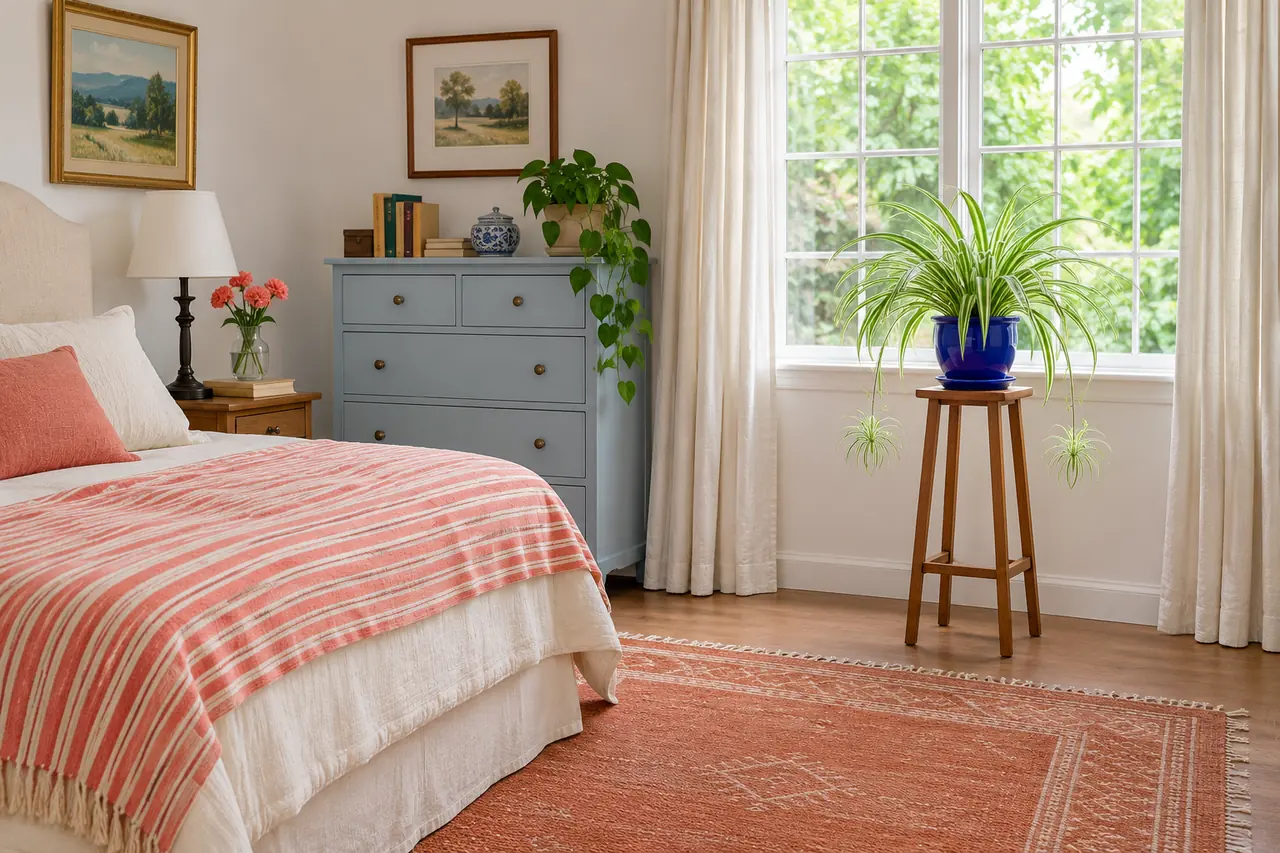
Spider plant gives a bedroom movement: striped leaves arch outward, and established plants may send out stems carrying small plantlets.
Use a stable wooden stand near a bright window, with a cobalt pot and waterproof saucer.
A coral striped coverlet echoes the lively shape.
Keep the stand outside the main bedside route.
Allow enough room for the longest leaves and plantlets instead of wedging it between furniture.
Keep the mix moderately moist without leaving the pot standing in runoff. Water use changes with the season and the room’s conditions.
If leaf tips brown, investigate water quality and care conditions before assuming the plant simply needs more water.
7. Parlor palm for a generous reading corner
Chamaedorea elegans
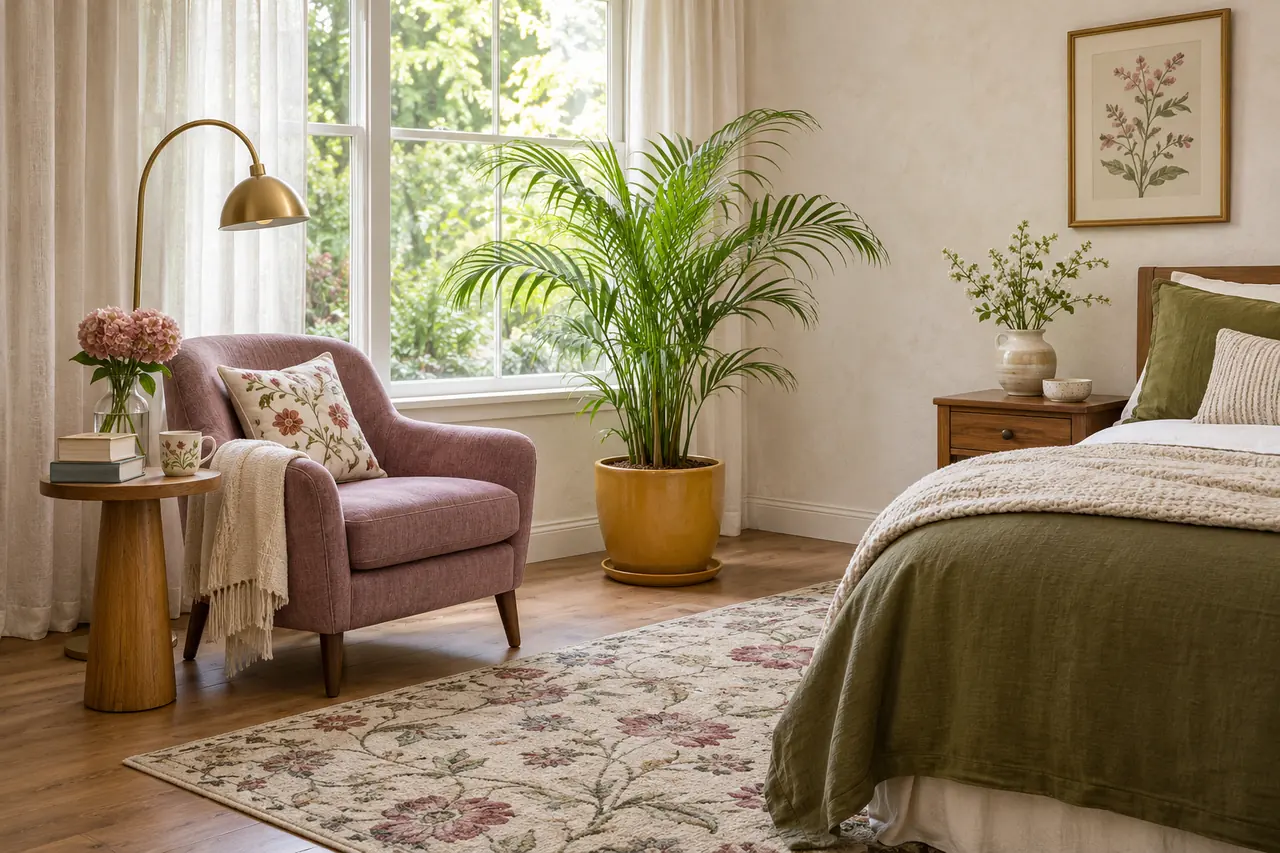
A parlor palm softens a bedroom corner with fine, arching fronds.
Give that shape space instead of pressing it tightly between the wall and chair.
Place an ochre floor pot near a window, then add a mauve reading chair and a small floral rug. Cream bedding keeps the composition restful.
The chair should pull forward without catching the fronds. Set the pot on a waterproof base and keep it away from the curtain’s sweep.
Use a draining mix and let it dry slightly between waterings. Persistent wetness is a more useful warning than a calendar reminder.
Check leaf undersides occasionally while turning the pot for inspection.
8. Baby rubber plant for a usable bedside cabinet
Peperomia obtusifolia

Baby rubber plant suits a bedside cabinet when you want greenery without sacrificing the whole tabletop. Its rounded leaves soften the corner.
Pair a teal pot with a blush cabinet, terracotta headboard, and navy floral pillow. Use a wall-mounted reading light to leave more surface free.
Keep a clear place for your book and glasses. If the plant already fills the cabinet, move it to a wider surface.
A draining inner pot makes sink watering and runoff checks easier. Avoid keeping the mix constantly wet or allowing prolonged severe dryness.
What I like here is the balance: one rounded plant, useful furniture, and room to breathe.
9. Rubber plant for a bold floor-level focal point
Ficus elastica
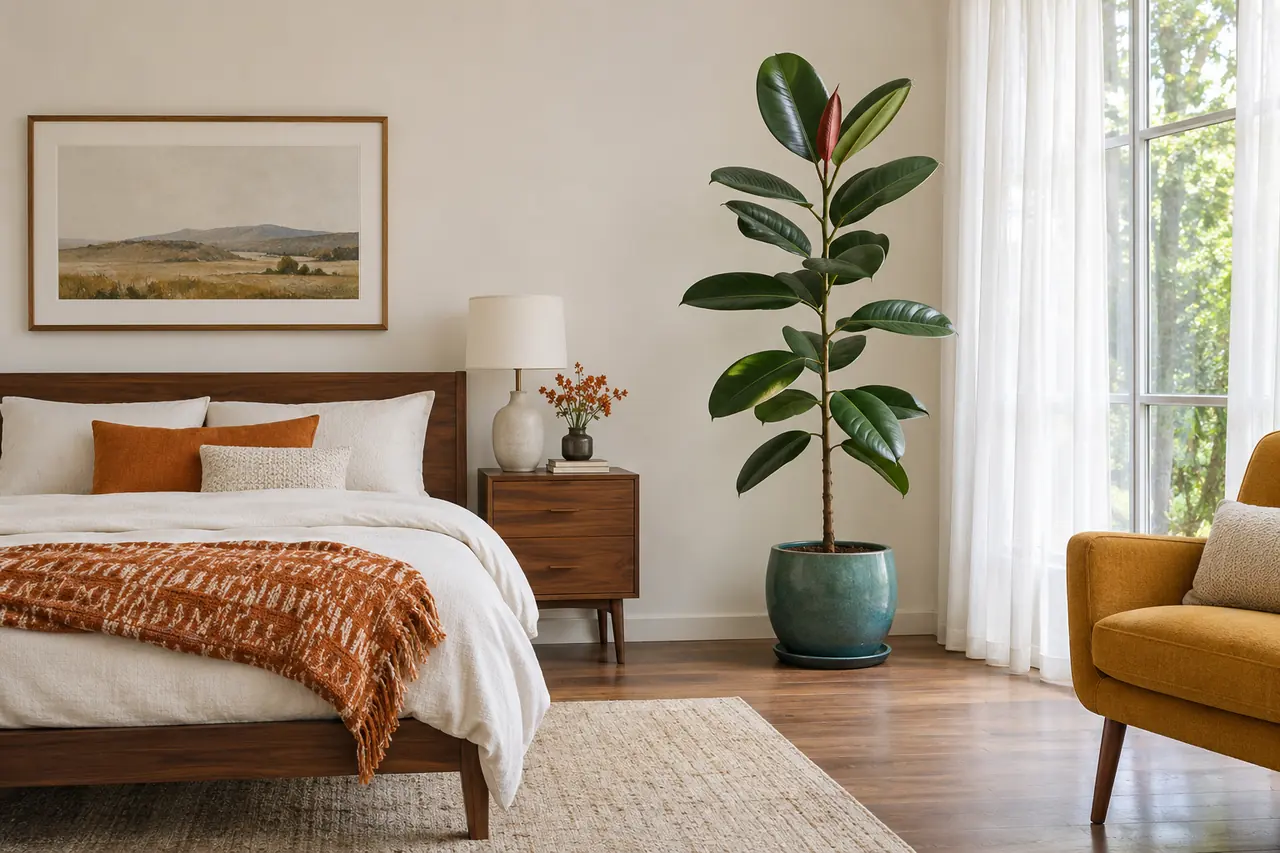
A young rubber plant works when the room needs one green shape rather than a collection of small pots.
Plan for its future spread.
Place a blue-green pot beside a tall window, with a walnut bed and an orange patterned throw nearby.
Keep the surrounding floor open.
Its broad leaves look good against a pale wall. Avoid squeezing them against curtains or placing the pot where you need to turn sharply.
Use a well-drained potting mix, avoid overwatering, and check moisture rather than watering on a fixed day.
The milky sap can irritate skin; handle pruning carefully and keep trimmings away from children and pets.
10. Wax plant for a neat, patterned dresser display
Hoya carnosa
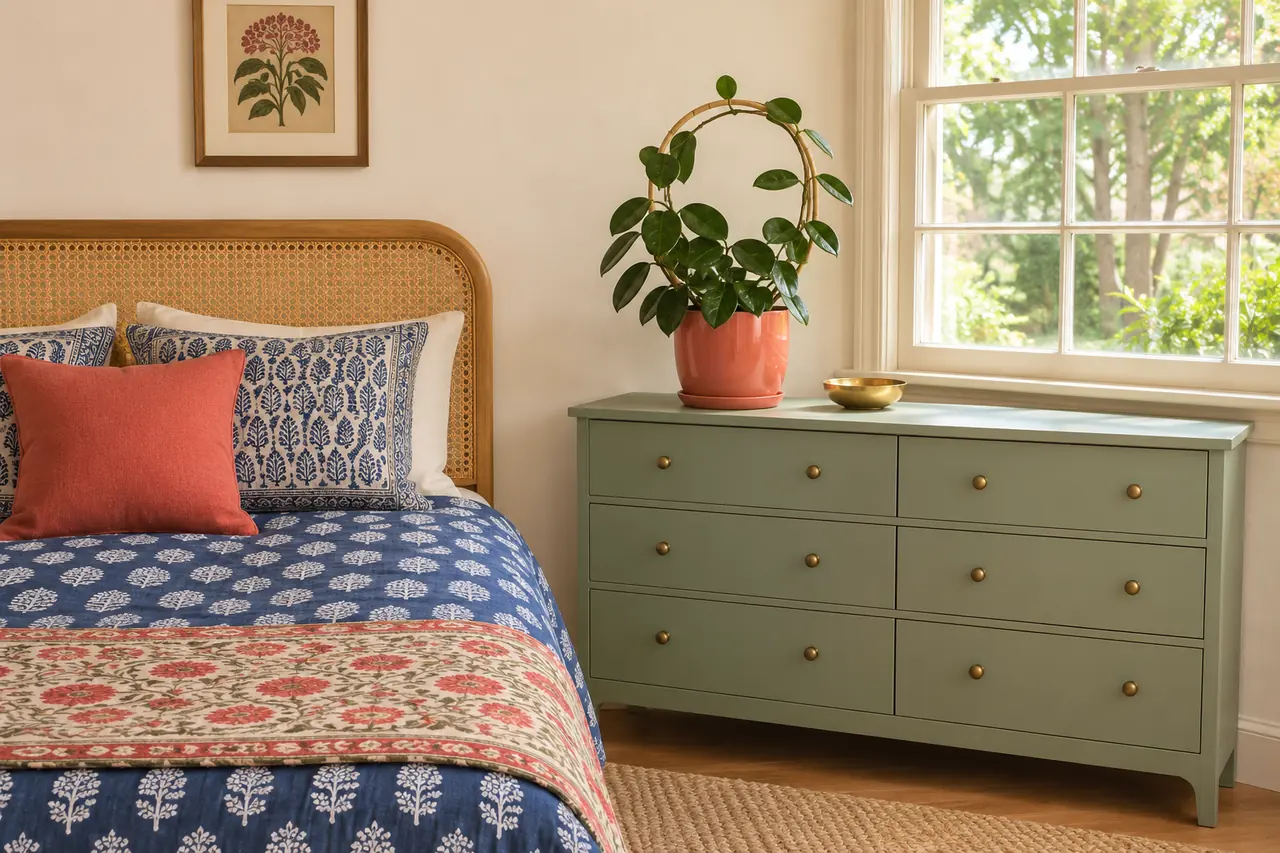
A small wax plant trained around a hoop gives you character in a contained outline.
It suits a dresser that still needs working space.
Try a coral pot on sage-painted furniture, with an indigo block-print bedspread and a cane headboard. The leaves connect those stronger colors.
Keep the support inside the pot and the stems clear of handles. The whole plant should lift out easily for watering and inspection.
Don’t buy it solely for flowers. A foliage arrangement stays attractive while you wait, and flowering isn’t guaranteed by bedroom placement.
Leave a little room around the hoop for new growth.
11. Moth orchid for a window-side splash of pink
Phalaenopsis hybrids
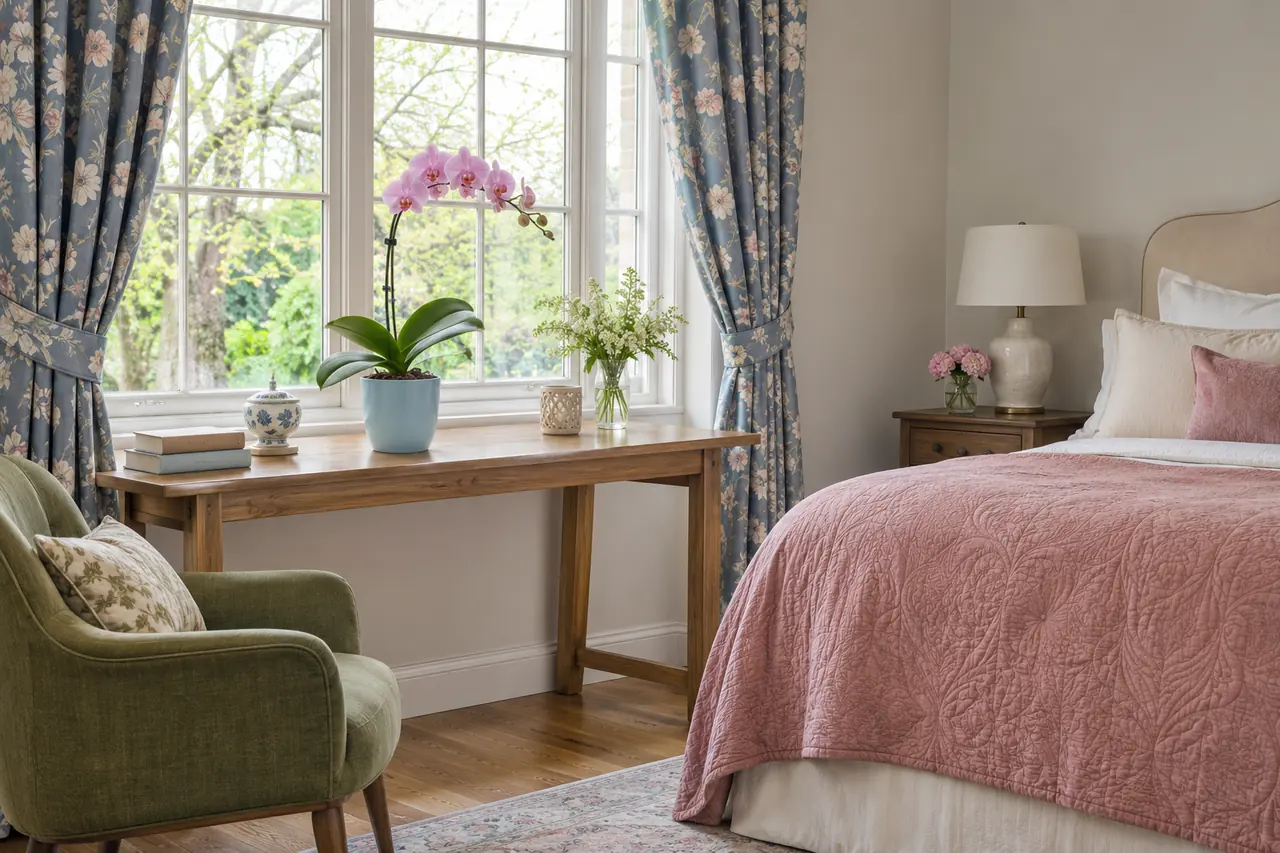
A flowering moth orchid adds color without needing a shelf full of ornaments. Set it where you can enjoy the whole arching flower stem.
Use a broad window-side table, a pale blue cover pot, and dusty rose bedding. Pulled-back floral curtains frame the display without brushing the blooms.
Use an orchid pot and suitable bark-based medium with excellent drainage. Allow the medium to dry somewhat between waterings and drain the pot completely.
Keep the plant out of standing water inside its decorative container. Empty that container after every watering.
Flowers are seasonal, so choose a healthy plant whose broad leaves you’ll also enjoy between flowering periods.
12. Prayer plant for a layered, colorful low display
Maranta leuconeura
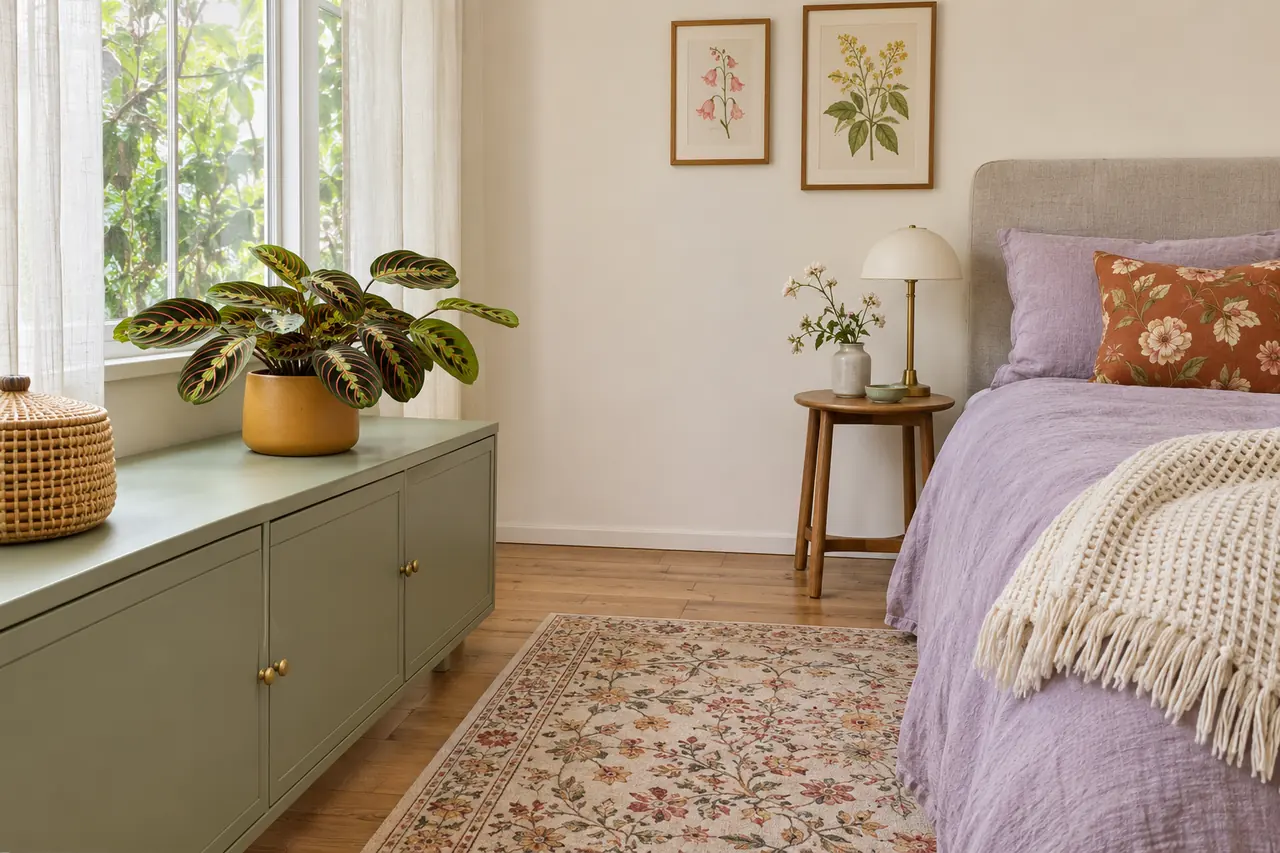
Prayer plant brings pattern into a bedroom through its leaves, making it a partner for plain walls and colored bedding.
Choose a low cabinet beside a bright window, with an ochre pot, lilac coverlet, and terracotta floral cushion.
Let the foliage spread across its own space.
Keep the plant away from the cabinet edge and leave the drawers usable. A framed print is enough decoration behind it.
Keep the growing mix evenly moist during active growth without making it soggy. Adjust watering as winter conditions and growth change.
Choose another plant if meeting those moisture and humidity needs would make the room uncomfortable for you.
Match the plant to your room and household
Use these checks to rule out an awkward choice before it becomes a daily frustration.
People and pets
Several plants here, including pothos, philodendron, ZZ plant and snake plant, are unsuitable for chewing. Keep plants away from children and pets.
Watering location
Choose where runoff will drain and where the inner pot can sit before returning to the furniture. Keep water away from electrical fittings.
Your actual sleeping routine
If a grow light is necessary, plan its daytime operating period and suitable position using the fixture instructions. Avoid a setup that disrupts your sleep.
Check, then change one thing
Record moisture, light and recent moves when a plant changes. Several different problems can produce similar symptoms; don’t diagnose from one leaf.
Questions before you bring a plant into the bedroom
Can a plant live with the curtains closed all day?
Not without another suitable source of light. Low-light tolerance does not mean a plant can grow indefinitely in darkness.
Open curtains during daylight if that supplies suitable light, move the plant, or assess an appropriate grow light. The RHS explains that even easy-care houseplants cannot tolerate complete darkness.
Which option suits a small bedside best?
Start by measuring the space. A small baby rubber plant may suit a broad cabinet, but the plant’s mature spread and your belongings still need room.
For a tiny tabletop, a plant on a separate stable stand may work better than squeezing another item beside your glass and lamp.
Should every bedroom plant be watered on the same day?
No, check each plant’s mix and requirements. Pot size, growing medium, light, temperature and growth all change how quickly it uses water.
The RHS houseplant guide covers light, watering, drainage and seasonal care. Feed according to the product label and the plant’s needs.
Do I need a different plant for winter?
Usually, reassess the conditions first. Shorter days, heating and colder window areas can change an otherwise suitable position.
Adjust care to growth and moisture rather than following a summer schedule. Keep foliage clear of hot vents and cold glass.
Choose the position, then the plant
Pick one place where the leaves will receive suitable light and the pot will stay easy to check. Measure it with the furniture in use.
Then choose the plant that fits those conditions. One well-placed pot can give a bedroom all the greenery it needs.