
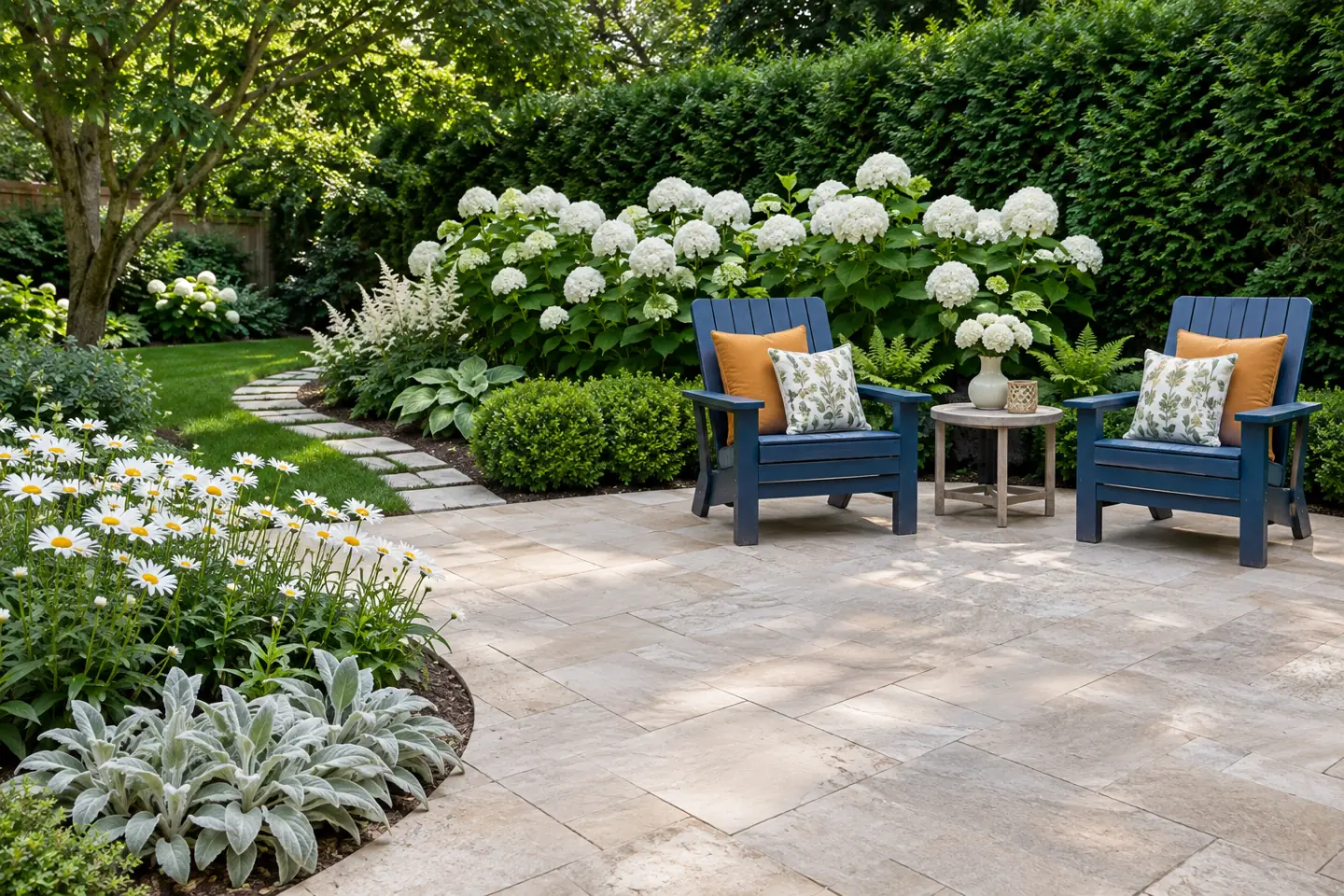
White flowers can give a familiar garden a different presence as daylight fades. Place them near a seat, doorway or path you use in the evening.
The “glow” is reflected available light, not light produced by the flowers. The effect changes with the moon, cloud cover and surrounding shade.
These twelve moon garden ideas pair white blooms with complete, usable settings. Some flowers open by day and remain visible at dusk; they do not all open at night.
Start with the site’s daytime sunlight and soil moisture. A garden planned for evening enjoyment still has to meet its plants’ growing needs.
What makes a moon garden work: Put pale flowers and useful foliage where you can enjoy them, then match each planting to its daytime growing conditions.
Chicago Botanic Garden describes white blooms and pale foliage standing out at dusk. Darker green backdrops can make the contrast easier to read.
Find your moon garden setting
- 1. Curve a hydrangea border around a bench
- 2. Gather white petunias around a bistro courtyard
- 3. Frame woodland seating with white astilbe
- 4. Make a white-rose entrance with a clear route
- 5. Use airy cosmos beside a straight garden walk
- 6. Soften a side-house walk with white phlox
- 7. Keep a quiet corner flowering into autumn
- 8. Let spring candytuft spill over a low wall
- 9. Make a white-daisy island in the lawn
- 10. Edge a dining patio with white zinnia planters
- 11. Place white irises beside a damp garden bed
- 12. Float white gaura beside a gravel sitting area
Choose the layout that fits your site
Check the position in daylight before deciding how you want to enjoy it after sunset. These choices help narrow the twelve designs.
Sunny, reasonably drained ground
Consider cosmos, zinnias or daisies. Observe how long direct sunlight reaches the actual bed, and check the chosen variety’s mature size.
Filtered light with reliable moisture
Consider astilbe or a suitable hydrangea selection. A shady bed can still dry out where tree roots compete for water.
A damp growing-season hollow
Investigate Japanese iris only after checking year-round drainage. Summer moisture and permanent winter saturation are different conditions.
Paving with little planting space
Begin with the petunia courtyard or dining planters. Leave room to move chairs, reach containers and manage drainage.
Check local winter hardiness, heat, rainfall and any invasive-plant guidance before buying. The Fish & Wildlife Service’s moon garden guide emphasizes matching sunlight and soil to the plants, and considering locally appropriate native flowers.
1. Curve a hydrangea border around a bench

A curved bed of white hydrangeas can make a small sitting area feel held within the garden. Keep the broadest shrubs behind a cobalt bench.
Use a charcoal fence as the backdrop, with lower green planting along the pale path. A pink floral cushion adds daytime color without competing with the flowers.
Mark the curve with a hose before cutting the bed. Leave room for both the mature shrubs and someone walking past the bench.
Smooth hydrangea prefers partial shade and well-drained soil; full sun requires consistent moisture. Choose a white-flowered selection suited to your local conditions.
I love how the rounded flower heads soften the fence. Allow for stems drooping after rain, rather than planting them directly against the walkway.
2. Gather white petunias around a bistro courtyard

A courtyard moon garden can begin with three generous pots and a table you already enjoy using. Place the tallest container against the fence.
Repeat white petunias in a lower bowl and a middle-height pot. Their spilling flowers connect the different containers without needing a continuous bed.
Add a coral bistro set and navy striped cushions. Keep the center clear for pulling out both chairs.
Petunias flower best with suitable sunlight and light, well-drained soil. Heavy shade reduces the display, even if the plants remain alive.
Use draining containers filled with appropriate potting mix, and check moisture rather than watering on a rigid calendar.
Treat tender petunias as seasonal plants where winters are cold. A sunny courtyard still needs an accessible watering route.
3. Frame woodland seating with white astilbe
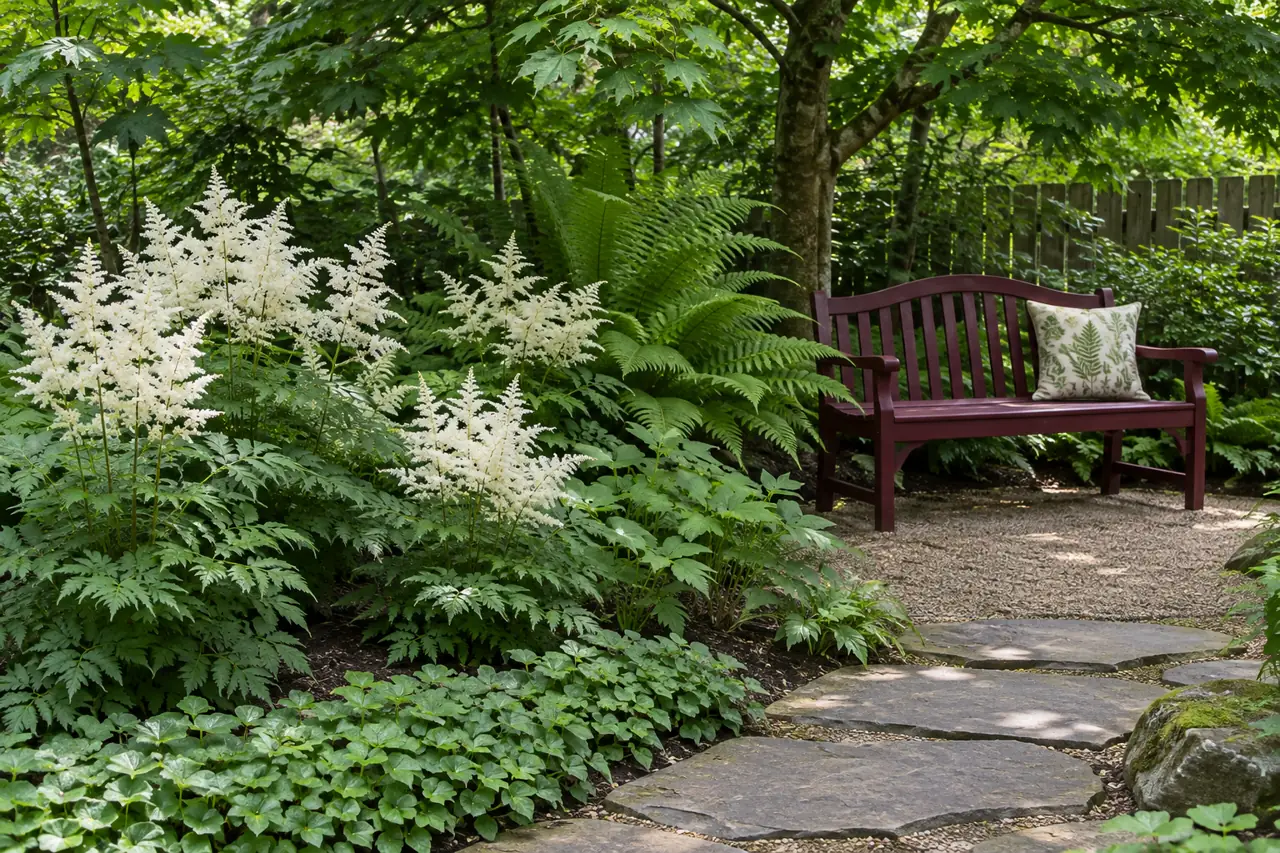
White astilbe plumes bring a soft middle layer to a leafy woodland corner. Plant them in a broad drift beside a dry sitting pad.
Let ferns rise behind the flowers, with low green foliage defining the path. A maroon bench and botanical cushion give the shade a little warmth.
Use large, steady stepping surfaces for the approach.
Keep planting back from their edges.
Astilbes prefer shady, moist conditions and organically rich soil with drainage. Dry shade beneath thirsty trees can be much harder to manage.
Check root competition and the reach of your hose before buying a large group.
Choose varieties by their local flowering window; different astilbes bloom at different times. The fern and foliage layers keep the setting attractive after the white plumes fade.
4. Make a white-rose entrance with a clear route

A rose arch gives the moon garden a doorway, with white flowers above the route rather than crowding the ground. Start with a substantial, securely installed support.
Keep a broad paved passage through the opening. Position a mustard bench outside the reach of thorny stems.
A blue patterned cushion and low green edging finish the entrance.
A few pale pink roses farther away can soften the wider garden.
Climbing roses need fertile soil, sun or suitable light shade, and enough moisture. They do not attach themselves neatly to an arch without training.
Tie stems to the support and check the variety’s eventual spread. Plan for pruning access on both sides.
This is a longer-term framework; a newly planted rose will not instantly cover the whole arch.
5. Use airy cosmos beside a straight garden walk

A long bed of white cosmos makes a light, informal screen beside a straight brick walk. Its fine foliage keeps the planting from feeling solid.
Place mauve folding chairs on a gravel pad at the far end. Green lattice behind the bed gives the white flowers a readable backdrop.
Leave access along the planting edge for cutting flowers and removing faded blooms. Put discreet supports in before tall stems lean over the path.
Cosmos needs direct sunlight, and taller varieties may need staking in windy places. Sow outdoors after frost danger has passed, following local planting guidance.
Choose white-flowered seed rather than a mixed-color packet if the pale effect is central.
Expect a seasonal display, with possible seedlings appearing later. Thin or remove volunteers where they crowd the layout.
6. Soften a side-house walk with white phlox

A white phlox border can give a side-house path more purpose than simply getting you around the building. Arrange upright clumps along the wall side.
Keep a lower silver or green foliage layer toward the brick paving. A teal bench at a widened end creates somewhere to pause.
Use a yellow checked cushion to warm the cream wall and white flower clusters. Leave the center of the walkway open.
Garden phlox prefers sun to partial shade and moist, fertile, well-drained soil. Space plants for air movement, since powdery mildew can be troublesome.
Water at the root zone and avoid squeezing the mature clumps against the wall.
Check whether the house shades this route for most of the day. A narrow sunny-looking photograph does not replace observing your own site.
Plan a sequence of white flowers, not one permanent show
Use this as a planning sequence rather than a universal month-by-month calendar. Variety and local climate change the actual flowering dates.
Earlier-season feature
The candytuft wall supplies a spring flower display. Keep a separate place for later flowers rather than expecting it to stay covered in bloom.
Main growing-season feature
Hydrangeas, daisies, phlox and suitable annuals can cover different parts of the warmer season. Compare local bloom windows before combining them.
Later-season feature
Hybrid Japanese anemones can extend the display toward autumn. Allow for their spread and the time they may take to establish.
Between flowering periods
Keep useful foliage, a sound path and comfortable seating in the plan. Replace seasonal pots only when temperatures suit the next planting.
The linked plant profiles in the twelve ideas support the individual flowering and growing requirements. Ask a local nursery for labeled white selections that suit your site.
7. Keep a quiet corner flowering into autumn

White anemones give a quiet garden corner an airy late-season canopy. Their flowers sit on wiry stems above a lower layer of divided leaves.
Curve a pale gravel path toward a plum chair, with a dark evergreen boundary behind the planting. A striped throw makes the seat inviting.
Keep the chair on a firm pad outside the spreading bed. Place the tallest flowers behind the lower path edge.
Hybrid Japanese anemones bloom from late summer into fall and spread through underground stems. Give them room, and check how vigorously they behave locally.
They need moist but well-drained soil; in hot southern conditions, partial shade helps limit drying and scorch.
Plan the boundary before planting. This graceful drift is less suitable where every neighboring plant needs a tightly reserved space.
8. Let spring candytuft spill over a low wall
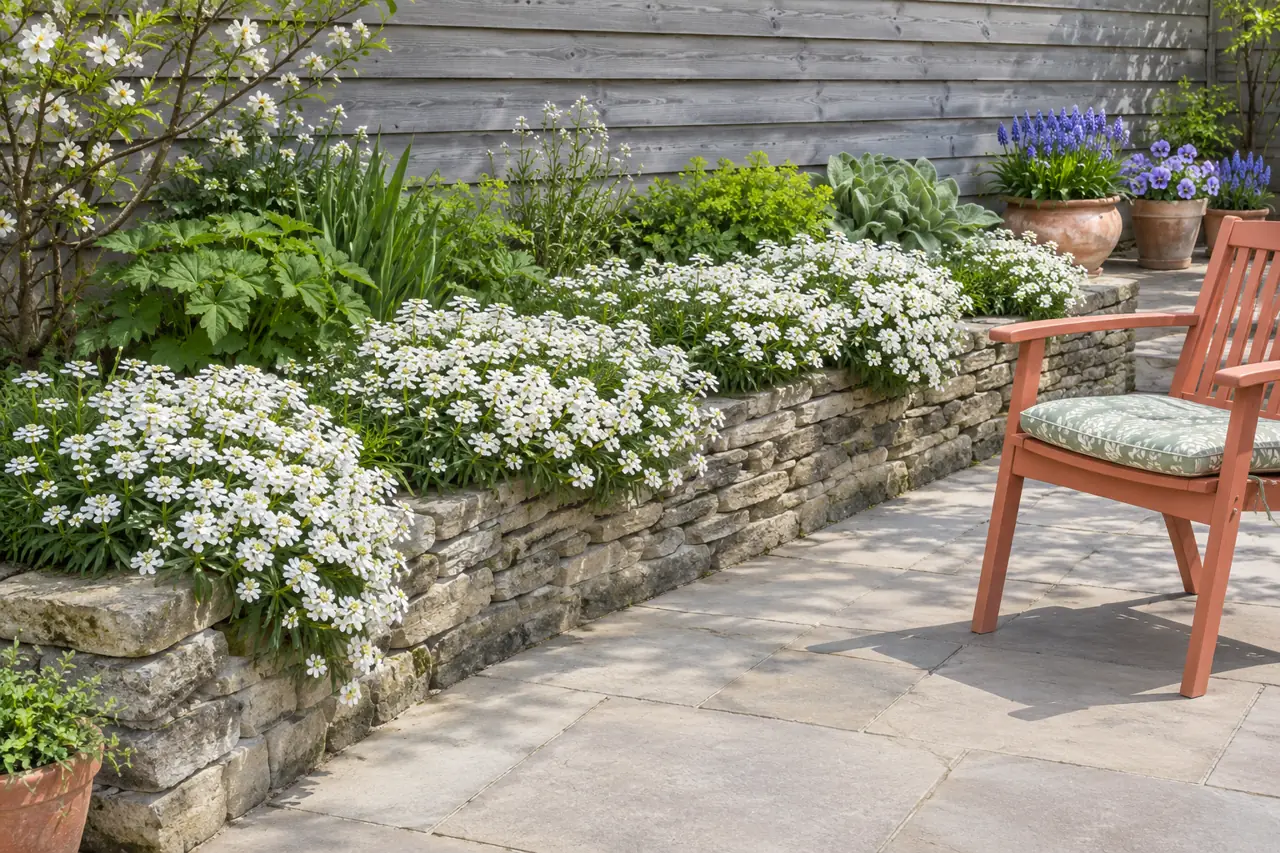
A low stone edge brings white flowers closer to eye level when you are sitting nearby. Let candytuft soften its top without hiding the walking surface.
Use a shallow planted border behind the wall, with green foliage providing a second layer. A terracotta chair and sage patterned cushion suit the stone.
Keep the paving level and clear, with enough room to reach the bed from the front. Start with a sound existing wall or appropriate construction advice.
Evergreen candytuft flowers mainly in spring and needs well-drained soil. It prefers sun and dislikes wet ground.
Choose this as an early-season chapter in the moon garden, rather than a summer-long flower guarantee.
The small-leaved foliage continues the edging after bloom. Check winter performance for your climate before relying on year-round cover.
9. Make a white-daisy island in the lawn

An oval island of Shasta daisies gives an open lawn a clear evening focal point. Put taller clumps toward the center and lower selections near the edge.
Keep a simple mowing strip around the planting. A forest-green bench on its own stone pad provides a view across the flowers.
A coral striped cushion adds a cheerful daytime accent. Leave the lawn route wide enough for your actual mower and walking needs.
Shasta daisies need well-drained soil and sun to partial shade. Winter-wet ground is a poor fit for this display.
Check cultivar sizes before planting, and divide crowded clumps when needed. Wear gloves when handling plants if skin irritation is a concern.
Choose the island position from the bench, then check it again from the house.
10. Edge a dining patio with white zinnia planters

Long planters can make a white-flowered boundary beside a dining patio without closing it in. Place them along one outer edge, leaving an open approach.
Choose white zinnias with a mature height that suits the table. Their upright stems create a different effect from trailing courtyard flowers.
Pair terracotta-colored containers with a turquoise table, mustard chairs and geometric seat pads.
Leave room to pull each chair back.
Set containers on a stable surface with drainage clear.
Zinnias need full sun and good air circulation. Check moisture in the mix, and choose varieties suited to local heat and humidity.
These are seasonal flowers where frost ends growth. Replace the display when needed rather than expecting permanent planting from one annual sowing.
11. Place white irises beside a damp garden bed

A damp planting hollow can become a distinct white-flowered part of the garden. Use Japanese irises for their upright leaves and broad, elegant blooms.
Keep the path outside the wet ground. Two navy chairs on a separate firm pad let you enjoy the flowers without stepping into the bed.
Add pink patterned cushions and a dark timber backdrop. Taller leafy planting behind the irises gives the flowers a calmer setting.
Japanese irises prefer a sunny position and damp, rich, acidic soil during growth. They do not tolerate winter saturation in the same way.
Check drainage across the year before planting. A permanently flooded hollow needs a different plan.
Choose a labeled white-flowered selection, and leave access for dividing clumps. Do not mistake this seasonal iris display for constant bloom.
12. Float white gaura beside a gravel sitting area
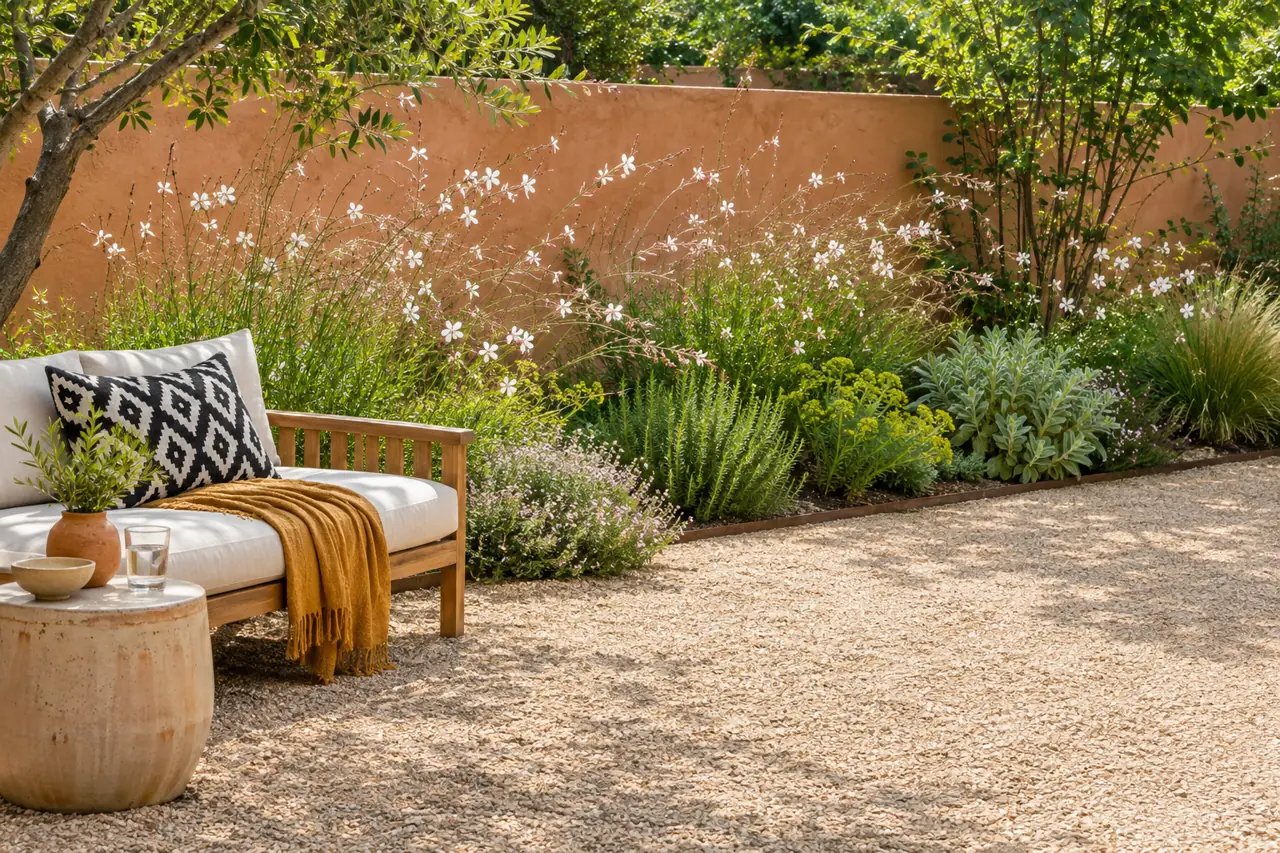
White gaura brings a loose, moving edge to a gravel sitting area. Its small flowers hover on fine stems rather than forming a solid white block.
Set a timber lounge bench against a terracotta wall. A bold patterned cushion and ochre throw provide color while the planting stays airy.
Keep the stems back from the walking route. Use neighboring perennials to support the composition without crowding the gaura.
Gaura prefers sun and well-drained soil, and its deep root helps it tolerate heat and drought. Newly planted specimens still need establishment care.
Expect some pink buds and fading flowers rather than an unnaturally pure-white cloud.
What I like to do when planning this corner is choose the seating footprint first. Then mark the planting line outside the space your feet need.
Do one evening walk before calling the layout finished
Visit the planned seat and route as daylight fades. This checklist adds practical checks that a daytime planting plan cannot settle.
Follow the whole route
Check the gate, steps, chair legs and return path. Move pots or leaning stems that intrude; pale flowers are not route lighting.
Use light only where needed
If lighting is necessary, choose outdoor-suitable fixtures aimed down at the task. Keep them no brighter than needed and avoid lighting every flower bed.
Control operating time
Use suitable controls so lights are on when needed and off afterward. Favor warm-colored light and limit spill toward neighbors and habitat.
Check comfort from the seat
Notice fragrance, prevailing wind and how visible the white planting actually is. Adjust placement rather than promising identical brightness on every night.
The lighting approach follows DarkSky and the Illuminating Engineering Society’s five principles. Use qualified help for electrical installation where required.
A few moon garden questions
Do white flowers really glow in complete darkness?
No, they reflect available light rather than producing it. Expect a quieter effect when moonlight is limited, and provide suitable light for necessary routes.
Does every moon garden need night-opening flowers?
White daytime flowers and pale foliage can be part of an evening garden. Choose night-opening or fragrant plants separately when their growing needs suit the site.
Can I choose these plants just by their flower color?
Check the exact plant’s size, growing conditions, toxicity and local suitability as well. This is an ornamental design list, not a pet-safe or edible-flower list.
Start with the view from one seat
Choose the place you actually want to sit, then mark a clear route to it. Shortlist one white-flowered planting that suits the sunlight and soil nearby.
Build that first view well before extending the scheme. A comfortable corner with room to grow can give you plenty to enjoy as the light changes.