
A small entryway has a big job. It needs somewhere for keys, shoes, bags, and the things you always remember just as you’re leaving. And it’s the first space you see when you come home.
The best small entryway decor ideas make that daily routine easier while giving the space a little personality. You don’t need a full hallway or a matching furniture set. A few well-chosen pieces can turn even a short stretch of wall beside the door into a welcoming landing spot.
Start with one useful anchor—a slim console, a bench, or a shelf—then add storage and a finishing touch. Here are 11 ideas to help you find the right combination.
1. Choose a Slim Console That Fits Your Walkway
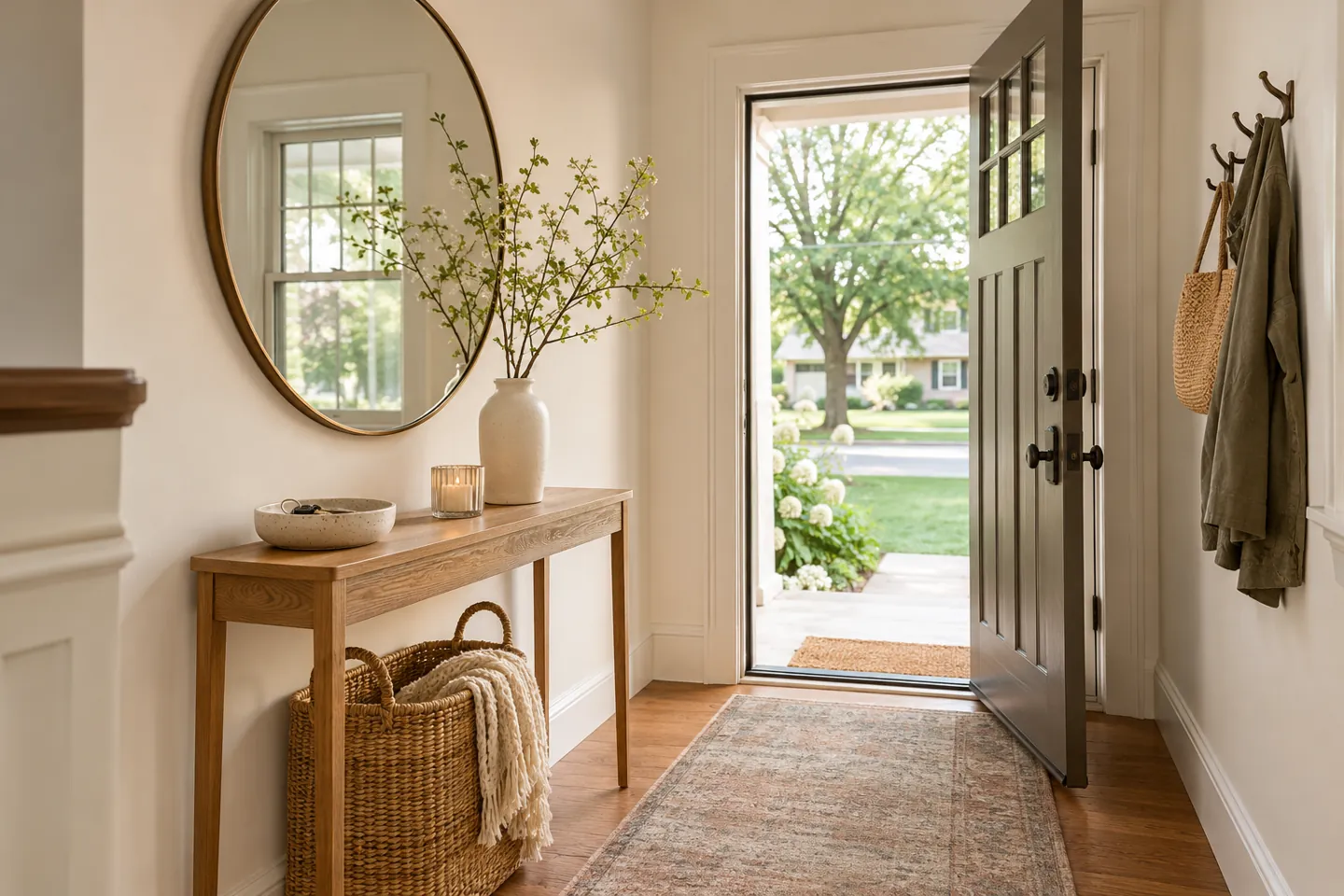
A narrow console gives your entryway a focal point without taking over the floor. Look for a shallow design with an open base if your space feels tight. Light wood, simple legs, and a plain silhouette can keep the arrangement feeling relaxed.
Before choosing furniture, mark its footprint on the floor with painter’s tape. Open the front door fully and walk past while carrying a bag. If the layout feels awkward in everyday use, choose a shallower piece or try a wall shelf instead.
Styling idea: Keep the top simple with a catchall tray, a small vase, and one practical light if you have a nearby outlet.
2. Hang a Mirror Above Your Landing Spot
A mirror gives you a convenient place for one last check before leaving and can reflect light from a nearby window. A round mirror softens a boxy console; a rectangular one can suit a tall, narrow wall.
Position it around the furniture below, rather than centering it on the entire wall. Check what it reflects, too. A view of a bright room or a simple piece of art usually feels calmer than a reflection of an overflowing coat rack.
Use fixings suited to the wall and the mirror’s weight, following the manufacturer’s instructions. In a busy entry, securely mounted pieces are more practical than casually leaning heavy decor.
3. Give Keys and Small Essentials Their Own Tray
Sometimes the smallest change makes the biggest difference. A shallow dish or tray keeps keys, sunglasses, and a wallet together, so they don’t spread across every available surface.
Choose a tray just large enough for the items you actually use each day. An oversized one can quickly become a home for receipts, loose change, and things that belong elsewhere.
Try ceramic for a soft, handmade feel, wood for warmth, or a simple metal tray to repeat the finish of your door hardware.
4. Use Wall Hooks for Everyday Bags and Jackets
When floor space is limited, use a short row of hooks for the things you grab most often. Matching hooks can make a small wall feel orderly, while a wooden peg rail adds a gentler, more casual look.
Keep this area for everyday essentials rather than your entire coat collection. A few hooks holding one bag and a couple of jackets will feel much less crowded.
Place hooks where hanging items won’t block the door, light switches, or the walking route. Check the installation instructions and load limits before hanging heavy bags.
5. Add a Small Bench with Storage Underneath
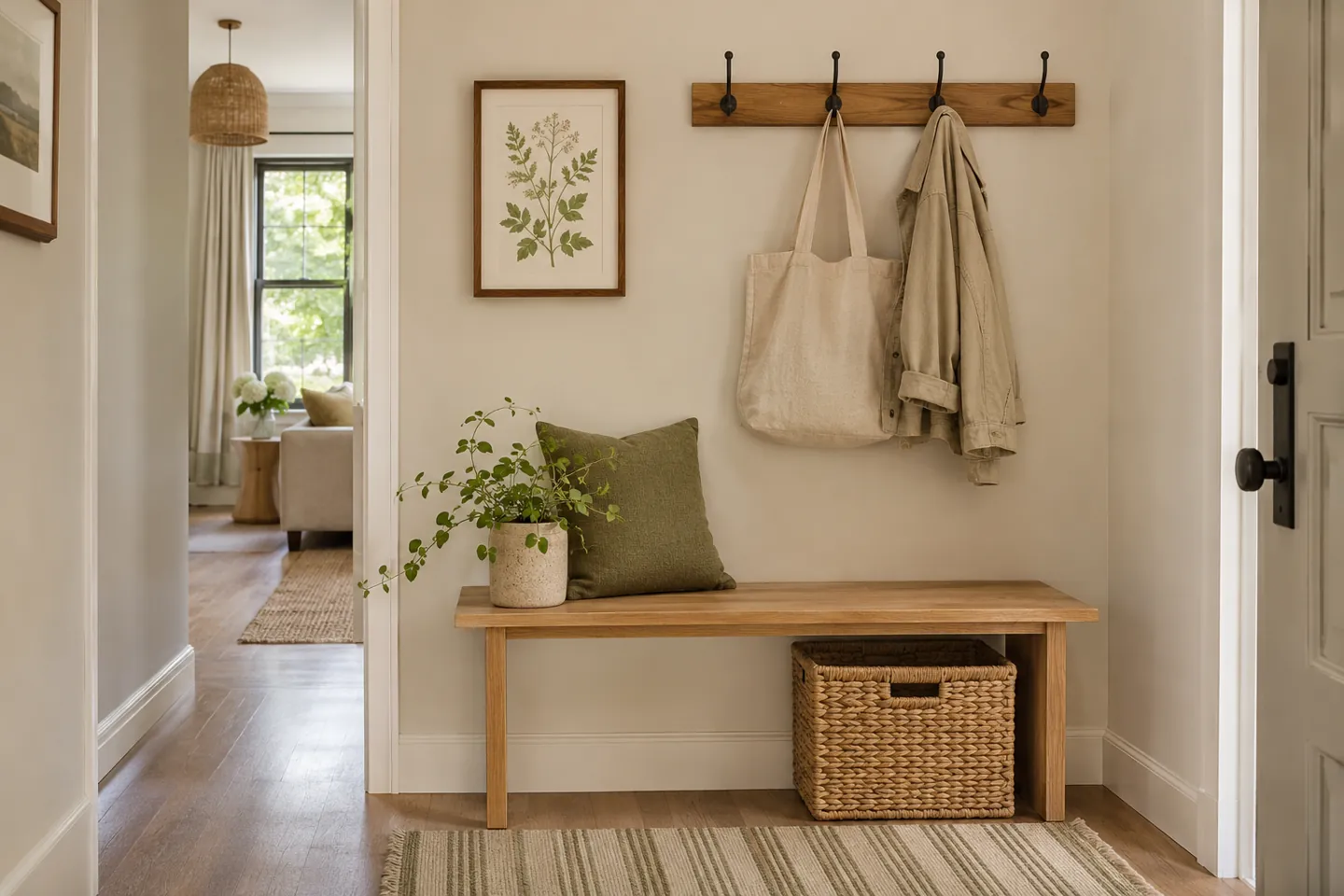
If you regularly sit down to put on shoes, a compact bench can earn its place. An open bench with a basket underneath gives you seating and somewhere to tuck away a few everyday items.
Choose a sturdy piece designed for sitting and measure the space with the door open. A narrow bench is useful only if you can sit down comfortably without squeezing through the rest of the entry.
A single cushion can add color, but skip a pile of decorative pillows that you’ll need to move every morning.
6. Make Shoe Storage Easy to Maintain
A tidy entryway needs a realistic shoe plan. Give each person a small amount of space for the pairs they wear most, then store occasional shoes elsewhere.
An open rack makes it easy to drop shoes into place. A closed cabinet creates a quieter look if you prefer less visual clutter. For a narrow cabinet, check that its compartments fit your shoe sizes and that doors or drawers can open without blocking the entrance.
Follow any anti-tip installation instructions, and let wet shoes dry before putting them into enclosed storage.
7. Define the Space with a Practical Rug
A rug can make a small entry feel intentional, even when it opens directly into the living room. Try a short runner in a hallway or a compact rectangular rug inside the door.
Choose a low-profile option that clears the door, with a suitable non-slip backing or pad for your flooring. Check the care label rather than assuming every flatwoven rug is machine washable.
Muted patterns can be forgiving between cleanings. Pick up one color from the rug in your artwork, basket, or cushion to help the small arrangement feel connected.
8. Keep the Color Palette Simple
You don’t have to paint everything white to make a compact entrance feel welcoming. Warm cream, soft greige, muted green, or a gentle blue can all work with the right surrounding finishes.
Choose one main wall color, one wood tone, and a small number of accent finishes as a starting point. Repeating those choices can help an entryway feel more settled, especially when several rooms are visible from the front door.
Test paint samples in the space and look at them at different times of day before committing.
9. Add Light Where You Actually Need It
A welcoming entry should feel comfortable when you arrive after dark. If your console sits near an outlet, a small lamp can add a softer layer of light alongside the main ceiling fixture.
Choose a lamp base that leaves room for your everyday essentials. Keep cords secured and out of walking paths. In a very tight space, a suitable wall light may be worth considering, with installation handled as required.
Look at the entry from the doorway after sunset. That simple check can reveal a shadowy corner or a lamp that feels too bright at eye level.
10. Give One Personal Detail Room to Stand Out
A small entryway can still feel like you. Add a favorite print, a framed family photograph, a handmade bowl, or an interesting thrifted vase.
Choose one piece you love and let the practical items support it. If the wall is narrow, one reasonably sized artwork may feel calmer than a collection of tiny frames.
Leave some empty surface around your display. That breathing room makes it easier to use the space without constantly shifting decor out of the way.
11. Create a Simple Reset Routine
The most useful entryway is one you can put back in order quickly. Give mail a designated spot, return extra shoes to their usual storage, and move items that have collected by the door.
If something repeatedly ends up on the floor, treat it as a clue. You might need a lower hook for a child’s bag, a larger shoe tray, or a basket for reusable shopping bags.
Let your daily habits guide the layout. An entryway that works for your household will be easier to keep looking good.
Three Easy Small Entryway Combinations
- For a narrow hallway: a shallow console, a mirror, and one catchall tray.
- For an apartment doorway: a wall shelf, a short hook rail, and a compact rug.
- For a busy household: a sturdy bench, everyday shoe storage, and a clearly assigned hook for each person.
Frequently Asked Questions
How do you decorate an entryway with no room for furniture?
Use the wall. A few hooks, a small mirror, and a shallow shelf can create a landing spot without a freestanding console. Keep the floor clear and check that hanging bags won’t obstruct the door.
How can I make a small entryway look less cluttered?
Limit what stays there to everyday essentials, group small items in a tray, and give shoes a specific place. A consistent palette and a little empty space can also make the arrangement feel calmer.
What should I put on an entryway table?
Start with a tray for keys and one decorative piece. Add a small lamp only if you need the light and have enough room. Keep a useful portion of the tabletop clear for setting down a bag or sorting the mail.
Start with the Part That Frustrates You Most
You don’t need to change everything at once. If shoes pile up, start with storage. If you’re always hunting for keys, add a tray. If the space feels bare, try a mirror or a favorite print.
Build your small entryway around what you need every day, then add a few details that make you happy to be home.