
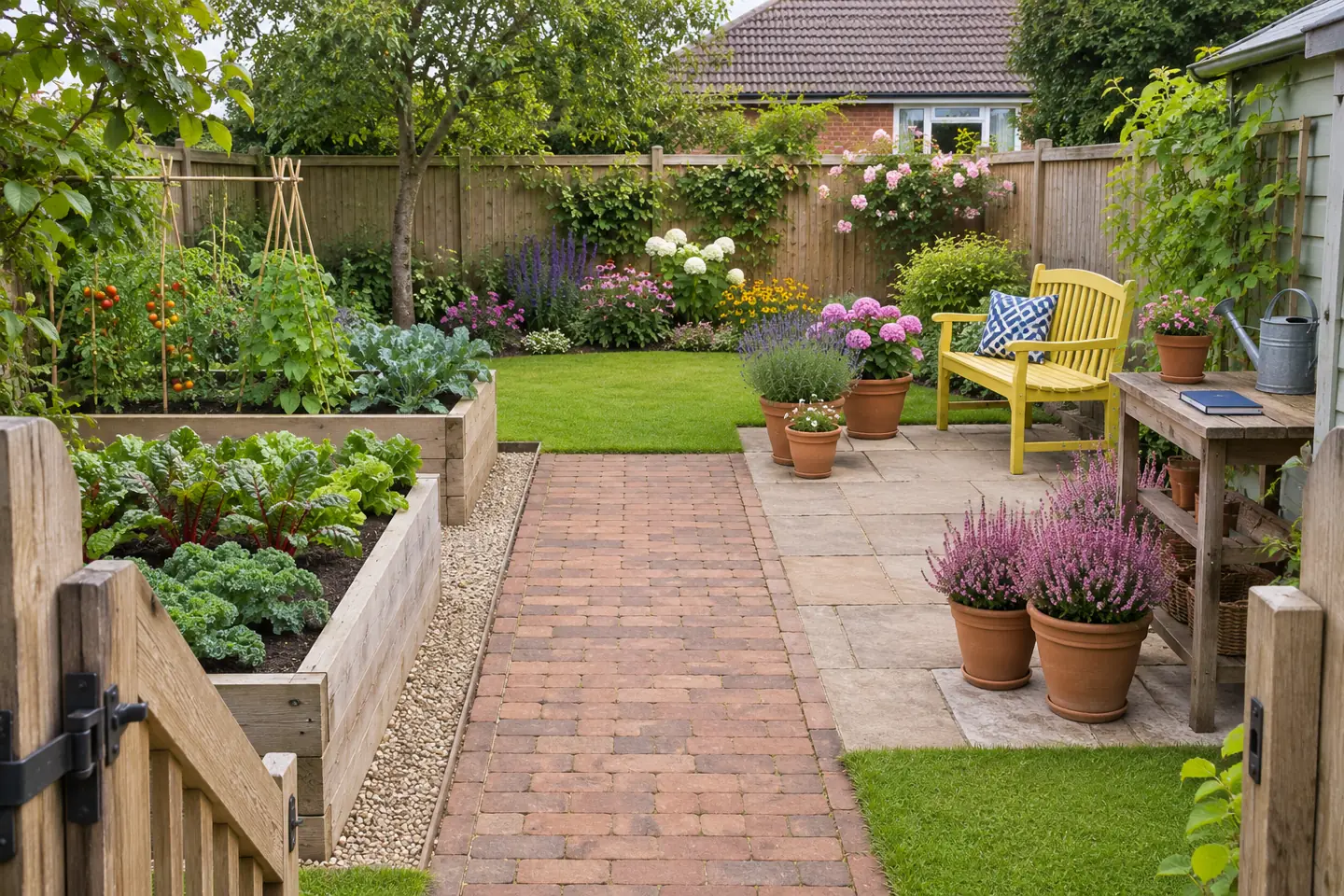
To raise soil pH, use agricultural limestone when a soil test recommends it. To lower pH in suitable soil, elemental sulfur is a common option, but the amount and timing depend on the soil and plants.
You do not need seven homemade remedies. You need the right decision for one bed, border or container collection.
The seven approaches below include actual pH amendments, gradual maintenance and ways to garden successfully without changing the whole site. Start with a soil test and the needs of your intended plants.
Before you amend: Maryland’s soil-test guidance supports test-based limestone and sulfur choices. A mineral described as natural can still harm plants when the amount or target is wrong.
Keep different planting zones separate in your plan. A vegetable bed, a blueberry patch and a container of heathers do not have to share one pH target.
Find the approach for your garden
- 1. Raise low pH with test-recommended limestone
- 2. Consider wood ash only for a suitable tested bed
- 3. Lower suitable soil pH with elemental sulfur before planting
- 4. Use an acidifying feed only when nutrients are needed
- 5. Give acid-loving plants their own container growing medium
- 6. Check irrigation alkalinity when pH keeps drifting upward
- 7. Choose a planting scheme that fits the existing soil
Read the soil test before choosing a treatment
A pH below 7 is acidic, 7 is neutral and above 7 is alkaline. Those labels describe the soil; the right target depends on the plants.
Already suitable for the intended plants
Keep the existing pH. A lower number is not automatically healthier, and acid-loving plants need a different target from many vegetables.
Too acidic for the intended plants
Ask the laboratory for a limestone recommendation and whether magnesium is also needed. Use that recommendation for the sampled area, not every bed in the garden.
Too alkaline for acid-loving plants
Ask whether the soil can realistically be acidified. Free lime or chalk, a strongly buffered soil and an unsuitable water supply can complicate the project.
A plant looks unhappy but pH is unknown
Check watering, drainage, light and nutrition as well as pH. Yellow leaves alone do not establish a soil-acidity diagnosis.
A laboratory report adds nutrient and amendment guidance to a pH reading. University of Maryland explains how to interpret the report; our guide to testing garden soil helps you plan the first checks.
1. Raise low pH with test-recommended limestone
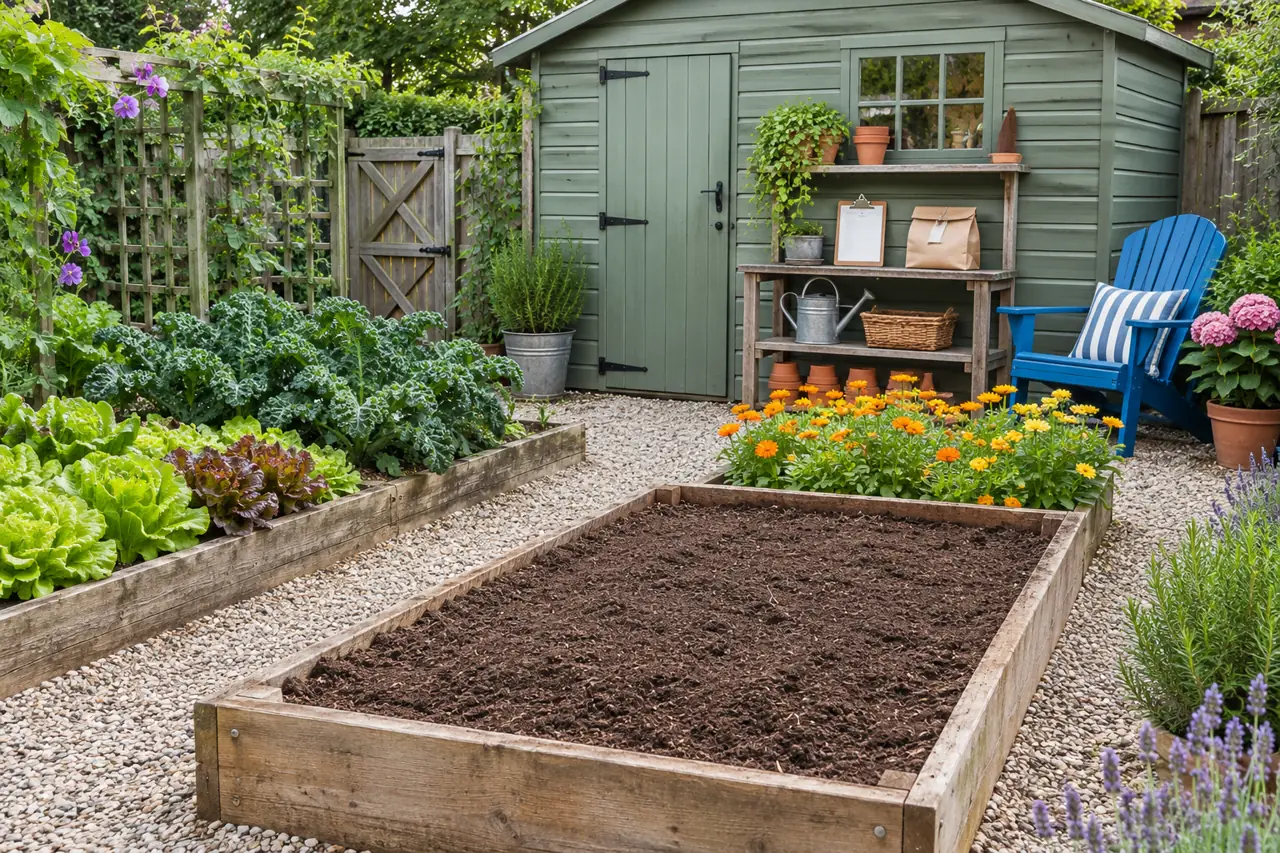
Give a vegetable garden a practical preparation corner: an empty bed beside leafy crops, gravel paths and a potting shelf against the shed.
Calendula and a blue chair keep the working area cheerful. Leave the paths wide enough to carry supplies without stepping into the beds.
If testing shows the soil is too acidic for the intended crop, agricultural limestone can raise its pH.
Choose calcitic or dolomitic lime from the soil report. Dolomitic material supplies magnesium as well as calcium, so use it when both adjustments are needed.
Follow the recommended product, rate and incorporation instructions before planting. Keep the treated bed marked in your notebook, and allow the recommended reaction time before retesting.
2. Consider wood ash only for a suitable tested bed
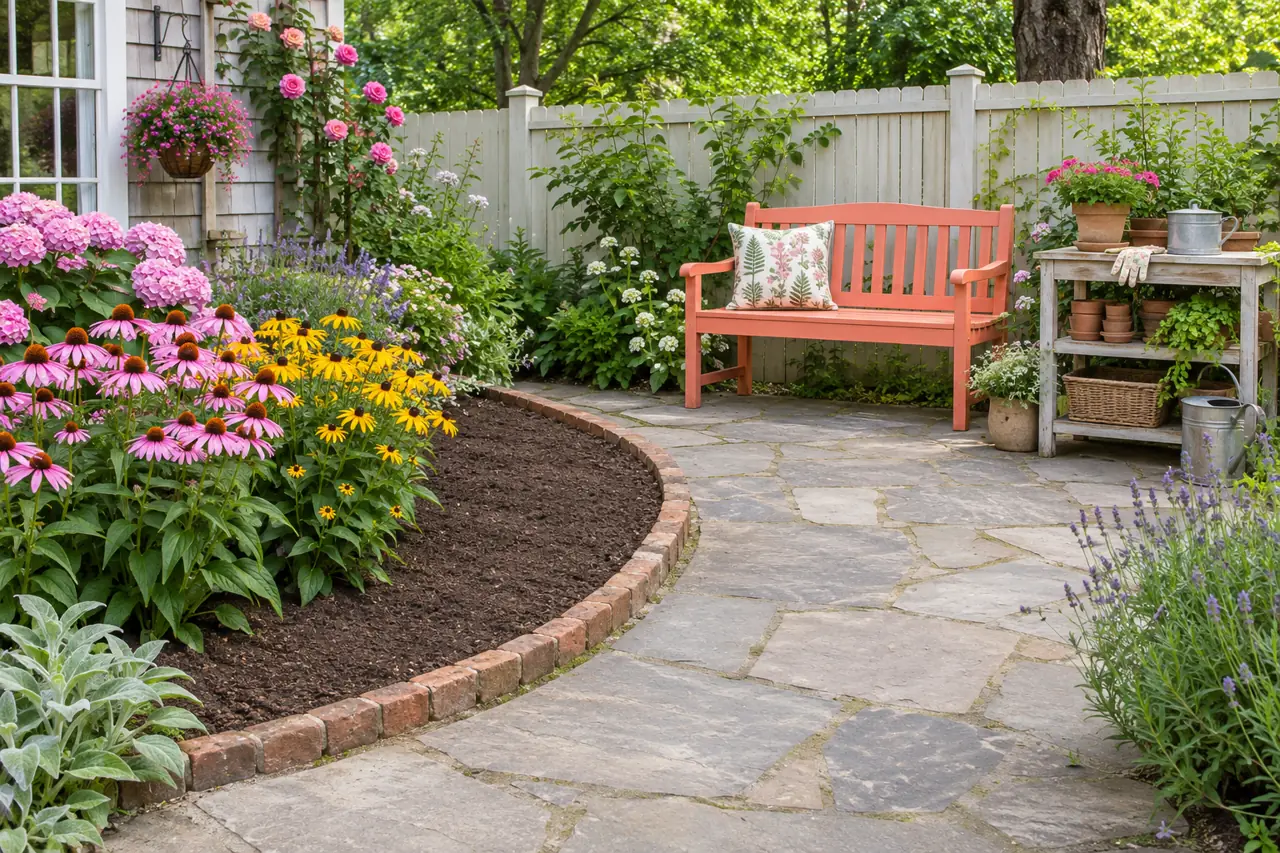
A curved flower border can share a work area with a coral bench, brick edging and a small potting shelf. Keep any ash securely contained there.
Use the empty border section for preparation, leaving established flowers and the walking route undisturbed.
Wood ash raises pH and adds nutrients, but its strength varies. Treat it as a conditional alternative to lime, never a routine garden dressing.
Only consider fully cooled ash from clean, untreated wood when soil testing and local advice support its use.
Keep it away from acid-loving plants and germinating seedlings. Never mix it with fertilizer.
Ask for an appropriate rate rather than copying a bucketful-per-bed recipe. Wear the recommended protective clothing and avoid windy application days.
Wood ash handling: Use a secure lidded container, never a pile on the ground. Iowa State warns against ash from painted or treated wood, fertilizer mixing and caustic dust.
If the tested bed does not need a pH increase, choose a suitable local disposal route instead of adding ash to the garden.
3. Lower suitable soil pH with elemental sulfur before planting
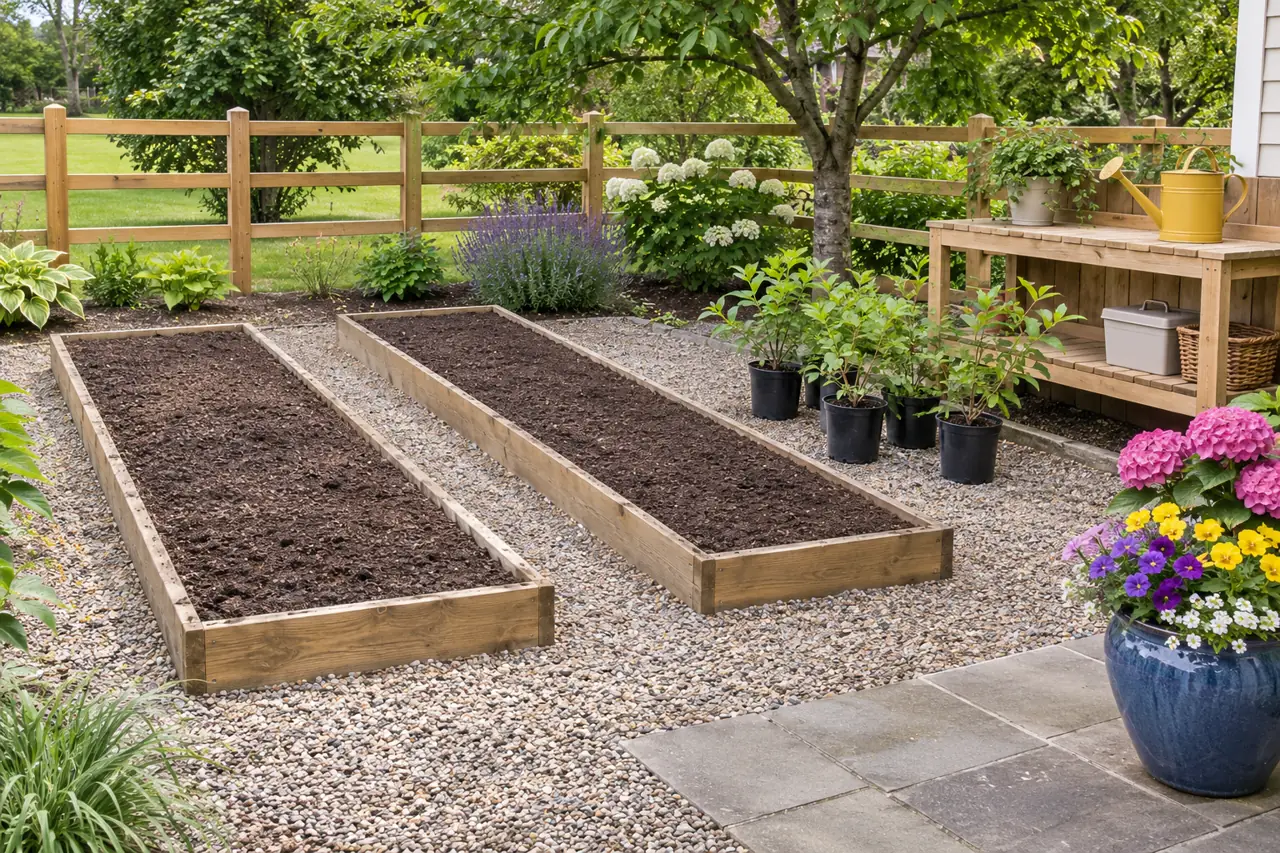
Lay out a future blueberry patch as two accessible beds, with nursery plants waiting beside a potting bench. A separate flower pot adds color while preparation proceeds.
Keep the beds empty until testing confirms they suit the chosen plants.
Elemental sulfur can lower soil pH as soil organisms convert it to acid. This takes time, especially in cold soil.
Get a recommendation that accounts for the starting pH, soil texture and intended crop.
Follow the product instructions for even distribution and incorporation before planting. Do not add extra to hurry the reaction.
Clay and organic matter resist pH change more than sandy soil.
Where free lime or chalk is present, whole-bed acidification may be unrealistic. Choose the container or plant-selection approach instead.
Measure the treatment area before buying amendments
A soil pH number alone does not supply a safe dose. The soil’s resistance to change, the product and the intended crop also matter.
Draw separate sampling areas
Mark vegetable beds, established borders and problem patches on a simple sketch. Follow the lab’s sampling instructions and keep areas with different histories separate.
Calculate only the ground being treated
A rectangular bed 4 feet wide and 8 feet long has an area of 32 square feet. Measure a curved border as smaller shapes; leave paths out of the calculation.
Match the recommendation’s units
Amount for your bed = recommended amount × bed area ÷ reference area. Keep all areas in the same units and confirm whether the recommendation describes product or an active ingredient.
Confirm product and application limits
Ask the lab or Extension adviser to check the conversion, incorporation depth and any split applications. Do not swap ash for lime, or one sulfur product for another, by equal volume.
University of Minnesota explains why buffer pH helps determine lime requirements. Its regional crop rates are not universal home-garden prescriptions; follow advice matched to your soil and location.
4. Use an acidifying feed only when nutrients are needed
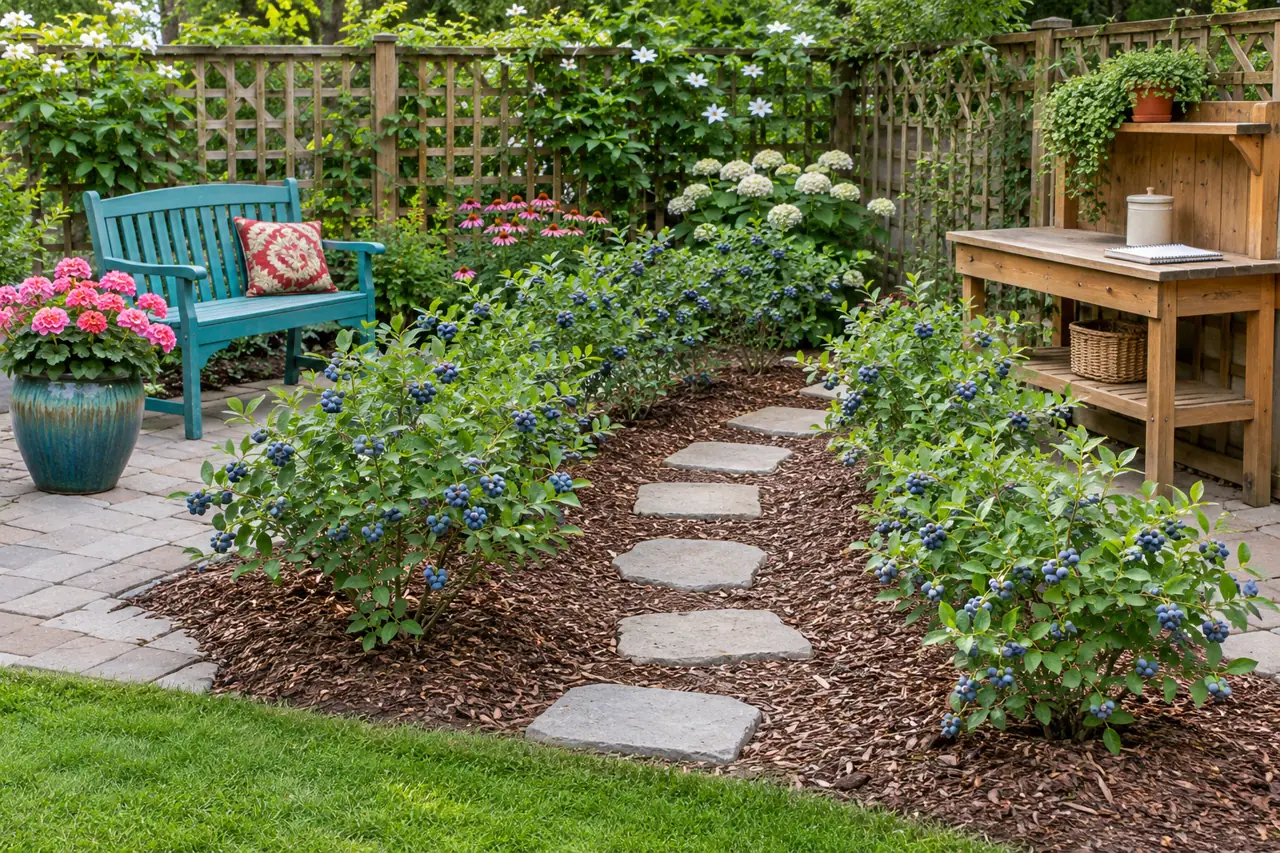
An established blueberry garden needs room for care as well as picking. Curve mulched rows around stepping stones, with a teal bench beyond their mature spread.
Keep a separate flower planter on the paving and a notebook at the potting bench. This makes the maintenance space pleasant without crowding the roots.
Some ammonium-based nitrogen fertilizers gradually acidify soil. Oregon State explains their slower effect and warns against exceeding nitrogen recommendations.
Choose a suitable feed only when the crop also needs those nutrients. Follow locally appropriate timing, the label and the crop’s fertilizer recommendation.
This is a maintenance option, not a quick repair for a large pH mismatch. Record both feeding and test results before deciding whether any further correction is justified.
5. Give acid-loving plants their own container growing medium
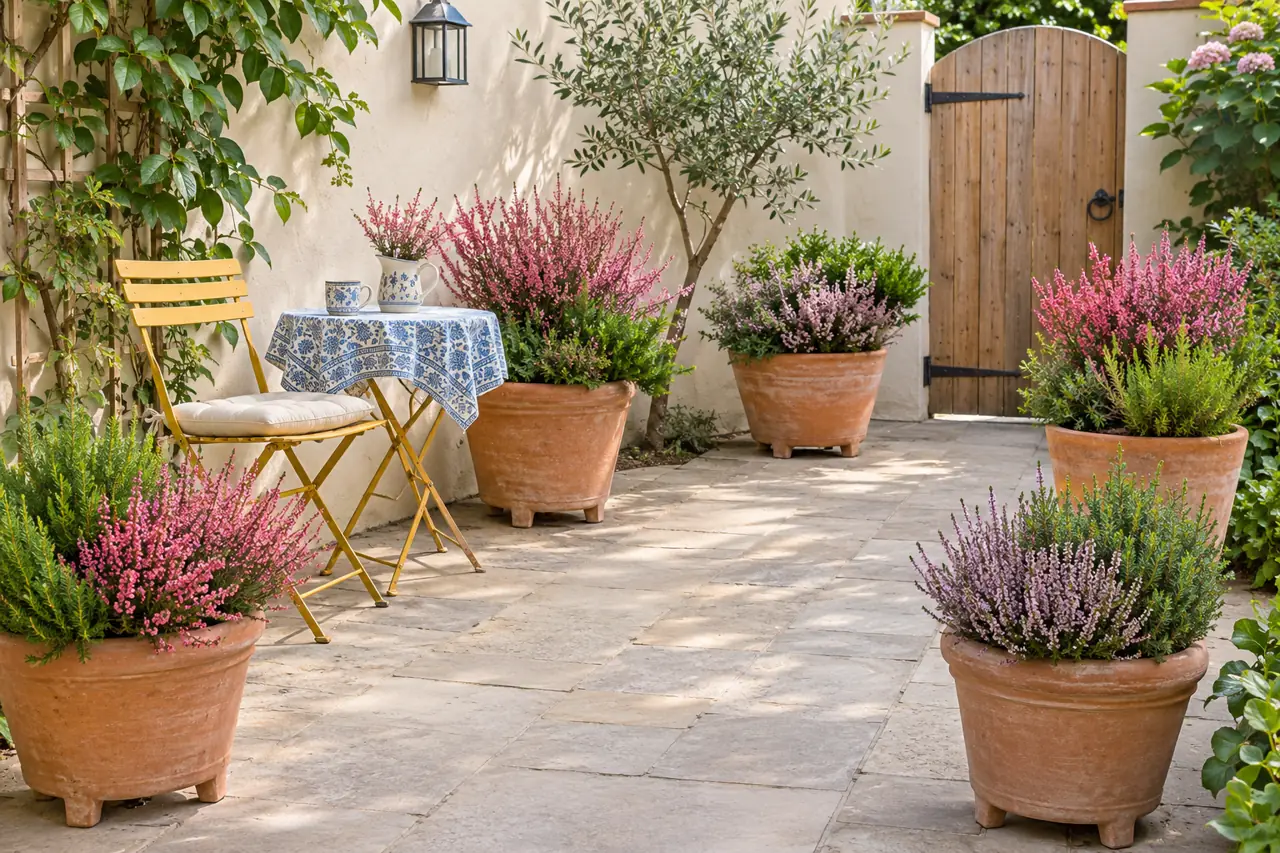
A sunny courtyard can hold a generous heather collection without changing the ground beneath it. Group terracotta pots against a pale wall, leaving the central route open.
Pink and mauve flowers sit comfortably beside a mustard chair and a blue patterned tablecloth.
I love how a repeated pot material ties together plants with different textures.
Choose heathers suited to your climate and light. The RHS recommends peat-free ericaceous compost for containers when the garden soil is too alkaline.
Use a growing medium intended for containers rather than copying mineral-soil sulfur rates into a pot.
Provide drainage holes and support pots so water can escape.
This creates a separate root environment; it does not lower the pH of the whole courtyard. Allow space for watering and eventual repotting.
Climate check: Sulfur reactions slow in cold soil; local temperatures also determine which heathers and other acid-loving plants suit an outdoor container.
Check the exact plant’s hardiness, light needs and container care before buying. Garden-soil amendment instructions do not automatically apply to potting mixes.
6. Check irrigation alkalinity when pH keeps drifting upward
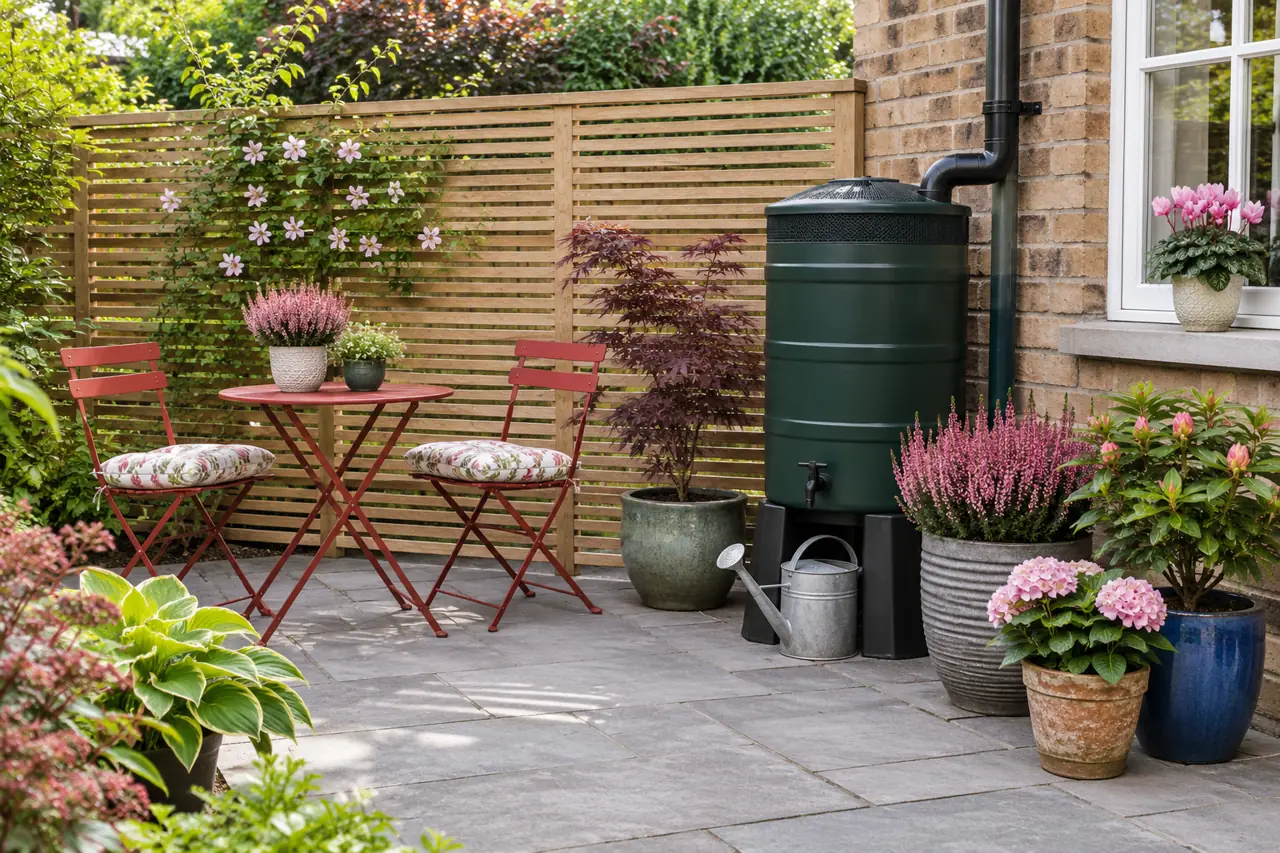
Build a manageable watering station into a container terrace: a covered rain barrel beside the downpipe, a clear tap area and pots within comfortable carrying distance.
Red chairs, a small table and patterned cushions make it somewhere to pause, too. Keep access to the lid and overflow unobstructed.
If an acid-loving collection repeatedly develops a pH problem, test the irrigation water as well as the growing medium.
Water pH and alkalinity measure different things. Alkalinity describes acid-neutralizing capacity, so a pH reading alone cannot explain the water’s long-term effect.
Where suitable, collected rainwater may provide a lower-alkalinity supply. Check local collection rules and water suitability.
Keep storage covered and screened. Seek specialist advice on treatment rather than improvising an acid-mixing recipe at home.
7. Choose a planting scheme that fits the existing soil

A sunny gravel garden offers a different answer to stubborn alkaline ground. Curve the path between lavender, pink dianthus and soft gray foliage toward a green bench.
A stone wall gives the planting a quiet backdrop; a patterned cushion and terracotta pot finish the seating corner.
The RHS lists lavender and dianthus among options for chalky soils. Choose exact species and varieties for local winter temperatures, summer heat and drainage.
What I like to do when planning is shortlist plants for the site before choosing the flower palette.
Check soil depth and leave room for mature growth. Water new planting according to its establishment needs.
This approach does not lower pH. It avoids an ongoing amendment project where free chalk or lime makes acidification impractical.
Skip the tempting shortcuts and keep a record
A repeatable record is more useful than adding another ingredient whenever a plant looks pale. Use these checks before making a second application.
Coffee grounds and pine needles
Do not depend on coffee grounds to lower soil pH. University of Minnesota advises against using them as an acidifying treatment.
UNH explains why pine needles do not appreciably acidify soil. They can still serve as mulch where appropriate.
Gypsum and Epsom salts
Neither is a substitute for limestone to neutralize acidity.
Penn State distinguishes these nutrient materials from liming materials. Use nutrients only for an identified need.
Compost as a guaranteed pH correction
Compost has other uses, but it does not provide a predictable pH adjustment. Excess composted manure can push pH upward, as Minnesota’s soil management guidance explains.
Retest before repeating
Record the bed, product, amount, date and weather conditions. Follow the lab’s waiting period; track longer-term results at a similar season to make comparisons more meaningful.
If the pH is suitable but growth remains poor, investigate the remaining problem. For heavy ground, our guide to improving clay soil addresses structure and drainage alongside planting decisions.
Common soil pH questions
How quickly will soil pH change?
There is no dependable overnight timetable. The RHS describes sulfur taking weeks or months, with slower reactions in cold soil; deeper correction can take longer.
Ask your lab when to check the specific treatment. Avoid stacking extra applications while the first one is still reacting.
Should every garden be adjusted to pH 7?
No. Match the target to the chosen plants and local soil advice rather than aiming for neutral everywhere.
Can irrigation changes replace a soil amendment?
Usually they address a different part of the problem. Minnesota describes water acidification as a supplemental approach, not an automatic replacement for correcting suitable soil.
Is an acidifying fertilizer a natural soil remedy?
It is a nutrient product with an acidifying effect, not a universal homemade remedy. Oregon State cautions against adding excess nitrogen to force a pH change.
Start with one tested planting area
Choose the crop or border you most want to grow, then test that area before buying an amendment. Make a note of its size, sunlight and drainage while you wait.
Sometimes the answer is limestone or sulfur. Sometimes a few well-chosen pots, or plants that already like your soil, make a more manageable garden.